Water-Based vs Oil-Based Cleansers: Which Fits Your Skin?

A water-based cleanser and an oil-based cleanser are not two strengths of the same thing. They clean by different chemistry. One grips oily residue with a detergent and lets the rinse water carry it off. The other dissolves the oil on your face into more oil and lifts the mixture away on a cloth. That difference decides what comes off, what stays behind, and which of the two your skin will get along with.
Key Takeaways
- Two mechanisms, not two grades. A surfactant hands oil to water. An oil cleanse has no detergent in it at all.
- They remove different things. Water-based formulas take sweat, dirt and everyday grime. Oil-based formulas take sebum, long-wear makeup and water-resistant sunscreen.
- They leave different things. Some surfactant stays in the outer skin layer after rinsing. Oil stays on the surface if the wipe-off step is rushed.
- Oily skin is the contested case. Dermatology's standing advice is a mild foaming wash, not an oil. The honest split is shine versus congestion.
- FATCO sells only one side of this divide. Its whole facial cleanser range is oil-based: three plant-oil Cleansing Oils with no tallow in them, plus a Cleansing Balm that does contain tallow.
The Two Mechanisms, and What Each One Removes
A water-based cleanser works through surfactants. Each molecule has one end that likes water and one that likes oil, so it grips the oily residue on your skin and hands it to the rinse. An oil-based cleanser has nothing doing that job. Plant oils, or a balm that melts on contact, dissolve the oil already on your face, and a warm damp cloth carries the whole mixture off.
Cleveland Clinic dermatologist Jane Wu, MD, splits the work cleanly. Oil-based cleansers remove oil-based impurities and excess sebum. Water-based cleansers, she says, which are generally foaming, remove water-soluble impurities like sweat and dirt. She names the case where the oil side has the clear advantage: it is the step that handles waterproof makeup and sunscreen.
That is the practical translation. If your day ends in a water-resistant SPF and long-wear makeup, a foaming wash on its own is working against physics. If it ends in sweat and city grime, it is not.
What Each One Leaves Behind
Rinsing and removing are not the same event. A 2012 review in Dermatology Research and Practice, written by researchers at Johnson & Johnson Consumer Products Companies and Neutrogena, describes what happens once the water stops. Surfactants extract skin components while they clean, and some of them remain in the stratum corneum after rinsing. Those two effects disrupt the structure of that layer and degrade its barrier properties. The authorship is worth knowing, since the paper also sells the fix. The finding still explains the tight feeling an hour after a wash that rinsed clean.
An oil cleanse has the opposite residue problem. No detergent is left in the skin, but the oil will sit on it if the removal step is rushed. The film people complain about after oil cleansing is almost always that. The fix is mechanical rather than chemical: press a warm damp cloth over the face, then wipe. Emulsifying blends rinse away with water instead, one of the practical differences between one cleansing oil and another.
Neither of those is the same question as pH, and pH is where the surfactant side splits again. Skin's own surface sits near 4.7. True soap runs 9 to 10, and synthetic detergent formulas sit between 5.5 and 7. What separates a mild formula from a harsh one is that number and the surfactant above it, not the base on the front of the bottle.
Who Each Base Fits
Oily skin is where intuition fails in both directions. The first instinct is the strongest foam on the shelf. The American Academy of Dermatology says that backfires, because a face wash that is too harsh can irritate skin and trigger increased oil production. The counter-instinct, that oil must therefore be the answer, has no dermatology behind it either. The same AAD page tells oily skin to use a gentle, foaming face wash, and not to use oil-based or alcohol-based cleansers, because those can irritate skin too.
So the useful line is not oily versus not oily. It is shine versus congestion. If your skin runs shiny and also goes tight after a foaming wash, the oil base is worth a fair trial. Just go in knowing it is the minority position rather than the standing recommendation. If clogged pores and breakouts are the real complaint, a gentle foaming wash built for oily skin is the safer start. Dr. Wu puts the sharper version on that group: on acne-prone skin, an oil-based cleanser used alone can cause breakouts.
Reactive skin is where "oil-based is gentler" quietly stops being true. The base is only half the question and fragrance is the other half. Most cleansing oils and balms on the natural shelf are scented with essential oils, FATCO's included, and essential oils are fragrance ingredients. For dry, sensitive skin Dr. Wu's recommendation is a gentle, unscented water-based cleanser, and she notes that cream cleansers are less drying than foaming ones. A fragrance-free cream wash beats a scented oil for anyone whose trigger is fragrance, whatever the base.
| Your situation | The base that fits | Why | Where it goes wrong |
|---|---|---|---|
| Dry or barrier-compromised | Oil | No surfactant to take lipids you are short of | A rushed wipe leaves a film that reads as greasy |
| Reactive, fragrance not the trigger | Either, cream or oil | Both keep surfactant exposure low | High-foam gels are the format to skip, not the base |
| Reactive, fragrance is the trigger | Water, fragrance-free | Most cleansing oils and balms carry essential oils | An unscented oil cleanser is hard to find |
| Oily, shiny, tight after foaming | Oil | Clears sebum with no detergent to overshoot | Not the dermatology default, so judge it on your own face |
| Oily, congested, breakout-prone | Water, gentle foam | An active can ride along in the formula | An oil cleanser used alone can cause breakouts |
| Waterproof SPF or long-wear makeup | Oil first | Water-based formulas do not dissolve a water-resistant film | Stopping there when skin still feels coated |
Double Cleansing, and Whether You Need It
Double cleansing is simply using both bases in order. Cleveland Clinic's description is the plain one: cleansing your face twice, first with an oil-based product and then a water-based cleanser. The starting point is not arbitrary either. Every FATCO cleansing oil direction opens with a dry face, because water in the way blocks the oil from reaching the sebum.
What the trend rarely leads with is that Dr. Wu calls the second step usually not necessary. For most people, she says, washing your face once thoroughly with a gentle cleanser is more than adequate. Dermatologists worry more about over washing than about a double cleansing routine, and her stated risk is specific: dryness, irritation and breakdown of the skin barrier.
So the test is not your skin type, it is your day. Waterproof makeup and water-resistant sunscreen are what earn a second pass. Her lighter alternative is micellar water to lift makeup before a water-based cleanser. FATCO's own cleansing oil directions say the same thing from the other side, since each one closes by telling you no second cleanser is needed. That is also how the oil cleansing method is normally taught.
Water-Based Is Not One Thing
Water-based is a base, not a formula. Foaming gels, cream cleansers and micellar waters all run on surfactants, and they behave differently enough that the phrase alone tells you little.
Foaming and gel formulas carry the highest surfactant load and are the ones most likely to leave skin tight. Cream cleansers suspend a milder surfactant in an emollient base and barely foam. That is why they are the usual recommendation for dry skin that still wants a rinse-off routine.
Micellar water raises a question the other two do not, which is whether to rinse. Cleveland Clinic's guidance is that there is no need to rinse it off. That is a design decision rather than an oversight, since the formula is a very dilute detergent in purified water. It comes with a stated limit. Dermatologist Alok Vij, MD, says it takes off most makeup and some waterproof cosmetics, but that specialized products like stage makeup or waterproof mascara may not come off completely. If your skin is reactive, or you can feel a residue afterwards, rinsing costs nothing.
Then there is the bar, a surfactant cleanser too and the most alkaline thing in this article. FATCO's Fat Bars are grass-fed tallow saponified with lye, so they sit at soap's pH rather than skin's. One clarification while we are here: FATCO's Toner is water-based but is not a cleanser, and its own directions place it after the cleansing step.
Got Questions?
Frequently Asked Questions
Q What are water-based cleansers?
Water-based cleansers clean with surfactants, molecules that grip oil at one end and water at the other so the rinse can carry residue away. Foaming gels, cream cleansers, micellar waters and soap bars all qualify. Cleveland Clinic describes their job as removing water-soluble impurities like sweat and dirt.
Q Which is better, oil-based or water-based cleanser?
Neither, because they remove different things. The better one is whichever matches what is actually on your face. Oil-based formulas dissolve sebum, long-wear makeup and water-resistant sunscreen. Water-based formulas handle sweat and daily grime, and they suit reactive skin better when fragrance is the thing you react to.
Q What happens if I don't double cleanse?
For most people, nothing. Cleveland Clinic's position is that one thorough wash with a gentle cleanser is more than adequate, and that dermatologists worry more about over washing than about a missed second step. The exception is waterproof makeup or water-resistant sunscreen, which a water-based wash will not fully dissolve.
Q Do you rinse off micellar water?
You do not have to. Cleveland Clinic's guidance is that there is no need to rinse it off, since the detergent concentration is very dilute by design. Rinse anyway if your skin is reactive or you can feel a residue. It also will not remove every waterproof cosmetic.
Q Why does my oil cleanser leave a film on my face?
Usually because it was rinsed rather than wiped. Water alone will not carry a non-emulsifying oil off your skin. Press a warm damp cloth over your face for 30 to 60 seconds, wipe gently, and repeat if it still feels coated. Emulsifying blends are the ones that rinse clean.
Q Do dermatologists recommend oil cleansing?
Not as the default. The American Academy of Dermatology tells oily skin to use a gentle foaming wash and to avoid oil-based cleansers. Cleveland Clinic warns they can cause breakouts on acne-prone skin when used alone. FATCO's facial range is entirely oil-based, so patch-test on the jawline before committing.
The FATCO Alternative
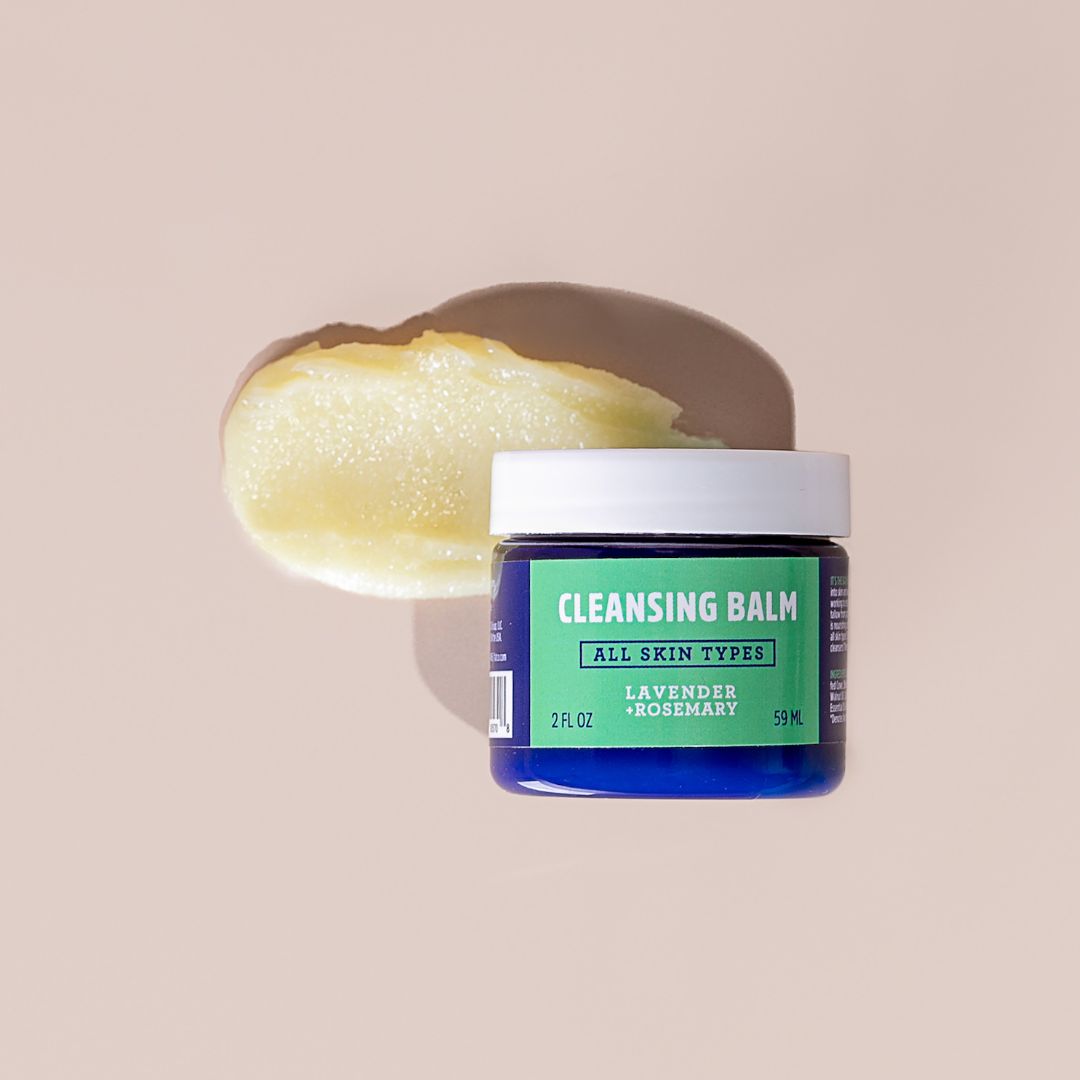
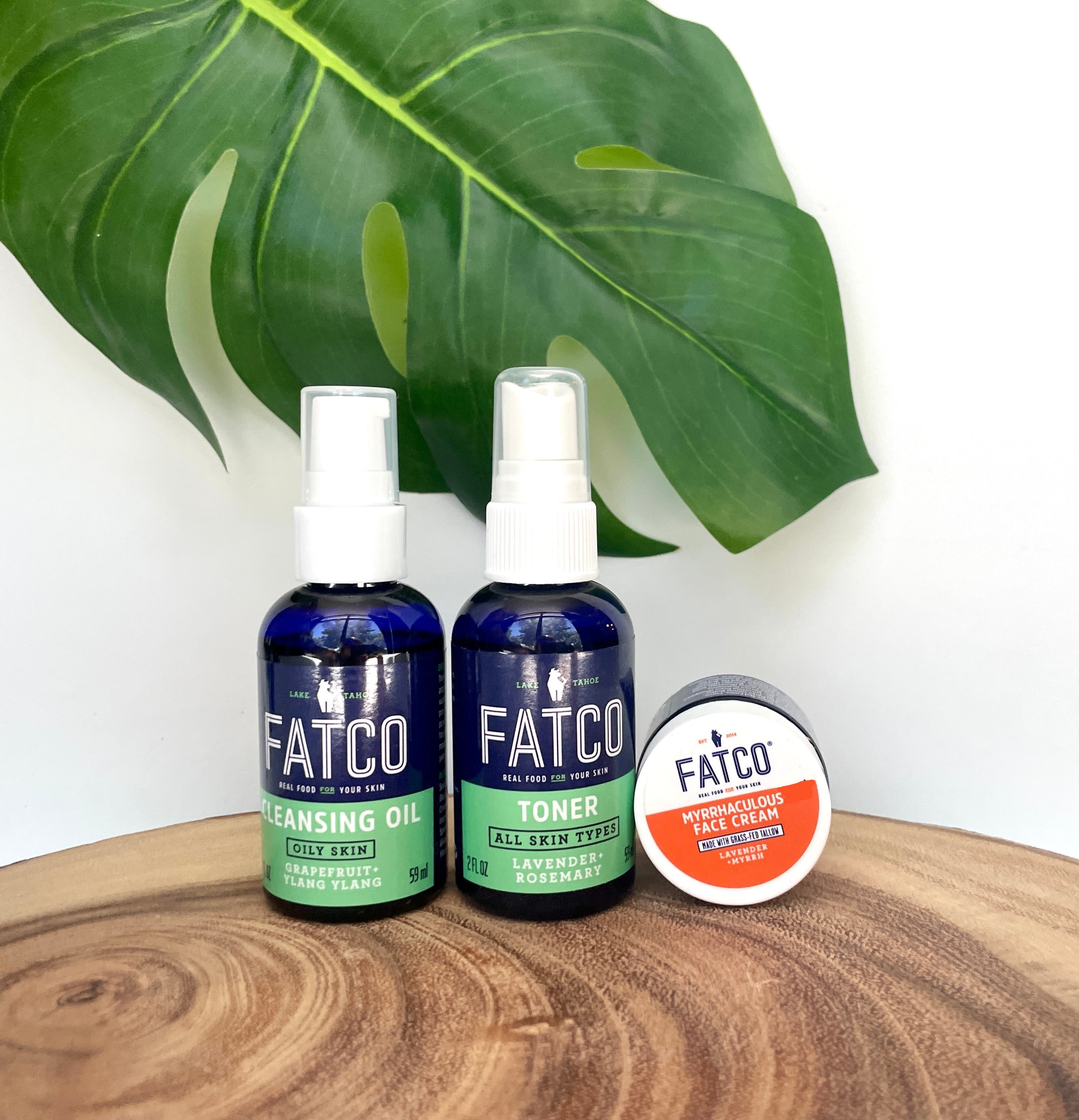
FATCO sells one side of this divide, and it is worth saying so plainly. Everything in its facial cleanser category is oil-based. Three plant-oil Cleansing Oils cover oily, normal/combo and dry skin at $14 for 2 oz and $24 for 4 oz. A Cleansing Balm at $16 for 2 oz sits alongside them, its panel opening with coconut oil and listing tallow second. There is no foaming face wash and no synthetic-detergent facial cleanser in the range. All four carry essential oils, so none of them is fragrance-free. If your skin is shiny rather than congested and foam leaves it tight, the Cleansing Oil for Oily Skin is the one on lighter carriers. If fragrance is your trigger, a fragrance-free water-based cleanser is the better answer, and it will not be coming from us.
FATCO Tallow Skincare
Grass-Fed. Suet-Sourced. Dry-Rendered.