Best Beef Tallow for Face: What to Look For and Why It Works
THE SHORT ANSWER
The best beef tallow for face comes from grass-fed cattle, is rendered from suet or leaf fat rather than mixed trim, and has a short ingredient list with no synthetic emulsifiers or fillers. It works because its fatty acid profile — roughly 37% oleic, 27% palmitic and 17% stearic acid — closely overlaps the lipids in human skin and sebum, so it absorbs into the barrier instead of sitting on top of it.
Why People Are Putting Beef Tallow on Their Face
Let's get the obvious question out of the way: yes, this is a thing. And no, it's not as strange as it sounds.
Tallow-based skincare has been quietly building momentum for several years, driven by a growing skepticism of synthetic cosmetics and a renewed interest in ancestral approaches to health. The same people reading ingredient labels on their food started reading them on their moisturizers — and didn't love what they found. Silicones, PEGs, synthetic emulsifiers, fragrance compounds.
Beef tallow entered the conversation because it is close to the opposite of all that. It is one ingredient, from an animal that has fed humans for thousands of years, and it happens to be structurally similar to the fat your own skin makes.
What Makes Beef Tallow Work on Facial Skin
The reason tallow resonates with skin isn't marketing — it's composition. Tallow's biocompatibility with human skin comes down to three measurable things.
The fatty acids match. Beef tallow is roughly 37% oleic acid, 27% palmitic acid and 17% stearic acid. Those same three fats make up a large share of the lipids in your stratum corneum, and oleic acid is also the dominant fat in human sebum. That overlap is why tallow absorbs the way it does rather than forming a film that washes off unchanged.
It is remarkably stable. Tallow is under 2% polyunsaturated fat. Polyunsaturated oils are the ones that oxidize and go rancid quickly, so a fat this low in them stays stable on the shelf and on your skin without needing synthetic preservatives to hold it together.
Grass-fed tallow carries carotenoids and CLA. The yellow cast in good grass-fed tallow is carotenoid pigment from the animal's diet. Grass-fed fat also carries more conjugated linoleic acid than grain-fed. Both are real differences you can see and measure in the fat itself.
Why you won't find a vitamin list on this page
Tallow is widely marketed as rich in vitamins A, D, E and K. We don't make that claim. USDA reference data for beef tallow lists vitamin E at 2.7 mg per 100 g and vitamin D at 28 IU, with vitamin A and vitamin K not detected — modest amounts at best. Two caveats belong with that: USDA data doesn't distinguish grass-fed from commodity tallow, and the carotenoids above are provitamin A. But nobody has shown that tallow applied topically delivers a meaningful vitamin dose to skin, so we'd rather rest the case on the fatty acids, which are measured.
What to Look For in a Beef Tallow Face Product
Not all tallow is the same. Most of what separates a good product from a mediocre one is decided long before it reaches your face.
Grass-fed source. The animal's diet shows up in the fat. Grass-fed tallow differs meaningfully from grain-fed — a better omega-3 to omega-6 ratio, more conjugated linoleic acid, and visible carotenoids that give it a yellow cast where grain-fed tallow runs pale. If a label doesn't say grass-fed, assume it isn't.
Rendering. Suet and leaf fat — the hard fat around the kidneys and organs — render into the cleanest, most stable tallow, which is what you want on your face. Mixed trim renders into something softer and less consistent. Slow, low-heat rendering also produces a milder-smelling result than high-heat industrial processing.
A short ingredient list. Watch for synthetic emulsifiers (anything ending in -eth, polysorbates), petrolatum, mineral oil, and synthetic preservatives. Their presence usually means the tallow has been diluted into a conventional product structure and is doing less of the work than the label implies.
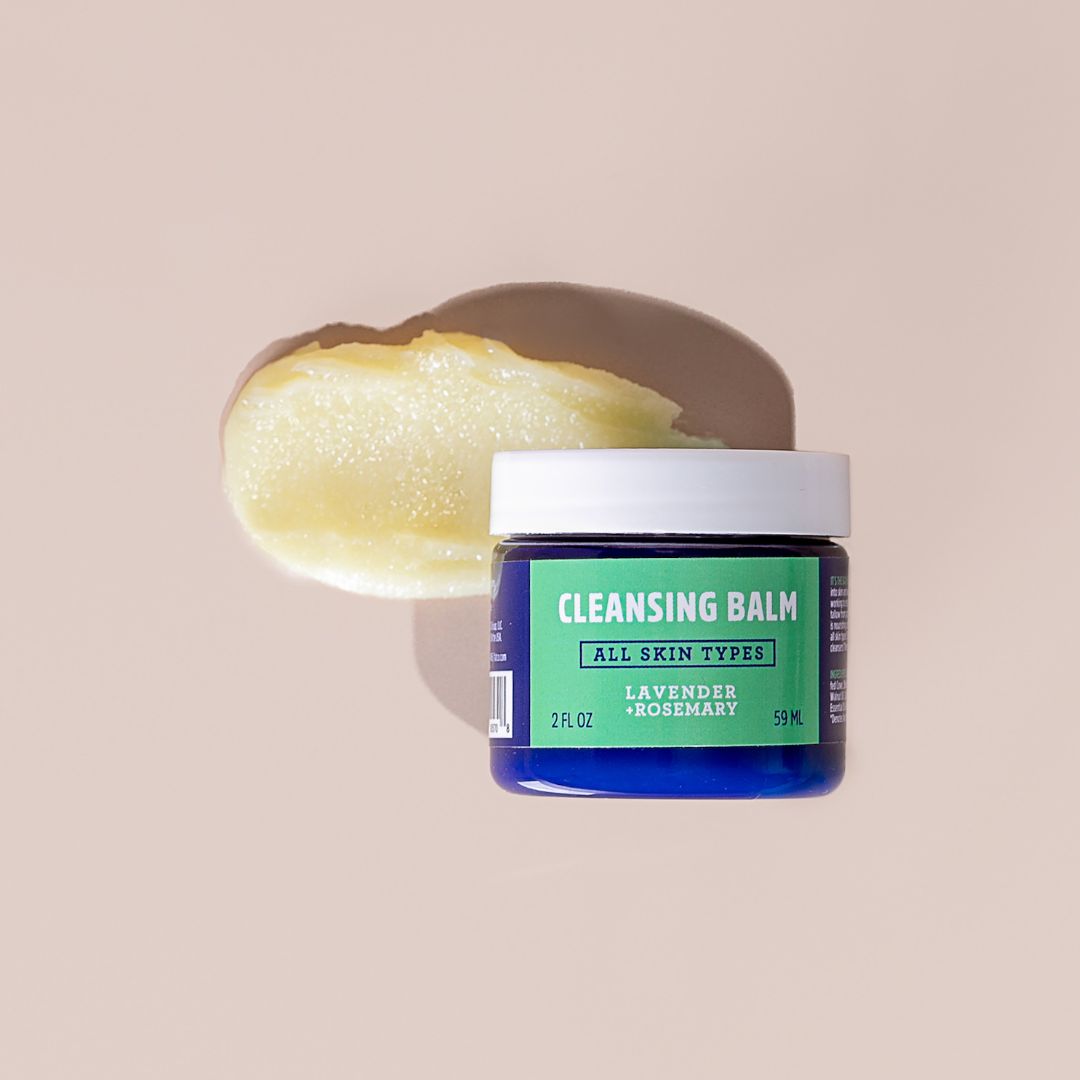
Format. Tallow shows up as a firm balm, a whipped cream, or blended with plant oils. For facial use, whipped and cream formats spread more evenly and feel lighter than a straight balm. A well-built formula uses botanicals and plant oils that complement the tallow base rather than replacing most of it.
Tallow vs. Conventional Moisturizers
Most conventional moisturizers work by occlusion — sealing water in — and humectancy — pulling water toward the surface. Silicones, glycerin, hyaluronic acid and PEGs are engineered to do exactly those two jobs, and they do them well.
Tallow works on a different principle. Instead of laying a moisture-trapping film over the skin, it contributes lipids of the same families the barrier is built from. That's a different value proposition: less immediate slip, more structural contribution. It's also why people switching to tallow often describe an adjustment period before their skin settles.
Neither approach is universally better. If you like how a silicone-based moisturizer feels, nothing here says you're wrong. But if conventional moisturizers have never quite fixed the underlying problem for you, the mechanism above is the reason a fat-based approach is worth trying.
Does Beef Tallow Clog Pores?
This is the most common objection, and it deserves a straight answer rather than a reassuring one.
There is no published comedogenic rating for beef tallow. The 0–5 comedogenic scale that gets quoted all over the internet came out of research in the 1970s and 80s that applied isolated ingredients to rabbit ear canals. Beef tallow was not among the substances tested. Any specific number you see attributed to tallow — including the “2 to 3” figure that circulates widely on skincare blogs — traces back to no study we've been able to find. We used to repeat that number ourselves. We've removed it.
What can be said honestly: tallow is a rich occlusive fat, and tolerance varies by person. Its similarity to sebum means it tends to absorb rather than sit inert on the surface, and plenty of people with breakout-prone skin use it daily without trouble. Others find it too heavy for the face and prefer it on the body. Neither outcome is unusual.
The practical approach: patch test along the jawline for a week before committing to full-face use, and start with a whipped or cream format rather than a straight balm.
How to Use Beef Tallow on Your Face
Less is more. Tallow is concentrated and absorbs well, so a pea-sized amount — often less — covers the whole face.
Warm it first. Tallow firms up at room temperature. Press a small amount between your fingertips for a few seconds until it softens, and it will spread far more evenly.
Press, don't drag. Apply with a gentle pressing motion instead of rubbing across the skin.
Morning and night both work. Many people prefer a heavier application at night and a lighter one in the morning. If you're layering SPF or makeup, apply tallow first and give it a minute to absorb.
Give it two weeks. If you're coming off a conventional routine, expect a short adjustment period while your skin recalibrates.
Who Benefits Most — and Who Shouldn't Bother
Dry and very dry skin. The barrier-compatible fatty acids provide lasting moisture rather than the surface-level hydration of water-based products.
Reactive and sensitive skin. A short ingredient list removes most of the common triggers. People with rosacea- and eczema-prone skin often report tallow as one of the few moisturizers that doesn't make things worse.
People who've tried everything. If a shelf of products hasn't solved it, tallow operates on a different principle and is worth a genuine trial.
Who should skip it: anyone avoiding animal products — tallow is rendered beef fat and there is no vegan version of it. If that's you, a plant-oil cleansing routine or a botanical face oil is the better path. And if your skin is very oily and congests easily, try tallow on the body first before putting it on your face.
Got Questions?
Beef Tallow for Face FAQ
Is beef tallow good for your face?
For most skin types, yes. Beef tallow is roughly 37% oleic acid, 27% palmitic acid and 17% stearic acid — the same fats that make up a large share of the lipids in human skin, with oleic acid also dominant in sebum. That overlap is why it absorbs into the barrier instead of sitting on the surface. It's also under 2% polyunsaturated fat, which makes it unusually stable. It is not suitable for anyone avoiding animal products.
Will beef tallow clog my pores?
There is no published comedogenic rating for beef tallow. The 0–5 scale quoted across skincare sites came from research that applied isolated ingredients to rabbit ear canals in the 1970s and 80s, and tallow wasn't among the substances tested — so any specific number attributed to it is unsourced. In practice tolerance varies. Tallow is a rich occlusive fat; many people with breakout-prone skin use it daily without issue, while others find it too heavy for the face. Patch test along the jawline for a week first.
What's the difference between grass-fed and grain-fed tallow?
Grass-fed tallow has a more favorable omega-3 to omega-6 ratio, more conjugated linoleic acid, and higher carotenoid content — which gives it a yellow cast where grain-fed tallow runs pale. The animal's diet directly affects the composition of the fat, which is why sourcing is worth checking.
Can you use beef tallow on your face every day?
Yes. A pea-sized amount or less usually covers the whole face. Many people apply it morning and night, though a heavier application at night with a lighter touch in the morning is a common pattern.
Does beef tallow have a smell?
Plain rendered tallow has a mild, faintly neutral fat scent that fades quickly after application. Slow low-heat rendering produces a milder result than high-heat industrial processing. Most tallow skincare uses botanicals or essential oils for scent rather than synthetic fragrance.
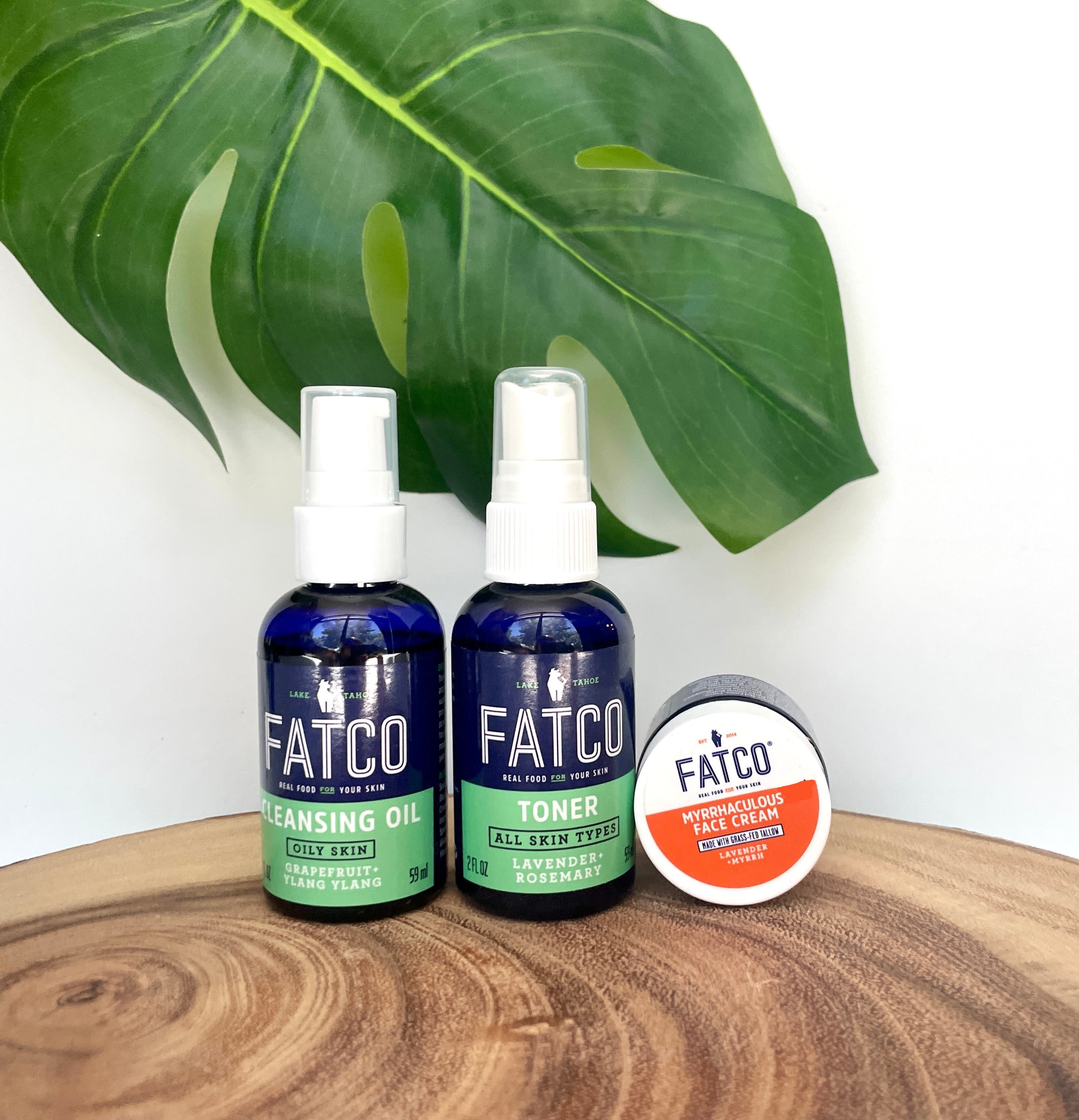
FATCO Skincare
Tallow Face Products
Every product below lists grass-fed tallow as its first ingredient.