Why Is My Skin So Dry? Causes Beyond the Obvious

Most dry skin has an ordinary explanation. Your barrier is losing water faster than it rebuilds, and the usual culprits are dry or heated air, hot showers, strong cleansers, and skin that makes less oil each decade. A smaller set of causes sits underneath: medications, thyroid or kidney disease, and skin conditions that look like plain dryness until they stop responding to moisturizer. Working out which one you have is what makes the fix stick.
Key Takeaways
- Most dry skin is a leak, not a shortage. Skin loses water to the air faster than it can replace it, usually because something stripped or thinned the fatty layer that slows that loss.
- Environment and washing habits explain the majority of cases. Cold outdoor air and dry indoor heat pull water off the surface faster, while hot showers and strong soaps strip away the lipids that slow that loss.
- Age quietly changes the baseline. Sebum output drops sharply from your 40s onward, so a routine that worked at 25 can leave you dry at 45 with nothing else changing.
- A few causes need a doctor, not a better cream. Eczema, psoriasis, thyroid disease, kidney disease, and several common medication classes can all present as stubborn dryness.
- Tallow works on the leak side of the equation. It is a fat rather than a treatment, and its job is to slow water loss and resupply the kind of lipids a thinned barrier is short on.
How Your Skin Holds On to Water
Healthy skin is not wet. The outermost layer, the stratum corneum, runs at roughly 10% to 30% water, while the living tissue underneath sits at 75% to 85%. That gradient is the whole design. Your barrier holds a small amount of water at the surface and loses only a trickle of it to the air, a process called transepidermal water loss.
Two systems keep that trickle small. The first is natural moisturizing factor, a mix of amino acids, lactic acid, urea, and salts inside the surface cells that binds water and holds it in place. The second is the lipid mortar packed between those cells, built from ceramides, cholesterol, and free fatty acids, with a thin film of sebum sitting on top. The cells are the bricks and the fats are the mortar.
Dry skin starts when the mortar thins out. Strip those lipids with a hot shower and a foaming cleanser, or simply make fewer of them with age, and water escapes faster than skin can replace it. That is why dryness often feels like it arrived overnight. Nothing changed inside you. The leak just got wider.
What Is Actually Drying You Out
Dry skin almost always traces back to one of three buckets: something in your environment, something in your routine, or something in your body. Most people have two or three of these stacked at once, which is why fixing only one rarely feels like enough.
| Cause | How it dries you out | First fix |
|---|---|---|
| Cold outdoor air | Cold air holds less moisture, so it pulls water out of the skin's surface faster than warm air does | Cover exposed skin; switch to a richer moisturizer for the season |
| Dry indoor air | Running the heat pulls moisture out of the air indoors, and low humidity raises the rate water leaves your skin | Run a humidifier in the room where you sleep |
| Hot showers and long baths | Hot water dissolves and rinses away the surface lipid film, and the longer the exposure the more comes off | Warm water, five to ten minutes, moisturize while skin is still damp |
| Deodorant soaps and harsh cleansers | Strong detergents strip oils and fats out of the skin along with dirt | Gentle, fragrance-free cleanser, used sparingly enough that you never see a thick lather |
| Frequent water and chemical contact at work | Repeated exposure keeps the barrier from rebuilding between washes | Moisturize after each wash rather than once at the end of the day |
| Age | Sebum production drops significantly from your 40s, and barrier ceramides decline with age | Move from a lotion to a heavier cream or balm |
| Medications | Certain drug classes, including statins and diuretics, list dryness as a known effect | Never stop a prescription over dry skin; raise it with your prescriber |
| Underlying conditions | Eczema, psoriasis, seborrheic dermatitis, ichthyosis, diabetes, thyroid disease, and kidney disease can all present as dryness | See a doctor if moisturizer barely touches it |
| Nutrient shortfalls | Low vitamin D, vitamin A, niacin, zinc, or iron can show up as excessive dryness | Uncommon in well-fed adults; get tested rather than guessing at supplements |
Indoor air does more than the weather
Winter dryness gets blamed on the cold outside, but the heated air indoors is doing plenty of it too. Running the heat pulls moisture out of the room, and low humidity measurably raises the rate water leaves your skin. Winter also shifts your own lipid production. Ceramide levels measured in leg skin run lower in winter than in warmer months, so the barrier thins exactly when the air pulls hardest.
Your shower is the biggest single lever
If you change one habit first, make it the shower. Heat and time are what strip lipids, and both are free to cut. Turning the temperature down and getting out five minutes sooner does more for most people than upgrading a moisturizer.
When Dry Skin Is a Medical Signal
Some dryness is a symptom rather than a condition. The American Academy of Dermatology groups atopic dermatitis, psoriasis, seborrheic dermatitis, ichthyosis, diabetes, thyroid disease, and kidney disease among the health conditions that cause excessively dry skin. It also lists statins and diuretics among the medications that dry skin out, and names dialysis and cancer treatment as separate risk factors.
The practical test is responsiveness. Ordinary environmental dryness improves within a week or two once you cut the hot water and moisturize consistently. Dryness driven by an underlying condition does not, no matter how good the cream is.
Book an appointment if your skin itches badly enough to interrupt sleep or daily life, if it looks infected, or if it has cracked open and started to bleed. Persistent patches that come back in the same places may be eczema rather than plain dryness, and that changes what actually helps. And if the dryness arrived alongside whole-body changes like fatigue or feeling cold all the time, mention that too, since thyroid disease is one of the conditions on that list.
What Actually Fixes Dry Skin
Habits first, products second. That order matters, because a good moisturizer applied on top of a stripping routine is just replacing what you removed an hour earlier.
- Turn the shower temperature down and keep it short. Warm water, five to ten minutes.
- Swap deodorant bars and high-foam gels for a mild, fragrance-free cleanser.
- Pat dry instead of rubbing, and moisturize while skin is still slightly damp.
- Run a humidifier through heating season, at least in the bedroom.
- Moisturize hands after every wash rather than once at night.
- Give any change two full weeks before judging it.
Once the habits hold, the product question gets easier. If your skin feels tight again soon after you moisturize, the usual suspects are the formula, the timing, and the dose. That is the pattern behind skin that stays dry after moisturizing. If the label is a blur, it helps to know which moisturizer ingredients hold water in versus which ones only sit on the surface. And because a concentrated balm needs far less than a watery lotion, it is worth checking how much moisturizer to use for the type you actually own.
Where Tallow Fits (Honestly)
Tallow addresses one part of this problem well and does nothing for the rest. Because it is a fat, it works on the occlusive and emollient side. It slows water loss at the surface and resupplies fatty material to a barrier short of it. Its fatty acid profile is close to human sebum, which is a fair reason to expect it to sit well on skin. FATCO's own materials also describe grass-fed tallow as carrying fat-soluble vitamins, though USDA reference data for beef tallow lists vitamin E and a trace of vitamin D rather than meaningful vitamin A or K, so treat the vitamin content as a minor point rather than the reason to use it.
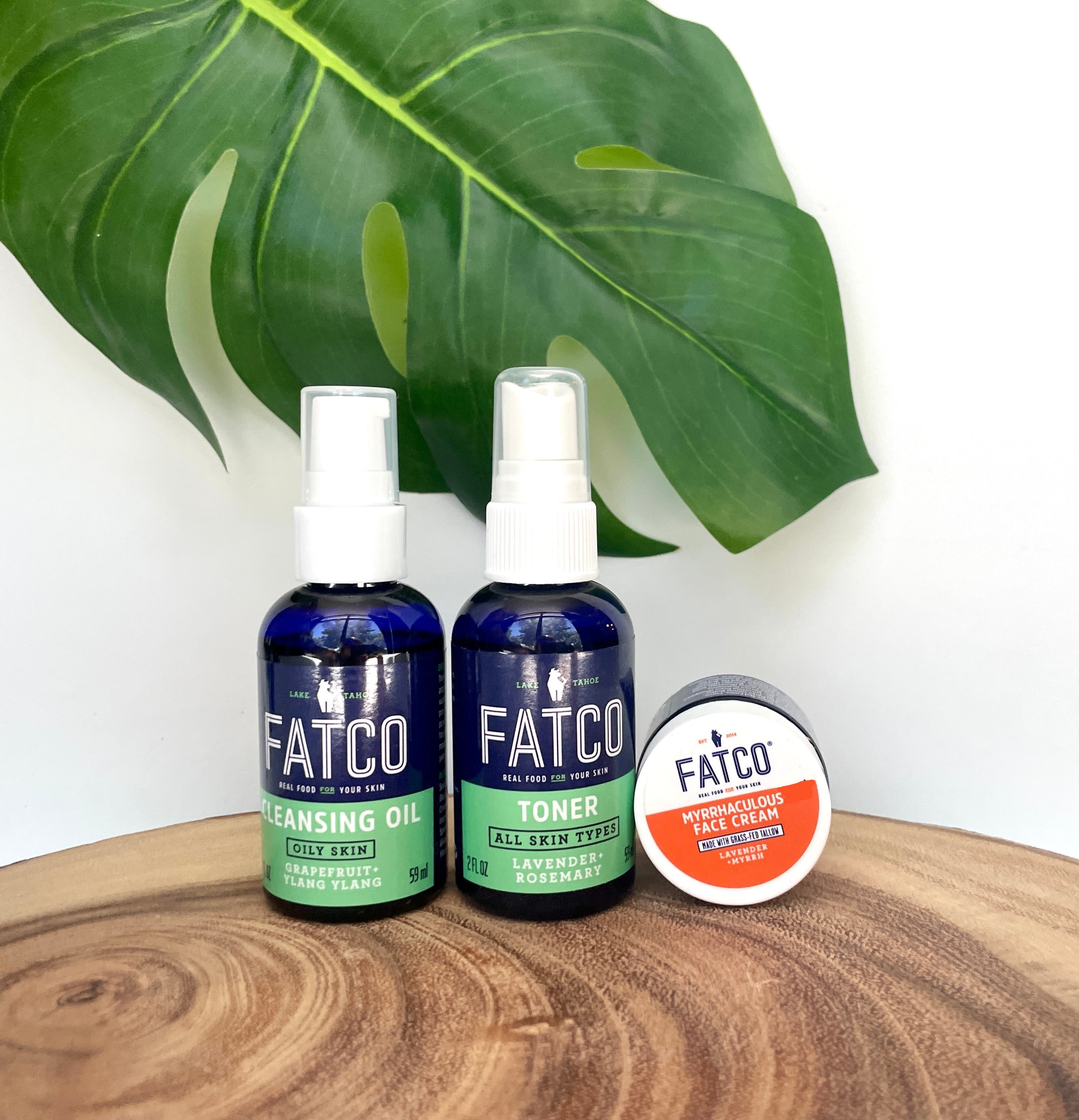
What it will not do is override the cause. Tallow cannot counteract a medication that is drying you out, correct a thyroid problem, or clear psoriasis. FATCO's Myrrhaculous Face Cream is a grass-fed tallow base blended with jojoba, rosehip seed, and myrrh. It suits the common version of this problem, where the barrier has simply been thinned by air, water, soap, and time.
Got Questions?
Dry Skin FAQ
Q Why is my skin so dry even though I drink a lot of water?
Because surface hydration is mostly controlled by the barrier, not by intake. When 49 healthy women added about two liters a day for a month, hydration improved most in the group with lower baseline water intake. If you already drink enough, more water will not close the leak.
Q Why has my skin suddenly become so dry?
Something in your environment or routine almost certainly changed. Heating season starting, a move to a drier climate, a new cleanser, hotter showers, or a new prescription are the usual triggers. Sudden dryness with no obvious trigger, especially with fatigue or itching, is worth a doctor's visit.
Q Can a vitamin deficiency cause dry skin?
Yes, though it is an uncommon cause in well-fed adults. The American Academy of Dermatology notes that too little vitamin D, vitamin A, niacin, zinc, or iron can cause excessively dry skin. Raise it with a clinician rather than guessing and self-supplementing, since unnecessary vitamin A supplementation carries its own risks.
Q Why is my skin dry in winter but fine in summer?
Cold air holds less moisture, and indoor heating drops humidity further, so water leaves your skin faster all season. Your skin also produces fewer barrier ceramides in winter. The usual answer is a seasonal routine: heavier moisturizer, cooler showers, and a humidifier while the heating runs.
Q Does dry skin mean I have eczema?
Not usually. Ordinary dry skin is diffuse, seasonal, and responds to moisturizer within a week or two. Eczema tends to show up as defined, itchy, inflamed patches that return to the same spots and keep flaring despite good moisturizing. Persistent patches deserve a dermatologist's opinion.
Q Does tallow help with dry skin?
It can support dry skin by slowing water loss and adding fats similar to your own sebum. Tallow is a moisturizing ingredient rather than a treatment, so it addresses barrier dryness well and does nothing for dryness caused by medication or an underlying condition.
The FATCO Alternative
If your dry skin traces back to air, hot water, soap, and falling oil production with age, it is a barrier that needs fat put back in. That is what tallow does. FATCO builds its face creams and balms on grass-fed tallow rather than a water-and-preservative base, so what goes on your skin is closer to the lipids it makes for itself. Fix the shower and the cleanser first, then give a tallow-based moisturizer two weeks of consistent use before judging it.