How Much Moisturizer Should You Use?
For most face lotions and creams, a nickel-sized amount is enough to cover your whole face. If you use a concentrated balm, such as a tallow-based face cream, shrink that to a pea-sized dab, because there is no water filler to spread. Every other zone scales from there: a little extra for your neck, a fingertip-length line of cream per hand, and roughly a tablespoon for your whole body. Here is the full breakdown, zone by zone, plus how to tell when your dose is off in either direction.
Key Takeaways
- A nickel-sized amount covers your face. That is the amount dermatologists commonly recommend for lotions and lighter creams. Concentrated balms need only a pea-sized dab.
- Timing matters as much as quantity. Moisturizer applied to damp skin within about three minutes of washing traps water far better than a thick layer applied late.
- Twice a day is the standard frequency. Morning and night for your face, and after every bath or shower for your body.
- Under-dosing is the more common mistake. In a 2022 clinical study, a full fingertip unit dose cleared dry skin at three times the rate of a one-third dose.
- Tallow balms are concentrated, so a little goes far. A pea-sized amount of FATCO's tallow face cream does the work of a nickel-sized scoop of watery lotion.
How Much Moisturizer to Use on Each Zone
The right amount depends on the zone: a nickel for your face, an extra dab for your neck, a fingertip-length line per hand, and considerably more for your body. Here is the full map.

| Zone | How much | The visual cue |
|---|---|---|
| Face | A nickel-sized amount of lotion or cream; pea-sized for concentrated balms | One small coin of product in your palm, or a single pea |
| Neck | An extra pea- to dime-sized dab on top of your face amount | Face and neck together come to about 2.5 fingertip units |
| Hands | One fingertip unit per hand | A line of cream from the tip of your finger to the first crease |
| Body | About 3 fingertip units per arm, 6 per leg, and 14 for the front and back of your torso | Roughly a tablespoon of cream for a full-body application |
The fingertip unit is the measure dermatology actually uses for dosing. It is the line of cream squeezed from the tip of an adult index finger to the first crease, about 0.5 g. That single unit covers an area the size of two adult hands. Add up the body zones in the table and you get 32 units, about 16 g of cream, which is where the rough tablespoon figure comes from.
The dose genuinely changes the result. A 2022 study in The Journal of Dermatology compared a full fingertip unit dose of moisturizer with a one-third dose, each applied twice daily to dry lower legs. After one week, 43.3% of the full-dose patients were completely clear of dry skin. In the low-dose group, only 13.3% were.
One caution about borrowed analogies. The shot glass rule you may have heard belongs to sunscreen: a shot glass of SPF for your whole body is sun-protection dosing, not moisturizer dosing. Moisturizer amounts run smaller, because the goal is a thin layer your skin fully absorbs rather than a measurable protective film.
Why More Moisturizer Isn't Better
Your skin can only absorb so much, and everything beyond that point just sits on the surface. That leftover layer is where the familiar problems start:
- Pilling. Excess product rolls into little flakes the moment sunscreen or makeup goes over it.
- A greasy film. Shine that shows up by mid-morning is usually unabsorbed product, not your skin suddenly turning oily.
- Congestion risk, honestly framed. Most moisturizers do not clog pores on their own. What raises the odds is volume: heavy layers pressed onto skin that was never properly cleansed hand your pores extra material to work with. If you suspect your moisturizer is clogging your pores, check when the bumps appeared before blaming the formula itself.
- Waste. A jar that should last six weeks empties in two, and the extra product delivered exactly zero additional hydration.
Acne-prone skin deserves its own note, because the instinct there is to use nothing at all. That backfires. The American Academy of Dermatology explains that when skin dries out, your body makes more oil, and that extra oil can clog pores. A pea-sized amount of a well-chosen moisturizer for acne-prone skin works better than skipping the step entirely.
Signs You're Using Too Little
Tightness within an hour of applying is the clearest sign you under-dosed. A few more tells:
- Flaky patches that persist even though you moisturize every day
- Skin that feels comfortable right after application but dry again by midday
- Cream that disappears instantly, with your face feeling like nothing went on
Under-dosing quietly undermines results. In the fingertip unit study above, the one-third dose left most patients still dry and flaky at the one-week mark, on the exact same product. Before you swap creams, try a full dose on damp skin for a week and see what changes.
If you are dosing generously and your skin still feels tight, quantity is not your problem. Persistent dry skin after moisturizing usually traces to the routine around the cream: hot showers, harsh cleansers, or a formula too watery to seal anything in.
How Often Should You Moisturize Your Face?
Twice a day: once in the morning and once at night, right after cleansing. That frequency holds across skin types, including oily skin, which gets a smaller dose rather than fewer applications.

When you apply matters as much as how often. The American Academy of Dermatology advises moisturizing while your skin is still damp, because damp skin lets thicker creams spread more easily and traps water underneath. Cleveland Clinic dermatologist Alejandra Estemalik puts a number on it: apply within three minutes of stepping out of the bath or shower. Pat yourself dry only to the point where you stop dripping.
A few frequency details worth keeping:
- Body: after every bath or shower, while skin is damp
- Hands: after every wash if they run dry, since washing strips oils all day long
- Night: feel free to be slightly more generous on your face, because nothing layers on top
- Oily skin: stay at twice daily with a dime-sized amount instead of dropping the habit
How Product Type Changes the Amount
The richer the formula, the less of it you need. Moisturizers run a spectrum from mostly water to zero water, and your dose should slide down that spectrum as the water content drops.
Gels and lotions. These are the lightest, most watery formulas. Cleveland Clinic notes that lotions contain more water and more alcohol than creams, which is why they can leave dry skin wanting. Expect to use a bit more than the nickel standard and to reapply sooner.
Creams. The nickel rule was written for these. A cream carries more oil than a lotion, spreads predictably, and holds moisture in for longer per application.
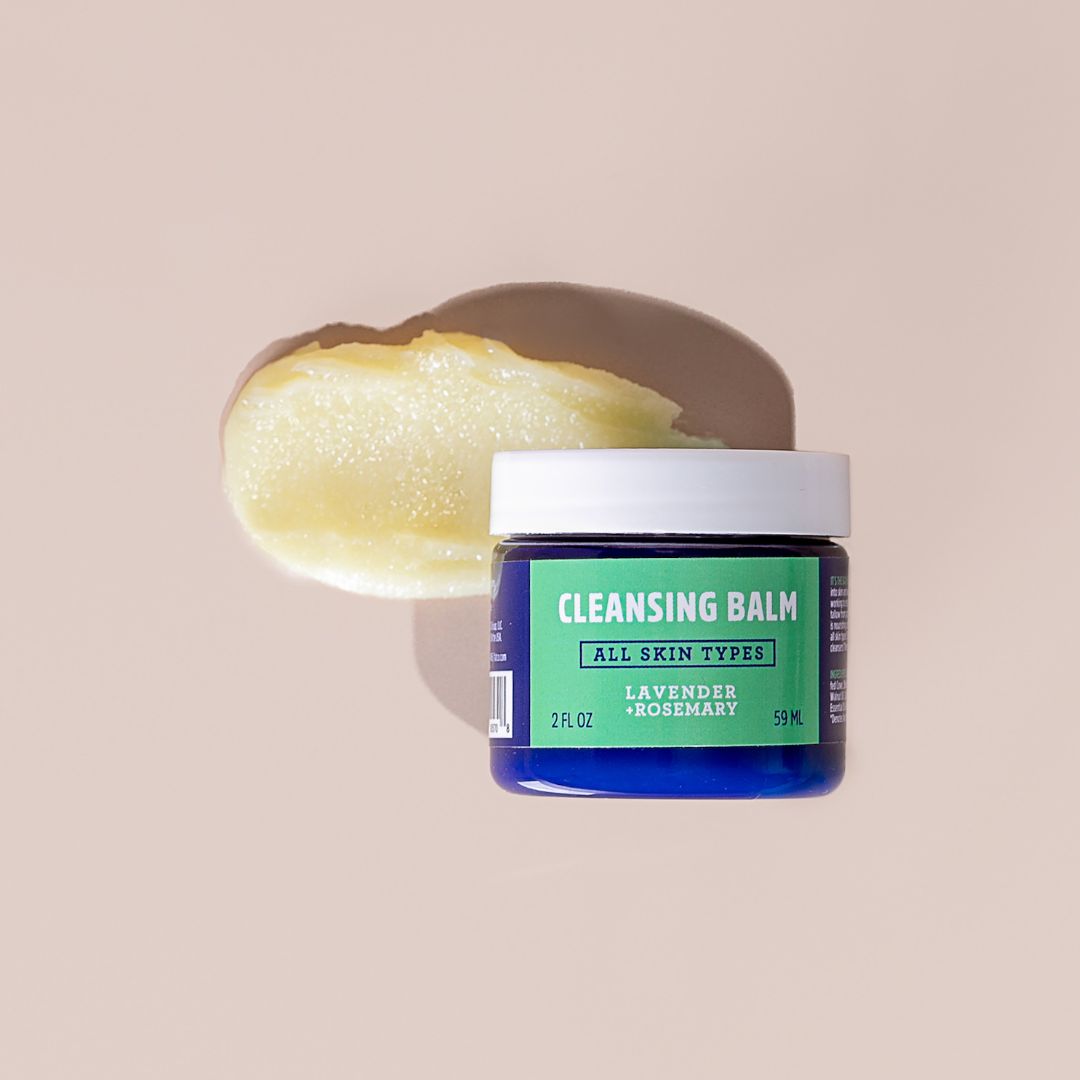
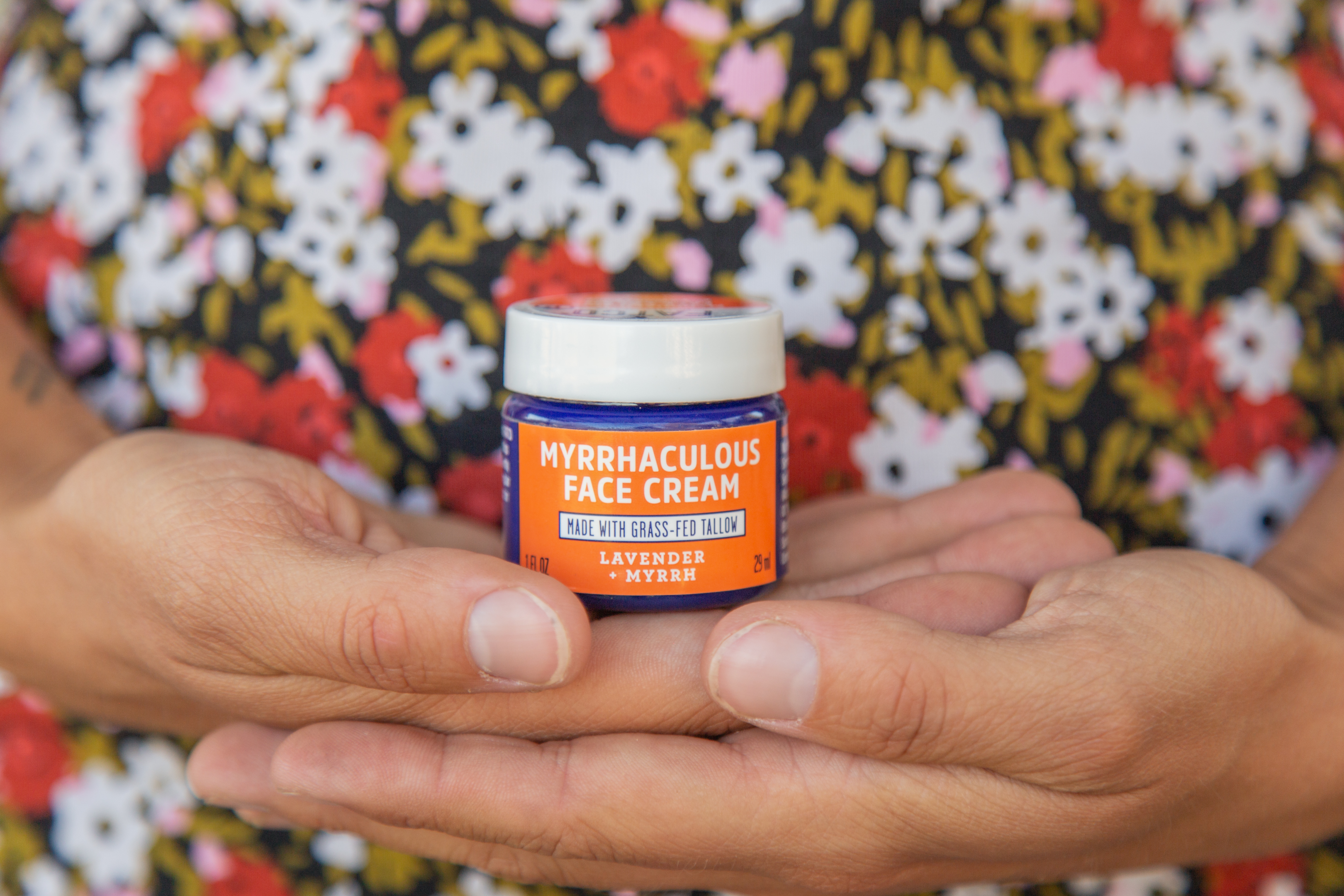
Balms and anhydrous formulas. No water at all, so every gram is active lipid. This is the concentrated end of the spectrum, where the dose drops to a pea. Grass-fed tallow balms sit here: tallow shares its main fatty acids, palmitic and oleic, with the sebum your skin already produces. With no water in the jar, a pea-sized amount melts across the whole face. FATCO's dosing guidance says exactly that. The 1 oz Myrrhaculous Face Cream is built around a pea-sized application, and the jar typically lasts 4 to 6 weeks of daily use at that rate.
Formula choice interacts with skin type, too. Dry skin does best at the rich end of the spectrum, which is why the best moisturizers for dry skin are creams, ointments, and balms rather than lotions. Sensitive skin benefits less from adjusting the amount and more from shortening the ingredient list. A simple moisturizer for sensitive skin at the right dose beats a heavy layer of the wrong formula.
Got Questions?
Frequently Asked Questions
Q How much moisturizer should I use on my face?
A nickel-sized amount of lotion or cream is enough for the average face. Concentrated balms are the exception: a pea-sized dab does the same job because there is no water filler to spread. Start small, press it into damp skin, and add more only if your skin still feels tight.
Q How much moisturizer should I use for oily skin?
Use a dime-sized amount, slightly less than the nickel standard for other skin types. Oily skin still needs daily moisturizer, since stripped, dried-out skin responds by making more oil. A light lotion or a small dab of a non-comedogenic balm works better than skipping the step.
Q How many times a day should you moisturize your face?
Twice a day: once in the morning and once at night, right after cleansing. Dermatologists recommend applying while skin is still damp, within about three minutes of washing, so the cream can trap that water. Body moisturizer follows the same logic, going on after every shower.
Q How much moisturizer is too much?
You are using too much if the product is still sitting on your skin a few minutes after applying. Pilling under sunscreen or makeup, a greasy film by mid-morning, and a jar that empties in two weeks are the usual signs. Extra product cannot absorb, so it just sits there.
Q How many moisturizers should I use in my routine?
One moisturizer per routine is enough for most people. Some prefer two: a lighter lotion under sunscreen in the morning and a richer cream or balm at night. Layering several moisturizers in one sitting adds material to your skin without adding meaningful hydration, so pick one and dose it right.
Q How much tallow balm should I use on my face?
A pea-sized amount covers your whole face. Tallow balms contain no water, so every gram is concentrated skin-compatible fat, and a little spreads surprisingly far on damp skin. Applied daily at that rate, FATCO's 1 oz Myrrhaculous Face Cream typically lasts 4 to 6 weeks.
The FATCO Alternative
Conventional moisturizers are built on water, which is why the dose keeps creeping up: the water evaporates, the tightness returns, and you reach for the jar again. FATCO takes the opposite approach. Our face creams are built on grass-fed tallow, with fatty acids that overlap with your skin's own surface lipids and zero water filler. A pea-sized amount does a full day of work, and a small jar carries you through weeks of daily use. Skip the moisturizer math and switch to a formula where a little genuinely goes far.