Best Body Lotion for Aging Skin

The best body lotion for aging skin is the one that puts fat back where the skin stopped making it, and the shins are where that shows up first. Body skin ages differently from face skin, and the difference is measured rather than marketed.
Key Takeaways
- Oil output falls, and the body starts from less of it. Sebum secretion drops roughly 23 percent per decade in men and 32 percent in women. Limbs carry fewer oil glands than the face to begin with.
- The barrier gets weaker, not leakier. Resting water loss in aged skin reads normal or low. The weakness shows only once the barrier is challenged and has to repair.
- Shins go first. A nursing home trial and the National Institute on Aging both put the lower legs at the top of the list.
- "Mature skin" is a marketing category, not a regulated one. Nothing in the label rules ties the phrase to a formulation.
- A lotion changes the surface, not the structure. It softens scale and makes fine lines less obvious. It cannot rebuild collagen, and no fat carries SPF.
What Changes in Body Skin With Age
Oil production falls. A 1985 study in the Journal of Investigative Dermatology measured sebaceous wax ester secretion on the foreheads of 109 men and 167 women aged 15 to 97. Its equations of best fit suggested sebum secretion declines about 23 percent per decade in men and 32 percent per decade in women. The forehead is the oiliest site on the body, and shins and forearms have far less to lose.
The lipids between surface cells thin out. A 1995 study in the Journal of Clinical Investigation compared adults over 80 with adults under 30, testing on the volar forearm. In the paired animal model, total lipid in the outer skin layer fell by roughly 30 percent with age. The drop was spread evenly across ceramides, cholesterol and free fatty acids, which the authors call a global deficiency in all key stratum corneum lipids.
Water loss reads fine, which is the trap. In that same study, baseline transepidermal water loss in aged skin was subnormal, meaning lower than in young skin. Integrity is what had failed. It took 18 tape strippings to perturb the older forearms against 31 for the younger ones. Recovery was slower too: young skin reached 50 percent at 24 hours and 80 percent at 72, while aged skin managed 15 percent at 24 hours. The paper's conclusion is that assessing the aged barrier at rest is misleading.
Turnover slows. A 1983 study in the Journal of Gerontology tracked a fluorescent dye off the skin. Stratum corneum transit took about 20 days in young adults. In older ones it was lengthened by more than 10 days, and cell renewal begins to drop dramatically after age 50. Dead cells linger, which is the flaking and the rough feel.
Twenty one volunteers is a small sample for that 1995 work. None of the three studies was funded by a cosmetics company; the money came from the NIH, the Veterans Affairs Medical Research Service and two research foundations.
Why the Shins Go First
The National Institute on Aging is specific about where this lands. Many older people develop dry spots on their skin, often on their lower legs, elbows and lower arms. A 2017 randomized trial in Berlin nursing homes measured it: across 133 residents with a mean age of 83.8, leg skin areas were drier compared to arms and trunk areas.
Four things stack on a lower leg, and none applies to a face. Oil gland density is lowest on the limbs. Sunscreen goes on faces daily and almost never on shins, so the photoaging half of the damage runs unchecked there. Clothing rubs: the American Academy of Dermatology names tight clothes such as leggings and body-hugging jeans among the things that worsen dry skin. And the body is a far larger surface, so one pump over an arm and a leg is a fraction of the dose a face gets.
The face keeps more of its oil glands, gets sunscreen, and gets a product applied daily. That is why face creams for aging skin are built around actives rather than fat volume.
What "Mature Skin" Means on a Label
Nothing enforceable. The FDA regulates by what a product is intended to do, not by the audience printed on the front. Its position is that a product meant to make lines and wrinkles less noticeable simply by moisturizing the skin is a cosmetic. One intended to remove wrinkles or increase the skin's production of collagen is a drug or a medical device. Cosmetics need no FDA approval before sale. The agency says the same of the industry's other favourite coinage: "cosmeceutical" has no meaning under the law. The National Institute on Aging advises being skeptical about antiaging claims, since many such products are cosmetics and are not required to be tested in humans. So read the panel instead, in order. Ingredients are listed in descending order of predominance, so a fat below the preservatives on a body lotion label is a rounding error.
What a Body Lotion Can and Cannot Do
It can supply fats the skin no longer makes and hold water in the surface layer, softening the scale that makes older shins feel rough. Hydrated skin also makes fine lines less pronounced, which is a genuine effect and an appearance one. Sealing the top and filling the gaps between cells are two different jobs, and that split runs through every comparison of moisturizers for dry skin. Older body skin wants both.
It cannot rebuild collagen or thicken thinned skin. Crepiness is structural and sits below where a lotion reaches. It also carries no sun protection. The two products with the strongest evidence against skin aging are daily sunscreen and a retinoid, and neither is a body lotion.
One class needs a caveat. Lactic acid and urea smooth the scale that slowed turnover leaves behind. Both AmLactin's lotion and Eucerin's Advanced Repair Cream carry the sunburn alert that an alpha hydroxy acid may increase your skin's sensitivity to the sun. On skin already carrying decades of UV, keep the area covered.
Four Body Lotions Worth Considering for Older Skin
Prices are from each brand's own site on 4 August 2026 and drift. Eucerin publishes none, so none appears here.
FATCO Calming Body Butta. Anhydrous, so nothing evaporates and no emulsifier or preservative is needed, which is the structural difference between a tallow body butter and a tallow lotion. The panel opens with tallow from grass-fed cows, followed by plant butters and oils. It is scented with lavender and clary sage. Price: $16 for 2 oz, $27 for 4 oz, $48 for 8 oz.
CeraVe Moisturizing Cream. Three ceramides plus cholesterol on one ingredient list, covering two of the three lipid classes the 1995 study found reduced. Petrolatum and dimethicone do the sealing and hyaluronic acid holds the water. Fragrance-free. Price: $14.99 for a 16 oz jar bundled with a 1.89 oz size.
AmLactin Daily Nourish Lotion. Ammonium lactate sits second on the panel, giving a labelled 12 percent lactic acid, with mineral oil and dimethicone behind it. This is the one for shins that read scaly rather than dry. Fragrance-free and dye-free. Price: $15.99 for 7.9 oz and $21.99 for 20 oz. The 14.1 oz size is out of stock.
Eucerin Advanced Repair Cream. Built on 5 percent urea with Ceramide-3. Eucerin describes urea as part of the skin's natural moisturizing factor, the water-binding molecules skin makes itself. Fragrance, dye and paraben free.
How to Choose
| Option | What it supplies | Suits | Fragrance-free |
|---|---|---|---|
| FATCO Calming Body Butta | Tallow, plant butters, glycerin, no water | Very dry shins and elbows | No |
| CeraVe Moisturizing Cream | Ceramides, cholesterol, petrolatum | Whole-body daily use | Yes |
| AmLactin Daily Nourish Lotion | 12 percent lactic acid | Rough, scaly legs | Yes |
| Eucerin Advanced Repair Cream | 5 percent urea, ceramide | Itchy, flaky dryness | Yes |
Getting It Onto Older Skin
Timing does more than the formula. The American Academy of Dermatology's instruction is to apply moisturizer while your skin is still damp after a shower or bath. It also caps the shower itself: five to ten minutes, in warm water. On skin that repairs a disturbed barrier slowly, avoiding the disturbance beats treating it.
Dose is the other half, and it usually runs low. Arms and legs are most of your skin, so work downward and finish at the shins, where the tube tends to run out.
The AAD sets the routing. If you continue to have dry skin after trying the top tips that dermatologists recommend, it is time to see a board-certified dermatologist. Overly dry skin may be due to an underlying medical condition such as atopic dermatitis, psoriasis or kidney disease.
Got Questions?
Frequently Asked Questions
Q What body lotion is good for aging skin?
One that supplies fat rather than only water. Look for ceramides, cholesterol, urea or a plant or animal butter listed above the preservatives, since older skin makes less of its own oil. A humectant alone leaves the surface no better sealed than it started.
Q How do you treat aging skin on legs?
Shorten showers, apply while damp, and use more product than feels necessary. Legs carry fewer oil glands than the face and rarely get sunscreen, so they dry out first. Rough, scaly patches respond to lactic acid or urea, while plain dryness responds to a richer sealing fat.
Q What do dermatologists recommend for aging skin?
The American Academy of Dermatology points to creams and ointments over lotions, since they add more moisture and are more effective. Its ingredient list names glycerin, hyaluronic acid, lactic acid, dimethicone, petrolatum and shea butter. It also says to stop products containing alcohol, fragrance or retinoids while skin is very dry.
Q Is there a crepey skin cream that actually works?
Not in the structural sense. Crepiness comes from thinned skin and lost elastic fibers, and a cream sits above both. Moisturizing genuinely makes the texture look smoother while skin is hydrated. Anything promising to rebuild collagen is making a drug claim, which the FDA treats differently from a cosmetic one.
Q Can you reverse dry skin on legs?
You can clear the current dryness, but not the reason for it. Oil output does not return, so leg skin needs topping up indefinitely rather than fixing once. Persistent dryness that a consistent routine does not settle is worth a dermatologist's opinion, since it can signal something else.
Q What is the best lotion for crepey arms and legs?
No lotion is best for crepiness itself. For the dryness that makes it more visible, a water-free butter or a ceramide cream holds up better than a thin lotion. FATCO's Body Butta is one anhydrous option, though it is scented, so check the panel first.
The FATCO Alternative
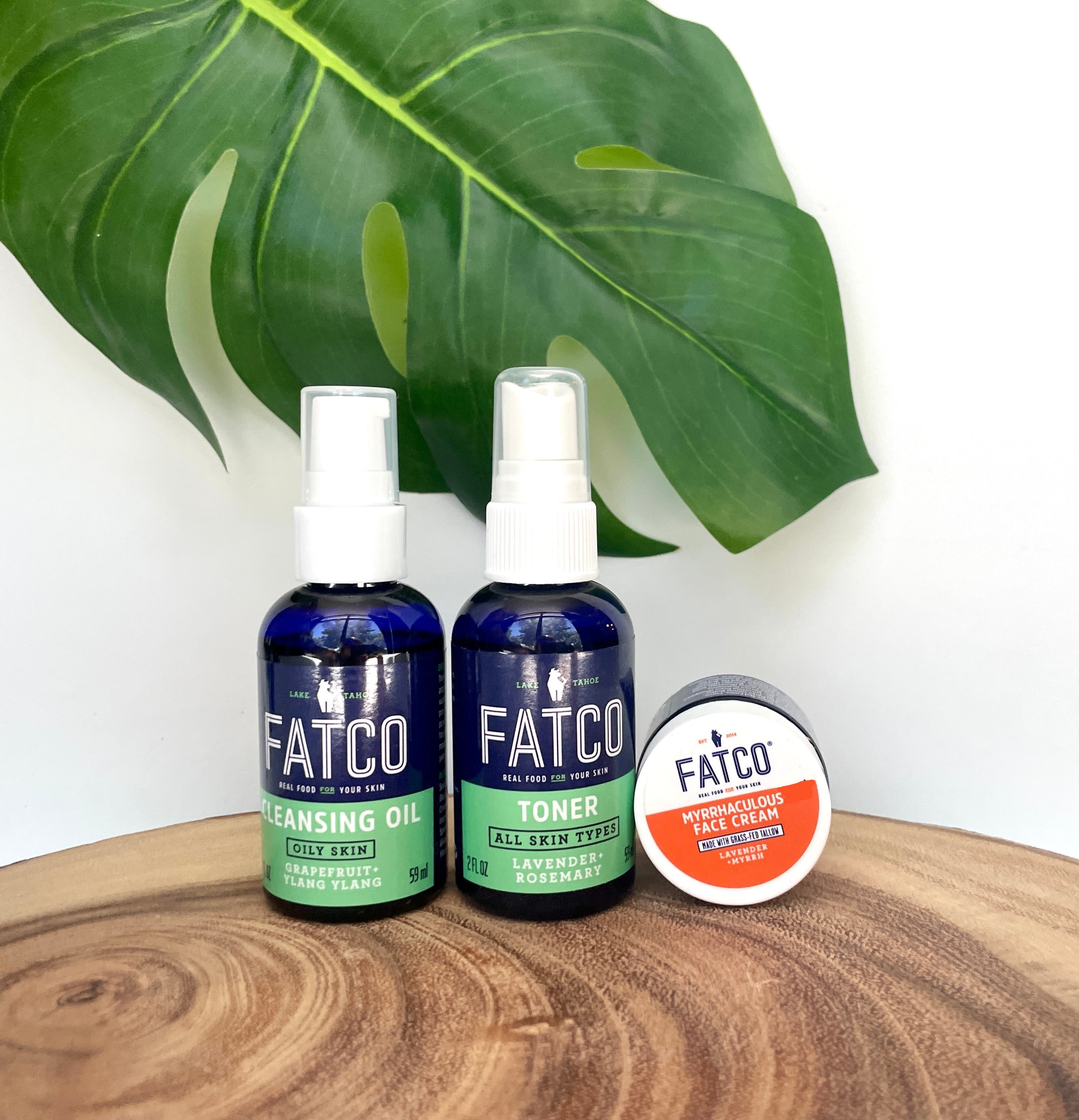
FATCO does not make a body lotion, and on this keyword that is worth saying plainly. What it makes is Body Butta, a whipped butter with no water in it. The Calming Body Butta panel runs tallow from grass-fed cows, coconut oil, cocoa butter, mango butter, shea butter, almond oil and olive oil. Beeswax, vegetable glycerin, avocado oil, magnesium oil and two essential oils finish it. Tallow and the skin's own surface lipids share high proportions of palmitic and oleic acid, so the fat is compatible with what the barrier already handles. The overlap is partial: skin also carries squalene, wax esters and sapienic acid that tallow does not. That is an emollient case rather than an anti-aging one. Calming is the scent in stock, since Invigorating is sold out in every size, and Baby Butta is the unscented member of the line.
FATCO Tallow Skincare
Grass-Fed. Suet-Sourced. Dry-Rendered.