Tallow Lotion and Body Butter: What They Are and How to Use Them

Tallow lotion and tallow body butter are the same fat in two different formats, and the difference between them is water. A lotion is tallow emulsified with water, which makes it thin enough to pump and quick to disappear. A body butter has no water in it at all, so every scoop is concentrated fat that you warm between your palms and spread thin. That one distinction drives the texture, the amount you need, how you store the jar, and how it behaves in a cold bathroom.
Key Takeaways
- Water is the whole difference. A lotion is an emulsion of water and fat, so it needs an emulsifier and a preservative. A body butter is anhydrous, with no water phase at all.
- Body butter is concentrated, so you need less of it. FATCO's instruction for Body Butta is a quarter-size dollop, warmed between the palms, for head to toe.
- Damp skin beats dry skin. Apply within about three minutes of the shower, while there is still water on the surface for the fat to seal in.
- Cold firms it up and heat softens it. Tallow is close to half saturated fat, so the jar sets hard in winter. Warm a scoop in your hands rather than digging at it.
- The benefit is occlusive and emollient at once. A body butter seals the surface and softens it in the same pass. A 2024 scoping review found tallow's main fatty acids overlap with the lipids of the skin's own surface, while cautioning that human research is thin.
What Tallow Body Butter Is
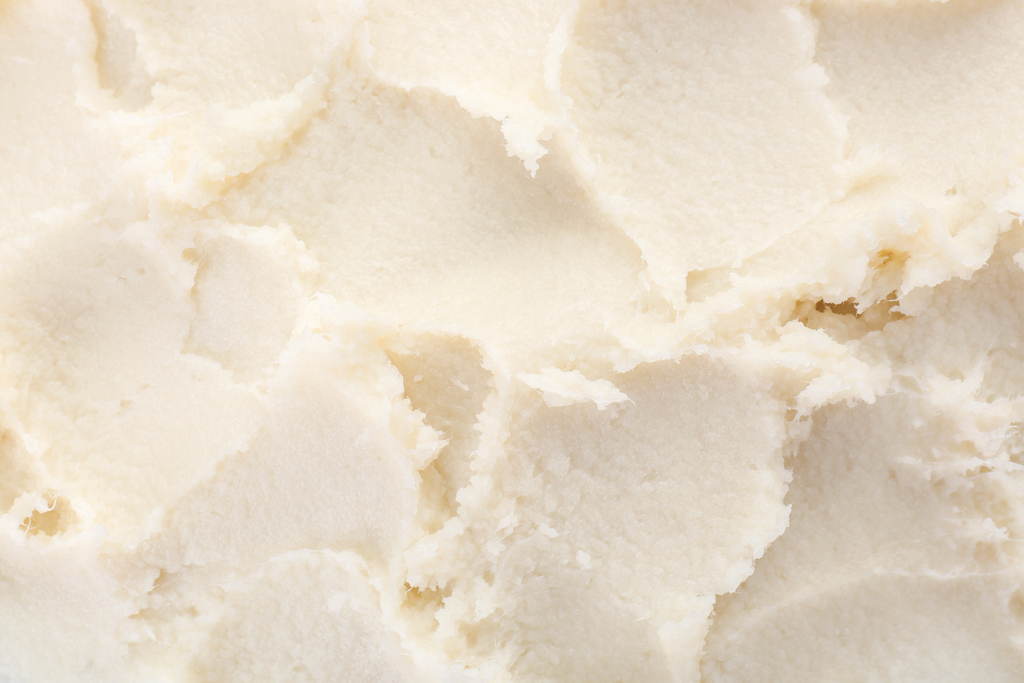
Tallow body butter is rendered beef fat whipped together with plant oils and butters into a soft, scoopable moisturizer that contains no water.
Tallow itself is rendered beef fat: fat from cattle melted at low heat, strained clean, and cooled into a firm solid. Skincare is only one place it ends up, alongside cooking fat and traditional soap. Whipping beats air into the tallow and the softer oils blended with it, so the finished product scoops like frosting instead of chipping like a candle.
FATCO's Calming Body Butta is a representative build. The label opens with tallow from grass-fed cows, then coconut oil, cocoa butter, mango butter, shea butter, almond oil and olive oil. Beeswax, vegetable glycerin, avocado oil, magnesium oil and two essential oils finish it. There is no water on that list. The glycerin is a humectant, a water-binding ingredient rather than water itself, and the beeswax gives the blend its structure.
Every fat on that list is solid at room temperature and liquid at skin temperature. That is the whole trick: firm in the jar, oil on contact.
Tallow Body Butter Benefits: What It Does for Skin
The benefits of a tallow body butter come from doing two jobs at once. It seals the surface the way an occlusive does, and it fills the spaces between skin cells the way an emollient does. That is the combination most dry skin moisturizers chase with a much longer ingredient list.
The compositional argument is the interesting one. A 2024 scoping review in Cureus reports that tallow is rich in oleic, palmitic, stearic and linoleic acids. Free fatty acids are also among the main lipids of the stratum corneum, so tallow shares fatty acids with the skin's surface lipids. That same review is candid that research gaps remain, so treat the overlap as a good reason to try tallow rather than a settled result.
Day to day, the benefits people notice come from the concentration. Nothing evaporates, so a thin layer keeps working for hours. The ingredient list is short enough to read in one go. And a single jar covers elbows, heels, shins, hands and cuticles, so it quietly replaces three products.
Two boundaries are worth naming. Facial skin is oilier and more prone to congestion than the skin below your neck, so whether tallow suits your skin type is worth reading first. For infants, FATCO's Baby Butta is a single-ingredient grass-fed tallow balm with no fragrance, preservatives or synthetics, a different proposition from a scented body butter.
Tallow Lotion vs Tallow Body Butter
A tallow lotion is tallow emulsified with water. A tallow body butter is tallow with no water in it. Everything else follows from that.
Water and fat do not mix on their own. A lotion needs an emulsifier to hold the two phases together, plus a preservative to keep microbes out of the water. That is not a knock on lotions, it is the cost of a thinner, faster-spreading product. Cleveland Clinic notes that products labeled as lotions contain more water and more alcohol than creams, which is why a lotion can leave genuinely dry skin wanting more.
An anhydrous butter skips both ingredients. There is nothing to emulsify and nothing water-based for microbes to grow in. FATCO describes its Body Butta line as having no water, no synthetic emulsifiers and no preservatives.
This matters when you shop, because plenty of products sold as tallow lotion are whipped anhydrous balms. If water or aqua is not in the ingredients, you are holding a balm whatever the front label says.
| Tallow lotion | Tallow body butter | |
|---|---|---|
| Water content | Usually the largest ingredient | None |
| Needs an emulsifier | Yes | No |
| Needs a preservative | Yes | No |
| Texture | Pourable or pumpable, absorbs fast | Firm in the jar, melts on contact |
| Amount per use | More, applied more often | Less, applied less often |
| Best for | Large areas, hot weather, anyone who dislikes residue | Dry skin, winter, rough patches, short ingredient lists |
Choose by the problem in front of you. If you moisturize head to toe every morning and want to be dressed a minute later, a lotion is the practical format. If your shins flake by January, the concentrated version holds better.
How to Apply Tallow Body Butter
Scoop a small amount with dry fingers, warm it between your palms until it turns to oil, then spread it thin over skin that is still damp from the shower.
Time it to the shower. Pat dry instead of rubbing and leave your skin slightly damp. Cleveland Clinic's guidance puts a three-minute window on it, so the moisturizer traps the water still on the surface. A steamy bathroom also softens the butter for you.
Warm it first. Rub the scoop between your palms for a few seconds until it goes glossy and liquid. Cold butter drags and streaks. Warm butter spreads.
Go thin, then go again. Long strokes up the legs and arms, then a second pass only where it is needed: shins, elbows, knees and heels.
Give it a minute. Fat and fabric do not get along immediately, so wait before dressing. A thin layer also works in place of shaving cream if you like a slower, more cushioned shave.

How Much Tallow Body Butter to Use
FATCO's instruction for Body Butta is a quarter-size dollop, warmed between the palms and applied head to toe. That is deliberately more than the pea-sized dab recommended for a tallow face cream, because you are covering far more skin in one go.
Concentrated formats change the feedback, not the principle. Across moisturizers, under-dosing is the common mistake, and a watery lotion hides it, since a layer spread too thin evaporates without leaving much behind. A butter tells you sooner, because unabsorbed fat shows up straight away as shine.
Spread the dollop thin and add a second pass on the dry spots rather than one heavy coat. If your skin still looks glossy ten minutes later, make the next application smaller.
Working With the Texture in Cold Weather
In a cold room a tallow butter sets hard, and the fix is warmth rather than force.
Tallow is close to half saturated fat, which is what makes it solid at room temperature and firmer still in an unheated bathroom in February. USDA reference data puts beef tallow at 49.8g saturated fat per 100g. Four habits help:
- Scrape a thin curl off the top with a fingernail or a small spoon rather than digging out a lump.
- Hold the closed jar in both hands, or keep it in a pocket, for a minute before you open it.
- Warm the scoop between your palms longer than you would in summer, until it is fully liquid.
- Skip the microwave and the radiator. Melting the whole jar once changes the texture for good.
Heat causes the opposite problem. A jar left in a hot car can go liquid and then reset grainy, because the fats in the blend firm up at different temperatures. It has not spoiled, but the whipped texture will not come back on its own.
Storage and Shelf Life
Keep the jar cool, dry, closed and out of direct sun, and keep water out of it.
The no-water formula is what makes storage simple. With no water phase there is nothing for microbes to grow in, which is why FATCO's Body Butta carries no preservatives. The catch is that you can add water yourself. Wet fingers drip into the jar, and that is what shortens an anhydrous product's life. Dry hands or a small spoon solve it.
For shelf life, go by the jar rather than a rule of thumb, since it depends on which oils are in the blend. Check the printed date or the period-after-opening symbol. Trust your nose too. Fats eventually oxidize, and the first sign is a sharp, crayon-like smell where there used to be a clean one.
Heat accelerates all of that. A bathroom shelf away from the shower spray is fine. A windowsill and a car glovebox are not.

Got Questions?
Tallow Body Butter FAQ
Q What is tallow body butter?
Tallow body butter is rendered beef fat whipped with plant oils and butters into a soft, scoopable moisturizer. It contains no water, so it is concentrated fat rather than an emulsion. That is why it stays firm in the jar and melts into oil at skin temperature.
Q What is tallow lotion?
Tallow lotion is tallow blended with water into an emulsion, held together by an emulsifier and kept stable by a preservative. The added water makes it thinner, faster to spread and quicker to absorb than a body butter, at the cost of concentration per application.
Q What is the difference between tallow lotion and tallow body butter?
Water. A lotion contains water, so it needs an emulsifier and a preservative and feels light on the skin. A body butter contains no water, so it needs neither, feels richer and lasts longer per application. Read the ingredient list rather than the front label.
Q How do you use tallow body butter?
Scoop a small amount with dry fingers, warm it between your palms until it liquefies, then spread it thin on damp skin within a few minutes of showering. Concentrate the second pass on shins, elbows, knees and heels, and wait a minute before dressing.
Q What are the disadvantages of tallow for skin?
Tallow is rich, and it can feel heavy or greasy on the face or in humid weather. It is an animal product, so it is not vegan. Research specific to tallow in skincare is still limited, and the scent and texture are not to everyone's taste.
Q Can you use tallow on a baby's skin?
Yes, plain tallow balms are widely used on infants, though a fragrance-free single-ingredient formula suits delicate skin better than a scented body butter. FATCO's Baby Butta is exactly that: grass-fed tallow with no fragrance, preservatives or synthetics. Patch test a small area first.
The FATCO Alternative
If you came here looking for a tallow lotion, FATCO does not make one, and that is on purpose. Body Butta is the concentrated version of the same idea: grass-fed tallow, plant butters and oils, beeswax and essential oils. No water to dilute it, and no preservative system needed to keep that water safe. It comes in Calming, scented with lavender and clary sage, and Invigorating, scented with orange, ginger and ylang ylang. A quarter-size dollop covers you head to toe, which is why a small jar goes a long way.