Beard Butter vs Beard Balm: Picking the Right Texture

Beard butter is a wax-free blend of plant butters and oils that conditions facial hair with little hold, while beard balm adds beeswax for a firmer texture that both conditions and styles. The difference is the wax, and manufacturers say so plainly on their own labels. The two get used interchangeably online, but they are built differently, feel different in your hands, and solve slightly different problems once they hit your face.
Key Takeaways
- Beard butter is wax-free. It leans on shea, mango, kokum, or cocoa butter for a soft, creamy texture that melts on contact and offers a light natural hold at most. Some brands whip theirs; the defining trait is the missing wax, not the whipping.
- Beard balm adds beeswax (or a plant wax). That single ingredient difference makes balm firmer, gives it light-to-medium styling hold, and means it needs to be warmed between your palms before applying.
- Butter is skincare-first, balm is skincare-plus-styling. If your only goal is conditioning the skin and hair, butter does the job without leaving any stiffness behind.
- The skin under the beard matters as much as the hair on top. Whichever texture you choose, you're moisturizing skin that is prone to ingrown hairs, seborrheic dermatitis and irritation from shaving at the edges.
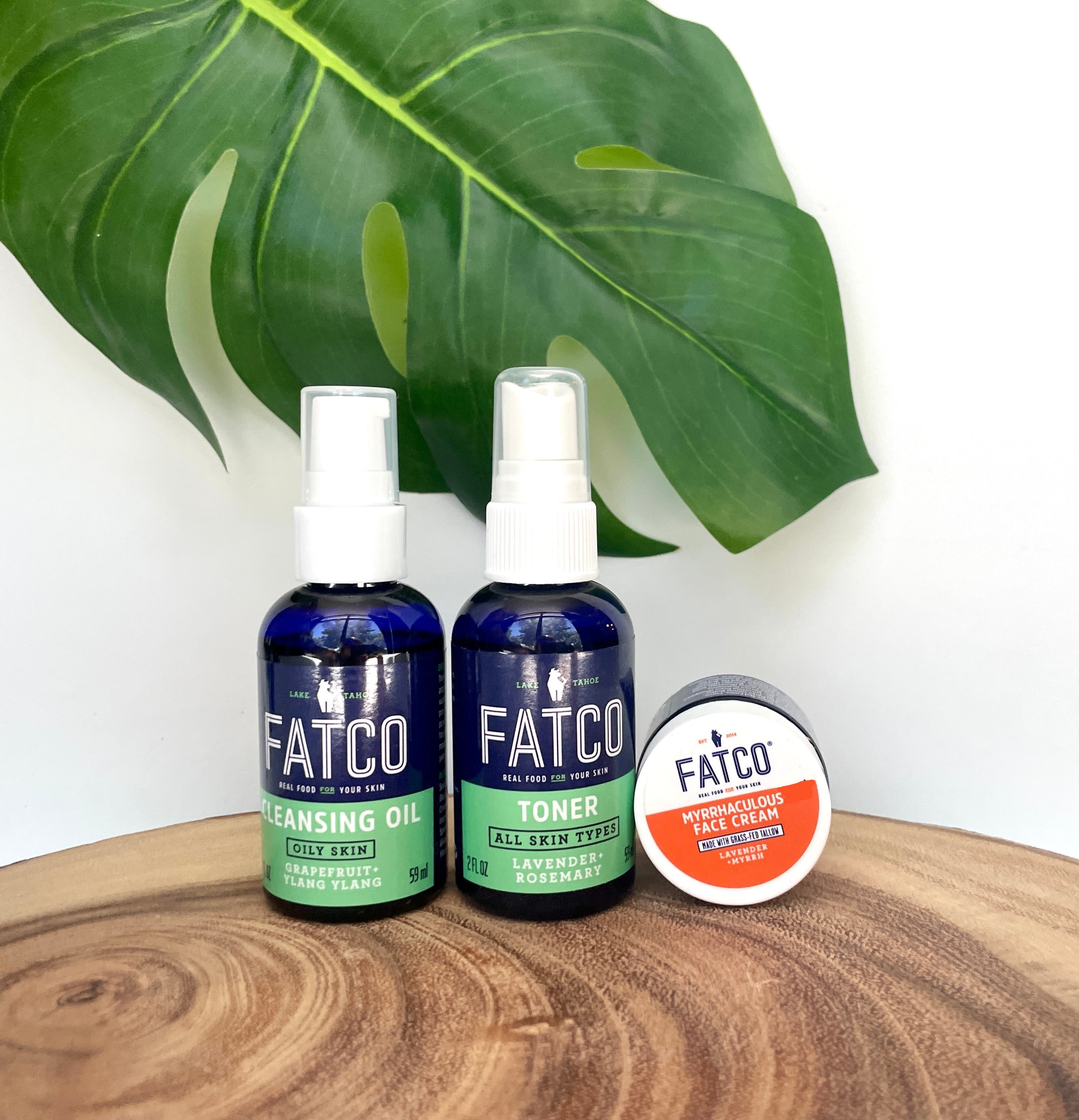
- FATCO doesn't make a dedicated beard product. Its full catalog carries no beard item, verified against the live store. The Fat Stick's beeswax and grass-fed tallow base is chemically similar to a balm, without the men's-grooming branding.
What Beard Butter and Beard Balm Actually Are
Both products start from the same idea: facial hair and the skin underneath it need more moisture than a standard face wash and a quick towel-dry can provide. Where they diverge is in formulation.
Beard butter is built from plant butters, usually shea, mango, kokum, or cocoa butter, blended with carrier oils like jojoba or argan and no wax at all. Some are aerated, and whipping incorporates air into a fat as it cools, which lightens the texture. Whipped or not, a wax-free butter melts on contact with body heat and leaves the beard soft without much structure.
Beard balm starts from a similar base of butters and oils, then adds beeswax (or a plant-based alternative like candelilla wax, the same substitute used in vegan formulas). That single addition changes everything: balm sets up firmer in the tin, needs a few seconds of friction between your palms to liquefy, and leaves behind a light tackiness that tames flyaway hairs.
You do not have to take this on trust. One beard-care brand states the split on its own product page: its balm contains beeswax and is the option for taming flyaways, while its butter has no beeswax and therefore a softer, creamier consistency with a lighter natural hold. The confusion between the two comes from marketing more than chemistry, so checking the ingredient list for beeswax or another wax is the fastest way to know which one you're actually holding.
Texture, Hold, and Day-to-Day Use
The practical difference between these two products comes down to three things: how they feel going on, whether they style anything, and how long they last on the hair.
Texture going on: Butter spreads like a thick lotion the moment it touches skin; scoop it straight from the jar and rub it through a beard in seconds. Balm needs a warm-up step. Rub a pea-to-thumbnail-sized amount between your palms first, or it will sit in clumps instead of distributing evenly.
Hold: This is the real dividing line. Butter offers a light natural hold at most; it conditions the hair shaft and lets it fall naturally. Balm's beeswax content provides light-to-medium hold, which is the phrase two separate manufacturers use on their own balm pages, enough to tame flyaways and shape a beard's general direction, but not enough to sculpt it the way a wax or pomade would.
Leave-in vs. styling: Think of beard butter as a leave-in conditioner and beard balm as a leave-in conditioner with light styling built in. A shorter beard that only needs occasional conditioning suits butter's simplicity. A longer beard that needs daily shaping is where balm's hold earns its place in the routine.
Skin-Conditioning: The Part Most Guides Skip
Most beard-product comparisons focus entirely on the hair. The skin underneath gets mentioned almost as an afterthought, which is backwards, since skin problems are usually what send people searching for a beard product in the first place.
Yale Medicine's dermatologists list what actually goes wrong under a beard, and it is worth being precise about the causes rather than reaching for "trapped dirt." Skin irritation, ingrown hairs, dandruff, and acne all come into play when you stop shaving. Ingrown hairs, clinically pseudofolliculitis barbae, happen in the stubble phase when a cut hair curls back into the skin, and they are more likely with curly facial hair. Beard dandruff is seborrheic dermatitis, and Yale is explicit that although it looks like a hygiene problem, it is not: it involves an immune reaction to a yeast called Malassezia.
Neither of those is something a moisturizer fixes. What beard butter and beard balm do is address the ordinary dryness underneath: they moisturize the skin layer beneath the hair, not just coat the hair shaft. The fatty acids in shea, cocoa, and mango butter work the same way a face moisturizer does, which matters most during the early growth phase when itching is worst.
This is where tallow-based options earn a place in the conversation, on a narrower claim than the usual one. Beef tallow's fatty acid profile is led by oleic and palmitic acid, and palmitic acid is the most abundant fatty acid in sebum too, so the overlap is real. It is also partial: sebum's leading monounsaturated fatty acid is sapienic acid, unique to human sebum and absent from tallow, sebum carries squalene and wax esters that tallow lacks, and stearic acid, tallow's third-largest component, is not a sebum fatty acid. Shared fatty acids, not a copy.
Which Suits Which Beard (and Skin Type)
The right texture depends less on personal preference and more on two practical factors: beard length and skin sensitivity.
Short beards and stubble suit butter best. There's minimal hair to style, so hold is irrelevant, and the lighter texture won't feel heavy on a face that's mostly skin with a dusting of hair on top. Medium-to-long beards lean toward balm, since longer hair develops more flyaways and tangling that benefit from light hold, and the beeswax helps protect hair from wind and dry air.
On the skin side, sensitive or acne-prone skin generally does better starting with butter's lighter, faster-absorbing texture, since it leaves less product sitting on the surface; patch-test along the jawline before committing to daily use. Dry or flaky skin under the beard benefits more from balm's longer-lasting wax layer, though it's worth starting with a smaller amount than the label suggests. The early growth phase, when a freshly cut hair still has a sharp edge that scratches the follicle as it grows out, is the stretch most people find itchiest, and a lighter butter applied more often is the easier thing to live with there.
How to Choose: Beard Butter vs Beard Balm
| Attribute | Beard Butter | Beard Balm | FATCO Fat Stick (alternative) |
|---|---|---|---|
| Base | Shea, mango, kokum, or cocoa butter, no wax | Butters and oils plus beeswax or plant wax | Beeswax first, then grass-fed tallow |
| Hold | Light natural hold at most | Light to medium | Light, balm-like (contains beeswax) |
| Finish | Light, fast-absorbing | Slightly tacky, protective film | Absorbs into skin, not beard-specific |
| Best for | Short beards, stubble, sensitive skin, new growth | Medium-long beards, flyaway control, drier climates | General face and skin conditioning, not styling |
| Skin benefit | Moisturizes without residue | Moisturizes and protects longer | Shares palmitic and oleic acid with skin surface lipids, though not sebum's full profile |
The Fat Stick isn't built or marketed as a beard product; FATCO doesn't currently make one. It's included here because beeswax and grass-fed tallow put it in the same chemical family as a balm, and a tallow-based stick is a reasonable option for conditioning the skin under a beard with an ingredient list built around recognizable fats rather than synthetic emulsifiers. Worth knowing before you buy: four of the five Fat Stick scents are scented with essential, fruit or coffee oils, and the Baby Fat Stick is the unscented one.
How to Apply Either One
- Apply to a clean, slightly damp beard after washing, while skin is more receptive.
- For balm, warm a small amount between your palms until it liquefies before working it through the beard. For butter, scoop directly and rub between palms briefly.
- Distribute into the skin underneath, not just the surface hair, then use a beard comb to even it out and detangle.
- Start with less than you think you need; reapplying is easier than washing out an over-application.
A Few Honest Caveats
Neither product replaces basic beard hygiene. Both work best layered on top of regular washing, not as a substitute for it; a beard that traps sweat, dirt, and dead skin stays irritated no matter how good the moisturizer underneath is.
Beeswax-based balms aren't suitable for anyone avoiding animal-derived ingredients beyond dietary preference; vegan formulas substitute candelilla or carnauba wax, which behave similarly but aren't identical in feel. And "lighter" doesn't mean "non-comedogenic" for everyone, so patch-testing along the jawline before full-face use remains the safest approach.
Got Questions?
Beard Butter FAQ
Q Is beard butter better than beard balm?
Neither is objectively better; they serve different needs. Butter suits short beards, sensitive skin, or anyone who wants conditioning without styling hold. Balm suits medium-to-long beards that need flyaway control and a longer-lasting protective layer.
Q Can I use beard butter and beard balm together?
Yes. A common approach is using a lighter butter for daily conditioning and switching to balm on days when more styling hold is needed. Layering too much product at once can leave hair looking greasy, so apply in thin amounts and build up if needed.
Q Does beard balm or butter help with beard itch?
Yes, both help indirectly by moisturizing the skin under the beard, a main contributor to itch during new growth. According to a medically reviewed overview, an itchy beard often stems from dry skin, sharp new hairs scratching follicles, or ingrown hairs. Neither treats folliculitis or seborrheic dermatitis; see a dermatologist if itching persists.
Q What ingredients should I avoid in a beard butter or balm?
Watch for synthetic fragrance, a common irritant on already-sensitive beard-area skin, along with mineral oil or petrolatum if you're specifically looking for a plant- or animal-fat-based formula. Beyond that, ingredient quality varies more by brand than by butter-versus-balm format.
Q How often should I apply beard butter or balm?
Once daily after washing is typical for most beard lengths. Butter's lighter texture means some people reapply a small amount midday if their skin runs dry, while balm's longer-lasting film usually only needs one daily application.
Q Does FATCO make a beard butter or beard balm?
No. A check of FATCO's full live catalog returns no beard product at all. Its line focuses on tallow-based skincare for the face and body rather than men's grooming. The closest equivalent is the Fat Stick, a 0.5 oz beeswax and grass-fed tallow stick FATCO describes as being for dry lips, rough dry patches on the face, elbows and knees.
The FATCO Alternative
If you're after a tallow-based option for the skin under your beard rather than a dedicated grooming product, the Fat Stick is built from beeswax and grass-fed tallow, the same wax-plus-fat combination that gives beard balm its conditioning-plus-light-hold texture. It won't replace a beard-specific butter or balm for styling a longer beard, but for conditioning reactive, post-shave, or stubble-stage skin with a short, recognizable ingredient list, it's worth a look. Our guide to choosing a tallow balm covers the same multi-use territory for the rest of your face and body.