Whipped Tallow: How Air Changes the Way Beef Fat Feels on Skin

Whipped tallow is beef tallow that has been aerated through mechanical mixing until it reaches a light, creamy consistency, similar to whipped butter, and that change in texture makes a real difference in how it feels and absorbs on skin.
Key Takeaways
- Whipping tallow incorporates air and breaks up the fat crystal structure, creating a softer, faster-melting balm compared to solid rendered tallow.
- Tallow shares two of its main fatty acids, palmitic and oleic, with the skin's surface lipids. The overlap is partial: stearic acid, another of tallow's three largest components, is not one of them.
- You can make whipped tallow at home with a stand mixer, a few add-ins of your choice, and rendered tallow at the right temperature.
- Homemade whipped tallow has no preservative system at all. Being water-free is what keeps it stable, so the whole job is keeping water out. Any moisture that gets into the jar has nothing stopping it.
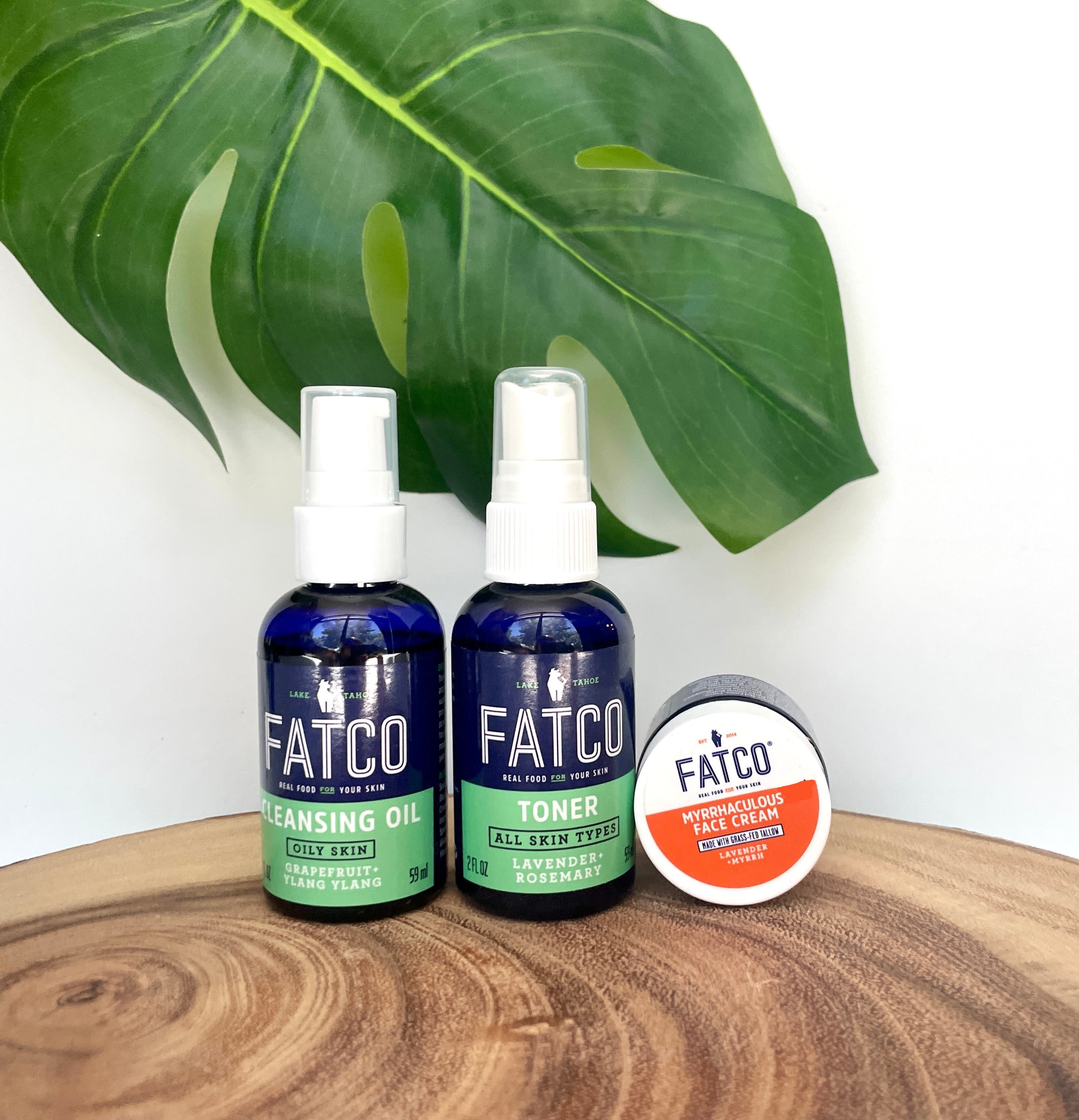
- FATCO uses grass-fed beef tallow as the base for its tallow skincare, including the Myrrhaculous Face Cream and the Body Butta range. Pasture-finished cattle carry more vitamin E in their fat than grain-finished cattle do.
What Is Whipped Tallow?
Tallow is rendered beef fat. The grade most used in skincare comes from suet, the fat from around the kidneys, which renders to the cleanest and most neutral result; it is the cut FATCO names as its own source. In its solid state, tallow looks and feels like a firm off-white block at room temperature, similar to coconut oil but denser. It melts on contact with warm skin, but that solid starting point means it can feel heavy on first application.
Whipped tallow is the same fat after it has been beaten with a mixer at the right temperature, usually when the tallow has cooled to just below its setting point but hasn't fully hardened. The agitation traps air throughout the fat, creating small bubbles that break up the dense crystal structure. The result is a soft, mousse-like balm that scoops like thick whipped cream and melts into the skin faster than solid tallow.
How Whipping Changes the Texture and the Experience
When fats crystallize as they cool, they form tight lattices of fat molecules packed closely together. Mechanical agitation during the cooling phase interrupts this process. The fat still solidifies, but in a much looser arrangement with air pockets throughout. Those pockets do a few things:
- Lower the density: whipped tallow feels significantly lighter on the finger than solid tallow.
- Feels like it softens faster: the lower density means it warms and spreads at body heat almost immediately, even though the fat's true melting point is unchanged.
- Improve spreadability: less force is needed to spread it, which means less friction and a more comfortable application.
The fat itself hasn't changed. The fatty acid profile of whipped tallow is identical to solid tallow; it just behaves differently once the texture opens up.
The Fatty Acid Angle: Why Tallow Works on Skin
Tallow's case for skin comes down to its fat composition. USDA reference data for beef tallow puts oleic acid at about 38 percent of total fatty acids, palmitic at about 26 percent, and stearic at about 20 percent.
Two of those, palmitic and oleic, are also present in the skin's surface lipids, and that is a genuine point of compatibility. It is worth being precise about how far it goes, because the category routinely overstates it. Skin's leading monounsaturated fatty acid is sapienic acid, which tallow does not contain. Sebum also carries squalene and wax esters that tallow lacks. And stearic acid is not one of sebum's fatty acids at all.
The barrier itself is a related but separate thing. Cleveland Clinic describes the skin barrier as a brick wall whose mortar is a mix of ceramides, cholesterol and fatty acids. Tallow does not supply ceramides or cholesterol, so it is not replacing that mortar. What an emollient like tallow does is sit on top and slow water loss while the skin barrier does its own repair work.
Grass-fed tallow also carries fat-soluble vitamins, chiefly vitamin E with a trace of vitamin D. Do not extend that list. USDA reference data for beef tallow lists vitamin A and vitamin K1 at zero, and the Weston A. Price Foundation's own lab testing of animal fats concluded that tallow is not a good source of vitamin A either. Vitamin E is the one that pasture finishing reliably raises.
Traditional Use: Humans Have Done This for a Long Time
Animal fats used as skin preparations are not a new idea. Before petroleum-derived products became widely available, rendered animal fats were the ordinary base for salves and balms across many cultures.
The case for using beef tallow in your skin care routine isn't built on novelty; it's built on a long track record. Modern clean-skincare brands like FATCO have formalized the process with consistent temperature control and traceable ingredient sourcing.
How to Make Whipped Tallow at Home
If you want to try whipped tallow before buying, here is a straightforward approach.
Read this first. Homemade whipped tallow contains no preservative. That is fine as long as it stays anhydrous, because microbes need water, but it means the product has nothing in it to fall back on if water gets in. The FDA makes the same point about consumer cosmetics generally: it asks people to consider the increased risk of contamination in products containing non-traditional preservatives or none at all, and notes that "all natural" products with plant-derived ingredients can have an unusually short shelf life. Every instruction below about dry equipment and dry hands is doing real work.
What you need:
- 1 cup rendered tallow, at room temperature (ideally grass-fed, from a supplier you can ask questions of)
- Optional: 1 to 2 tablespoons of a light carrier oil (jojoba, rosehip, or argan work well)
- Optional: essential oil for scent, a few drops at a time
- Stand mixer or hand mixer with whisk attachment
- A clean, completely dry glass jar with a lid
On essential oils: they are fragrance ingredients, not a gentler alternative to fragrance. The FDA notes that components of fragrance formulas can cause allergic reactions or sensitivities in some people, and advises anyone concerned about fragrance sensitivity to choose fragrance-free products and read the ingredient list. Lavender and rose in particular contain linalool, geraniol and citronellol, the components EU labelling rules single out as common sensitisers. If you are making this for reactive skin, a baby, or your own face, the safest version is the one with no scent in it. If you do add scent, patch-test the finished batch on your inner forearm before putting it anywhere else.
Steps:
- Render and cool your tallow to room temperature. It should be soft and slightly hazy but not fully liquid. If it is fully solid, gently warm the jar in a water bath until barely soft, then let it cool again. Keep water well away from the tallow itself while you do this.
- Place the tallow in a dry stand mixer bowl or deep mixing bowl.
- Start mixing on low, then gradually increase to medium-high.
- If using a carrier oil, drizzle it in while mixing.
- Whip for 5 to 10 minutes until the texture turns light and mousse-like, with soft peaks.
- Add essential oils if using, and mix briefly to incorporate.
- Spoon into a clean, dry glass jar. It will stay whipped as long as it isn't heated.
Shelf life: There is no published shelf life for homemade whipped tallow, and any number you see quoted is somebody's rule of thumb rather than a tested figure. The FDA's own guidance is that even printed expiration dates on commercial cosmetics are "rules of thumb," and that a product's safety can expire well before the date if it has been stored badly. So judge yours by the product, not the calendar. Rendered fat that has gone rancid smells sharp, waxy, or like old crayons, and it should be thrown out when it does regardless of how long you have had it. Keep the jar cool, dark, sealed and dry, use a clean dry spoon rather than fingers, and make small batches rather than big ones.
Common mistakes: Starting with tallow that is too cold makes whipping difficult and produces a grainy texture. Starting with tallow that is too warm gives a greasy result that won't hold peaks. Ordinary room temperature is the target; if your kitchen is warm enough that the tallow looks glossy or slumps, chill it briefly and try again.
What to Use Whipped Tallow For
Whipped tallow is versatile. Common uses include:
- Face moisturizer: A pea-sized amount applied after cleansing. Less is more on the face; start with a minimal amount and see how your skin responds.
- Body balm: Elbows, knees, feet, and rough patches respond well. The whipped texture spreads over larger areas far more easily than solid tallow.
- Hand cream: Absorbs without leaving a greasy film, making it practical for daytime use.
- Lip balm: The same fatty acids that work on skin work on lips. A small amount applied before bed soothes dry, cracked lips. FATCO's Fat Stick is a tallow-based balm stick the brand describes as a lip balm, cuticle repair and lotion stick in one tube.
- After-shave balm: The calming, emollient properties make it a good option for irritated post-shave skin.
Is Whipped Tallow Right for Every Skin Type?
Most skin types tolerate whipped tallow well. People with very oily skin sometimes find tallow too rich for daily face use and prefer using it at night or limiting it to drier areas. Tallow is not formally rated on the comedogenic scale in the way some synthetic oils are; it is generally considered low-risk, though individual responses vary.
If you are new to tallow, a patch test on the inner forearm for a few days before using it on your face is a practical starting point. FATCO's guide on tallow for different skin types covers this in more detail.
Got Questions?
Whipped Tallow FAQ
Q What is whipped tallow made of?
Whipped tallow is rendered beef fat, typically suet from grass-fed cattle, mechanically aerated by whipping with a mixer. It may also include carrier oils like jojoba or rosehip and optional essential oils for scent. The base fat is simply tallow; whipping changes the texture, not the underlying formula.
Q Is whipped tallow the same as tallow balm?
Similar but not identical. Tallow balm can describe any tallow-based topical, including solid versions and blends with beeswax or plant oils. Whipped tallow specifically means tallow aerated to a soft, creamy texture. Plenty of products marketed as tallow balm are not whipped at all, so check how the brand describes the texture rather than assuming.
Q How does whipped tallow feel on the skin?
Lighter and less waxy than solid tallow, and much lighter than petroleum-based balms. It melts quickly against body heat and absorbs within a few minutes. Most people describe the finish as similar to a thick body butter, but with a drier, less greasy feel on the skin.
Q Is whipped tallow better than regular solid tallow?
Neither is objectively better; whipping changes texture, not the fatty-acid profile. Whipped tallow spreads more easily and absorbs faster because air pockets lower its density and let it soften at body heat. Solid tallow works fine for smaller areas, but whipped is generally easier to apply over the face or larger body areas.
Q How long does homemade whipped tallow last?
There is no tested figure, because a homemade batch has no preservative system and no stability testing behind it. Judge it by smell rather than by date: rancid fat smells sharp or waxy and should be discarded. Keep water out, use a clean dry spoon rather than fingers, store it cool and sealed, and make small batches.
Q Can I buy tallow balm instead of making it myself?
Yes. Several clean-skincare brands sell ready-made tallow balms. Check the tallow source, the rest of the oil blend, and whether the product is scented, since most are. FATCO's Body Butta is a grass-fed tallow body moisturizer blended with cocoa, mango and shea butters plus plant oils. Note that the Calming and Invigorating versions are scented with essential oils; Baby Butta is the one with no added scent.
The FATCO Alternative
Making your own whipped tallow is satisfying, but getting the temperature, the timing, and the sourcing right has a learning curve, and a homemade jar has no preservative behind it if you get the water discipline wrong. FATCO's tallow skincare skips all of that. Its Myrrhaculous Face Cream and its Body Butta range are both built on tallow from grass-fed cows and blended with plant oils, made in the USA, with the full ingredient panel published on every product page. If you're ready to try tallow skincare without the DIY batch, start here.