Non-Comedogenic Cleanser: What the Claim Is Worth

"Non-comedogenic" is not a test result. No agency defines it, no laboratory certifies it, and the ratings behind it were produced on the ears of albino rabbits. On a cleanser the gap widens, because the claim describes a formula you rinse off while the numbers behind it come from raw ingredients left on skin for weeks.
Key Takeaways
- The phrase began as a formulator's goal, not a regulator's standard. It is the title of a 1976 paper in Cutis by James Fulton and colleagues, who screened ingredients on the only model they had, the rabbit.
- The ratings came from rabbit ears. Neat ingredients were applied to the inner surface of the ear flap, or the ear canal, of albino rabbits, often under occlusion, for two to four weeks.
- The rabbit overcalls it. Mills and Kligman built a human model in 1982 and reported that the rabbit model is more sensitive than the human one.
- The claim is about a finished formula. The numbers are about undiluted ingredients. Those are different questions, and a 2006 human study found the answers diverge.
- FATCO makes no liquid face wash, and its own oily-skin cleansing oil page uses the word anyway. Read our label the way you would read anyone else's.
Where the Word Came From
The idea arrived in 1972, when Albert Kligman and Otto Mills described "acne cosmetica" in Archives of Dermatology. They meant small closed comedones on the cheeks, chin and forehead of women who used cosmetics daily. Four years later a group led by the dermatologist James Fulton went looking for a fix, and their paper in Cutis was titled "Non-comedogenic cosmetics". That is where the phrase on your bottle starts.
The method sentence is the one worth reading. The need for a comedogenic-free cosmetic for acne patients, they wrote, led to a study run on the only model available to them: the rabbit. They screened ingredients and built a cover-up cosmetic from the ones that came back clean. Using it in acne-prone women, they reported, cut acne cosmetica among their clinic patients from 25 percent to under 5 percent.
So the claim was never a regulatory category. It was a formulation target, coined by people who said in the same breath that they had one animal to test it on.
What the Rabbit Ear Test Actually Involved
A test substance goes on the inner pinna, meaning the inside surface of the ear flap, or on the external ear canal of an albino rabbit. It stays there once or several times weekly for two to four weeks, often under occlusion. Kligman and Kwong refined it for the British Journal of Dermatology in 1979. Their version applied materials for two weeks just outside the ear canal, then lifted a sheet of epidermis in hot water so microcomedones could be counted under a stereomicroscope.
Fulton's 1984 paper in the Journal of the American Academy of Dermatology, which produced the ingredient list most charts still copy, says the quiet part in its own abstract. The data were gleaned from the rabbit ear assay, "which is not an ideal animal model but is the best we have".
It also did not reproduce well between laboratories. Tucker and colleagues built an objective version of the assay for Archives of Dermatology in 1986. Controversy existed about the standard assay's reliability, they wrote, because results differed from lab to lab. They added that the subjective nature of the usual grading method may contribute to that variation.
Then the human check. Mills and Kligman applied substances under occlusion for one month to the upper backs of volunteers with large follicles. Their finding was flat: "The rabbit model is more sensitive than the human." Substances that were weakly comedogenic in the rabbit, they wrote, are probably safe for people, with the possible exception of acne-prone ones.
Where the Numbers on the Charts Come From
Two papers sit behind the numbers, both in the Journal of the Society of Cosmetic Chemists. The 0 to 5 grading is credited to Morris and Kwan in 1983, which is what the 2025 JAAD Reviews clinical review cites for the scale. Fulton published a second ingredient survey there in 1989, five years after the tables in his 1984 paper. An American Academy of Dermatology expert panel endorsed the grading that same year, advising that ingredients scoring 0 to 1 could be treated as safe for acne-prone people.
Neither of those two journal papers is indexed in PubMed, and neither is freely readable, so nearly everyone quoting their numbers is quoting a copy of a copy. The 2025 review traces today's consumer checkers back to the original Kligman and Mills ingredient list. It is blunt about what they are: informal databases and comedogenicity-checking platforms built by consumers and brands, "not governed by scientific or regulatory standards". Our own reference on which ingredients carry a published rating marks that difference row by row. Most of the entries people expect to find have no number in either direction.
The Claim Is About a Formula. The Numbers Are About Ingredients.
Every rating on every chart came from applying one ingredient on its own, usually undiluted. A team writing in Contemporary Clinical Trials Communications in 2021 put it plainly. Those ratings came from testing ingredients at 100 percent concentration in the rabbit ear assay, and their comedogenic potential "cannot be taken to be the same as finished products".
The check had already been run. Draelos and DiNardo tested finished cosmetics on human volunteers for the Journal of the American Academy of Dermatology in 2006. Six people wore patches on the upper back three times weekly for four weeks. Their conclusion was that finished products using comedogenic ingredients are not necessarily comedogenic. Six people is a small study, and they say so. It still points one way. Related, and often confused with it: occlusive and comedogenic are different properties, so a rich texture is not a warning sign on its own.
The 2025 review arrives at the same place. The quantity of ingredients and the way they combine matter, which is why testing finished formulas is essential, and the FDA has no legal definition for the term. The word appears nowhere on the FDA's cosmetics labeling claims page, in its cosmetics labeling guide, or on its page separating a cosmetic from a drug.
And a Cleanser Rinses Off
Put the protocols next to the product and the mismatch is hard to miss.
| Test | What was applied | Where | For how long |
|---|---|---|---|
| Rabbit ear assay, 1970s on | one neat ingredient, often occluded | inside of a rabbit's ear flap or ear canal | 2 to 4 weeks |
| Mills and Kligman human model, 1982 | test substance under occlusion | upper back | one month |
| Draelos and DiNardo, 2006 | 0.2 to 0.5 mL of a finished cosmetic | upper back | 4 weeks |
| Waranuch and colleagues, 2021 | a finished cream on a pad | upper back | 4 weeks |
| Your cleanser | a diluted formula, then rinsed away | your face | as long as it takes to wash |
Two things fall out. Every published protocol is leave-on and occluded, and a face wash is neither. And every human protocol tests the upper back, which the 2025 review flags directly, since the intended use is the face.
That does not make the claim meaningless. It makes it untestable by the only methods anyone has published, which leaves the ingredient list. On a cleanser the interesting line is rarely the plant oil near the bottom. Sodium lauryl sulfate, a foaming surfactant, sits at 3 to 4 on the 2025 review's own table, noted there for irritation and potential comedogenicity, again as a raw ingredient. Beyond that, the surfactant and the pH tell you more about how a wash will treat your face than any adjective printed above it.
The review saves its sharpest observation for this aisle. Isopropyl myristate, the ingredient it calls the highest rated on the whole scale, turns up in "cleansers often marketed as noncomedogenic".
What to Do With the Word Instead
Read it as intent and check the panel. Dermatology's own patient advice does something close to that. The American Academy of Dermatology tells acne-prone readers to look for "Oil-free", "Non-comedogenic" or "Won't clog pores" on a moisturizer container. It then words the payoff carefully, saying such a product is "unlikely to cause acne". Unlikely is honest. Tested is what the label implies.
Then run the studies' own clock on yourself. Every human protocol above ran about four weeks, which is a fair trial for a new wash and a better answer than a chart. If breakouts are the actual problem, what actually helps breakouts is a question about actives and technique rather than about a word on a carton.
Got Questions?
Frequently Asked Questions
Q Is the term non-comedogenic regulated?
No. The FDA has no legal definition for it, and no agency approves the claim before a product reaches a shelf. The 2025 JAAD Reviews clinical review states this directly and adds that manufacturers can therefore make the claim without regulation. Nothing is filed anywhere a shopper can read it.
Q What is a non-comedogenic facial cleanser?
It is a cleanser whose maker believes the formula will not add to pore plugs. No standard test qualifies a product for the phrase, and no result sits behind it. The word describes an aim rather than a finding, so the ingredient list is the part you can actually check.
Q Is non-comedogenic good for acne prone skin?
It is a reasonable filter and a weak guarantee. The American Academy of Dermatology does tell acne-prone readers to look for it, while wording the benefit as unlikely to cause acne rather than certain. Individual response varies enough that a four-week trial beats the label.
Q What is the most pore clogging ingredient?
Isopropyl myristate is the one cited most consistently. The 2025 JAAD Reviews paper reports it at 4 to 5 in the rabbit ear assay and calls that the highest possible rating on the scale. The number describes the raw ingredient, and finished formulas behave differently.
Q Is non-comedogenic legit?
It is honest as a description of what a brand was aiming for and empty as a verified property. The literature behind it runs on rabbit ears and undiluted ingredients, and the 2025 review notes there is still no universal industry standard for judging the label.
Q What face wash does not clog pores?
No format is exempt, so screen the formula rather than the category. Check the surfactant, anything oily high on the list, and how your skin behaves after four weeks. Oil cleansing suits some people who react to foams, though it is a change of method rather than a safer grade.
The FATCO Alternative
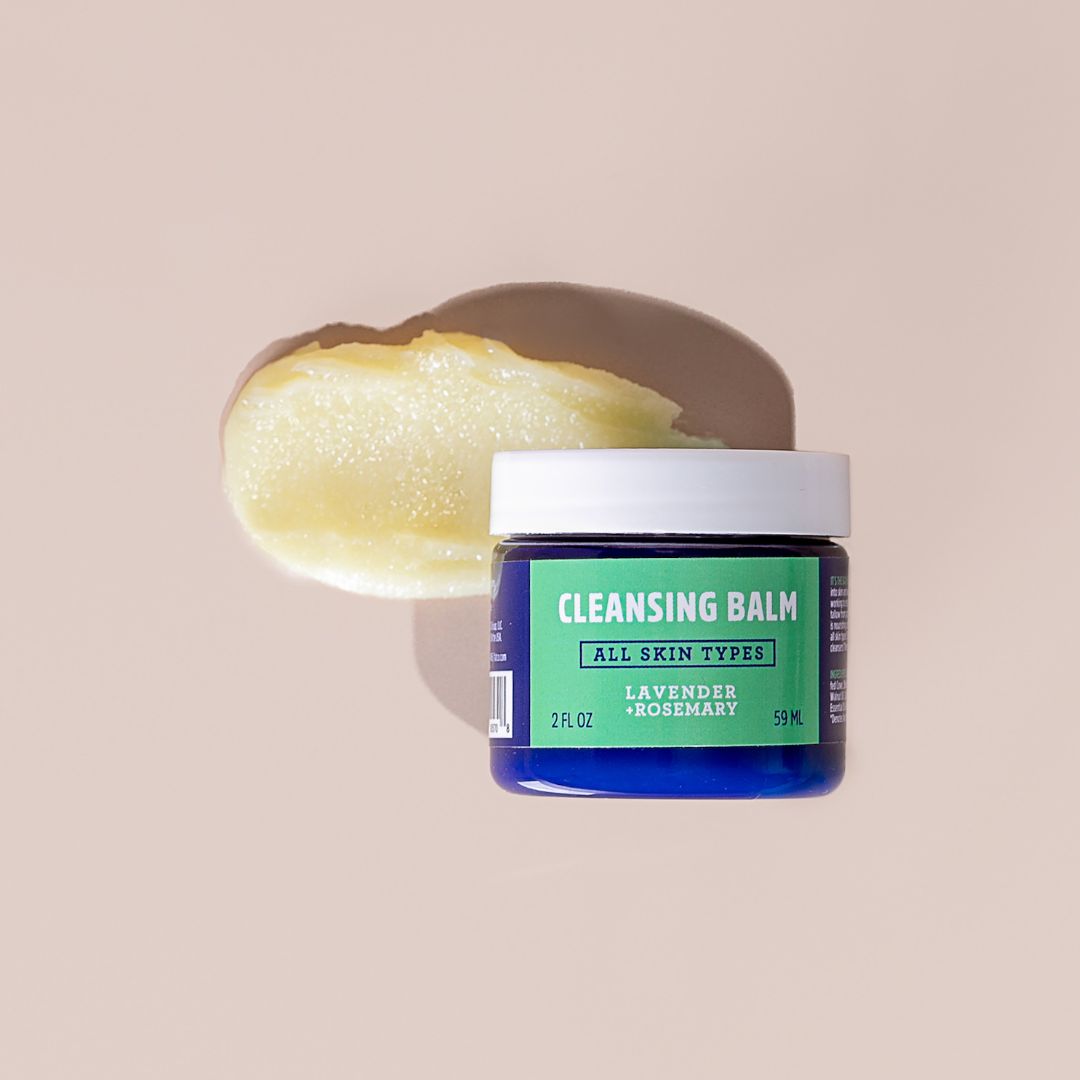
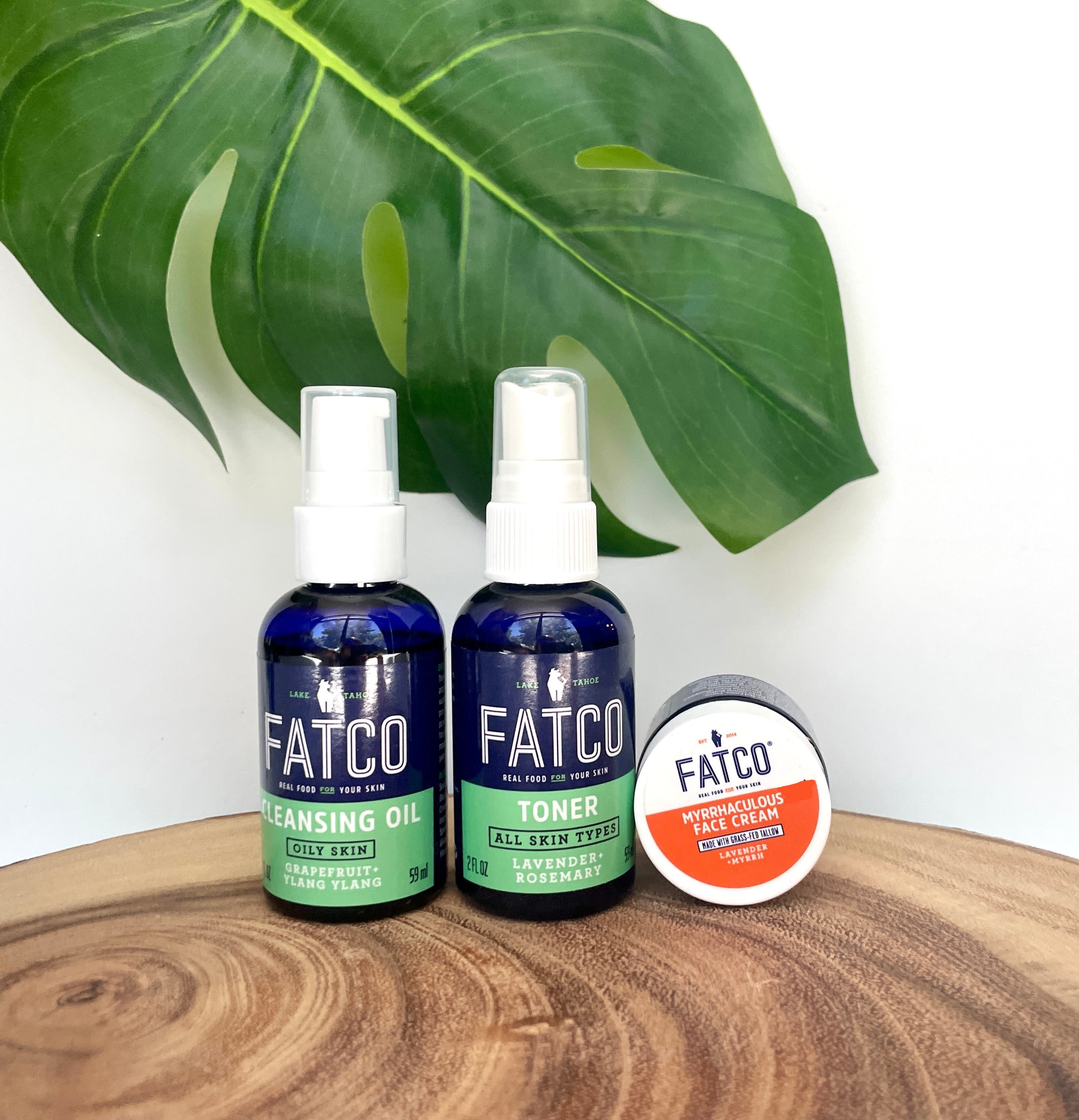
Apply this article's own test to our shelf. FATCO makes no liquid face wash and no synthetic-detergent facial cleanser. What it makes is three plant-oil Cleansing Oils, at $14 for 2 oz and $24 for 4 oz. It also makes a tallow Cleansing Balm at $16 for 2 oz, whose panel opens with coconut oil and lists tallow second. True-soap Fat Bars are $10 for 4 oz. Our own catalogue then does the exact thing described above. The Cleansing Oil for Oily Skin page says the formula has no pore-clogging ingredients and calls grapeseed oil non-comedogenic. Neither line rests on a test you can read. Tallow itself has no published comedogenic rating in either direction, because it was never in the screens. Every one of these carries essential oils, so none is fragrance-free, and true soap runs alkaline. Patch-test on the jawline and give it four weeks, the same window every human study used.