Moisturizer for Rosacea: What Calms It and What Sets It Off
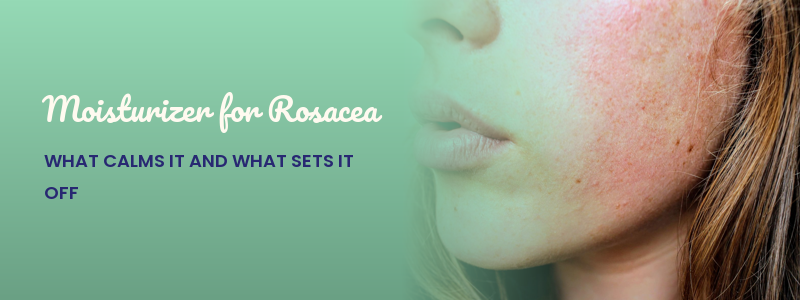
A moisturizer for rosacea has a job an ordinary moisturizer does not: hydrate the face without adding a trigger to it. That narrows the shelf quickly, because several of the ingredients dermatologists tell rosacea patients to avoid are the same ingredients moisturizers are commonly built from.
Key Takeaways
- Moisturizing is not optional, and it is not the same as treating. The American Academy of Dermatology puts it plainly: "Moisturizer is essential whether rosacea makes your skin dry or oily."
- It goes on dry skin, not damp skin. This is the reverse of the rule for ordinary dry skin, and it exists because moisturizer applied to a wet rosacea face is more likely to sting.
- Three of the eight ingredients on the dermatologist avoid list are humectants. Glycolic acid, lactic acid and urea all draw water into skin, which is why they turn up in moisturizers in the first place.
- Fragrance-free and unscented are different labels. Essential oils count as fragrance, and a conventional facial moisturizer carries some by default.
- Tallow is a plain occlusive, not a rosacea product. Every FATCO face cream carries lavender essential oil, Cleveland Clinic flags heavy fats as a rosacea risk, and Baby Butta is the unscented option in the range.
What a Rosacea-Prone Face Actually Needs
Two problems, and a moisturizer only addresses one of them. The National Rosacea Society describes rosacea as often involving "a defective moisture barrier in the facial skin as well as increased moisture evaporation (transepidermal water loss)". It estimates that roughly half of people with rosacea also have dry skin. That is the half a moisturizer can work on.
The dermatology academy describes what moisturizing does in physical terms: it hydrates by trapping water in the skin, and it restores essential lipids. Both effects are surface effects. Neither touches the vascular and inflammatory drivers underneath.
The clinical evidence sits exactly where you would expect from that description. One 20-patient study of erythematotelangiectatic rosacea is summarized in the Journal of Clinical and Aesthetic Dermatology. Patients used metronidazole gel on the whole face and a gentle cream on one side only. After 15 days the moisturized side showed less dryness, peeling and roughness. Only the dryness difference reached statistical significance, and no appreciable improvement in redness was seen on either side. So the honest promise of a rosacea moisturizer is comfort, less dryness and less stinging. Redness is a job for your dermatologist.
What Calms It
Moisturizers work through three ingredient classes, and the same review defines each one. Occlusives form a surface layer that slows evaporation. Humectants pull and hold water inside the outer layer. Emollients make skin feel and look smooth, and some of them are occlusive too. A good formula uses all three.
Occlusive strength varies more than the marketing suggests. That review puts petrolatum above a 98 percent reduction in water loss through the skin, with other occlusive oils achieving a 20 to 30 percent reduction. Tallow is not one of the occlusives it names.
The National Rosacea Society keeps its own shortlist of moisturizer ingredients that may be beneficial. It names hyaluronic acid, ceramides, vitamin C, aloe and, depending on your particular skin, niacinamide. Dermatology guidance adds two format rules that are easy to miss on a label: choose a cream rather than a lotion or gel, and choose something marked for sensitive skin. A barrier-supporting moisturizer built on that spec is the shape to look for.
What Sets It Off
The academy names eight ingredients to avoid: alcohol, camphor, fragrance, glycolic acid, lactic acid, menthol, sodium lauryl sulfate and urea. Three of those eight are not contaminants that slipped into a formula. Glycolic acid, lactic acid and urea are humectants, listed alongside glycerin and hyaluronic acid as standard moisturizing ingredients, which is precisely why a moisturizer might contain them. Lactic acid in particular is described in the same review as capable of inducing stinging and irritation.
Fragrance is the other one hiding in plain sight. A conventional facial moisturizer is roughly 80 percent water and about 0.2 percent fragrance by that review's breakdown, so scent is the default rather than an addition. In National Rosacea Society patient surveys, alcohol was named as an irritant by 66 percent of patients. Witch hazel and fragrance followed at 30 percent each, then menthol at 21 percent, peppermint at 14 percent and eucalyptus oil at 13 percent. Two of those are essential oils, which is the reason "unscented" is not good enough. Unscented can mean a masking scent was used; only fragrance-free means no scent compounds were added at all. Fragrance-free moisturizers built for dry skin tend to lean on petrolatum, ceramides and silicones for that reason.
Two more come from the same review. Propylene glycol rarely irritates at low levels, but it can produce dermatitic changes in exquisitely sensitive people at concentrations as low as 2 percent. Lanolin can cause allergic or irritant reactions.
| What to look for | What to avoid |
|---|---|
| A cream rather than a lotion or gel | Anything that stings on application |
| Fragrance-free on the label | "Unscented", which can mean masked |
| Ceramides, hyaluronic acid, glycerin, aloe | Glycolic acid, lactic acid, urea |
| Marked for sensitive skin | Alcohol, camphor, menthol, sodium lauryl sulfate |
| A short ingredient list | Essential oils, including lavender and peppermint |
How to Apply It Without the Sting
Onto a dry face. The academy's instruction for rosacea is to apply moisturizer to dry skin: "After washing your face, wait for your face to dry. When you apply moisturizer to dry skin, it's less likely to burn or sting." That is the reverse of the damp-skin advice given for ordinary dry skin, and rosacea is the exception.
Order matters too if you have a prescription. Both the academy and the society put medication before moisturizer. The society spells the full sequence out: cleanse with a mild, fragrance-free cleanser, let the face air dry, apply the topical medication, allow that to dry, then moisturize. It notes this should not reduce how well the medication works. The rest of the sequence, including sun protection, sits in our calm-first rosacea routine.
Testing a New Moisturizer Without Triggering a Flare
The two main authorities give different windows, so pick the cautious one if your skin is reactive right now.
The National Rosacea Society's version is quick: try it on a peripheral area such as the neck or jawline, apply a small amount, and wait at least a few hours. The academy's general product-testing guidance is slower and stricter. Apply the product to a quarter-sized test spot twice daily for seven to 10 days. Choose somewhere it will not be rubbed or washed off, such as the underside of your arm or the bend of your elbow. If there is no reaction by day 10, use it.
If a reaction does appear, the instruction is to wash the product off gently as soon as possible and not use it again. A cool compress or petroleum jelly can settle the skin. A severe reaction that neither of those relieves is a reason to see a dermatologist, who can also patch-test you to find the specific ingredient.
One more thing worth knowing during a bad flare. The same rosacea review describes a clinician's practice of running only a mild cleanser and moisturizer for the first three to five days of a flare. The reasoning is that a calmer barrier tolerates topical medication better when it restarts. The review is careful to call this anecdotal and to say further studies are needed, so raise it with your dermatologist rather than treating it as a protocol.
Got Questions?
Frequently Asked Questions
Q Which moisturizer is best for rosacea skin?
There is no single best one, but there is a spec. Dermatology guidance points to a fragrance-free cream rather than a lotion or gel, marked for sensitive skin. The avoid list is alcohol, camphor, menthol, glycolic acid, lactic acid, urea and sodium lauryl sulfate. Ceramides, hyaluronic acid and glycerin are the common calming additions.
Q Does moisturizer aggravate rosacea?
A specific product can, the act of moisturizing does not. Dermatology guidance calls moisturizer essential whether rosacea makes your skin dry or oily. When a moisturizer causes a flare, the usual culprits are fragrance, an exfoliating acid used as a humectant, or applying it to a damp face rather than a dry one.
Q Should rosacea cream sting?
No. Stinging is information, not a sign a product is working. Rosacea skin is reactive by nature, so burning on application usually means an ingredient does not suit you or the skin was still damp. Apply to a fully dry face first, and if it still stings, stop that product.
Q Should I stop using moisturizer if it stings?
Stop that moisturizer, not moisturizing. Dermatology advice is to wash off a product that causes a reaction as soon as possible and not to use it again. Soothe the skin afterwards with a cool compress or petroleum jelly. Switch to a fragrance-free cream and test it on a small area first.
Q How do you stop rosacea stinging?
Remove the cause, then protect the barrier. Wash off whatever triggered it, apply a cool compress, and keep the routine down to a mild cleanser and a plain fragrance-free moisturizer while the skin settles. Persistent stinging that a simplified routine does not fix belongs with a dermatologist.
Q Why are dermatologists against tallow?
Most are cautious rather than opposed. Cleveland Clinic's stated concerns are three. Heavy fats can trap heat and worsen sensitive-skin conditions including rosacea. Many tallow products add fragrance to cover the smell. And tallow has no standard formulation, so jar contents vary.
The FATCO Alternative
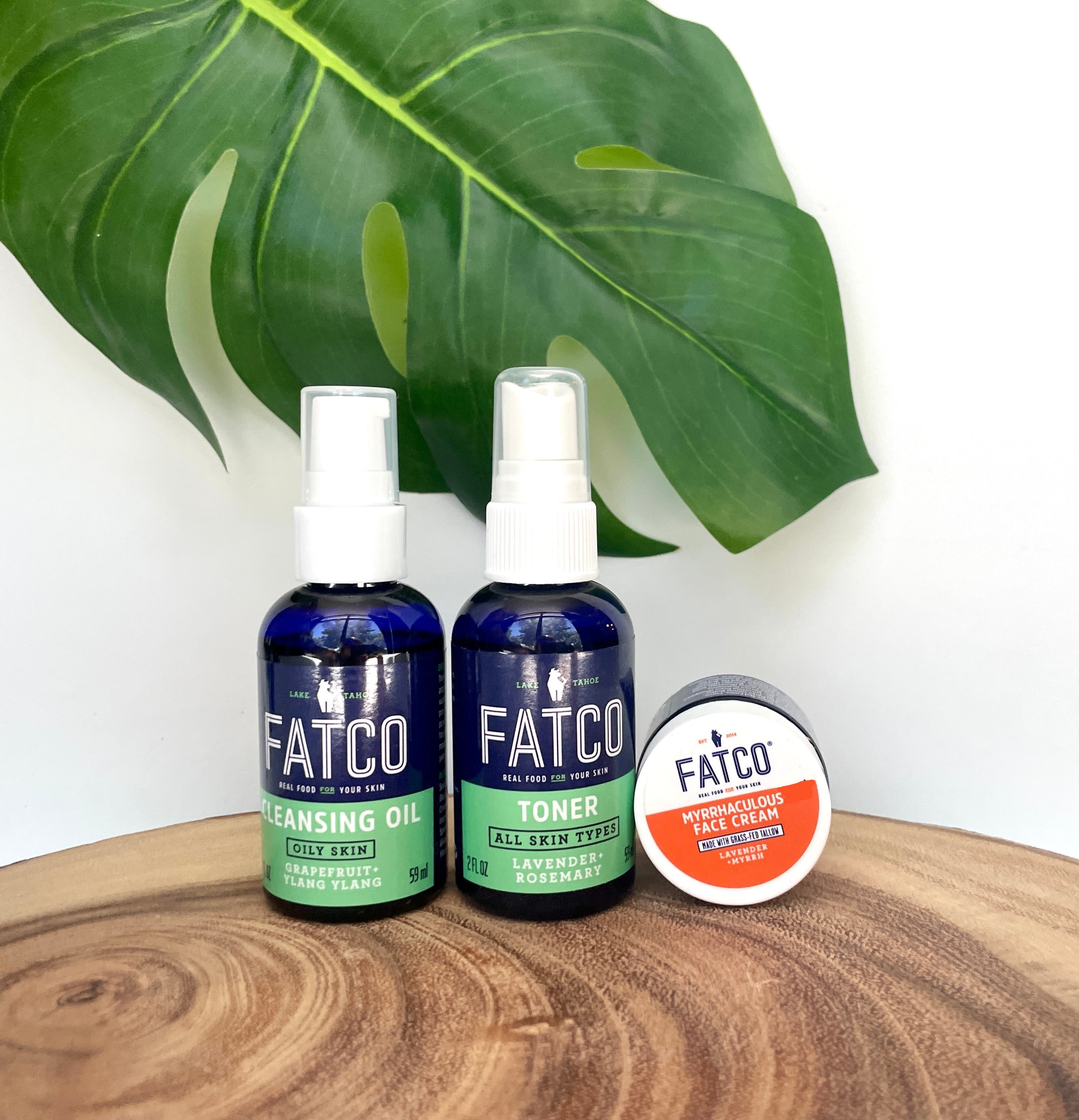
Here is the honest position on tallow for a rosacea-prone face. Tallow shares fatty acids with the skin's surface lipids and behaves as a plain occlusive. That is a real but modest job, and how a tallow moisturizer works on skin is the same whoever makes it. Two cautions apply here more than anywhere else. Cleveland Clinic says heavy products like beef tallow can lock in heat and worsen conditions related to sensitive skin, rosacea among them. It adds that fragrance in tallow products is its own irritant risk. That second one lands on us. All four FATCO face cream SKUs contain lavender essential oil, and Myrrhaculous carries myrrh essential oil on top of it. None of them is fragrance-free, and fragrance is on the dermatologist avoid list. The two FATCO leave-on products with no added scent at all are the Baby Fat Stick and Baby Butta, and Baby Butta is the one built as a moisturizer. Its whole label is tallow, coconut oil, shea butter, olive oil, avocado oil, jojoba oil and beeswax. It is a thick balm rather than a cream, tallow carries no formal comedogenic rating, and it is not a rosacea treatment. Test it on your jawline for a week before it goes near your face.