What Makes a Good Cleanser for Rosacea-Prone Skin?

If you have rosacea, you already know that the wrong cleanser can turn a calm face into a red, burning one in seconds. Finding a good cleanser for rosacea-prone skin means understanding what your skin actually needs: gentle surfactants, a skin-compatible pH, no fragrance, and a technique that does not strip what little barrier protection you have left. This guide covers all of it.
Key Takeaways
- Rosacea skin can have a compromised barrier, with raised water loss measured in visibly affected areas and a higher surface pH, which lets irritants through more easily.
- Fragrance-free is essential. Both synthetic fragrance and natural essential oils can activate flushing and inflammation in rosacea-prone skin.
- Avoid sodium lauryl sulfate (SLS), alcohols, and AHAs. These are among the most common cleanser ingredients that worsen rosacea symptoms.
- Technique matters as much as formula. Lukewarm water, fingertips only, and gentle patting dry can reduce reactivity significantly.
- Minimal-ingredient, food-based cleansers avoid many of the common trigger ingredients. Tallow soap is true soap, though, so it is alkaline rather than pH-balanced. It is not a rosacea treatment, and rosacea needs a clinician.
How Rosacea-Prone Skin Reacts to Cleansing
Rosacea is more than persistent redness. The skin barrier can be measurably compromised, though the picture is more specific than "rosacea skin is damaged." A review of cleansers and moisturizers for rosacea patients in the Journal of Clinical and Aesthetic Dermatology summarizes a study of 75 papulopustular rosacea patients that found raised transepidermal water loss in clinically involved skin, on the perinasal cheek and the side of the nose, while clinically healthy areas such as the lateral cheek showed no such rise. Surface pH also runs higher: a 2018 review of skin pH in the Journal of Dermatology lists rosacea among the conditions that show a disturbed barrier and an increased pH, alongside atopic dermatitis, acne, and aged or dry skin. Where the barrier is impaired, the stratum corneum is more permeable, and irritants that would bounce off healthy skin can get through.
Cleansing adds another layer of challenge. Every time you wash your face, you temporarily disrupt the lipid film that holds the skin barrier together. For people without rosacea, that disruption is brief and the barrier rebuilds quickly.
For rosacea-prone skin, a cleanser with harsh surfactants, alcohol, or fragrance can push that disruption further than the skin can recover from quickly. The result is redness, stinging, or a full flare.
In a National Rosacea Society survey of 1,066 patients, 41% reported that certain skin care products aggravated their condition, and 27% said the same of certain cosmetics. A separate set of surveys from the same group asked which ingredients caused problems: alcohol was named by 66% of patients, witch hazel by 30%, fragrance by 30%, menthol by 21%, peppermint by 14%, and eucalyptus oil by 13%. Those two figures come from different surveys, so treat the ingredient percentages as their own finding rather than a breakdown of the 41%.
Water temperature is part of this equation too. Hot baths and hot weather sit high on the society's trigger list, and the American Academy of Dermatology's cleansing instruction is to rinse with warm water rather than hot. Lukewarm to warm is the safe zone.
What to Look for in a Rosacea Cleanser
A skin-compatible pH
Healthy skin is acidic, and the exact number depends on the study. The 2018 skin pH review in the Journal of Dermatology gives the physiological pH of the stratum corneum as 4.1 to 5.8. Either way it sits well below neutral, and true soap sits well above it: the typical pH of a true soap is 9 to 10. That matters because skin pH regulates the enzymes of ceramide metabolism and the proteases behind epidermal differentiation and desquamation, so pushing it up interferes with barrier maintenance rather than just feeling drying. Rosacea skin already runs higher than healthy skin, so an alkaline cleanser adds to a gap that is already there.
Syndets (synthetic detergent bars) and liquid cleansers are the structural answer. Syndet bars contain less than 10% soap and are typically formulated in the neutral-to-acidic 5.5 to 7 range, close to the pH of normal skin. If you want to prioritize pH, an acidic liquid cleanser goes further than a bar.
Gentle surfactants
Not all cleaning agents strip the barrier equally. The one to avoid is sodium lauryl sulfate (SLS): the rosacea cleanser review describes it as causing significant skin irritation and penetration, and both the academy and the society name it as an ingredient to steer clear of. Sodium laureth sulfate (SLES) is a close relative and milder, but it is still an anionic surfactant.
Better options for rosacea-prone skin:
- Sodium cocoyl isethionate (the same review contrasts it directly with SLS and describes it as showing excellent skin compatibility; common in gentle syndet bars)
- Decyl glucoside or coco-glucoside (plant-derived nonionic surfactants, the mildest class by charge)
- Cocamidopropyl betaine (amphoteric, and commonly paired with an anionic surfactant to soften a formula; worth knowing it is itself a recognized contact allergen for a minority of people, so it is not automatically safe)
Low-foam or no-foam formulas are a reasonable default. Anionic surfactants remain the industry's primary cleansing agents precisely because they foam and lather well, so a big lather is a hint about what is doing the work.
Fragrance-free (not just "unscented")
"Fragrance-free" and "unscented" are not the same. "Unscented" products may still contain masking fragrances that neutralize odor without being disclosed as fragrance. True fragrance-free means no added scent compounds at all.
For rosacea-prone skin, this matters because fragrance is one of the most frequently reported problem ingredients: 30% of patients in those ingredient surveys named it, and it sits among the eight ingredients on the dermatologist avoid list below. Essential oils appear on the same patient-reported lists in their own right, with peppermint at 14% and eucalyptus oil at 13%. Natural origin does not make them safe for reactive skin.
Minimal active ingredients
The more actives a cleanser contains, the more potential triggers. For rosacea skin, the goal of cleansing is to remove debris and residue without adding inflammation. Save acids, retinoids, and brightening agents for other products. If your skin can tolerate them at all, introduce them very slowly.
Beneficial additions in a rosacea cleanser include glycerin (helps maintain hydration during cleansing), ceramides (support barrier recovery), and panthenol (soothing and barrier-supportive). These work with the skin rather than against it.
Ingredients and Triggers to Avoid
These are the most commonly cited cleanser ingredients that worsen rosacea:
- Alcohol (ethanol, SD alcohol, isopropyl, alcohol denat.): strips the barrier and causes vasodilation
- Fragrance (listed as "fragrance," "parfum," or via essential oils): triggers neurogenic flushing
- Sodium lauryl sulfate (SLS): disrupts the lipid barrier and increases TEWL
- Menthol and camphor: directly vasodilating; the cooling sensation masks the damage
- Witch hazel: named by 30% of patients in the same ingredient surveys
- Glycolic acid and lactic acid: both on the standard rosacea avoid list; low pH irritates sensitized skin
- Salicylic acid (BHA): appears on published lists of common irritants in rosacea
- Benzoyl peroxide: strongly drying; use only if a dermatologist prescribes it
- Urea: on the same list
One important clarification: fatty alcohols (cetyl alcohol, cetearyl alcohol, stearyl alcohol) are not the same as simple alcohols. They are emollients derived from plant or animal sources and are generally safe and beneficial for sensitive skin.
Dermatologist guidance consistently flags the same group of rosacea trigger ingredients: alcohol, camphor, fragrance, glycolic acid, lactic acid, menthol, sodium lauryl sulfate, and urea.
A Gentle Cleansing Routine for Rosacea
Morning: Cleanse twice a day, morning and night, with a mild rosacea-friendly cleanser rather than soap, because that removes the oil and dirt that can worsen irritation. If your skin is very reactive and a full morning cleanse stings, a plain water rinse is the gentler fallback, but it is a compromise rather than the recommendation.
Evening: A gentle cleanse is appropriate after a day of sunscreen, pollution, and makeup. Use your chosen cleanser with:
- Lukewarm to warm water, never hot
- Fingertips only (no washcloths, loofahs, or cleansing brushes)
- Gentle circular motions; no pressure or scrubbing
- A thorough rinse to remove all cleanser residue (leftover surfactant is a common overlooked trigger)
- Pat dry with a clean, soft cotton towel, blotting rather than rubbing
Wait a few minutes after cleansing before applying any topical medications or treatments, and a few more minutes after those before layering on moisturizer or sunscreen. Rushing this sequence can cause stinging and increase absorption of active ingredients into already-sensitized skin.
Patch-test everything. Before committing to any new cleanser, apply a small amount to your neck or inner arm for several days first. Rosacea triggers vary person to person, and even a product labeled "sensitive-skin safe" can be problematic for certain individuals.
Work with a dermatologist. Rosacea is a medical condition and nothing in this guide diagnoses or treats it. Cleanser choice is the smallest part of managing it. A board-certified dermatologist can work out what you actually have and recommend prescription and over-the-counter strategies for your presentation. Cleveland Clinic still describes four types (erythematotelangiectatic, papulopustular, phymatous, and ocular), while the National Rosacea Society's expert committee replaced that subtype system with a phenotype-based classification in 2017, so expect your dermatologist to describe your skin by its features rather than by assigning a subtype label.
Where Gentle Tallow-Based Cleansing Fits
For people exploring minimal-ingredient approaches to skin cleansing, tallow-based soaps have some attributes worth considering. Beef tallow's main fatty acids are oleic (36 g per 100 g in USDA reference data), palmitic (24.9 g), and stearic (18.9 g), and palmitic, stearic, and oleic acid all appear in the fatty acid profile of the epidermis. A tallow bar also needs no synthetic surfactant system, no added fragrance, and no preservative complex.
FATCO soaps are built on this same logic, detailed in how they work for sensitive and dry skin. The Lavender Fat Bar's full list is grass-fed beef tallow, sodium hydroxide (lye), distilled water, sucrose, sodium lactate, kaolin clay, colloidal oats, and lavender essential oil: no synthetic fragrance, no SLS, no alcohol, which skips several of the categories above. Results vary by individual, and tallow-based products suit different skin types to different degrees, which is why patch-testing is always the starting point.
That said, the pH caveat cuts against us here, and it is worth being blunt about. True soap is made by saponifying a fat with an alkali, and the rosacea cleanser literature uses tallow and lye as its worked example of exactly that reaction. The typical pH of a true soap is 9 to 10. FATCO's bars are true soap, so they are alkaline, not pH-balanced, and a rosacea-prone reader whose main concern is pH should choose an acidic liquid syndet cleanser instead of a bar, ours included.
Tallow cleansing is not a rosacea treatment. It may suit some people with reactive or sensitive skin who want to simplify their routine and avoid synthetic ingredient triggers, but it will not address the underlying vascular and inflammatory drivers of rosacea. The patch-test caveat is not optional here: apply to your neck, wait several days, and observe before using on your face.
Got Questions?
Rosacea Cleansing FAQ
Q Is it okay to use bar soap if I have rosacea?
True soap bars are alkaline, typically pH 9 to 10, which pushes skin pH up and can worsen rosacea. If you prefer a bar format, look for a syndet bar instead: these contain less than 10% soap and are usually formulated between pH 5.5 and 7, close to normal skin.
Q How many times a day should I cleanse with rosacea?
Twice a day is the dermatology recommendation, morning and night, with a mild cleanser rather than soap. Over-cleansing beyond that adds irritation without removing anything useful. If a morning cleanse stings no matter what you use, a plain water rinse is a reasonable fallback while you find a gentler formula.
Q Can essential oils in a cleanser trigger rosacea?
Yes. In National Rosacea Society ingredient surveys, patients named peppermint (14%) and eucalyptus oil (13%) as problem ingredients, and fragrance in general at 30%. "Natural" does not mean non-irritating for rosacea-prone skin. Look for products that are both synthetic-fragrance-free and essential-oil-free.
Q Does water temperature affect rosacea when cleansing?
It matters enough to get right. Hot baths and hot weather both sit high on the rosacea trigger list, and the American Academy of Dermatology's own cleansing instruction is to rinse with warm water. Lukewarm to warm is the safe zone; hot is the one to avoid.
Q Why does my face feel tight and burn after cleansing even with a "gentle" cleanser?
Tightness and burning after cleansing usually signals that the cleanser is stripping your skin barrier, even if the product is marketed as gentle. Check for SLS, SLES, alcohol, fragrance, and AHAs in the ingredient list. Also confirm your water is not too hot. Switching to a pH-balanced, fragrance-free, low-surfactant formula often resolves this quickly.
Q Could a simpler, shorter ingredient list help my rosacea-prone skin?
Possibly. The National Rosacea Society's advice is to use as few products as possible, on the reasoning that each one added to a routine increases the chance of irritation, and the same logic points toward shorter ingredient lists. A short list built around a mild surfactant and a humectant like glycerin gives you fewer things to rule out. Check for essential oils before assuming a short list is a safe one.
The FATCO Alternative
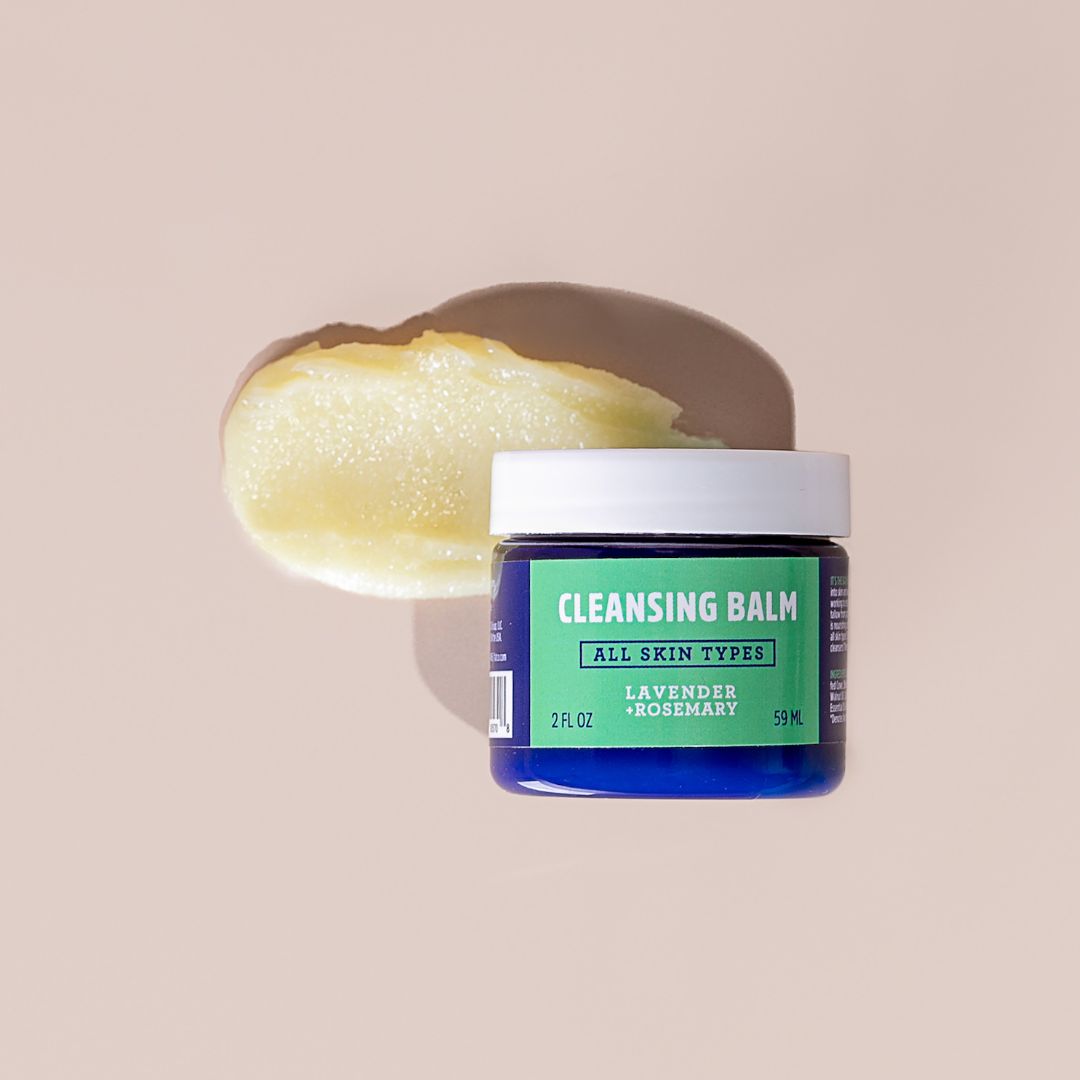
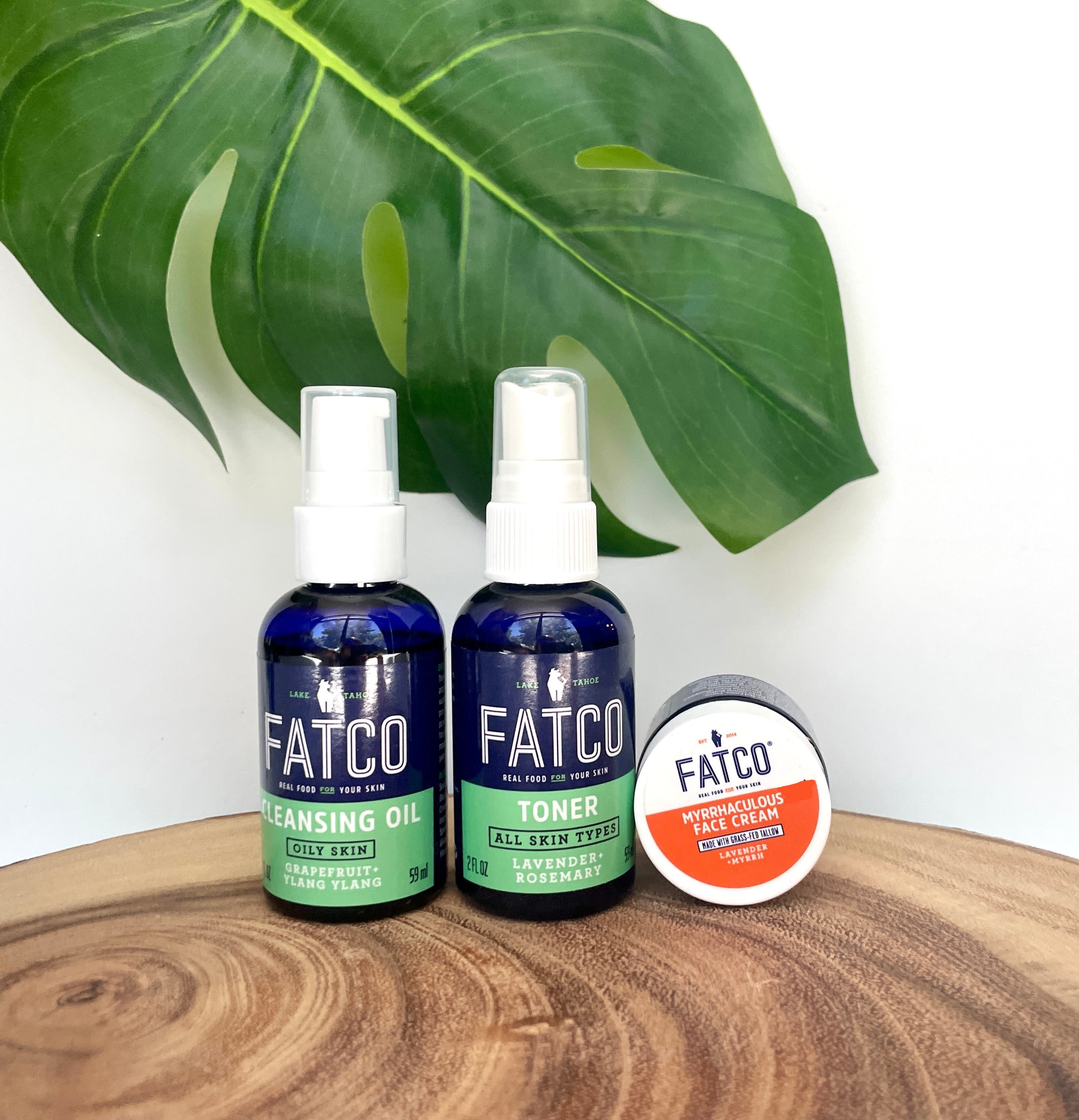
If you are looking for a simple, short-ingredient cleanser that skips synthetic fragrance, SLS, and alcohol, FATCO's tallow-based soaps are built on exactly that premise. Real food for your skin: creamy rendered tallow, simple saponified fats, nothing added that does not need to be there. Two honest caveats. Most of the range is scented with essential oils, including the Lavender and Lemongrass Fat Bars and the Cleansing Balm, which lists lavender and rosemary essential oils. If you are screening those out, the Baby Fat Bar is the one to look at: tallow, lye, colloidal oats, calendula, olive oil, distilled water, sucrose and sodium lactate, with no essential oils and no synthetic fragrance. And they are true soap, so they are alkaline. They are not a rosacea treatment and nothing here replaces a dermatologist, but for reactive skin that wants to simplify, they are worth a careful patch-test.