Moisturizers for Oily Skin: Why You Still Need One (and What to Use)

Oily skin still needs a moisturizer. The oil your face produces and the water held in its outer layer are two different things, and sebum does not stand in for the second. Skipping the step does not lower how much oil you make. What changes for oily skin is the texture you reach for, not whether you moisturize at all.
Key Takeaways
- Oil output and hydration are separate. Sebum is a lipid mixture. The water your skin holds sits in the outer layer, and a shiny face can still feel tight.
- Skipping moisturizer does not reduce sebum. Going without leaves you managing the shine and the tightness at the same time.
- Texture is the whole decision. An oil-free gel carries the same humectants and ceramides as a cream with far less weight on the surface.
- This is written for oily skin that is not breaking out. Active acne changes the shortlist, because the treatment you use drives the moisturizer choice.
- A rich tallow cream is not the obvious pick here. FATCO's face creams suit dry, barrier-stressed skin better than skin that turns shiny by noon.
Oil and Water Are Two Different Problems
Sebum is not moisture. It is a lipid mixture the sebaceous glands push onto the skin surface. A review of sebaceous gland lipids in Dermato-Endocrinology breaks it into roughly 57.5 percent triglycerides and fatty acids taken together, 26 percent wax esters and 12 percent squalene. The same review notes that squalene and wax esters are unique to sebum and are not found anywhere else in the body.
None of that is water. Your skin's water content sits in the stratum corneum, the outermost layer, topped up by humectants and held in by occlusives. Those are jobs a moisturizer does and sebum does not.
That is why a face can look greasy at noon and still feel tight after washing. Both readings can be true, because they measure different things.
Telling the two apart on your own face is mostly touch. Shine wipes off and leaves the surface smooth, while congestion stays put through a wash, which is the practical test for clogged pores versus surface shine.
Does Skipping Moisturizer Make Skin Less Oily?
No. Leaving the step out does not turn the tap down. The American Academy of Dermatology's oily-skin guidance is to apply moisturizer after cleansing, because oily skin still needs to stay hydrated. It also says to look for a moisturizer that contains a broad-spectrum sunscreen with SPF 30 or higher, which saves a step.
The opposite belief is more stubborn: that drying skin out trains it to produce less. That one deserves care. The same AAD page says a face wash that is too harsh can irritate skin and trigger increased oil production. Whether stripping measurably raises sebum output is argued both ways among dermatologists, which is the position we take on choosing a face wash for oily skin.
What is not argued is the downside. The AAD's list also tells you to resist scrubbing, because scrubbing irritates skin and can make it look worse. Irritated skin is harder to manage than oily skin on its own, so there is no version of this where going harsher comes out ahead.
Moisturizers for Oily Skin
Prices are quoted only where a brand publishes one on its own page, and are current as of August 2026. Cetaphil and Vanicream route buyers to retailers, so no figure appears for those two. Prices move, so check before you buy.
CeraVe Oil Control Moisturizing Gel-Cream. CeraVe describes it as a lightweight moisturizer with oil-absorbing technology and a non-greasy, matte finish, made for combination to oily skin. It is fragrance-free, paraben-free and carries a non-comedogenic label, built on niacinamide, three ceramides and hyaluronic acid. CeraVe's page lists it at $19.99 and states no size. One thing to know first: isopropyl myristate sits sixth on the ingredient list. The 2025 JAAD Reviews comedogenicity table rates it 4 to 5 in the rabbit-ear assay and calls it frequently cited as highly comedogenic, which puts it in the top band of the published comedogenicity data. The same review says finished formulas behave differently from isolated raw materials, so treat this as a reason to patch-test rather than to avoid it.
CeraVe Ultra-Light Moisturizing Gel. The plainer sibling, listed as oil-free, fragrance-free and non-comedogenic, built on glycerin, niacinamide, dimethicone, three ceramides and hyaluronic acid, with no isopropyl myristate on the list. CeraVe files it under all skin types and features it on its own oily-skin page. Also $19.99, again with no stated size.
Cetaphil DermaControl Oil Absorbing Moisturizer SPF 30. Oil-free, fragrance-free and labelled "won't clog pores", with MicroPearl technology that absorbs surface oil for a matte finish. Sun protection is broad-spectrum SPF 30 from avobenzone 3 percent, octisalate 5 percent and octocrylene 7 percent, alongside ceramide NP, glycerin and zinc gluconate. Cetaphil's page states neither a price nor a size.
Vanicream Daily Facial Moisturizer. Water, squalane and glycerin lead the list, followed by hyaluronic acid and five ceramides, with no botanical extracts or essential oils at all. Vanicream lists it as fragrance-free, dye-free, pH balanced and suitable for oily skin among others. Its page also publishes neither price nor size.
How to Choose: The Picks Side by Side
| Product | Texture | Fragrance-free | Best for |
|---|---|---|---|
| FATCO Myrrhaculous and Unmyrrhaculous Face Cream | Rich cream | No, both carry lavender essential oil | Oily skin whose barrier is stripped, or an oily T-zone with tight cheeks |
| CeraVe Oil Control Moisturizing Gel-Cream | Matte gel-cream | Yes | Holding shine down through the afternoon |
| CeraVe Ultra-Light Moisturizing Gel | Water-light gel | Yes | Hydration with nothing extra in the formula |
| Cetaphil DermaControl Oil Absorbing SPF 30 | Mattifying lotion | Yes | Daytime, when sunscreen and moisturizer should be one step |
| Vanicream Daily Facial Moisturizer | Light lotion | Yes | Oily skin that also reacts to fragrance |
Where a Tallow Cream Fits, and Who Should Skip It
A rich tallow cream is the wrong first pick for skin that is shiny by noon, and FATCO would rather say that than sell you the wrong jar. Myrrhaculous and Unmyrrhaculous are dense, occlusive formulas built for skin that has run short of its own lipids. That is close to the opposite of the problem here.
The compositional argument for tallow is real but narrower than it usually gets made. Tallow and sebum share high proportions of palmitic and oleic acid. USDA reference data puts oleic at 36 grams per 100 grams of beef tallow, about 38 percent of its fatty acids. The overlap stops well short of a match. Human sebum's leading monounsaturate is sapienic acid, at roughly a quarter of its total fatty acids, and sebum carries squalene and wax esters that tallow has none of.
Tallow also has no published comedogenic rating in either direction, so nobody can hand you a number for it. That is a reason to patch-test on the jawline for a week, not a reassurance.
Where these creams do earn a place on oily skin is narrow enough to name. One case is an oily T-zone with dry cheeks, where a richer formula goes on the cheeks only. The other is oily skin whose barrier has been stripped by months of harsh washing, where the tightness is the urgent problem and the shine can wait. Both creams contain lavender essential oil, and Myrrhaculous adds myrrh, so neither is a fragrance-free option.
A Few Honest Caveats
- Give a new formula three to four weeks before deciding. Shine changes with heat, humidity and hormones, so one week tells you very little.
- Patch-test anything rich on the jawline for about a week before it goes near your whole face.
- The AAD puts no clock on when to get help. Its advice is that if you are concerned about how much oil your skin is producing, or you are struggling with blackheads or acne, partner with a board-certified dermatologist.
- If you are actively breaking out, the shortlist changes, and our guide to hydration without breakouts is the better starting point.
Got Questions?
Frequently Asked Questions
Q Which moisturizer is best for oily skin?
There is no single best one, because it depends on how much shine you want to hold down and what else is in your routine. A matte gel-cream handles afternoon shine, a water-light gel covers plain hydration, and a mattifying lotion with SPF 30 does daytime in one step.
Q What happens if oily skin isn't moisturized?
Skin gets tight, rough and sometimes flaky underneath the shine, while sebum output stays exactly where it was. Skipping the step removes the water side of the equation without touching the oil side, which leaves you managing two complaints instead of one.
Q How often should oily skin be moisturized?
Twice a day, after cleansing morning and night. The AAD's oily-skin advice is to cleanse your face up to twice daily and after sweating, and to apply moisturizer after cleansing. Use a formula carrying SPF 30 or higher in the morning rather than adding a third application.
Q How do I choose a moisturizer for oily skin?
Start with the vehicle rather than the actives. An oil-free gel or gel-cream carries the same humectants and ceramides as a cream while sitting lighter on the surface. Then check for fragrance if you react to it, and check the daytime option for broad-spectrum SPF.
Q What can I use instead of moisturizer for oily skin?
A lighter moisturizer, not nothing. A water-gel, a fluid lotion or a humectant serum under sunscreen all deliver water with less weight than a cream. Sunscreen on its own only counts if it is sold as a moisturizer with SPF built in.
Q Is beef tallow good for oily skin?
It is not the obvious choice. Tallow creams are rich and occlusive, which suits dry, barrier-stressed skin more than skin that runs shiny. Tallow carries no published comedogenic rating in either direction, so a week-long patch test on the jawline is the only honest way to find out.
The FATCO Alternative
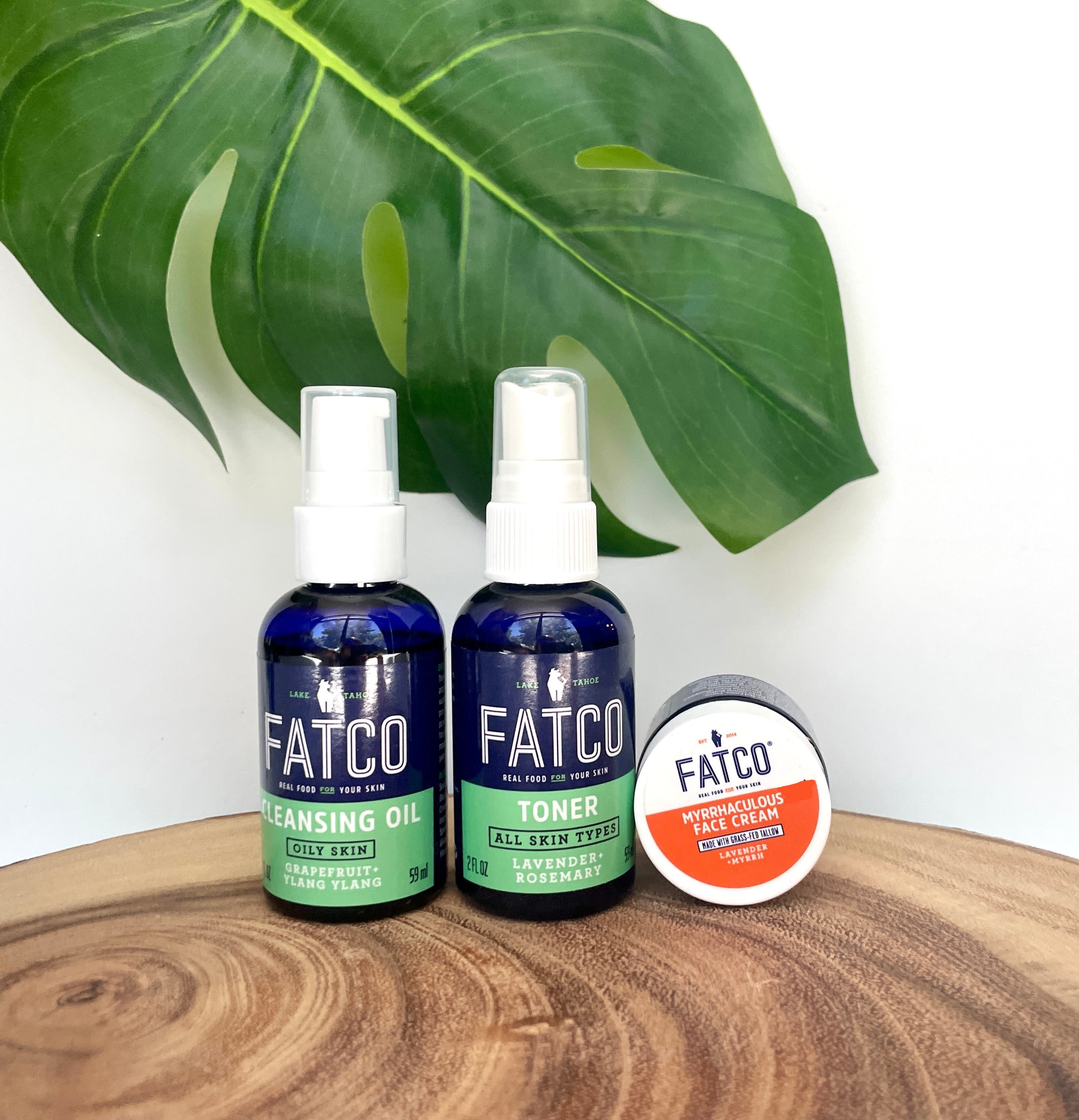
FATCO makes tallow face creams, and on oily skin they are a specific tool rather than a default. Myrrhaculous and Unmyrrhaculous both open with tallow from grass-fed cows, coconut oil and shea butter. Both run $28 for 1 oz and $52 for 2 oz on fatco.com, checked 4 August 2026. If your skin is oily and comfortable, a light oil-free gel is the better daily driver, and there is nothing to gain by talking you out of it. If it is oily and stripped, tight or flaking under the shine, a fat-based cream on the dry areas is worth a patch test.