Pregnancy Acne? How a Pregnancy Safe Face Cream Can Help
You may think you are going crazy if your skin is behaving differently than before; it's not. The increase in hormones can alter oil production in your skin, cause the skin barrier to become more reactive, and create more breakouts (even when you've never had issues with breakouts before).
When dealing with these changes, a very simple and consistent skin care routine (cleanse gently, do not strip your skin of too much oil, and moisturise to support your skin barrier without creating any further irritation) will become more important than ever.
People often use a pregnancy safe face cream to reduce the tightness, irritation, and appearance of their acne. A pregnancy safe face cream can help keep the skin hydrated, which helps reduce the irritation from acne.
If you have any questions regarding a specific ingredient, consult with your OB-GYN or dermatologist prior to trying a new product.
When Skin Changes Fast, and Your Usual Routine Stops Working
When it comes to pregnancy, one of the most challenging things about your skin will be the fact that you may not be able to follow your "normal rules." One week you may feel completely fine, the next week you may be dealing with both dry and oily skin with breakouts or clogged pores.
Many will begin to Google pregnancy acne and panic shortly thereafter because the products they have used in the past may seem like a total gamble now.
Don't expect to achieve perfection with your skincare routine. Rather, focus on soothing the skin and strengthening and protecting the skin's barrier while re-establishing a routine that is easy to manage with the use of a pregnancy safe face cream.

Breakouts Feel Personal When You’re Already Dealing With A Lot
To be honest, breakouts from pregnancy can be a bit rough. You're already experiencing multiple changes to your body, and now your skin is adding to the mix! Plus, you're usually advised against using so many acne treatment ingredients that it can feel like you have no idea what you can actually use to manage your breakouts without feeling stressed out.
This confusion may lead to excessive washing and exfoliation and/or overusing spot treatments, all conditions that might further irritate the skin.
The calming and consistent routine associated with acne care during pregnancy, especially one that concentrates on moisturizing, may be the most overlooked aspect of pregnancy acne skincare.
What Usually Works Best (Without Going Extreme)
The typical pregnancy-safe acne method has much less to do with "strong active ingredients" and much more to do with balance. You should:
-
Gently cleanse (no scrubbing, don't get that squeaky clean feel from your face).
-
Moisturize every day so that you maintain your barrier.
-
Spot treat carefully, and only with guidance that is safe during pregnancy.
If you are thinking about acne treatments, authoritative medical sources indicate that many of the widely accepted over-the-counter (OTC) treatment options that can be applied to the skin (e.g., topical benzoyl peroxide, azelaic acid, and topical salicylic acid) can be used during pregnancy. However, the use of any retinoids is discouraged.
If acne is causing discomfort, extensive damage, and marks on your skin, then it would be a good idea to discuss with your clinician a pregnancy acne treatment plan that can help alleviate some symptoms of this condition.
Why FATCO Made Pregnancy-Safe Versions (And What That Means)
FATCO’s approach to skin care focuses on easy-to-build-on, good-for-you natural products with ingredients your body is familiar with. Additionally, while FATCO offers both regular and unMyrrhaculous products, it removed myrrh essential oil from the unMyrrhaculous line due to its potential to stimulate the uterus.
FATCO then wanted to create a luxury product without this essential oil while still feeling like an effective and safe product for mothers-to-be.
A Simple Lineup for Pregnancy Skin That Leans Acne-Prone
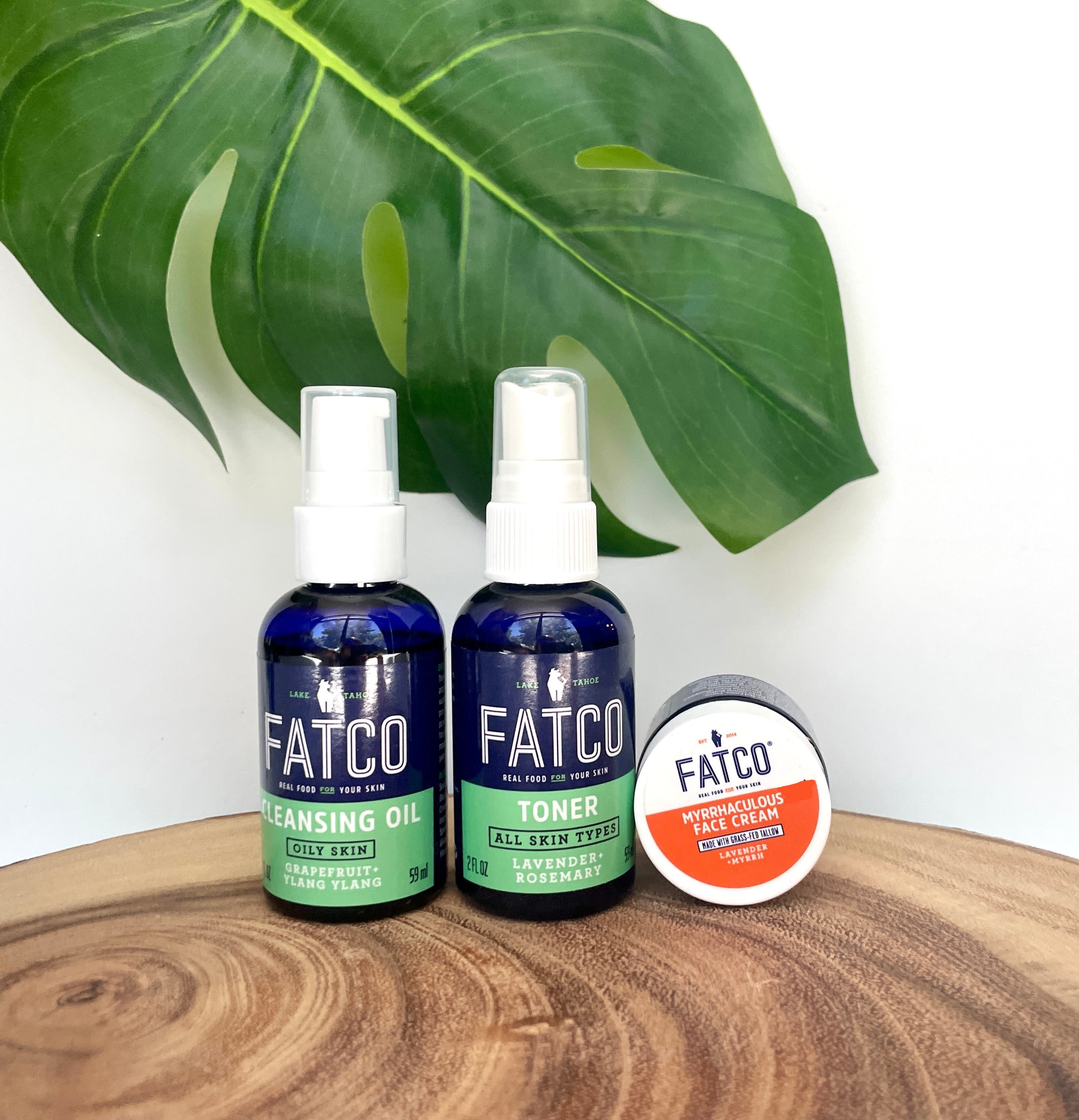
If you want to have calm & comfortable skin with certainty of what's in the product, check out FATCO for these simple, safe-to-use, while pregnant items:
-
Unmyrrhaculous face cream 2 oz
If you're looking for a pre-packaged solution and want a bundle that includes both cream and oil that are safe for pregnant women, you should purchase the moisturizing power pack pregnancy safe bundle.
Alternatively, if you have oily skin and would like to have a routine, you could purchase a facial skincare set for oily skin.
This is also where the pregnancy safe face cream really gets the spot, because oily breakout-prone skin often needs moisture and the right amount of formula.

What’s Inside and Why It Supports Acne-Prone Pregnancy Skin
A pregnancy safe face cream routine works well when it supports your barrier (so skin feels calmer) without any heaviness. FATCO’s pregnancy safe unmyrrhaculous line is created around this idea, and it clearly notes that myrrh essential oil is removed to make these options pregnancy safe.
What’s inside (key highlights)
-
Tallow from grass-fed cows is the main ingredient in the unmyrrhaculous cream, giving a rich, barrier-supporting base.
-
The cream has a blend of nourishing oils and butters like shea butter, jojoba oil, pumpkin, seed oil, extra virgin olive oil, avocado oil, argan oil, and rosehip seed oil.
-
The product includes beeswax, which creates a protective barrier that keeps its contents secure, whereas it uses supportive oils from evening primrose oil, borage oil, and moringa oil to provide additional protection.
-
The unMyrrhaculous face oil combines various plant oils to provide moisturizing benefits, while FATCO recommends its use as a basic skincare product that users should apply following their cleansing routine.
Why does this help acne-prone pregnancy skin?
-
The skin will show less "angry" behavior when barrier support exists because more stable skin barriers make breakouts appear less red.
-
Pregnancy skin requires special hydration because it can develop both oily and dehydrated conditions, and moisturizing helps control these issues.
-
The cream provides daily usage while users can apply a small amount of oil to specific areas between their cheeks and flaky patches to maintain a lighter weight on oily zones.
Your “No-Stress” Routine To Start This Week
You should start your evaluation after 10 to 14 days of using one moisturizer, which you should use as your only product. Most days require you to use a mild cleanser, which you should apply before you dry your skin, and then you should use a pea-sized amount of pregnancy safe face cream.
You should apply the oil treatment only when your skin experiences tightness or flakiness or shows signs of excessive reaction.
To treat your pregnancy skin issues, pregnancy safe face oils help to nourish your skin the way you want during pregnancy.
A pregnancy safe face cream should make your routine feel calmer, not hectic, and should support your skin without harming it.