Organic Beef Tallow: What the USDA Seal Actually Tells You
Organic beef tallow is rendered fat from cattle raised under the USDA's National Organic Program: certified organic feed, no synthetic hormones or antibiotics, and no prohibited pesticides on the land they grazed. That is a real, audited standard, but it answers a narrower question than most shoppers assume, and it is not the same thing as grass-fed.
Key Takeaways
- "USDA Organic" is a feed and management standard, not a fat-quality standard. It governs what the animal ate and how it was raised, not the fatty acid profile of the rendered fat.
- The organic rule explicitly allows feedlot finishing. 7 CFR 205.239(d) permits yards, feeding pads and feedlots for finish feeding rations, exempts slaughter stock from the 30 percent pasture requirement during that window, and caps the finishing period at one fifth of the animal's total life or 120 days, whichever is shorter.
- Organic and grass-fed are different claims that can overlap or stand alone. An animal can be organic and grain-finished, or grass-fed and not organic-certified. Read both words separately on a label.
- "Grass-fed" has no federal standard behind it at all. USDA's Agricultural Marketing Service withdrew its Grass (Forage) Fed Marketing Claim Standard on 12 January 2016 (81 FR 1386), so unlike the organic seal, the term now rests on whatever private standard a producer names.
- The USDA Organic seal requires third-party certification. A brand cannot self-apply the seal; a USDA-accredited certifying agent has to verify the operation first.
- For multi-ingredient skincare, the label math matters. A product needs at least 95 percent certified organic content to carry the "organic" claim and seal, or at least 70 percent to say "made with organic [ingredients]," with no seal allowed at that lower tier.
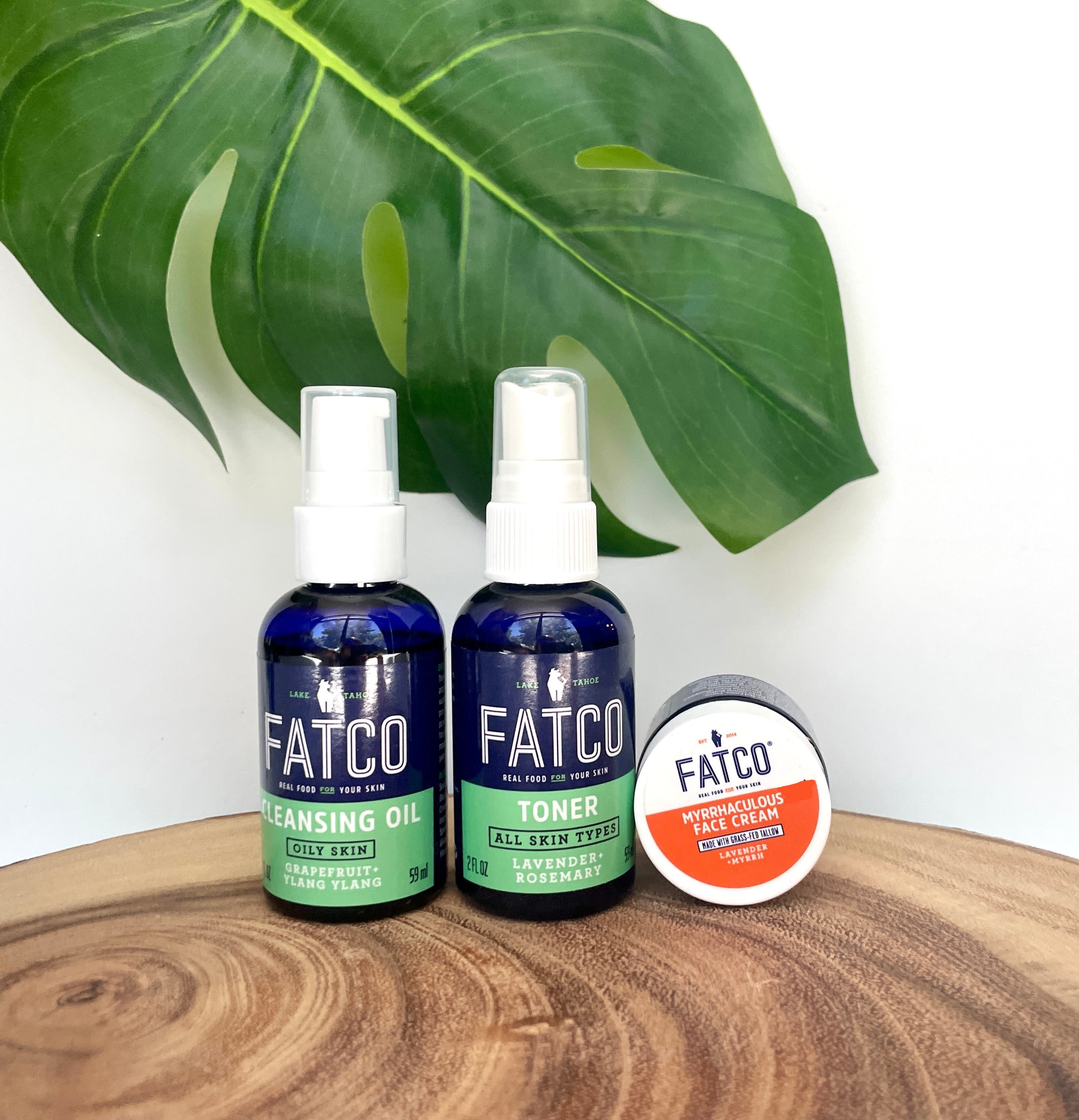
- FATCO's tallow is sourced grass-fed, not USDA Organic-certified, and some of its plant-based ingredients (not the tallow itself) carry an organic designation. The two sourcing claims solve different problems, and it helps to know which one you're actually buying.
What "USDA Organic" Actually Certifies
The USDA Organic label is administered by the Agricultural Marketing Service through its National Organic Program. For livestock, certification means the animal was raised under organic management going back to the last third of gestation, or no later than the second day of life for poultry.
Producers have to feed livestock agricultural feed products that are 100 percent organic, supplemented only with allowed vitamins and minerals. Synthetic hormones and antibiotics are off the table; an animal treated with a prohibited substance can no longer be sold as organic. Ruminants like cattle also have to be out on pasture for the entire grazing season, which the regulations set at not less than 120 days a year, and get at least 30 percent of their dry matter intake from that pasture, averaged across the season.
That last requirement is where organic and grass-fed start to look similar, and it's worth pausing on, because the rule carves out an exception exactly where a tallow buyer would care most. Under 7 CFR 205.239(d), ruminant slaughter stock is described in the regulation itself as "typically grain finished," yards and feedlots may be used to provide finish feeding rations, and during that finishing period the animal is exempt from the 30 percent pasture minimum altogether.
The exemption is bounded, and the bound cuts both ways. The finishing period may not exceed one fifth of the animal's total life or 120 days, whichever is shorter, so an organic animal cannot be feedlot-finished for most of its life. But it can spend its last few months on organic grain and still carry the seal, which is the specific thing shoppers tend to assume the seal rules out.
The seal does not require "grass-finished" (a 100 percent forage diet through slaughter), and it says nothing about the fatty acid composition of the resulting fat, which is the part that actually matters once tallow ends up in a jar on your bathroom shelf. Organic certification is an audited paper trail covering inputs, recordkeeping, and prohibited substances, not a guarantee about what the final fat looks like on a molecular level.
Organic vs. Grass-Fed: Two Different Questions
It helps to think of these as separate axes rather than a spectrum from "less natural" to "more natural."
Organic is about inputs and management: what the animal was fed, whether synthetic substances were used, and whether a certifying agent verified all of it on paper. Grass-fed is about diet composition: whether the animal's calories came primarily or entirely from forage rather than grain. A producer can run a fully organic operation and still finish cattle on organic corn for up to 120 days before slaughter. Another producer can raise 100 percent grass-fed, grass-finished cattle without ever pursuing USDA organic certification, often because the certification process is expensive and paperwork-heavy for a small farm that is already doing the work.
There is an asymmetry worth naming here. Organic is a real audited standard with a regulation behind it. Grass-fed, since AMS withdrew its Grass (Forage) Fed Marketing Claim Standard in January 2016, is not. Producers who had been using the USDA standard were told to convert it into a private standard, adopt another recognized one, or write their own, which is why two "grass-fed" labels can mean genuinely different things today.
For tallow specifically, the diet question is still the one with more downstream effect on the fat itself, but the effect is narrower than most shoppers assume. A 2010 review in Nutrition Journal found that total saturated fat does not differ between grass-finished and grain-finished beef. What does shift is the detail: grass finishing raises conjugated linoleic acid and omega-3 fatty acids, roughly triples alpha-tocopherol (vitamin E), and raises beta-carotene, which is also why grass-finished fat can look yellowish. FATCO's own breakdown of why a grass-fed diet changes the cow's fat composition covers the same mechanism from the brand's side. That is a separate, and arguably more relevant, question from whether the operation is organic-certified.
This is also why "organic beef tallow" and "grass-fed beef tallow" are not interchangeable search terms, even though shoppers often use them as if they were. If what you actually care about is the cow's diet and the fat's resulting profile, grass-fed is the more specific claim to look for. If you care about the absence of synthetic hormones, antibiotics, and pesticide inputs with third-party verification, organic is the more specific claim.
What Organic Means for the Fat Itself
Buying organic beef tallow gets you a verified absence of certain inputs. It does not, by itself, get you a particular texture, scent profile, or fatty acid composition. Two jars of "organic beef tallow" from two different producers can vary meaningfully depending on whether the cattle were grass-finished or grain-finished within that organic system, how the fat was rendered, and which part of the animal the fat was sourced from (suet versus trim fat, for instance).
That doesn't make the organic claim meaningless. For someone specifically trying to avoid synthetic hormone and antibiotic exposure, or who wants a documented, audited supply chain, organic certification answers a real and legitimate question. It just is not the same question as "will this moisturize my skin barrier well" or "does this come from a 100 percent grass-fed animal." Both claims can be true on the same label, but neither one implies the other.
How to Read an Organic Beef Tallow Label
A few practical checks make the label easier to parse:
- Look for the actual seal, not just the word "organic." The round USDA Organic seal can only appear on products with at least 95 percent certified organic content. "Made with organic ingredients" (70 percent threshold) does not carry the seal.
- Check whether "grass-fed" appears as a separate claim. If it's absent, assume the organic certification alone doesn't tell you the cattle's finishing diet.
- Look for a certifying agent's name or number, often printed in small text near the seal. That's the USDA-accredited body that did the audit.
- For skincare specifically, check what fraction of the formula the tallow itself represents versus other plant oils that might carry their own, separate organic designation.
Organic vs. Grass-Fed vs. Conventional Tallow
| What the Claim Guarantees | Typical Feed | Certifying Body | What to Verify | |
|---|---|---|---|---|
| FATCO grass-fed tallow | Sourced from grass-fed, pasture-raised cattle (not USDA Organic-certified) | Pasture forage | None (sourcing claim, not third-party certified) | Confirm "grass-fed" or "pasture-raised" language on the product page |
| USDA Organic beef tallow | Organic feed, no synthetic hormones/antibiotics, audited management | At least 30% of dry matter intake from pasture across a grazing season of 120 days or more, with a finishing exemption of up to 120 days or one fifth of the animal's life | USDA-accredited certifying agent | Look for the seal and certifier name; confirm 95%+ organic content for the seal tier |
| Grass-fed (non-certified) beef tallow | Nothing by federal rule. AMS withdrew its grass-fed standard in 2016, so the term means whatever standard the producer follows | Forage, to a degree the producer defines | Usually none, or a private or third-party program the producer names | Ask which grass-fed standard they use, and whether it means grass-finished or just grass-started |
| Conventional beef tallow | Food-safe rendered fat; no specific feed or input standard | Grain-finished (typical feedlot diet) | None | Check rendering method and fat source (suet vs. trim) since sourcing claims are minimal |
No price-tier label applies here since none of these are FATCO's actual organic-certified product line. Read the table as a guide to what each claim verifies, not a buying recommendation ranked by tier.
Verifying an Organic or Grass-Fed Tallow Claim
A few things to check before trusting any sourcing claim, organic or otherwise:
- Ask for the certifying agent's name if a seller claims USDA Organic but doesn't show the seal clearly. Legitimate operations have this on file and should provide it without hesitation.
- Distinguish "USDA Organic" from "all-natural," "clean," or even "grass-fed." The first two are marketing language with no audit behind them. "Grass-fed" is a stronger claim than either, but since the 2016 withdrawal of the AMS standard it is not a federal one, so ask which standard the producer follows.
- For tallow used on skin, ask what the diet was, not just whether it was organic. Grass-finished and grain-finished organic cattle can produce noticeably different fat.
- Check rendering and filtering separately. Neither organic nor grass-fed certification says anything about how clean or fine the rendering process was, and that affects how the tallow feels and smells on skin. If you're sourcing tallow online, the rendering method and fat source matter as much as any sourcing certification on the label.
Who Should Care About Organic Certification
Organic certification matters most to people specifically trying to avoid synthetic hormone or antibiotic exposure with an audited paper trail behind the claim, rather than taking a producer's word for it. It's a legitimate priority, and the certification process exists precisely to give that assurance a third-party stamp.
If your priority is instead the fatty acid profile and nutrient density of the fat itself, the diet question (grass-fed versus grain-fed) is the more directly relevant claim to chase, with or without organic certification attached. Plenty of small, regenerative farms raise genuinely grass-fed cattle without pursuing USDA organic paperwork, simply because certification costs and recordkeeping are a real burden for an operation that may already be doing the underlying work.
Got Questions?
Organic Tallow FAQ
Q Does "organic beef tallow" mean the cattle were grass-fed?
No. USDA organic certification governs feed inputs, prohibited substances, and management practices, including a grazing season of at least 120 days with at least 30 percent pasture intake. It does not require grass finishing. Under 7 CFR 205.239(d) an organic animal may be feedlot-finished for up to 120 days, or one fifth of its life, whichever is shorter.
Q What does the USDA Organic seal require for a beef tallow product?
For single-ingredient rendered tallow, the seal means a USDA-accredited certifying agent verified the operation's organic system plan and records against the National Organic Program rules. For a multi-ingredient skincare product, at least 95 percent of the content has to be certified organic before the seal can appear at all.
Q Is organic beef tallow better for skin than grass-fed beef tallow?
They answer different questions, so "better" depends on what you're prioritizing. Organic certification verifies feed and input standards with a third-party audit behind it. Grass-fed describes diet composition, which is more directly tied to the fat's vitamin E, CLA and omega-3 content, but it carries no federal standard since 2016. Many producers achieve one without the other.
Q Can a product say "made with organic ingredients" without being USDA Organic-certified tallow?
Yes. The 70 percent threshold for "made with organic [ingredients]" labeling lets a formulator highlight individual organic ingredients (often plant oils) without that designation extending to every ingredient in the jar, including the tallow itself if it isn't separately certified. Check the ingredient list for which specific items are marked organic.
Q How do I verify a seller's organic claim is legitimate?
Ask for the name of their USDA-accredited certifying agent, which any genuinely certified operation will have on hand. The round USDA Organic seal itself is also a reliable visual marker, since it can only legally appear on products meeting the 95 percent organic content threshold.
Q Does FATCO use USDA Organic-certified tallow?
No. FATCO's tallow is sourced from grass-fed, pasture-raised cattle rather than carrying USDA Organic certification. Some plant-based ingredients in products like the Fat Stick are separately marked organic, but the tallow itself is a grass-fed sourcing claim, not a certified-organic one.
The FATCO Alternative
FATCO doesn't carry USDA Organic certification on its tallow, and we'd rather tell you that plainly than let the word "organic" do work it hasn't earned. What FATCO does source is grass-fed, pasture-raised tallow, rendered for skin rather than for the stovetop, because the diet and the rendering process are what actually shape how a fat performs on your face. If the cow's diet is the claim you care about, that's the one worth checking first.