Lavender Oil in Skincare: Benefits and Who Should Skip It
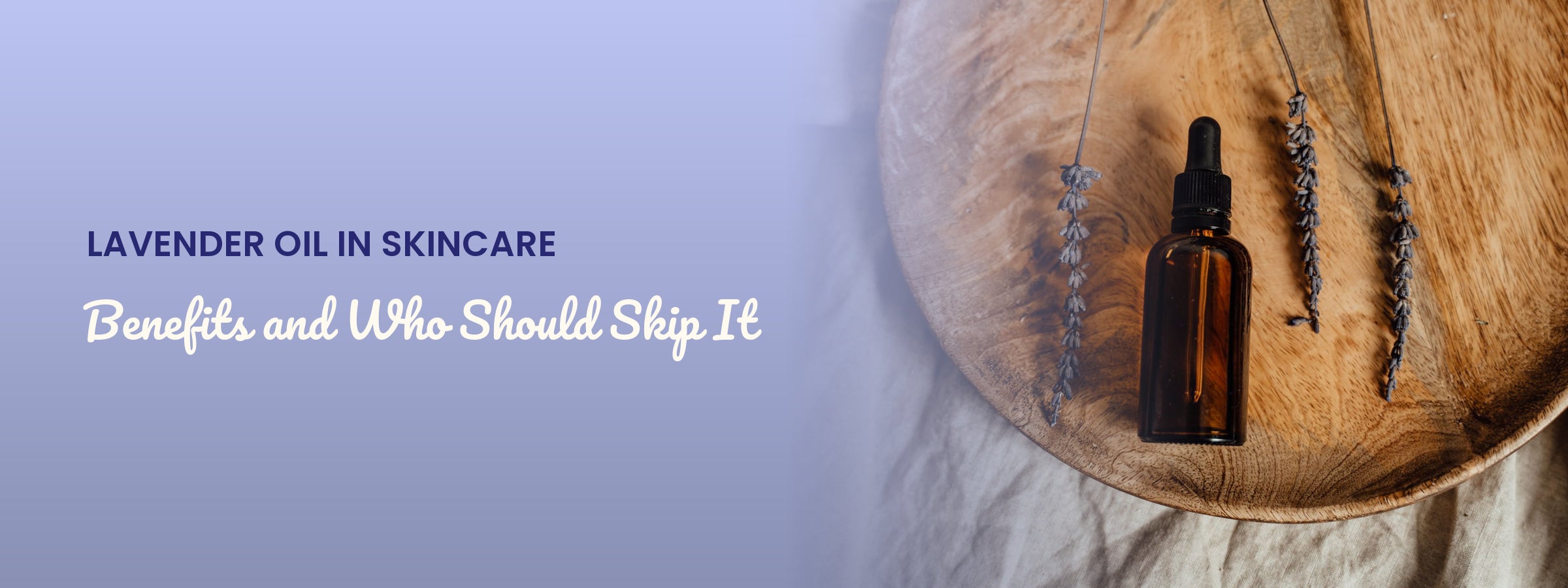
Lavender oil for skin is mainly a scent ingredient. Its best human results come from small wound-care studies. The skin risk the health sources name is allergy, and it grows as the oil reacts with air. If your skin tolerates it, use it diluted and after a test spot. A few groups should check with a doctor first, and anyone who reacts to fragrance is better off without it.
Key Takeaways
- Two compounds carry the scent. Lavender oil is steam-distilled from the flowering tops of Lavandula angustifolia, and its main components are linalool and linalyl acetate.
- Small wound trials carry the skin evidence. A review published in 2020 found six episiotomy trials with 415 women and asked readers to treat its results with caution. There's no published randomized trial of lavender oil for acne or eczema.
- Air turns it into an allergen. Linalool and linalyl acetate oxidize in air into contact allergens. In a study of 2,900 dermatitis patients, 6.9% reacted to oxidized linalool.
- The hormone question is still open. Published reports describe 12 children whose breast growth faded after they stopped lavender or tea tree oil products. A review published in 2023 found too little evidence to call the oils the cause.
- FATCO uses lavender oil widely. FATCO's face creams, face oils, Toner, Cleansing Balm and the Dry and Normal/Combo Cleansing Oils all list it, along with several body, deodorant and hair products. Check the label if lavender or fragrance has bothered you, and if you're pregnant, ask your doctor first.
Two Compounds, One Flower
Lavender oil is the essential oil of Lavandula angustifolia, made by passing steam through the plant's flowering tops. Its main components are linalool and linalyl acetate. Linalool is the fragrance compound known for giving lavender its smell.
Europe's medicines regulator accepts lavender oil medicines on the strength of long use, for the relief of mild stress and exhaustion and to aid sleep. Those medicines are taken by mouth or added to a bath, and none of the uses it accepts is a skin condition.
In cosmetics, lavender oil is used mostly for its scent, which makes it a fragrance ingredient like any other, plant origin or not.
The Trials Behind Lavender Oil for Skin
More high-quality research is needed before anyone can draw reliable conclusions about how well lavender works.
A review published in 2020 on lavender essential oil and wound healing kept 20 studies: 7 human clinical trials, 5 animal trials, 2 lab studies and 6 earlier reviews. Across them, treated wounds healed faster and showed more collagen, but the authors called for standardized oils and more high-quality human trials.
Episiotomy Healing
A systematic review published in 2020 found six trials of lavender for episiotomy healing, with 415 participants, and reported less pain and better healing with lavender in any form. All six came from developing countries, and the pain results varied a lot from trial to trial, so the authors said the findings should be considered with caution.
One trial, published in 2011, randomized 120 women after childbirth to lavender oil or povidone-iodine for episiotomy care, with 60 in the lavender group. By day 10, redness was significantly lower with lavender. The share of women with no pain, and the rate of complications, did not differ significantly.
There's no published randomized trial of lavender oil for acne or eczema.
When Lavender Oil Turns Allergenic
Pure linalool is not allergenic, or only very weakly. The problem is air. Linalool and linalyl acetate react with oxygen and form hydroperoxides, the compounds behind the allergy, and lavender oil lacks natural protection against that change. In mouse tests, the oil's power to sensitize rose as it oxidized.
Patch-test clinics see the result. In a study published in 2012, 2,900 consecutive dermatitis patients in six countries were tested with oxidized linalool, and 6.9% reacted, from 3% to 13% depending on the clinic.
A later series tested oxidized lavender oil itself on patients with suspected contact allergy, and 2.8% reacted. Only about half of them also reacted to the fragrance markers in the standard test series, so a routine patch test can miss a lavender allergy.
Oxidation doesn't wait. In linalyl acetate left exposed to air, hydroperoxides showed up early and kept building over 42 weeks, so an often-opened old bottle is not the oil it was on day one.
Topical products containing lavender may cause allergic skin reactions in some people. In patch tests, oxidized lavender oil has shown among the highest allergy rates of the essential oils studied.
The Breast Growth Reports in Children
A report published in 2007 in the New England Journal of Medicine described three otherwise healthy boys. Each developed breast tissue before puberty while using products containing lavender and tea tree oils. In each boy it resolved shortly after the products stopped. In human cell lines, both oils showed estrogen-like and anti-androgen activity, and the authors concluded the oils probably caused it.
A report published in 2019 added three girls and one boy with early breast growth after continuous use of lavender-scented products. The growth faded in all four once the products stopped. Its authors called the oils a possible source, but wrote that whether lavender oil is estrogenic enough to cause these effects is unknown.
A review published in 2023 counted 12 children in the reports since 2007, 8 boys and 4 girls, and found insufficient evidence to call the oils the cause. It points to limited skin penetration of some components, unknown amounts of oil in the products, and breast growth of this kind often going away by itself.
A parent survey published in 2022 covered 556 children and found no cases of prepubertal breast growth in boys. Its larger donors were two aromatherapy organizations and the Australian Tea Tree Industry Association, an industry group for one of the two oils in question. The US National Center for Complementary and Integrative Health says it's unclear whether lavender was responsible in the few reported cases.
Who Should Skip It, or Check First
Skip lavender oil if fragrance has given you a rash before, or if a patch test has shown an allergy to linalool or lavender. For skin that reacts easily, a fragrance-free moisturizer is the simpler choice.
Keep it off broken skin. Poison control advises against using essential oils on damaged skin. The European monograph rules out full lavender baths with open wounds, large skin injuries or acute skin disease.
Pregnancy, Children and Medicines
Europe's medicines agency says the safety of its lavender oil medicines in pregnancy and breastfeeding has not been established, and does not recommend them then. The US national center says little is known. If you're pregnant or breastfeeding, take the question and the product label to your doctor or midwife before using it.
For children, the European agency does not recommend its lavender oil medicines under age 12. Poison control suggests discarding essential oil bottles in homes with young children; otherwise, they must be locked up out of sight and reach.
If you take any medicine, the US national center advises talking with your health care provider before using lavender. There are theoretical reasons it might interact with some sedative drugs.
Using It on Skin: Dilution and a Test Spot
Pure essential oil is potent, so mix it into a carrier oil before it touches skin. Poison control names dilution as the best way to avoid a reaction. Not every essential oil suits the skin, so follow the instructions on the bottle.
A finished cream or balm that lists lavender has already set the dilution. The test spot still applies. The American Academy of Dermatology's advice is two applications a day on one small area, for a week to 10 days. Pick a quarter-sized area that won't get rubbed or washed off, like the underside of the arm. If the skin turns red, itchy or swollen, wash the product off and don't use it again.
If a rash keeps coming back, a dermatologist can patch test you for fragrance allergy. Mention lavender and ask about oxidized linalool, because the routine fragrance markers don't catch every case.
Lavender on FATCO Labels
Lavender oil is on a long list of FATCO labels: Myrrhaculous and Unmyrrhaculous Face Cream, both face oils, the Toner, the Cleansing Balm and the Dry and Normal/Combo Cleansing Oils. Calming Body Butta, Myrrhaculous Body Butta, the Lavender Fat Bar, the Lavender + Peppermint Fat Stick, the Purple Shampoo Bar, Pit Spritz, the Lavender + Sage Stank Stop cream and stick, and the sets built from them carry it too.
In the face creams, lavender essential oil is one of the last ingredients, well behind the grass-fed tallow that leads both labels. Myrrhaculous follows it with myrrh essential oil. Unmyrrhaculous drops the myrrh, but lavender essential oil is still on its label, so if you're pregnant, bring its label to that conversation with your doctor too.
Calming Body Butta pairs lavender with clary sage essential oil over a base of grass-fed tallow and butters. The Lavender Fat Bar is a tallow soap with kaolin clay, colloidal oats and lavender essential oil. For underarms, an unscented deodorant leaves lavender out along with every other scent.
Several of these products also contain nut-derived oils, such as argan in the face creams, macadamia in the face oils and those two Cleansing Oils, walnut in the Cleansing Balm, and almond in Calming Body Butta and the Fat Stick. If you avoid nuts, read the whole label first.
Got Questions?
Frequently Asked Questions
Q Can you apply lavender oil directly to the skin?
It's better diluted. Blend it into a carrier oil first and keep it off damaged skin, as poison control advises. A finished cream already has it blended in, though a test spot for seven to 10 days is still worth doing.
Q When should you not use lavender oil?
Skip it if fragrance or linalool has given you a rash before, and keep it off broken skin. If you're pregnant or breastfeeding, ask your doctor first: Europe's medicines agency doesn't recommend its lavender oil medicines then, or under age 12, because their safety there hasn't been established.
Q What are the potential downsides of using lavender oil?
On skin, the main one is allergy, which becomes more likely as the oil oxidizes in air. A smaller, unsettled question is hormonal. A handful of children developed breast growth while using lavender or tea tree products, and it faded when they stopped. Reviewers still disagree on whether the oils caused it.
Q Which essential oils should not be used on skin?
Not every essential oil suits skin, so follow each product's instructions and keep all of them off damaged skin. Oxidized oils are a known problem. Air-exposed lavender oil forms hydroperoxides that sensitize skin more strongly than fresh oil does, and oxidized tea tree oil is thought to behave in a similar way.
Q Where is the best place to rub lavender oil?
Europe's regulator accepts lavender oil medicines only by mouth or in a bath, for stress and sleep, on the strength of long use. If you do use it on skin, choose intact skin, diluted, after a test spot. In FATCO's tallow face creams, it comes already blended near the end of the label.
The FATCO Alternative
If lavender agrees with your skin, FATCO's face creams are where it meets real fat. Grass-fed tallow leads Myrrhaculous and Unmyrrhaculous, with jojoba, rosehip seed and argan among the oils, and lavender essential oil near the end. Give a new jar a test spot first, and if fragrance has bothered you before, pick a formula without lavender.