What Is a Hyaluronic Acid Moisturizer (And Does It Actually Work)?

Hyaluronic acid moisturizers are everywhere right now, and the hype is largely deserved. HA is a hygroscopic molecule able to bind up to a thousand times its volume in water, making it one of the most effective hydrating ingredients in clean personal care. The catch nobody talks about: HA is a humectant, not an occlusive. Without a sealing layer on top it may not hold what it attracts, and dermatology references note some humectants can make dryness worse in that situation. That gap is exactly where tallow fits in.
Key Takeaways
- Hyaluronic acid is a humectant, meaning it draws water from your environment and deeper skin layers up to the surface. It does not seal that water in.
- Without an occlusive layer on top, the moisture HA attracts can evaporate again, and StatPearls notes that some humectants can increase water loss through the skin and worsen dryness when nothing occlusive follows. This is most likely in low-humidity conditions.
- Tallow is an occlusive fat, forming a lipid layer that slows water loss from the skin surface. The two ingredients are complementary, not competitors.
- Layering order matters: apply HA first on damp skin, then seal immediately with a tallow cream or another occlusive before the HA dries.
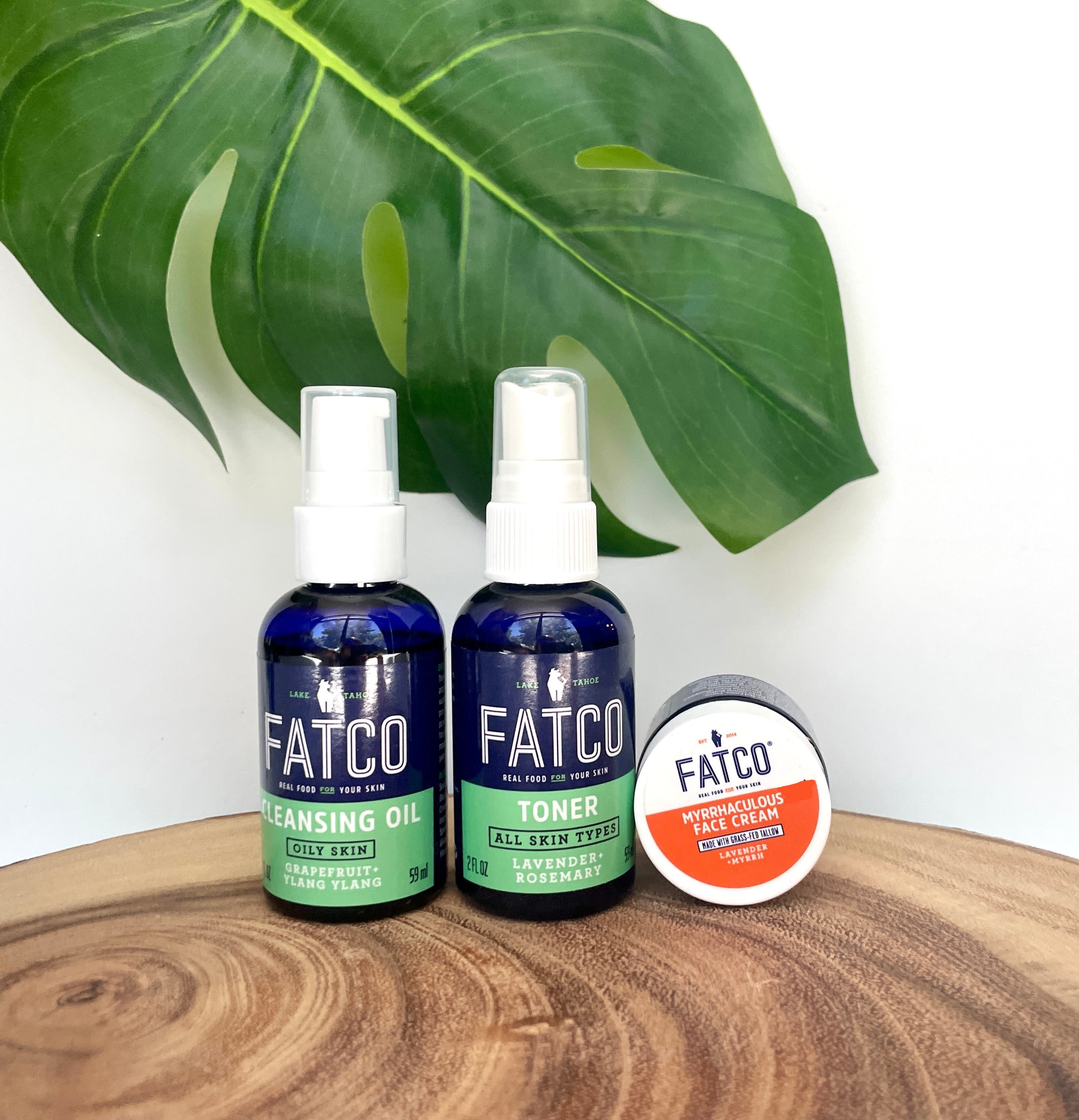
- FATCO's tallow-based face creams work as the occlusive half of this pairing for people who want a clean, ingredient-simple approach.
What Is a Hyaluronic Acid Moisturizer?
Hyaluronic acid is a glycosaminoglycan, a type of sugar molecule that occurs naturally in your skin, joints, and connective tissue. Its primary job is to keep those tissues lubricated and hydrated. In your skin specifically, HA concentrates in the dermis, the deeper layer below the surface, where it helps regulate water balance and maintain the structure that gives skin its plumpness.
As you age, natural HA levels in the skin decline. Topical HA products borrow from the molecule's natural function and apply it to the skin's surface, where it can draw moisture from the environment and from the dermis up toward the outer layer.
How Hyaluronic Acid Works as a Humectant
The term you'll see most often in skincare explanations is humectant. Cleveland Clinic describes humectants as ingredients that draw moisture from the dermis to the epidermis, the topmost layer of skin you can see and touch. Hyaluronic acid is one of the most effective humectants available because of how much water a single molecule can attract and hold.
A 2022 review in Dermatologic Therapy describes HA as a hygroscopic molecule able to bind 1,000 times its volume in water, which explains why even a small amount in a serum or cream can produce a noticeable plumping effect. (Worth knowing: several of that review's authors work for L'Oréal, which owns HA-serum brands, so treat the figure as the standard cited value rather than an independent measurement.) A well-formulated HA serum or moisturizer will increase surface hydration quickly, often within minutes of application.
The result is skin that feels softer, plumper, and more supple. For someone dealing with tight, dehydrated skin, a hyaluronic acid moisturizer can make a noticeable difference. So far, so good.
Why HA Alone Can Backfire (The Occlusive Gap)
Here is the nuance most product marketing skips: hyaluronic acid attracts water, but it cannot hold that water against evaporation. Once HA has pulled moisture to the surface, that moisture is now sitting in a place where air, wind, and low humidity can pull it right back out.
Humidity is the variable. StatPearls puts the threshold plainly: humectants can hydrate the skin from the air when humidity is more than 70 percent, but more commonly they draw water from the deeper epidermis and dermis instead. In dry climates, low indoor humidity, or winter heated air, that is the mode HA is working in. StatPearls adds that some humectants can increase water loss through the skin and worsen dryness without an occlusive moisturizer used alongside them. Note the hedge in the source: some humectants, not all, and the effect is a risk rather than a certainty.
This is not a flaw in the ingredient. It is a limitation of humectants as a class. They hydrate; they do not seal. To complete the job, you need an occlusive ingredient on top.
What an Occlusive Does
An occlusive creates a physical barrier on the skin surface that slows transepidermal water loss, the technical term for moisture escaping through your skin into the air. StatPearls names petrolatum as the classic and most effective example, reducing water loss through the epidermis by nearly 99 percent. Occlusives do not add water. They hold in the water that is already there, including everything the HA just delivered.
How Tallow Seals In HA's Hydration
Tallow is rendered beef fat. Its dominant fatty acids are oleic, palmitic, and stearic, and a 2025 analysis in the Journal of Cosmetic Dermatology notes that tallow and human sebum both carry high proportions of palmitic and oleic acid, which lets tallow integrate into the skin's lipid matrix and support barrier function. It shares those fatty acids with the skin's surface lipids; it is not a copy of sebum, which also contains lipids such as squalene and sapienic acid that tallow does not.
When you apply a tallow cream over a hyaluronic acid serum or moisturizer, the tallow layer does two things. First, it slows evaporation so the moisture HA attracted stays where it was delivered. Second, it adds lipids of the kind the skin barrier is built from, supporting the barrier function that keeps skin feeling comfortable through the day.
FATCO has written more about why beef tallow works so well in a skincare routine and why a healthy, intact skin barrier is the foundation of every good skincare routine. If you are new to tallow in skincare, those are good starting points.
The short version: tallow and hyaluronic acid play different but complementary roles. HA brings water in. Tallow keeps it there.
How to Layer HA and a Tallow Cream
The order of application determines whether this combination works or falls flat. Humectants first, occlusives second.
- Cleanse your face and leave it slightly damp. A few water droplets on the skin give the HA extra moisture to bind before you apply it.
- Apply your hyaluronic acid serum or moisturizer to damp skin. Press it in gently with your fingertips and let it absorb for 30 to 60 seconds.
- While skin still feels slightly tacky or damp, apply a small amount of tallow cream. A pea-sized amount is usually enough for the full face. The tallow seals the HA in before it has a chance to evaporate.
- In very dry conditions, you can add a second thin layer of tallow if your skin feels tight after the first application absorbs.
This layering routine is sometimes called the moisture sandwich in skincare communities: damp skin, humectant, occlusive. The tallow is the final piece that makes the humectant step actually stick.
If you are using a FATCO tallow-based moisturizer or one of the FATCO face creams, the application works the same way. Apply it as your final sealing step after the HA.
Got Questions?
Hyaluronic Acid Moisturizer FAQ
Q What is the difference between a hyaluronic acid serum and a hyaluronic acid moisturizer?
A serum is a thin, water-based formula with concentrated HA, meant to absorb fast and go on before a moisturizer. A moisturizer blends HA into a thicker, emollient base that adds some hydration on its own. Either way, both perform best under an occlusive seal, especially in dry or low-humidity climates.
Q Can I use hyaluronic acid every day?
Yes. HA is one of the gentler active ingredients in skincare and is suitable for daily use, including for sensitive skin. The main thing to watch is that you always follow it with a moisturizer or occlusive seal so the hydration it delivers stays in place.
Q Why does my skin feel dry after using hyaluronic acid?
It's likely a missing sealing step. Applied to dry skin with no moisturizer on top, HA pulls water to the surface, and dry air then pulls that same moisture right back out through evaporation. Applying it to damp skin instead, then following immediately with a tallow cream or other occlusive, closes that gap.
Q Is tallow comedogenic? Will it clog my pores?
It depends on formulation and individual skin chemistry more than the ingredient itself. FATCO's creams use grass-fed tallow, which the brand describes as dry-rendered and triple-filtered, and which shares its two dominant fatty acids, palmitic and oleic, with the skin's surface lipids. Many people with acne-prone skin use it without issues, but patch-test first if unsure.
Q What is the best hyaluronic acid moisturizer for dry skin?
For dry skin, what you layer on top usually matters more than which HA product you buy, because the humectant step alone does not hold water in dry air. A basic serum sealed with a rich occlusive is the routine most dermatology references describe, and a tallow cream fills the occlusive slot. FATCO's face creams are built for that sealing role.
Q Does FATCO make a hyaluronic acid product?
No, FATCO focuses on tallow formulas that cover the occlusive half of the pairing instead. If you already like an HA serum, a FATCO tallow cream on top completes the routine without changing your HA step. Tallow works by adding lipids and slowing water loss rather than by attracting water, a different mechanism from a humectant.
The FATCO Alternative
If you want to skip the multi-step HA routine entirely, FATCO's tallow-based face creams take a simpler path: fewer ingredients, no synthetic humectants, and a lipid profile that works with your skin barrier rather than around it. For people who prefer the HA-plus-occlusive approach, FATCO's face care range makes a clean, ingredient-simple occlusive seal that completes the routine.