Face Wash and Acne: What Actually Helps Breakouts (and What Makes Them Worse)

A face wash for acne can only do two things well: remove what is sitting on your skin, and deliver an ingredient that addresses bacteria or clogged pores. Everything else, including how it foams, how it smells, and how "clean" your skin feels afterward, is not a sign that it is working.
Key Takeaways
- Two ingredients do most of the real work in an acne face wash: salicylic acid, which loosens the buildup inside pores, and benzoyl peroxide, which reduces acne-causing bacteria.
- A squeaky-clean feeling is not a good sign. Dry skin is irritated skin, and the American Academy of Dermatology's position is that anytime you irritate your skin you risk getting more acne.
- Washing more than twice a day makes acne worse, not better. Over-washing and scrubbing are two of the most common habits dermatologists ask patients to stop.
- Sulfates and harsh foaming agents can work against you by washing away the healthy fats your skin barrier needs, even while removing dirt and oil.
- Tallow is not an acne treatment. It has no published comedogenic rating, which is not the same as being proven safe for acne-prone skin. A gentle, oil-based cleanse can suit acne-prone skin that reacts badly to stripping foams, but whether it suits you depends on your own skin.
- Acne that is cystic, painful or scarring should go to a dermatologist now, not after another two months of cleansers.
What a Face Wash Can (and Can't) Do for Acne
Acne starts below the skin's surface. A pore gets blocked by a mix of dead skin cells and sebum, bacteria multiply in that blocked environment, and inflammation follows. A face wash only touches the top layer of that process. It cannot reach a forming cyst, and it cannot rebalance the hormones or genetics that drive breakouts in the first place.
What it can do is meaningful, just narrower than most marketing suggests:
- Remove excess surface oil, sweat, sunscreen, and makeup so they do not sit in pores between washes.
- Deliver a small dose of an active ingredient, most often salicylic acid or benzoyl peroxide, for the brief time it is in contact with skin.
- Prep skin so leave-on treatments (retinoids, spot treatments, moisturizer) absorb evenly instead of fighting through oil or residue.
A cleanser supports an acne routine; it is not the star. If a face wash is doing the heavy lifting for a moderate or persistent case, expectations need resetting, not a stronger wash.
What a Good Face Wash for Acne Actually Contains
Salicylic acid
Salicylic acid is a beta hydroxy acid. The academy's plain description of what it does is that it opens clogged pores and exfoliates the skin, and that it is effective for whiteheads and pimples. Cleveland Clinic dermatologist Vickie Baker, MD, adds that salicylic acid is the pick for more sensitive skin types that get dried out easily, and that you will typically find it at 2% in face washes for acne.
Benzoyl peroxide
Benzoyl peroxide works differently. Dr. Baker calls it the number one ingredient for fighting acne: it fights bacteria, fights the clogging of pores, and has an anti-inflammatory effect that reduces redness, swelling and pain. Strengths run from as low as 2.5% up to a 10% maximum. Reaching for the strongest version is not automatically the answer, and the AAD's own warning about acne medication is blunt: applying more than your dermatologist recommends will not clear acne faster.
Gentle, low-lather surfactants
The cleansing base matters as much as the active ingredient in it. Look for formulas described as "creamy," "gentle," or "non-foaming" rather than a high-foam gel. A cleanser that lathers aggressively usually relies on stronger detergents to build that foam, and those same detergents strip the skin's protective oils along with the dirt. The same logic applies to choosing a cleanser for any reactive, easily-irritated skin type, not just acne.
What Makes Breakouts Worse
A face wash for acne can backfire just as easily as it can help, usually through one of four habits.
Sulfates and harsh detergents
Sodium lauryl sulfate and similar detergents create the thick lather many people associate with a "deep clean," but that lather comes at a cost. Cleveland Clinic's advice is to steer clear of acne face washes that use sulfates, which are known to dry out skin by washing away healthy fats and lipids. A stripped, irritated barrier is the problem here: dry skin is irritated skin, and irritating your skin puts you at risk of more acne.
Over-washing
Washing more than twice a day feels productive when skin is oily or breaking out, but it works against you. Washing your face throughout the day sits on the published list of skin care habits that can worsen acne, alongside scrubbing and using drying astringents. The reasoning is straightforward: washing several times a day further irritates your skin, which leads to more breakouts. Dr. Baker puts it the same way, that cleansing too often just keeps stripping your skin of oils.
Scrubbing and physical exfoliation
Washcloths, cleansing brushes, and gritty scrubs feel like they are doing more work. The same guidance is direct: scrubbing irritates your skin and causes acne to flare, and washcloths, sponges and other tools do the same. Its recommended technique is to apply a mild, non-comedogenic cleanser lightly with your fingertips, using a circular motion.
Drying your skin out on purpose
It is tempting to chase a tight, dry feeling after washing as proof that oil is gone. Drying out your skin is one of the ten habits on that same list, and the instruction if skin feels dry is to apply a moisturizer made for acne-prone skin twice a day and to avoid astringents and rubbing alcohol. If your face feels tight and uncomfortable after cleansing, that is a signal to switch products, not evidence the product is working.
How to Wash Acne-Prone Skin Correctly
This is the academy's own sequence, with the clinic agreeing on every step it covers.
- Wash twice daily, when you wake up and before bed, plus after any activity that makes you sweat. There is no need to cleanse more often than that.
- Apply the cleanser lightly with clean fingertips, using a circular motion. Skip washcloths, sponges and scrub brushes.
- Rinse it off with warm water, using only your fingers. Leftover cleanser on the skin can irritate.
- Pat dry with a clean towel rather than rubbing.
- Follow with any leave-on treatment as directed, then moisturize. If your skin feels dry, use a moisturizer made for acne-prone skin twice a day.
- Give a new product 6 to 8 weeks before judging it. That is how long it takes to see some improvement, and complete clearing generally takes 3 to 4 months.
How to Choose: Cleansing Approaches for Acne-Prone Skin
There is no universal best face wash for acne. The right pick depends on whether your skin leans dry, oily, sensitive, or inflamed, and on what is actually driving your breakouts.
| Approach | Who it suits | Caveats |
|---|---|---|
| FATCO Cleansing Oil (plant-oil based) | People whose acne coexists with dryness, sensitivity, or a reaction to foaming cleansers | Not a medicated acne treatment; no salicylic acid or benzoyl peroxide. Not fragrance-free: the Normal/Combo formula contains lavender, rosemary and lemongrass essential oils, so skip it if fragrance is one of your triggers |
| Salicylic acid face wash (~2%) | Sensitive or dry-leaning acne-prone skin; blackheads and clogged pores as the main concern | Can still dry out skin if overused; patch-test if you also use retinoids |
| Benzoyl peroxide face wash (2.5-10%) | Inflammatory acne with visible redness and active breakouts | Using more than directed will not clear acne faster; can bleach fabric and hair (Dr. Baker suggests a white washcloth) |
| Creamy, fragrance-free non-medicated cleanser | Very reactive or barrier-compromised skin, or as a "rest" cleanser between actives | Does not treat acne on its own; functions as the gentle base of a routine |
| High-foam gel/sulfate cleanser | Rarely the best fit for acne-prone skin | Dermatologist advice is to steer clear of sulfates in acne washes; gel-type formulas are often alcohol-based and dry sensitive skin |
The Over-Washing Myth
The idea that acne is caused by "dirty" skin and solved by washing harder is one of the most persistent myths in skincare. Acne is not primarily a hygiene problem. It is driven by hormones, genetics, inflammation, and how skin cells shed inside the follicle.
Washing removes surface debris, which matters, but scrubbing past that point does not reach the pore-level processes actually driving a breakout. It only adds irritation on top of a problem that was never about surface dirt.
Where Tallow Fits (Honestly)
Tallow shows up more and more in conversations about acne-prone skin, usually framed as either a miracle or a myth. Neither framing is accurate.
Start with what is actually known. Tallow shares fatty acids with the skin's surface lipids: a 2025 analysis in the Journal of Cosmetic Dermatology puts it as tallow and human sebum both carrying high proportions of palmitic and oleic acid. That overlap is partial and should not be oversold. Human sebum's most abundant fatty acid is sapienic acid, which the dermatology literature notes has not been found in the sebum of any other animal, and sebum also contains squalene and wax esters that tallow has none of. There is also no number to quote here: tallow has no published comedogenic rating. Absence of a rating is not evidence of safety, it is absence of evidence.
The honest concern worth naming is oleic acid, which is tallow's single largest component. The same 2025 analysis notes that oleic acid may have pro-inflammatory effects and trigger sebaceous gland hyperactivity, potentially worsening acne, and it ends its own lipid discussion by saying that tallow's classification as "non-comedogenic" on social media warrants further study. One thing to be clear about, because it gets repeated wrongly: acne-prone sebum is not simply "oleic-heavy." A review of lipid mediators in acne, published in Mediators of Inflammation, reports a raised C16:0 to C16:1 ratio in skin surface lipids and decreased amounts of linoleic acid in affected patients, and the monounsaturate the sebaceous gland pumps out most is sapienic acid, not oleic. That is why patch-testing before committing to a full routine matters more for acne-prone users than for most other skin types.
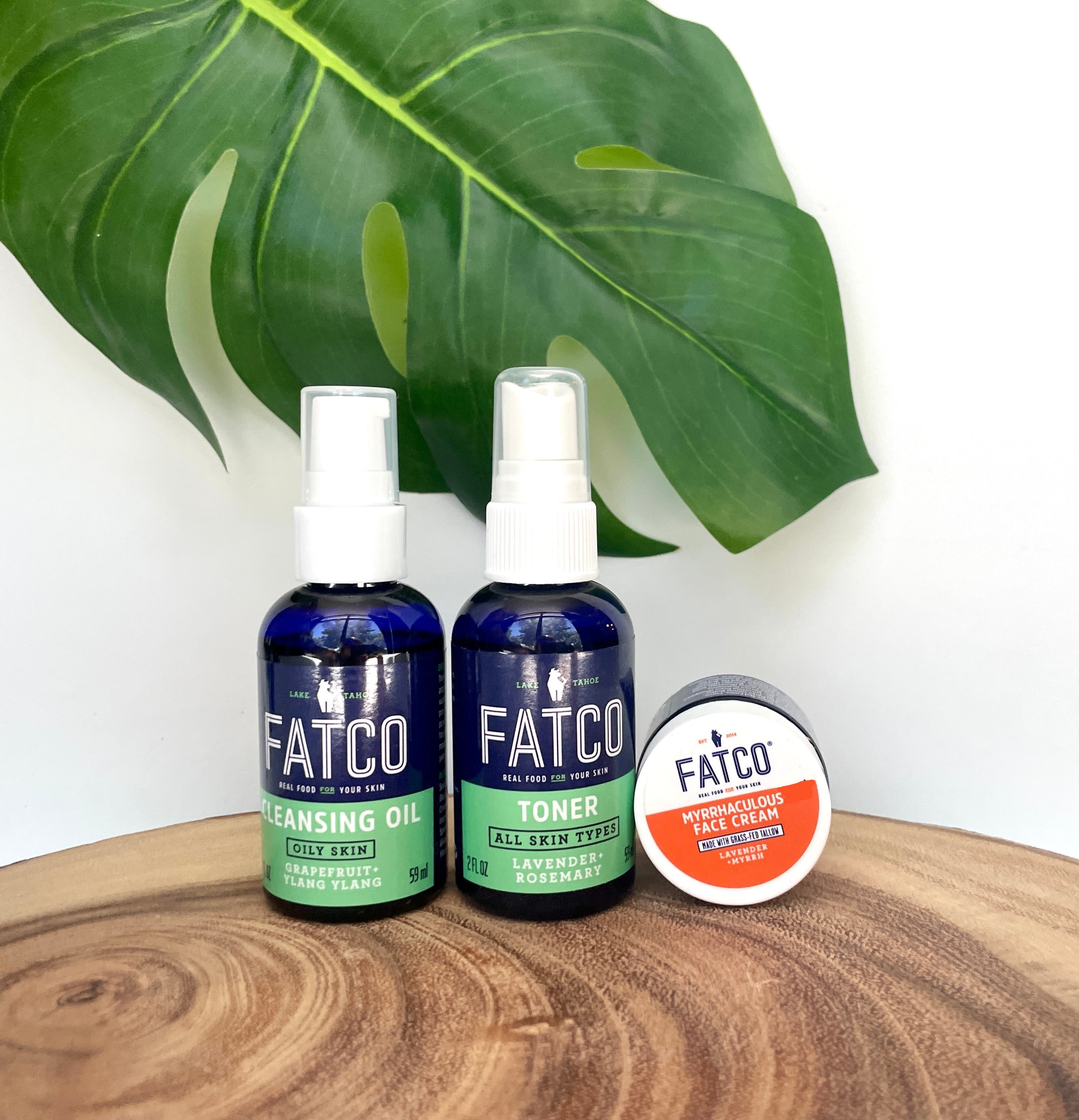
FATCO does not sell a foaming, medicated acne wash, and it would be dishonest to pretend it does. What FATCO offers instead is a plant-oil Cleansing Oil, formulated without sulfates or harsh detergents, for people who want a gentler alternative to a stripping foam. It is not fragrance-free: the Normal/Combo formula contains lavender, rosemary and lemongrass essential oils, so if fragrance is one of your triggers this is not your product. It is also not a substitute for salicylic acid or benzoyl peroxide if bacteria or inflammation drives your breakouts. Where it can make sense is if your acne coexists with dryness or a reactive barrier and a stripped, tight feeling after washing has been part of the problem. The same nuance applies on the moisturizer side: choosing a face lotion for acne-prone skin follows the same lightweight, barrier-first logic.
When Over-the-Counter Face Wash Isn't Enough
Two different situations here, and it matters which one you are in.
Go to a board-certified dermatologist now, without waiting, if your breakouts are cystic or nodular, painful, or leaving scars. Cleveland Clinic describes cystic acne as deep, pus-filled pimples and nodules that can cause scars, and says plainly that it usually needs medical treatment. Waiting out a cleanser trial while scarring develops costs you skin you do not get back.
For ordinary breakouts, give the product time first. The AAD's guidance is 6 to 8 weeks to see some improvement and 3 to 4 months for complete clearing, and it lists switching acne treatments every week or so as one of the habits that makes acne worse. If there is no improvement at all by 8 weeks, that is their own cue to try something else, and it is a reasonable point to book an appointment rather than buy a fourth cleanser. Persistent or inflammatory acne often needs a prescription approach that no face wash can replace.
Got Questions?
Acne Face Wash FAQ
Q What is the best face wash for acne?
There is no single best option. It depends on your skin type and what is driving your breakouts. Salicylic acid suits sensitive, dry-leaning acne-prone skin, benzoyl peroxide suits more inflamed, bacterial breakouts, and a gentle non-foaming cleanser suits reactive or barrier-compromised skin.
Q Which face wash is good for acne if my skin is also sensitive?
Cleveland Clinic's advice for sensitive skin is a creamy face wash rather than a gel-type one, which tends to be alcohol-based and drying. If you want an active ingredient, its dermatologist names 2% salicylic acid as the pick for skin types that get dried out easily. Patch-test before daily use.
Q Can I clear acne in 7 days with the right face wash?
No face wash clears acne in a week. Dermatology guidance is to use an acne product for 6 to 8 weeks before judging it, because that is how long it takes to see some improvement, and complete clearing generally takes 3 to 4 months. Faster claims oversell what a cleanser alone can do.
Q What face wash should I use if I'm also using a prescription retinoid like adapalene?
Choose the gentlest, most hydrating cleanser you can find, ideally fragrance-free and non-foaming. Retinoids already dry and sensitize skin, so pairing them with a stripping or actively exfoliating face wash compounds irritation instead of improving results. Save actives for the retinoid, not the cleanser.
Q Is oil-based face wash bad for acne-prone or oily skin?
Not inherently. Oil cleansing dissolves oil-based buildup (sebum, sunscreen, makeup) without stripping the skin barrier the way sulfate foams do. It is not a medicated treatment for active breakouts, but for oily skin that reacts poorly to harsh cleansers, it can be a gentler alternative worth testing.
Q Does tallow-based face wash help with acne?
It is not an acne treatment. Tallow has no published comedogenic rating, which is not the same as being proven safe, and its high oleic acid content is a genuine reason for caution: a 2025 review notes oleic acid may be pro-inflammatory and may drive sebaceous activity. It may suit acne-prone skin where dryness or barrier damage is the main issue. Patch-test first.
The FATCO Alternative
If harsh, stripping foams have been part of your acne frustration rather than the solution, FATCO's Cleansing Oil offers a gentler way to remove the day's buildup without the tight, over-cleansed feeling. It is not a medicated acne treatment, it is not fragrance-free (the Normal/Combo formula carries lavender, rosemary and lemongrass essential oils), and it will not replace salicylic acid or benzoyl peroxide if bacteria and inflammation are driving your breakouts. Acne is a medical condition, and nothing here diagnoses or treats it. For acne that also comes with dryness, sensitivity, or a reactive barrier, a plant-oil cleanse is worth trying alongside the basics: wash twice daily, use your fingertips, and give any new product 6 to 8 weeks.