Face Lotion for Acne-Prone Skin: How to Choose Wisely

Picking a face lotion for acne-prone skin sounds straightforward until you realize half the options on the shelf either break you out or leave your skin parched. The goal is not to avoid moisturizer. The goal is to choose one that works with your skin, not against it.
Key Takeaways
- Acne-prone skin still needs moisture. Skipping moisturizer causes the skin to overproduce oil, which worsens breakouts. Hydration and acne control are not opposites.
- Lightweight texture matters more than the "non-comedogenic" label. Gel-creams, water-gels, and thin fluid lotions are generally better tolerated than heavy creams or balms on acne-prone skin.
- Look for glycerin, ceramides, and niacinamide. These support the skin barrier and hydrate without contributing to pore congestion.
- Fragrance, heavy plant oils high in oleic acid, and occlusive waxes are the main triggers to avoid. They either irritate or sit on the skin surface in ways that can contribute to congestion.
- Tallow is not formally rated comedogenic, but it is high in oleic acid and low in linoleic acid, so acne-prone skin should always patch-test. Some people tolerate it well; others find it aggravates breakouts. Start slow.
- Persistent acne is a medical concern. A good moisturizer supports treatment, it doesn't replace a dermatologist.
Why Acne-Prone Skin Still Needs a Moisturizer
The instinct to skip lotion when you are breaking out is understandable. Skin already feels oily, so adding something on top feels counterintuitive. The problem is that dry, dehydrated skin responds by producing more oil. You end up with skin that is simultaneously tight and shiny, which is not a better outcome.
There is also a structural argument. A double-blind study in the Journal of Drugs in Dermatology put every participant on a once-daily adapalene 0.3% and benzoyl peroxide 2.5% gel, then gave one group a ceramide-containing cleanser and lotion and the other a basic foaming face wash. The acne gel damaged the skin barrier in both groups, shown by raised transepidermal water loss. The ceramide group's water loss stayed significantly lower at every timepoint, and the authors report significantly reduced severity and incidence of dryness, erythema, and scaling. The skin barrier, when compromised, lets irritants in and moisture out. A well-chosen face lotion helps close that gap.
This also matters for anyone using retinoids, benzoyl peroxide, or salicylic acid treatments, all of which increase dryness and barrier disruption as side effects. Moisturizer is not optional in those routines. It is part of the treatment working properly.
What to Look for in a Face Lotion for Acne-Prone Skin
Lightweight texture
The texture of a lotion matters as much as its ingredient list. Heavy creams and rich balms sit on the skin surface longer, which increases the chance of pore interaction. For acne-prone skin, look for:
- Gel-creams or water-gels (high water content, absorb quickly)
- Fluid lotions with a thin, liquid consistency
- Formulas that absorb quickly rather than sitting on the surface
If a product leaves a greasy film, it is probably not the right match for acne-prone skin.
Glycerin and humectants
Glycerin is a water-attracting humectant that draws moisture into the skin without adding oil or heaviness. It is one of the most widely used moisturizing ingredients and is well tolerated by most skin types, including acne-prone. Hyaluronic acid works similarly, though in very dry conditions it needs an occlusive layered on top or it can pull moisture from deeper skin and let it evaporate.
Ceramides
Ceramides are lipids that make up a significant portion of the skin's natural barrier. A 2018 study in Experimental Dermatology measured ceramides in the stratum corneum of acne and healthy skin and found overall lower ceramide levels in acne skin alongside raised transepidermal water loss, with the gap widest in winter. That is why barrier repair is often as important as oil control here, and why a moisturizer with ceramides is worth considering if you are on active acne treatment.
Niacinamide
Niacinamide (vitamin B3) is the best-evidenced active for this job: it supports barrier function and has been shown to lower measured sebum output. Most formulas that name it on the front of the pack use it somewhere in the low single-digit percentages, but brands are not required to disclose the concentration, so the number on the label is not always available to check.
Lightweight oils (high linoleic acid)
Not all oils are created equal for acne-prone skin. The key distinction is the ratio of linoleic acid to oleic acid. Oils high in linoleic acid, such as rosehip, hemp seed, and grapeseed, are generally better tolerated. Squalane belongs in the same "lightweight" bucket for a different reason: it is a saturated hydrocarbon rather than an oil, so it carries no linoleic or oleic acid at all. Cosmetic squalane is usually derived from olives or sugarcane today, though the ingredient was historically obtained from shark liver.
Ingredients and Textures to Avoid
Heavy plant oils high in oleic acid
Oleic acid is found in high concentrations in oils like olive oil, avocado oil, and marula oil. (Coconut oil is also flagged for acne-prone skin, but for a different reason: its high lauric acid content is what puts it near the top of the classic pore-clogging lists.) These are excellent for dry, non-acne-prone skin. For acne-prone skin the caution is about the balance rather than oleic acid on its own: research on lipid mediators in acne reports an altered ratio of saturated to unsaturated fatty acids in acne sebum and, specifically, less linoleic acid than in unaffected skin. Piling on a fat that is heavy in oleic acid and short on linoleic does nothing to correct that. This is not a universal reaction, but it is common enough to be worth thinking about in a daily face lotion.
Fragrance
Fragrance, whether synthetic or natural, is one of the most common skin irritants. For acne-prone skin that is already prone to inflammation, fragrance can trigger flares and worsen redness around breakouts. "Naturally derived fragrance" and essential oil blends carry the same irritation risk. A fragrance-free formula is the safer default.
Cocoa butter and lanolin
Both are rich, occlusive moisturizers that perform well for very dry or mature skin. For acne-prone skin, they are generally too heavy and can create a barrier on the skin surface that traps dead cells and oil. They are not the worst offenders in every formula, but they should give you pause in a face lotion targeting breakout-prone skin.
Alcohol (high on the ingredient list)
Some alcohols, like fatty alcohols (cetyl alcohol, stearyl alcohol), are actually skin-conditioning and well-tolerated. Denatured alcohol or SD alcohol listed high on an ingredient list is a different story. It can strip the skin barrier and trigger rebound oil production.
"Non-Comedogenic" as a label
The non-comedogenic designation is not regulated. Any brand can print it on a label without independent testing. The ratings behind it come from a rabbit-ear assay developed in the 1970s, and rabbit skin is more reactive than human facial skin, so the numbers over-predict real-world risk. A re-evaluation published in the Journal of the American Academy of Dermatology concluded outright that finished products using comedogenic ingredients are not necessarily comedogenic. Our pore-clogging ingredients checker goes through the ratings and their limits in detail. Rather than trusting the label alone, read the actual ingredient list and assess whether the formula aligns with the principles above.
Where Tallow Fits for Acne-Prone Skin
Tallow has earned real attention in ancestral skincare circles, and it has genuine merits. It shares several fatty acids with the skin's own surface lipids. USDA reference data lists vitamin E in beef tallow at 2.7 mg per 100 g and a small amount of vitamin D, and it is a rich emollient for dry, barrier-stressed skin.
But for acne-prone skin specifically, tallow deserves an honest look rather than a blanket recommendation. As we cover in detail in our guide to beef tallow for acne, tallow is not formally rated comedogenic. What it is, definitively, is high in oleic acid and low in linoleic acid. USDA reference data puts oleic acid at 36 g per 100 g of beef tallow, the largest single fatty acid in it, against 3.1 g of linoleic acid. Given that acne sebum already tends to run short on linoleic acid, adding a fat with that profile may not help.
This is not a reason to write off tallow. It is a reason to understand how it behaves on different skin types. Some people with acne-prone skin tolerate tallow well, particularly those whose acne is driven by dryness and barrier disruption rather than sebum excess. Others find it aggravates breakouts.
The practical guidance: if you are curious about tallow-based products for acne-prone skin, start with a patch test on the jawline or a small area of your cheek. Give it a full week. A clean, minimal formula (grass-fed tallow, no fragrance, no added plant oils) is the best starting point. If you see new congestion or breakouts in the test area, tallow is probably not the right match for your skin type right now.
Tallow is far from the only option in clean personal care. For active-breakout skin, a lighter water-based lotion may be the more appropriate daily driver, with tallow reserved for spot moisturizing on non-breakout-prone areas or for use when the skin barrier is the primary concern.
Got Questions?
Acne-Prone Skin FAQ
Q Should I use a face lotion even if my skin is oily?
Yes, oily and dehydrated are not opposites. Sebum production and water content are separate functions, and acne-prone skin often runs both oily and thirsty at once. The American Academy of Dermatology puts it plainly: when skin becomes dry, the body makes more oil, and that extra oil can clog pores. A lightweight lotion with glycerin or hyaluronic acid hydrates without adding to that oil load.
Q What does "non-comedogenic" actually mean?
It's an unregulated marketing claim, not a guarantee. The rabbit-ear testing behind most comedogenic ratings over-predicts risk in human skin, and dermatology research has concluded that finished products using comedogenic ingredients are not necessarily comedogenic. Treat the label as a starting point rather than proof. Reading the actual ingredient list tells you more than the claim printed on the bottle.
Q Can I use tallow as a face lotion if I have acne-prone skin?
With a patch test first. Tallow isn't formally rated comedogenic, but it is high in oleic acid and low in linoleic acid, which is worth watching on breakout-prone skin, and reactions vary person to person. Apply it to a small area for about a week before trying it across your whole face.
Q How do I know if my moisturizer is causing breakouts or if something else is?
Look at timing and location. Moisturizer-triggered breakouts usually show up where you applied the product, within one to two weeks, as small whiteheads or flesh-toned bumps rather than inflamed cysts. Stop the product for two weeks and watch: if congestion clears, that formula was likely the cause.
Q Is fragrance in a face lotion a big deal for acne-prone skin?
Yes, it's one of the most common triggers of contact irritation, and inflamed, acne-prone skin reacts to it more readily. Even "naturally derived" fragrance is still a mix of volatile compounds capable of setting off an inflammatory response. Fragrance-free stays the safer default when you're dealing with active breakouts.
Q When should I see a dermatologist about my acne?
Mayo Clinic's guidance is simple: if self-care remedies don't clear your acne, see your primary care doctor, and see a dermatologist if it persists or is severe. Mayo also notes acne can cause emotional distress and scar the skin, and that earlier treatment lowers that risk. Give any plan time: the American Academy of Dermatology says it takes at least six to eight weeks before you start seeing fewer breakouts. A good moisturizer supports treatment; it doesn't replace it.
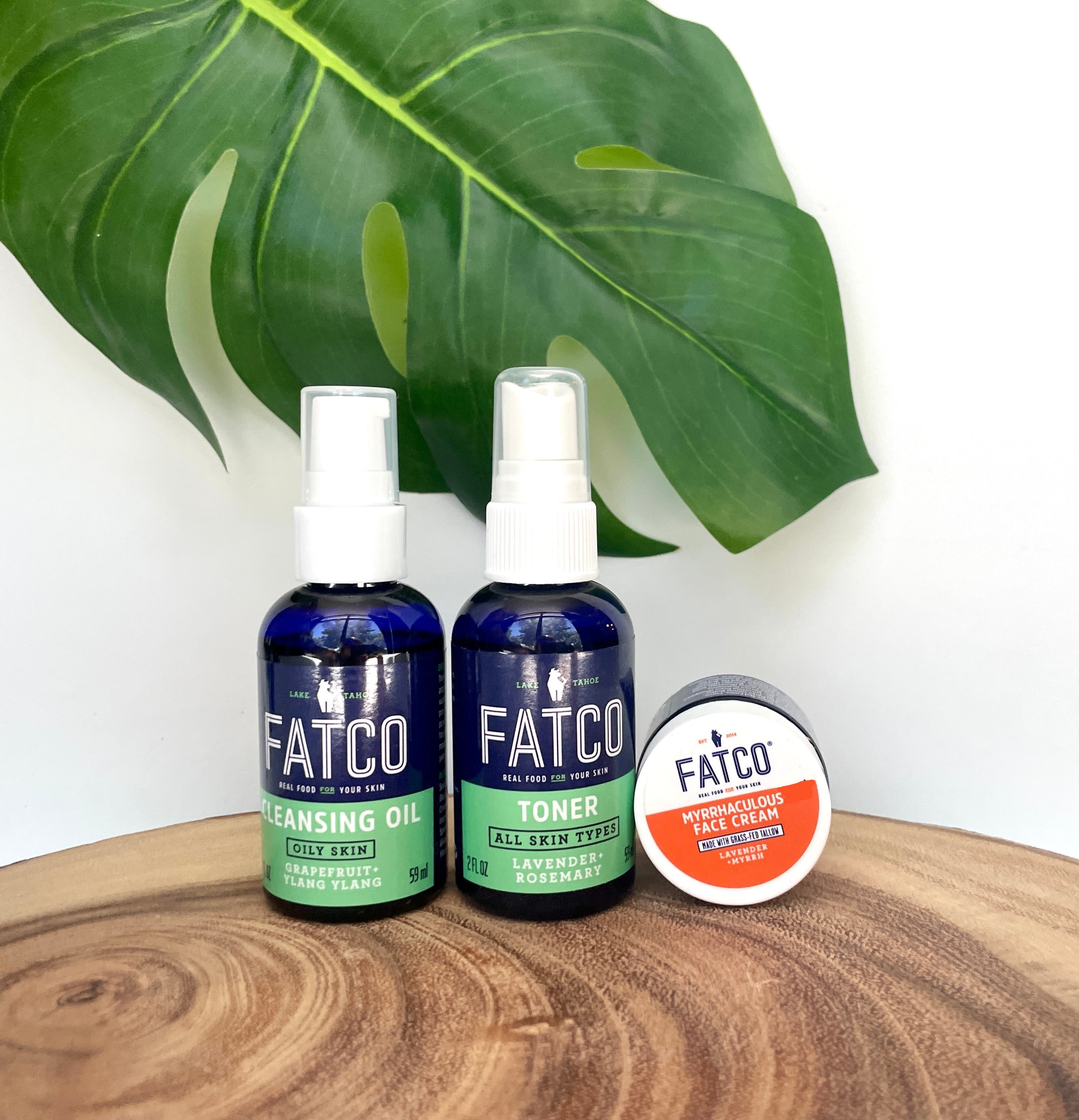
The FATCO Alternative
If you want to explore a simpler approach to face care, FATCO builds its face creams on grass-fed tallow and whole-food plant oils, with no synthetic fragrance. Whether tallow is right for your acne-prone skin depends on your individual skin chemistry, but FATCO's face range is a clean starting point for anyone curious about balancing oily or breakout-prone skin with tallow-based products.