Blue Shampoo vs Purple Shampoo
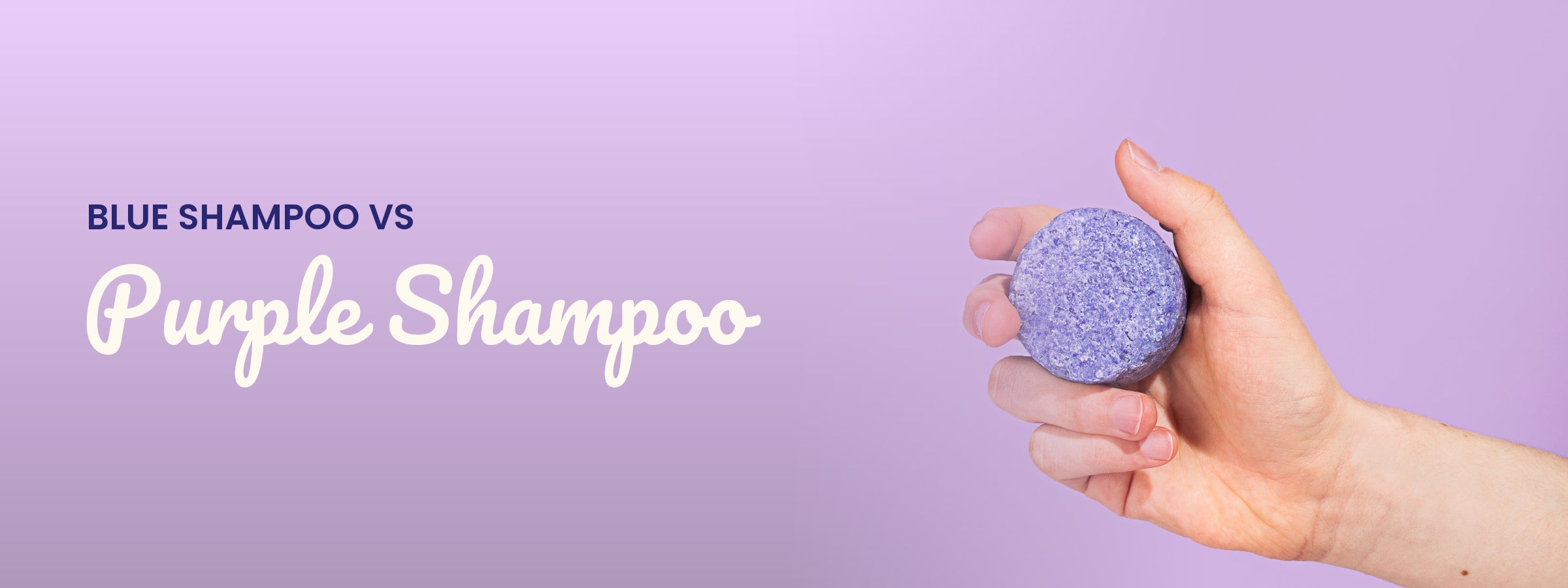
Blue shampoo vs purple shampoo is a question about the color of your brass. If the warmth in your hair looks yellow, like straw or lemon, purple shampoo is the match. If it looks orange or coppery, the kind that can show up when brown hair is lightened, blue shampoo is the match. Both work the same way, by leaving a little cool dye on the hair, and neither one lightens it.
Key Takeaways
- Each toner is matched to one warm tone. Violet sits across the color wheel from yellow, and blue sits across from orange, so the shade of the brass picks the bottle.
- How far the hair is lightened sets the brass. Bleach breaks down brown and black pigment more easily than red and yellow, so hair lifted part way can show orange or copper, and pale blonde shows yellow.
- Neither shampoo lightens hair. A toning shampoo changes how the warmth reads, and overdoing it can leave a purple, pink or blue tint on light hair.
- FATCO's Purple Shampoo Bar handles yellow brass. It carries a violet dye, CI 60730, the opposite of yellow on the color wheel, in a tallow shampoo bar you rub on wet hair.
Blue Shampoo vs Purple Shampoo: The Color Wheel Behind Both
The color wheel used in hair coloring starts from 3 primaries, red, yellow and blue. Mix 2 of them and you get a secondary: orange, green or violet. Colors that sit directly across the wheel from each other are called complementary, and mixing 2 complementary colors gives a brown or gray result. Neutral, in other words.
Each primary sits across from the secondary made of the other 2. That gives the 2 pairs that matter here:
- Yellow and violet. Violet is red plus blue, with no yellow in it, so a touch of violet on yellow hair reads as neutral.
- Orange and blue. Orange is red plus yellow, with no blue in it, so a touch of blue on orange hair cools it toward brown.
A toning shampoo puts that idea in the wash. Purple shampoo carries a violet dye, blue shampoo a blue one. Each leaves a small amount of color on the strand, enough to cancel some of the warmth without a permanent color change.
Why Light Hair Goes Yellow and Lightened Brown Hair Goes Orange
Natural hair color comes from 2 pigments. Eumelanin is the black or brown one; pheomelanin is the red or yellow one. Every shade, from black to pale blonde, is a different mix of the two.
When hair is lightened with bleach or a lifting color, the eumelanin breaks down more easily than the pheomelanin. So the warm pigment is what stays behind, and how warm it looks depends on how light the hair ends up. The leftover pigment runs from dark red at the darkest levels to the palest yellow at the lightest. In salon terms, all hair "lifts warm."
In practice:
- Brown or dark hair that has been highlighted, lightened or balayaged can show orange or copper in the lightened parts. Blue is the opposite of orange.
- Blonde, platinum and highlighted light hair shows its warmth as yellow, the palest of the leftover pigments. Violet is the opposite of yellow.
- Gray, silver and white hair shows yellow for other reasons, since white strands have no melanin. The causes, and choosing a shampoo for gray hair, have their own guide.
Which One You Need: Read the Tone
Look at your hair in daylight, near the ends, where the color is oldest.
- Yellow, straw, lemon or brassy gold: purple shampoo.
- Orange, copper, rust or a warm brassy brown: blue shampoo.
- Both, in different sections: by the same logic the lighter sections carry the yellow and the darker ones the orange, so match the toner to the part you most want to cool.
Who should use blue shampoo? Anyone whose lightened hair has turned orange or copper, the pigment left when hair is lifted only part way. That can be brown or dark hair after a full lightening, highlights or balayage. Yellow blonde hair is violet's job, because blue is the opposite of orange rather than yellow.
On dark hair that hasn't been lightened, a violet dye barely registers, and Healthline doesn't recommend purple shampoo for dark hair. Purple shampoo on brown hair is a question with its own answer.
Staining, Overuse and How Often
Both kinds deposit dye, so both can overshoot. Overuse of purple shampoo can give certain hair tones a purple, pink or blue tint. The lighter and more porous the hair, the faster it takes up pigment, which is why platinum, white and bleached hair show a cast first.
How often comes down to the label and to your hair. Many purple shampoos are meant for a wash or two a week rather than every day, though some are made for daily use. FATCO's Purple Shampoo Bar sits at the weekly end of that range. Treat a blue shampoo the same way: start with what its label says, and wash less often if a tint shows up.
If a Tint Shows Up
A tint isn't permanent: the dye coats the strand instead of altering it, so your next few washes take it down. Some purple shampoos can also dry hair out when used too often, which is one more reason to keep the toning days to what your hair needs.
For purple, contact time matters too. The details of how to apply purple shampoo, from wet hair to rinse, and how to back off an over-toned wash, are their own subject.
What Neither Shampoo Does
Neither shampoo lightens hair. Purple shampoo isn't a hair dye and won't lighten dark hair; it only cools the brassy undertone. Blue shampoo deposits color the same way and lifts none either. If you want lighter hair, that's a lightening service.
Neither is a repair step either. A toning shampoo only takes the brass out of how the color reads; dryness and roughness are a job for your conditioner.
There's no published trial comparing blue and purple shampoo head to head. The choice rests on the color wheel, and on what your hair looks like after the first couple of washes.
Toning With a Tallow Shampoo Bar
FATCO's toning shampoo is the Purple Shampoo Bar, meant for blonde or silver hair that has turned brassy, and its color comes from CI 60730 (Violet #2), a violet dye. It's a tallow shampoo bar in format, with synthetic detergents doing the cleaning: you rub it along the scalp on wet hair rather than pouring it.
Lavender and tea tree oils are in it too, so if either has given you a reaction before, check the label before you buy.
It is made for yellow brass, the warmth violet cancels.
Got Questions?
Frequently Asked Questions
Q What does a blue shampoo do?
A blue shampoo leaves a small amount of blue dye on the hair while you wash. Blue sits opposite orange on the color wheel, so it cools the orange or copper tones that show up when brown or dark hair is lightened. It changes how the warmth reads, not the hair's actual color.
Q What happens if I use blue shampoo on my blonde hair?
Blue won't cancel yellow the way violet does, because blue sits opposite orange, not yellow, on the color wheel. If your blonde shows orange in places, blue can cool those parts. On very light, porous blonde, any toning dye can leave a tint if it's overused, so start with fewer washes.
Q Will blue shampoo lighten my hair?
No. A toning shampoo deposits a little color and lifts none, so it can't make dark hair lighter. It only cools the orange undertone in hair that has already been lightened. For lighter hair you need a lightening service.
Q Is blue shampoo damaging to hair?
A blue shampoo is a cleanser with a dye added, so it's as gentle as its detergents and how often you use it. Some purple shampoos can dry hair when used too often, and the same caution makes sense for blue, so stick to the label's schedule. Overuse can also leave a tint on very light or porous hair.
Q Why do hairdressers say not to use purple shampoo?
Purple shampoo has drawbacks when it's misused. Used too often, it can leave a purple, pink or blue tint on light hair, and some formulas dry hair out. Healthline also doesn't recommend it for dark hair, and advises once or twice a week unless the label says otherwise.
The FATCO Alternative
Match the toner to the brass: violet for yellow, blue for orange. When yellow shows on blonde or silver hair, FATCO's Purple Shampoo Bar does the toning as a bar instead of a bottle. On the days you aren't toning, FATCO's other tallow hair bars handle ordinary washing and conditioning.