Tallow Shampoo Bars: Do They Actually Work?
The question everyone asks before they try a tallow shampoo bar: does this actually work, or is it just a trend? It is a fair question. Shampoo bars have a reputation for leaving hair waxy, and adding beef fat to the formula sounds like it should make that worse. The reality is the opposite — and there is a straightforward reason why.
Tallow Shampoo Bar — Quick Answer
- Yes, they work — tallow's fatty acid profile matches scalp sebum, so it conditions while the bar cleanses
- Sulfate-free — gentler on color-treated hair and sensitive scalps than most conventional shampoos
- Not a soap bar — FATCO's bars sit at pH 4.4–5, not the pH 9+ of saponified soap, which is why hair does not go straw-like
- Transition period is real — expect 2-4 weeks while your scalp recalibrates; this is normal
- Long-lasting — one bar typically replaces 2-3 bottles of liquid shampoo
- Best for dry, sensitive, color-treated, and eczema-prone scalps
What Is a Tallow Shampoo Bar?
A tallow shampoo bar is a solid shampoo built on rendered beef fat — tallow — as a conditioning base, paired with mild cleansers rather than the harsh sulfate detergents in most liquid shampoos. Conventional shampoos are built around sodium lauryl sulfate (SLS) or similar detergents that produce a heavy lather but strip the scalp of its natural oils in the process. A tallow bar cleans differently: the cleansing agents are gentler, and the tallow replaces the oils a sulfate wash would have taken.
Tallow's fatty acid profile — oleic acid at roughly 37%, palmitic acid at 27%, stearic acid at 17% — closely mirrors human sebum. That compatibility is why tallow is increasingly used in skincare, and the same logic applies to the scalp, which is skin with a heavy concentration of oil glands. A 2024 scoping review in Cureus found tallow biocompatible with human skin, noting the shared fatty acid composition between tallow and the epidermis.
FATCO's tallow shampoo bars pair grass-fed, suet-sourced beef tallow with mild coconut- and plant-derived cleansers — sodium cocoyl isethionate, cocamidopropyl betaine and decyl glucoside — plus castor oil, panthenol and hydrolyzed quinoa protein. No sulfates, no silicones, no synthetic fragrance. If you want the background on why the sourcing of the tallow itself matters, see not all beef tallow is created equal.
Shampoo Bar or Soap Bar? The Distinction That Decides the Result
This is the single most useful thing to understand before you buy, and it is where most tallow bars on the market differ from each other.
Many tallow "shampoo" bars sold online are saponified soap — tallow cooked with lye. Soap works, but saponification leaves the bar alkaline, usually pH 9 or above. Hair prefers a mildly acidic environment. Washing with an alkaline bar lifts the cuticle, which is what produces the waxy, straw-like texture people complain about, and it is why so many soap-bar users end up dependent on an apple cider vinegar rinse to close the cuticle again.
FATCO's bars are not saponified soap. They are built on mild surfactants, which lets them hold a pH of roughly 4.4 to 5 — close to the scalp's own. That is the difference between a bar that cleans hair and a bar that fights it.
Do Tallow Shampoo Bars Actually Work?
Yes — with two honest caveats.
The first is the transition period (more on that below). The second is water hardness. Bar shampoos can react with minerals in hard water to leave a film on hair. If you live somewhere with very hard water, you may need an apple cider vinegar rinse to get the best results.
Outside of those two variables, tallow shampoo bars clean effectively for most hair types. Because they skip sulfates, they do not produce the kind of aggressive lather that strips the scalp bare and triggers overproduction of oil. Many people who switch report that their hair needs washing less frequently over time as scalp oil production normalizes.
Color-treated hair specifically tends to respond well — sulfates are the primary culprit in color fading, and a sulfate-free bar simply does not strip color the same way. People with dry scalp, eczema-prone skin, and low-porosity hair also commonly report better results with tallow bars than with conventional shampoos.
The Honest Caveat
Tallow shampoo bars are not a magic fix for every hair type. Fine, oily hair can sometimes struggle with bar shampoos in general during the transition period. If you have very fine hair or an already-oily scalp, start with every other wash and see how your scalp adjusts before committing fully.
The Transition Period: What to Expect
This is the part nobody warns you about, and it is the main reason people quit before tallow shampoo bars have a chance to work.
When you switch from sulfate shampoo to any natural or bar shampoo, your scalp has been conditioned to overproduce oil because sulfates were stripping it regularly. Once you stop the stripping cycle, the scalp takes time — typically 2-4 weeks — to recalibrate and produce less oil on its own. During that window, hair can feel waxy, heavier, or less clean than usual.
This is not the bar failing. It is the scalp adjusting.
- Apple cider vinegar rinse — 1 tablespoon diluted in 1 cup of water, applied after washing and rinsed out. Closes the cuticle and removes mineral buildup from hard water.
- Keep the bar on the scalp — lather on the scalp first, let it rinse through the ends. Do not scrub the mid-lengths directly with the bar.
- Rinse thoroughly — bar shampoo residue is the most common cause of the waxy feel. More rinsing than you think you need.
- Dry the bar between uses — store on a draining soap dish. A wet bar dissolves faster and can leave buildup.
Who Tallow Shampoo Bars Are Best For
- Dry or damaged hair — tallow's fatty acids add moisture without silicone coating
- Color-treated hair — sulfate-free means color lasts longer between washes
- Sensitive or eczema-prone scalp — no synthetic fragrance, sulfates, or parabens.
- Low-porosity hair — tallow melts at body temperature and absorbs readily
- Anyone reducing plastic and synthetics — one bar replaces 2-3 bottles
Tallow shampoo bars are a harder sell for very fine, naturally oily hair. If that is you, start slow rather than making a full switch immediately. For the conditioning half of the routine, see beef tallow for hair.
How to Use a Tallow Shampoo Bar
- Wet your hair thoroughly.
- Lather the bar in your hands first or rub directly on the scalp in small sections.
- Massage the lather through the scalp with fingertips, let it rinse through the ends naturally.
- Rinse completely — longer than you think you need.
- Follow with an ACV rinse during the transition period or if you have hard water.
- Store the bar dry between uses on a draining dish.
FATCO Tallow Shampoo Bars
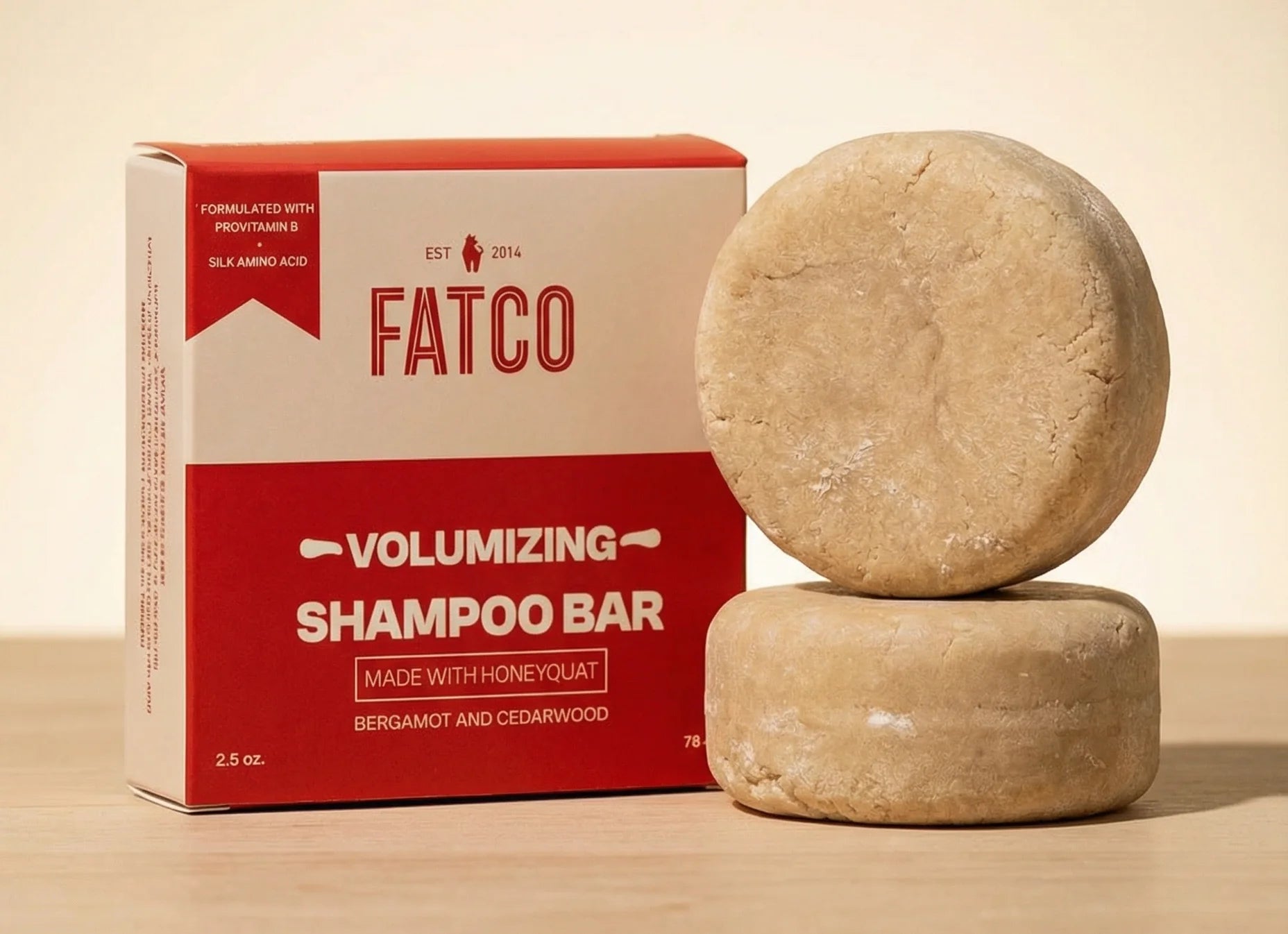
FATCO makes three tallow shampoo bars, each built on grass-fed beef tallow sourced from pasture-raised cattle. All three are sulfate-free, silicone-free, and made without synthetic fragrance.
Shop Tallow Shampoo Bars
Grass-Fed Tallow. No Sulfates. No Silicones.

Shampoo Bar
Classic tallow shampoo bar for all hair types. Rosemary + peppermint. Cleanses without stripping.
Shop Now
Volumizing Shampoo Bar
Tallow with quinoa protein and green clay for lift on fine hair. Rosemary + peppermint.
Shop Now
Purple Shampoo Bar
Tallow with violet pigment to neutralize brass on blonde and grey. Silk amino acids + provitamin B5.
Shop NowGot Questions?
Tallow Shampoo Bar FAQ
What is a tallow shampoo bar?
A tallow shampoo bar is a solid shampoo built on rendered beef fat (tallow) as a conditioning base, paired with mild cleansers instead of harsh sulfate detergents like sodium lauryl sulfate. Tallow shares fatty acids with scalp sebum, so the bar cleanses without stripping the oils your scalp needs.
Do tallow shampoo bars actually work?
Yes, for most people. Tallow's fatty acid profile is compatible with scalp sebum, so these bars cleanse without the dry, stripped feeling sulfate shampoos can cause. Expect a 2-4 week adjustment period while the scalp recalibrates.
Is there a transition period for tallow shampoo bars?
Yes — 2-4 weeks while the scalp adjusts to producing less oil. Hair may feel waxy or heavier during this time. A diluted ACV rinse and thorough rinsing both help. It resolves once the scalp recalibrates.
Is tallow good for hair and scalp?
Tallow contains oleic, palmitic, and stearic acid — the same fatty acids found in scalp sebum. This makes it compatible with the scalp's natural lipid barrier. People with dry scalp and eczema-prone skin often find it well-tolerated.
Is a tallow shampoo bar the same as a tallow soap bar?
No, and the difference matters. A true soap bar is saponified, which leaves it alkaline — typically pH 9 or higher — and that roughens the hair cuticle. FATCO's bars are not saponified soap; they sit at a hair-friendly pH of roughly 4.4 to 5, close to the scalp's own. That is why they tend not to produce the straw-like result people associate with washing hair using a soap bar.
Can you use a tallow shampoo bar on color-treated hair?
Yes. Tallow shampoo bars are sulfate-free, and sulfates are the main culprit in color fading. A tallow bar is generally gentler on color-treated hair than most conventional shampoos.
How long does a tallow shampoo bar last?
A FATCO bar typically lasts 75-90 washes — equivalent to 2-3 bottles of liquid shampoo. Keep it dry between uses on a draining soap dish to extend its life.