Best Face Moisturizers of 2026: A Skin-Type-by-Type Breakdown

The best face moisturizer is the one matched to two things: how much oil your skin makes, and how well its barrier is holding. Those decide the texture you need. The ingredient list barely changes from one skin type to the next.
Key Takeaways
- Skin type sets the texture, not the ingredient list. Ceramides, glycerin and fatty acids appear in every pick below. What changes is how heavy the vehicle carrying them needs to be.
- Oil output and barrier strength move independently. Oily skin can still be dehydrated and reactive, which is why an oil-free formula is often right for skin that feels tight.
- The American Academy of Dermatology puts creams and ointments ahead of lotions for dry skin, and warns that "unscented" on a label does not mean fragrance-free.
- "Non-comedogenic" is an unregulated marketing term. Treat it as a first filter rather than a guarantee.
- Tallow is a rich, food-based option that suits dry and barrier-stressed skin. FATCO's two face creams both carry lavender essential oil, so neither is the fragrance-free pick.
What Actually Changes Between Skin Types
Nearly every moisturizer is assembled from the same three parts. Humectants such as glycerin, hyaluronic acid and urea pull water into the outer layer. Occlusives such as petrolatum, dimethicone, beeswax and animal fats slow the water leaving it. Emollients such as ceramides, squalane and plant oils fill the gaps between surface cells so skin feels smooth.
Skin type does not change which of those you need. It changes the ratio and the weight.
Dry skin runs short on all three and tolerates a heavy vehicle. Oily skin already lays down its own occlusive film, so a second one is what makes a cream feel like a coating. The AAD is blunt about texture, calling ointments and creams more effective than lotions for dry skin. The ingredients it says to look for are jojoba oil, dimethicone, glycerin, hyaluronic acid, lactic acid, lanolin, mineral oil, petrolatum and shea butter.
The second variable is barrier state, and it does not track oil output. Skin can be oily and still stinging, flaking and reactive, usually after over-washing or a drying acne treatment. When both are true, fix the barrier first and worry about shine second.
One label note before the picks. The AAD warns that a product marked "unscented" can contain chemicals that neutralize or hide the odors of other ingredients. "Fragrance-free" is the wording that means none were added.
On prices. Of the four brands below, only Olay sells direct to US shoppers, so its figure is the only one quoted from the source and checked on 1 August 2026. CeraVe, Cetaphil and Vanicream route buyers to retailers, and a store's price on one day is not the brand's, so none appears here. FATCO's own prices are in the last section.
Best Face Moisturizer for Dry Skin
Dry skin wants a cream or an ointment rather than a lotion, and it wants something that puts lipid material back instead of only sealing the surface. That difference is why some moisturizers sit on the surface and others sink in.
CeraVe Moisturizing Cream. CeraVe's page lists three ceramides (NP, AP and EOP) alongside hyaluronic acid, dimethicone and petrolatum, released gradually through the brand's MVE technology. It carries the National Eczema Association's Seal of Acceptance, is labelled non-comedogenic, and is made for normal to dry skin on face and body. The posted ingredient list contains no added fragrance.
Best Face Moisturizer for Oily and Acne-Prone Skin
Oily skin still needs water, and skipping moisturizer does not lower oil production. What it needs is a light, oil-free vehicle, plus sun protection in daylight, since common acne treatments raise sun sensitivity. The same reasoning runs through our guide to hydration without breakouts.
Cetaphil DermaControl Oil Absorbing Moisturizer SPF 30. Cetaphil lists it as oil-free, fragrance-free and paraben-free, with MicroPearl technology to absorb surface oil, plus ceramide NP, glycerin and zinc gluconate. Sun protection is broad-spectrum SPF 30 from avobenzone 3%, octisalate 5% and octocrylene 7%. The label carries a "won't clog pores" claim, and the brand positions it for sensitive, oily skin.
Best Face Moisturizer for Combination Skin
Combination skin runs two budgets at once: a T-zone with more oil glands than the rest of the face, and cheeks that dry out. One light formula everywhere, with a second pass on the cheeks, is simpler than running two products for an oily T-zone and dry cheeks.
CeraVe PM Facial Moisturizing Lotion. Niacinamide, hyaluronic acid and three ceramides in a light, oil-free lotion that CeraVe describes as free of added fragrance and non-comedogenic, and lists for all skin types. A dermatologist quoted on the same page says the AM and PM pair helps relieve the redness, dryness and irritation that prescription acne creams commonly cause.
Best Face Moisturizer for Sensitive Skin
Reactive skin is a subtraction problem. The shortest ingredient list that still hydrates wins, and fragrance is the first thing to remove, whether it is synthetic or an essential oil. That is the same conclusion we reach on choosing a moisturizer for sensitive skin.
Vanicream Daily Facial Moisturizer. Squalane, glycerin, hyaluronic acid and five ceramides (EOP, NG, NP, AS and AP), with no botanical extracts or essential oils at all. Vanicream lists it as non-comedogenic, pH balanced and gluten-free, and the brand builds its whole range without dyes, fragrance, masking fragrance, lanolin, parabens or formaldehyde releasers.
Best Face Moisturizer for Mature Skin
Mature skin is usually drier for a structural reason. The National Institute on Aging notes that the outer layer thins and loses elasticity with age. It adds that older adults may produce less sweat and oil from the glands in their skin. Less of your own oil means a richer vehicle earns its place.
Olay Regenerist Micro-Sculpting Cream Moisturizer Fragrance Free. Olay sells this one direct at $36.65 and names hyaluronic acid as a key ingredient. Its own page lists the skin concerns it targets as fine lines and wrinkles, dryness, uneven texture and sagging skin. Two caveats: the page does not state a jar size, and the NIA cautions that antiaging cosmetics need no human testing or FDA approval before sale.
How to Choose: The Picks Side by Side
| Product | Best for | Key ingredients | Fragrance-free |
|---|---|---|---|
| FATCO Myrrhaculous Face Cream | Dry, barrier-stressed skin | Grass-fed tallow, coconut oil, shea butter, jojoba, rosehip seed oil | No (lavender and myrrh essential oil) |
| FATCO Unmyrrhaculous Face Cream | Dry skin, myrrh removed | Same base without the myrrh | No (lavender essential oil) |
| CeraVe Moisturizing Cream | Dry skin, face and body | Three ceramides, hyaluronic acid, petrolatum, dimethicone | No added fragrance |
| Cetaphil DermaControl Oil Absorbing Moisturizer SPF 30 | Oily, acne-prone, daytime | Ceramide NP, glycerin, zinc gluconate, SPF 30 | Yes |
| CeraVe PM Facial Moisturizing Lotion | Combination skin, night use | Niacinamide, hyaluronic acid, three ceramides | Free of added fragrance |
| Vanicream Daily Facial Moisturizer | Sensitive, reactive skin | Five ceramides, squalane, hyaluronic acid | Yes |
| Olay Regenerist Micro-Sculpting Cream Moisturizer Fragrance Free | Mature skin | Hyaluronic acid | Yes |
Two Things That Outrank the Pick
Amount and timing. The AAD advises applying moisturizer several times a day and while skin is still damp, after a shower and after washing your hands. Patch-test any rich formula on the jawline for a week before it goes anywhere near your whole face.
When to stop troubleshooting. The AAD puts no clock on this. Its instruction is that if you continue to have dry skin after trying the tips dermatologists recommend, it is time to see a board-certified dermatologist. The reason it gives is that persistent dryness can point to an underlying condition such as atopic dermatitis, psoriasis or kidney disease.
Got Questions?
Frequently Asked Questions
Q What is the #1 recommended face moisturizer?
There is no single one, because the answer moves with skin type. This breakdown lands on CeraVe Moisturizing Cream for dry skin, Vanicream Daily Facial Moisturizer for reactive skin, and a light oil-free formula with SPF for oily skin. Match texture to oil output first.
Q What do dermatologists recommend as a face moisturizer?
The American Academy of Dermatology recommends gentle, fragrance-free products, and creams or ointments rather than lotions for dry skin. It names jojoba oil, dimethicone, glycerin, hyaluronic acid, lactic acid, lanolin, mineral oil, petrolatum and shea butter as ingredients worth looking for on a label.
Q What is the best face day moisturizer?
For daytime the useful difference is sun protection. A lighter formula with broad-spectrum SPF 30 or higher, such as Cetaphil's DermaControl SPF 30, covers hydration and UV in one step. Keep the richer cream for night, when nothing has to sit under sunscreen or makeup.
Q Does moisturizer clog pores?
It can, though most do not. Whether yours does comes down to the whole formula and how you use it, not to how rich the cream feels going on. Congestion builds over weeks. Stinging or redness within a day or two is irritation instead.
Q How much moisturizer should I use?
A nickel-sized amount covers a face for a lotion or a light cream. A pea-sized dab is enough for a concentrated balm, which carries no water filler to spread. Under-dosing is the more common mistake, so measure once rather than guessing every night.
Q How do I avoid clogged pores from rich moisturizers?
Use less, apply it to properly cleansed skin, and start on the drier zones only. Rich is not the same as pore-clogging. Tallow has no published comedogenic rating either way, so with a tallow cream the honest step is a week-long patch test rather than a number.
The FATCO Alternative
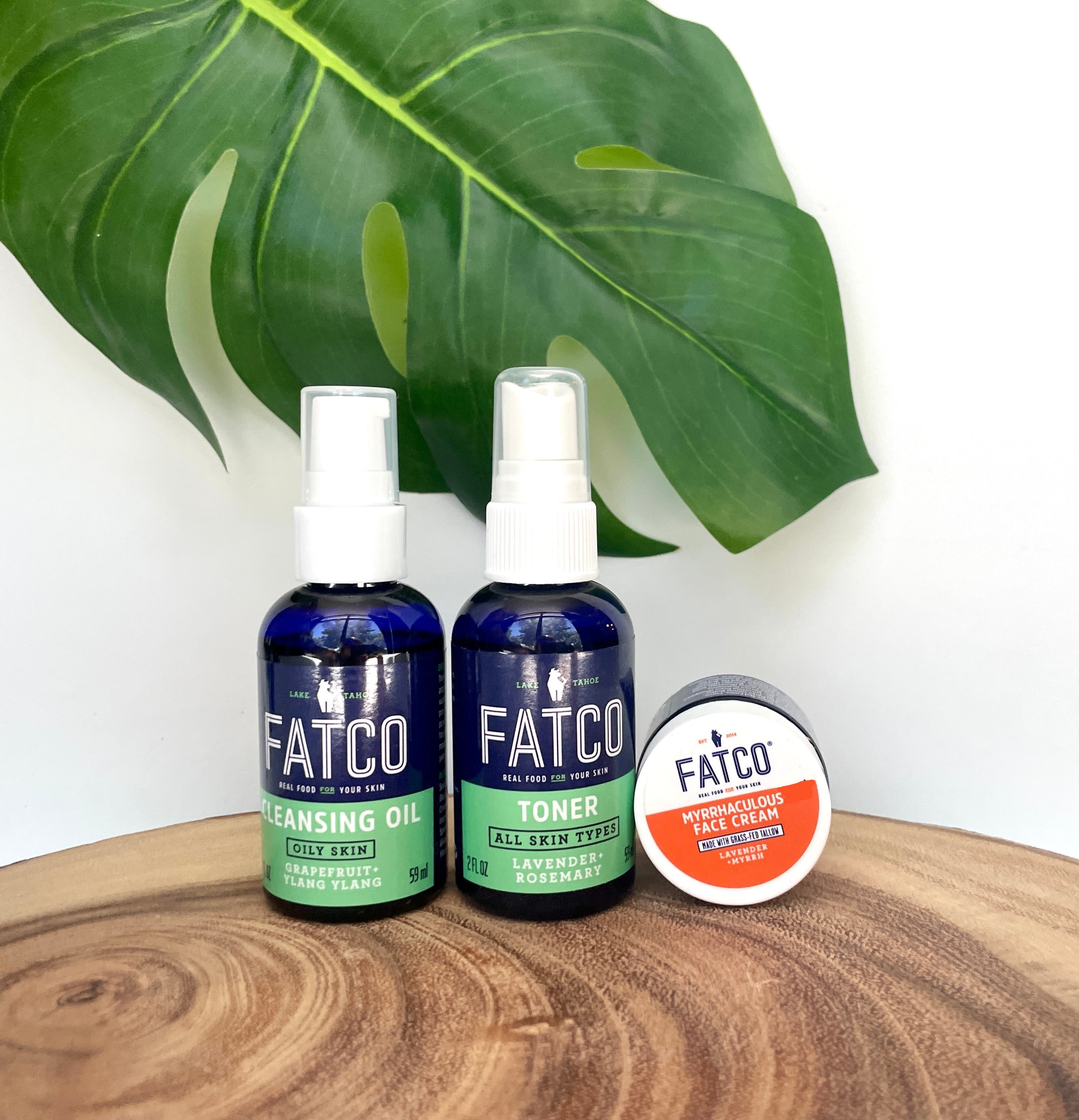
FATCO makes two tallow face creams, and where they fit is narrower than a category page would suggest. Myrrhaculous Face Cream and Unmyrrhaculous Face Cream open with tallow from grass-fed cows, coconut oil and shea butter. After those come jojoba, pumpkin seed, olive and avocado oils, beeswax, then rosehip seed, evening primrose, borage, moringa and argan. Both run $28 for 1 oz and $52 for 2 oz. Tallow and human sebum both carry high proportions of palmitic and oleic acid, and the overlap stops there, since sebum also holds squalene and wax esters that tallow does not. That makes these a good fit for dry, barrier-stressed skin and a poor first choice for oily or congested skin. Both contain lavender essential oil, and Myrrhaculous adds myrrh, so neither is fragrance-free.
FATCO Tallow Skincare
Grass-Fed. Suet-Sourced. Dry-Rendered.