Beeswax in Skincare: What It Does
Beeswax for skin does one main job: it leaves a thin film that slows the water escaping from your skin. That makes it a sealing ingredient, and it turns up far more often in lip balms than in face creams. Research on the wax by itself is thin. Allergy to it is uncommon, and when it happens, it mostly shows up on the lips.
Key Takeaways
- Beeswax works as a seal. It forms a film on the skin that cuts water loss, the job of an occlusive. Petroleum jelly is the stronger seal; beeswax usually comes blended with oils and butters.
- The skin research is small. A review published in 2023, with Burt's Bees listed as its funder, found five clinical studies of beeswax on skin: three in animals and two in people.
- Allergy is uncommon and centers on lip balms. In a UK study of 2,828 people patch tested for suspected contact dermatitis, 13 reacted to beeswax. Some reactions travel with an allergy to propolis, the resin glue bees make.
- Beeswax is an animal ingredient. Candelilla, carnauba and sunflower seed wax are plant waxes that stand in for it.
- FATCO pairs beeswax with tallow. FATCO's Fat Sticks list beeswax first or second, with grass-fed tallow, butters and plant oils behind it. Every stick's label also lists almond oil and kukui nut oil, worth knowing if you avoid nuts.
What Beeswax Is Made Of
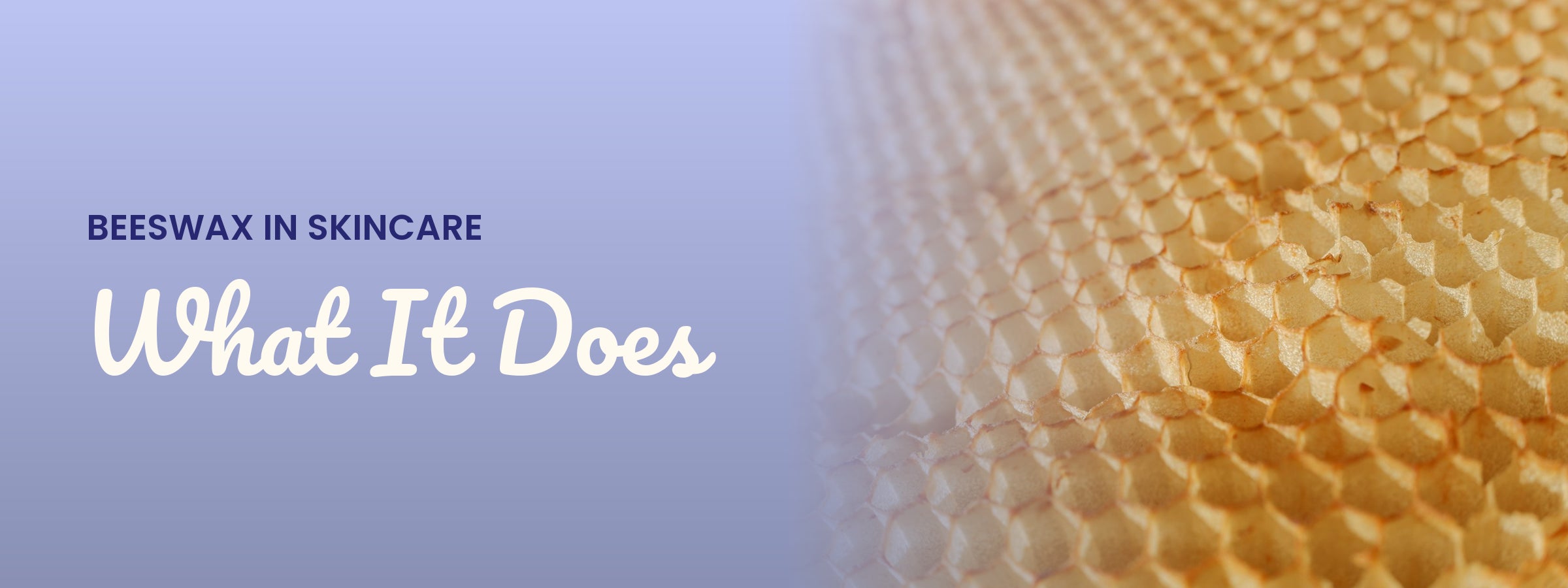
Honeybees secrete beeswax to build their honeycomb. Freshly made wax is white and turns yellow over time as propolis and pollen pigments work into it. Yellow beeswax is the wax melted from the combs, strained and refined. White beeswax is that wax bleached.
Chemically it is a mix of more than 300 compounds. Wax esters make up the largest share, with hydrocarbons and free fatty acids behind them. The blend stays solid until it is heated far past skin temperature, which is how it firms a balm into a stick.
On a label, look for Beeswax, Cera Alba (white beeswax) or Cera Flava (yellow). It is a lip product staple. One market survey of 350 leave-on cosmetics found white beeswax in 21 of 50 lip salves, and in 21 of the other 300, which were day creams, night creams, eye creams and sunscreens.
How Beeswax for Skin Holds Water In
On skin, beeswax forms a fine, protective film that reduces transepidermal water loss, the water that evaporates out through the skin. That is what an occlusive does: it holds moisture in by sitting on top of the skin. In creams and balms the wax does two more jobs. It stiffens the formula, and it helps keep water-in-oil mixtures from separating.
How firm a product is depends on how much wax it carries. Cosmetic ingredients are listed in descending order of predominance, so a balm that opens with beeswax is wax-forward and firm. A cream that lists it near the end carries far less. Because the wax stays solid on skin, a wax-forward stick relies on the butters and oils around it to soften and spread.
Beeswax also doesn't dissolve in water. It dissolves in oils, so a heavy beeswax balm comes off more easily with an oil-based cleanser than with water alone.
What the Research Covers
The research on beeswax as a skin ingredient in its own right is small. A review published in 2023 in the Journal of Cosmetic Dermatology found five clinical studies: three in animals and two in people. Burt's Bees, which sells beeswax skin care, is listed as the review's funder.
Some trials test the wax in a mixture. Two published in 2003 and 2005 used honey, beeswax and olive oil together, so the wax's own share of any result can't be separated out.
Beeswax Allergy and Propolis
Allergy to beeswax is uncommon. In a UK study across 10 hospitals, published in 2009, 2,828 people with suspected contact dermatitis were patch tested. Of those, 13 reacted to beeswax, 10 of them to yellow wax and 3 to white. An older series tested white beeswax on 2,634 patients with dermatitis and recorded no reactions at all.
Where reactions do happen, they cluster on the lips. Dermatologists at a Swedish university hospital and a private practice patch tested 95 people with lip inflammation, facial eczema or a suspected beeswax allergy, and 17 reacted to beeswax. Nine of them had used the same brand of lip balm.
If your lips stay sore or cracked whatever you put on them, a dermatologist can patch test you. The Swedish researchers suggest adding beeswax and propolis to the test, since many of their beeswax cases would have been missed with the Swedish baseline series alone.
The Propolis Link
Propolis is the glue honeybees make to build and seal their hives, from tree resins mixed with beeswax. It is a known skin allergen, and 14 of those 17 beeswax reactors also reacted to propolis. In that study, yellow wax carried far more of propolis's allergy-linked compounds on its surface than white wax did.
That has led to advice that anyone allergic to propolis should avoid beeswax entirely. A review published in 2026 in Contact Dermatitis weighed the evidence and found it inconsistent, with occasional co-reactions reported. Its authors could not rule out reactions from leftover propolis in beeswax, but said they appear uncommon and mainly involve lip balms. Their conclusion, on the data available, is that people allergic to propolis do not need to avoid every cosmetic that contains beeswax.
Beeswax or Plant Wax?
Bees make it, so beeswax is an animal ingredient, and a vegan lip balm replaces it with a plant wax.
Two plant waxes come up most. Candelilla wax comes from the candelilla plant and is about half hydrocarbons. Carnauba wax comes from the leaves and buds of the Brazilian wax palm, and it is hard and brittle. Sunflower seed wax is a third option.
Plenty of formulas use both kinds. FATCO's Stank Stop deodorant sticks list sunflower seed wax and beeswax side by side, next to tallow, shea butter and coconut oil.
How FATCO Uses Beeswax
Beeswax is in every Fat Stick, every Body Butta and Baby Butta, both face creams, the Cleansing Balm, and every Stank Stop cream and stick. The Fat Bars, Toner, Cleansing Oils, face oils and masks have none.
The Fat Sticks are where beeswax leads. It is the first ingredient in the four scented sticks, with grass-fed tallow, cocoa butter, shea butter and plant oils behind it. The unscented Baby Fat Stick lists it second, after sweet almond oil. FATCO puts the result plainly: "The tallow and beeswax base leaves a protective layer that helps skin hold on to moisture."
In the face creams, Baby Butta and the Cleansing Balm, beeswax sits further down the list, behind the tallow and several plant oils. There the wax is a smaller part of a fat-rich formula. Tallow shares palmitic and oleic acid with the skin's surface lipids, part of the case for building on it.
Nut Oils and Honey on the Labels
Read the label for anything you avoid. Every Fat Stick lists almond oil and kukui nut oil, and Calming and Invigorating Body Butta list almond oil too. Both face creams list argan oil, and the Cleansing Balm lists walnut oil. Honey is on three scented sticks: Orange + Vanilla, Vanilla + Coffee and Lemon + Honey.
Got Questions?
Frequently Asked Questions
Q Is beeswax good for your skin?
For most people, yes, as a sealing ingredient. It leaves a film that slows water loss from dry skin, and contact allergy to it is uncommon. Its other benefits are far less studied, and it usually works alongside oils and butters that do the softening.
Q Is it safe to put beeswax on your face?
Generally, yes. Beeswax shows up in some face creams and in many lip balms, and reactions to it are uncommon. When they do happen, they mostly affect the lips, sometimes in people who also react to propolis. If a beeswax product keeps leaving your skin red and itchy, a dermatologist can patch test for it.
Q What are the disadvantages of beeswax?
It is an animal ingredient, so it doesn't suit a vegan routine. It doesn't dissolve in water, so a heavy balm comes off best with an oil cleanser. A small number of people are allergic to it, most often through lip balms, and some of those reactions may come from propolis traces in the wax.
Q Is beeswax or Vaseline better for skin?
They do the same kind of job, and Vaseline seals more strongly. Vaseline lists its Healing Jelly's active ingredient as 100% white petrolatum, which a dermatitis review published in 2017 calls the most effective classic occlusive moisturizer. Beeswax usually comes blended with oils and butters, so a beeswax balm brings fats along with its film.
Q How do you use beeswax for skin care?
Use it in a finished balm, stick or cream rather than as raw wax. A beeswax-first stick suits small dry spots: lips, cuticles, elbows, knees and heels. FATCO's Fat Stick is built that way, with beeswax and grass-fed tallow in a solid, travel-friendly stick.
The FATCO Alternative
The Fat Stick is where FATCO gives beeswax the lead role: it opens four of the five labels, with grass-fed tallow, cocoa and shea butters and plant oils behind it. People reach for it on lips, cuticles, elbows and heels, and the Baby Fat Stick is labeled unscented. All five list almond and kukui nut oils, so anyone avoiding nuts should read the panel before buying.