Azelaic Acid Serum: What It Does and How to Use It
Azelaic acid sits in an unusual spot in the skincare world: it is one of the few topicals with published evidence across rosacea, acne, and hyperpigmentation, and it tends to be gentle enough that sensitive-skin types can actually use it. It is also a prescription drug in the US, which is the part most serum roundups skip. Here is a clear, honest look at what it does, how to use it, and who it works best for.
Key Takeaways
- Azelaic acid is a well-studied active used in dermatology since the 1970s to address blemishes, inflammatory rosacea lesions, and uneven skin tone.
- It works through multiple pathways: it is bacteriostatic, anti-inflammatory, antioxidant, and a competitive tyrosinase inhibitor, which is why it shows up across different skin concerns.
- The FDA-approved products are prescription-only: 15% gel or foam for rosacea and 20% cream for acne. The roughly 10% serums sold over the counter are cosmetics, not approved drugs, and have not been through that review.
- For rosacea, the evidence is strongest for the bumps, not the redness. A Cochrane-derived systematic review rates the evidence for azelaic acid high-certainty for papules and pustules, while the drugs with high-certainty evidence for persistent facial redness are different ones.
- FATCO does not make an azelaic acid serum, and nothing in our range treats rosacea or acne. A tallow-based cleanser and moisturizer are simply a low-variable base routine to sit underneath whatever your dermatologist prescribes.
What Azelaic Acid Is and How It Works
Azelaic acid is a saturated dicarboxylic acid that occurs naturally in grains including barley, wheat, and rye, and is also produced by Malassezia yeast living on human skin. Research into its dermatologic use dates to the 1970s, and the first US approval came in 1995. Worth saying up front: the Azelex label states that the exact mechanism of action is not known and that the available data are in vitro with unknown clinical significance, and the Finacea label says outright that the mechanisms by which azelaic acid interferes with rosacea are unknown. What follows is the best current account, not a settled one.
At the bacterial level, azelaic acid is bacteriostatic rather than bactericidal at therapeutic concentrations, inhibiting the proliferation of Cutibacterium acnes (formerly Propionibacterium acnes) and other Gram-positive skin flora without wiping them out. Because it works by inhibiting intracellular bacterial enzymes rather than attacking the cell wall the way many antibiotics do, reviews associate it with a lower risk of driving bacterial resistance.
At the inflammatory level, it downregulates pro-inflammatory cytokines such as IL-1 beta and TNF-alpha, suppresses NF-kappa-B signalling in keratinocytes, and scavenges reactive oxygen species.
At the pigmentation level, azelaic acid is a competitive inhibitor of tyrosinase, the copper-containing enzyme that converts tyrosine toward melanin. Blocking it reduces pigment overproduction in areas affected by post-inflammatory hyperpigmentation (PIH) and melasma.
It also normalizes keratinization, which the Azelex label describes as producing an anticomedonal effect. This is part of why it shows up across acne, rosacea, and tone-evening use cases: the mechanisms genuinely overlap.
What Azelaic Acid Serum Helps With
Rosacea and Persistent Redness
Azelaic acid is one of the few topical ingredients with documented clinical evidence for rosacea, which is a chronic inflammatory skin condition that causes facial redness, small visible blood vessels, and sometimes bumpy, pimple-like lesions. Read the indication carefully, though, because it is narrower than most articles suggest. Finacea 15% gel is FDA-approved for the inflammatory papules and pustules of mild to moderate rosacea, and the label adds that efficacy for treating erythema in rosacea in the absence of papules and pustules has not been evaluated.
The best evidence agrees with the label. A systematic review of 152 rosacea studies covering 20,944 participants, published in the British Journal of Dermatology in 2019, found high-certainty evidence for topical azelaic acid and topical ivermectin for reducing papules and pustules. For reducing persistent facial redness the high-certainty evidence went to topical brimonidine, with moderate certainty for oxymetazoline, and for redness with visible vessels to laser and intense pulsed light.
So if your main complaint is redness that does not respond to basic skincare adjustments, azelaic acid may not be the right target, and that is a conversation for a dermatologist rather than a shopping decision. Where inflammatory bumps are part of the picture, it has real backing.
Blemishes and Acne
Azelaic acid addresses acne through its antibacterial action and its ability to normalize the keratinization inside the pore. Azelex 20% cream is FDA-approved specifically for the topical treatment of mild-to-moderate inflammatory acne vulgaris, applied twice daily, and its label says improvement occurs in the majority of patients with inflammatory lesions within four weeks. Lower-strength serums are often added to routines by people who cannot tolerate retinoids or benzoyl peroxide, but they have not been through the same review, so treat them as a cosmetic bet rather than a proven dose.
One specific application where it shines is post-inflammatory hyperpigmentation, the dark marks that linger after a blemish heals. Azelaic acid's tyrosinase inhibition can reduce these marks over time, making it particularly useful for skin types that are prone to PIH after acne.
Uneven Skin Tone and Hyperpigmentation
Tyrosinase inhibitors are the standard approach to hyperpigmentation, and azelaic acid is one of the gentler options in that category. Reviews report that 20% cream performed comparably to hydroquinone in melasma, which makes it a genuine option for people with sensitive skin who cannot tolerate stronger brightening actives.
Results for tone evening are slow. Clinical trials show significant reductions in melanin index and visible pigmentation after 12 to 16 weeks of topical use, so plan in months rather than weeks.
How to Use Azelaic Acid Serum
Concentrations to Know
- Around 10%, sold over the counter. Widely available in serum form. These are marketed as cosmetics. Mayo Clinic's drug entry for topical azelaic acid states plainly that the medicine is available only with a doctor's prescription, which tells you the shelf serums are not the reviewed product.
- Prescription 15% gel or foam (Finacea): Indicated for the inflammatory papules and pustules of mild to moderate rosacea. Applied twice daily, morning and evening. The label directs a reassessment if there is no improvement after 12 weeks.
- Prescription 20% cream (Azelex): Indicated for mild-to-moderate inflammatory acne vulgaris. Applied twice daily, morning and evening.
If you are starting with a lower-strength serum, going slowly gives your skin time to adjust, but do not read a cosmetic serum as a substitute for the prescription strength if you have diagnosed rosacea or acne.
Application Routine
Apply to clean, dry skin after cleansing and before moisturizing. Both FDA-approved prescription formulations are dosed twice daily, morning and evening; lower-strength cosmetic serums are often started once daily.
A thin layer is enough. Azelaic acid does not need to be layered heavily to work.
What to Pair With It
Azelaic acid is considered one of the more compatible actives. It is generally well tolerated alongside:
- Niacinamide: Supports the skin barrier and may help with the mild flushing some people experience when starting azelaic acid.
- SPF: Important to wear daily when using any active that targets pigmentation, since sun exposure can reverse tone-evening progress.
- A gentle cleanser and moisturizer: The Finacea label specifies using only very mild soaps or a soapless cleansing lotion before application, and the Azelex label says to wash and pat dry first. Keeping the cleansing and moisturizing steps simple and non-stripping gives the skin the stability it needs to tolerate an active without tipping into irritation.
What to Be Careful With
Avoid combining azelaic acid with strongly acidic exfoliants (high-strength AHAs and BHAs) in the same step, as layering multiple acids can increase irritation risk. When introducing azelaic acid alongside other actives, give the skin a week or two to adjust before adding anything else new.
Who Should Be Cautious and Side Effects
Azelaic acid does not work by strong exfoliation, which is why it reads as one of the milder actives. Tolerated is not the same as symptom-free, though, and the trial numbers below are worth seeing before you start.
Common at startup: Mild tingling, itching, dryness, or temporary redness in the first few weeks. The Finacea trials put burning, stinging or tingling at 29%, itching at 11%, scaling or dryness at 8%, and redness or irritation at 4%, so this is common rather than unusual. If it persists or worsens, reduce frequency or step down the concentration.
Hypopigmentation in darker skin tones: Both FDA labels carry this warning. Isolated cases of hypopigmentation have occurred after azelaic acid use, and because it has not been well studied in patients with dark complexions, the labels direct that those patients be monitored for early signs. Report any lightening in the treated area to your provider.
Asthma: Mayo Clinic's drug entry lists asthma under other medical problems and says to use with caution because azelaic acid may make asthma worse. Worsening of asthma also appears in the post-marketing sections of both FDA labels. If you have asthma, mention it to your doctor before starting.
Pregnancy and breastfeeding: Roughly 4% of a topically applied dose is systemically absorbed, and the Finacea Foam label states that maternal use is not expected to result in fetal exposure. It is still a discuss-with-your-doctor decision: there are no adequate and well-controlled studies in pregnant women.
Children: Per Mayo Clinic, studies to date have not shown pediatric-specific problems that would limit the usefulness of the cream in children 12 and older, and safety and efficacy under 12 have not been established. For the foam and gel, pediatric studies have not been performed at all.
If any product causes significant burning, blistering, or peeling that does not settle within a few weeks, discontinue use and consult a healthcare provider.
How a Gentle Tallow-Based Routine Supports Skin Alongside Actives
Azelaic acid does real work, and it does it best when the rest of the routine is not working against it. This is where the base matters.
Actives like azelaic acid can cause some initial dryness or sensitivity, especially in the first few weeks. If you are simultaneously using a cleanser that strips the skin or a moisturizer full of potential irritants, you are stacking two sources of disruption on already-reactive skin. Simplifying the foundation reduces that friction.
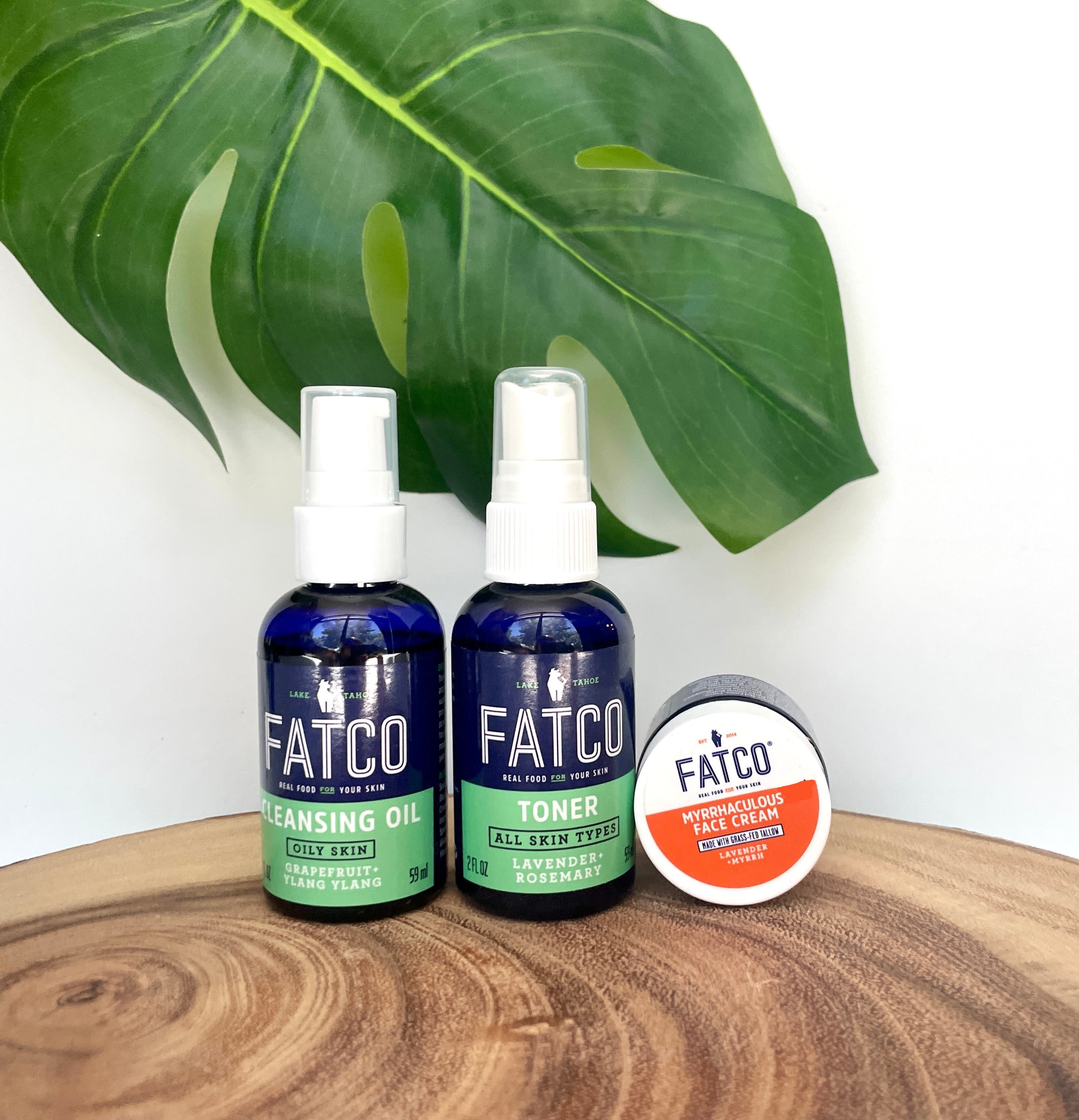
FATCO's tallow-based cleansers and moisturizers are built around one idea: fewer ingredients, fewer variables. Grass-fed beef tallow shares its three main fatty acids, oleic, palmitic and stearic, with the skin's surface lipids, which is the compatibility argument for using it across different skin types. It works as an occlusive, not as a repair formulation. It carries no synthetic fragrance, no alcohols and no synthetic preservatives, though the face creams and most of the soap bars are scented with essential oils, which are themselves among the more common cosmetic allergens.
The logic is simple: cleanse gently, moisturize with something that supports rather than disrupts the barrier, then apply your active. That sequence lets azelaic acid do its job without the base undoing the stability your skin needs. For anyone asking whether your skincare routine is hurting your skin barrier, the answer is often in the foundation, not the active.
FATCO is not a replacement for azelaic acid or any dermatologist-recommended treatment. It is the quiet, unglamorous part of the routine that makes the active's job easier.
Got Questions?
Azelaic Acid FAQ
Q How long does azelaic acid serum take to work?
The Azelex label reports improvement in most patients with inflammatory acne lesions within four weeks. For rosacea, both Mayo Clinic and the Finacea label set the checkpoint at 12 weeks: if it has not improved by then, go back to your doctor. Pigmentation is slowest, with trials showing measurable change at 12 to 16 weeks.
Q Can azelaic acid serum be used every day?
Yes, for most people. Both FDA-approved prescription formulations are dosed twice daily, morning and evening, from the start. Lower-strength serums are often begun once daily to let the skin adjust. If persistent dryness or tingling develops, reducing to every other day and building up is a reasonable approach, and worth raising with whoever prescribed it.
Q Is azelaic acid serum good for sensitive skin?
It is considered one of the more suitable actives for sensitive skin because it does not work by strong exfoliation or irritation. That said, all skin is individual, and starting at a lower concentration once daily is the sensible approach for reactive skin types. Pair it with a simple, fragrance-free routine to reduce variables.
Q Can you use azelaic acid with retinol?
Many people do use these together, but not necessarily in the same step. Applying retinol at night and azelaic acid in the morning is one approach that avoids layering two actives simultaneously. Introduce them separately and let your skin adjust to each before combining. A dermatologist can advise on timing for your specific concerns.
Q Does azelaic acid help with redness from rosacea specifically?
Less than you would think. NIAMS describes rosacea as a long-term inflammatory condition that cycles between flare-ups and remission, but the Finacea 15% gel label is approved for the papules and pustules of mild to moderate rosacea and states that efficacy for erythema without them has not been evaluated. A 2019 systematic review reached the same split. For redness alone, ask your dermatologist about the agents that do have that evidence.
Q If I want to try azelaic acid, what should my base routine look like?
Keep it minimal: gentle cleanser, azelaic acid serum, moisturizer, and SPF each morning. Fewer variables make it easier to tell what the active is actually doing for your skin. FATCO's face collection uses grass-fed tallow as its primary moisturizer, giving that kind of routine a simple, stable foundation.
The FATCO Alternative
If you are working with azelaic acid or exploring actives for redness, blemishes, or uneven tone, the smartest thing you can do for your base routine is simplify it. FATCO's tallow-based face products are short-list formulas built on a fat that shares fatty acids with the skin's surface lipids, which means fewer variables while an active does its work. No synthetic fragrance, no harsh preservatives, no unnecessary complexity. They do not treat rosacea or acne, and they are not a stand-in for what a dermatologist prescribes.