Tallow Face Cream: What It Is, How It Works, and What to Look For
Tallow face cream answers a specific problem: most conventional moisturizers rely on synthetic oils, silicones, or petroleum derivatives to create a moisturizing effect. Tallow does it differently. It uses rendered beef fat — which shares the same fatty acids as the skin's own sebum — to moisturize without synthetic film or occlusion. The result is a moisturizer that works with the skin barrier rather than coating over it.
Tallow Face Cream — Quick Answer
- Biocompatible with skin: Shares palmitic, stearic, and oleic acids with human sebum (2024 Cureus scoping review)
- No synthetic ingredients: No silicones, parabens, synthetic fragrance, or petroleum derivatives
- Best for dry, reactive, or sensitive skin — absorbs without film, hydrates without stripping
- Sourcing matters: Grass-fed tallow has measurably better fatty acid profile than grain-fed
- Does not formally clog pores — patch test recommended for acne-prone skin
What Makes Tallow a Good Facial Moisturizer
The reason tallow works on the face comes down to one thing: its fatty acid profile. Tallow from grass-fed beef is roughly 37% oleic acid, 27% palmitic acid, and 17% stearic acid. These are the same fatty acids the skin produces naturally through its sebaceous glands. When you apply a fat that shares your skin's own composition, it absorbs differently than synthetic alternatives — no greasy surface layer, no occlusive film, just absorption.
A 2024 scoping review in Cureus reviewed 19 studies and found tallow biocompatible with human skin, citing the overlap between tallow's fatty acids and those found in the epidermis. That is why people with dry, tight, or reactive skin often find tallow cream more effective than conventional moisturizers — it does not introduce foreign ingredients the skin has to work around.
Conventional moisturizers typically rely on dimethicone (silicone), petrolatum, or synthetic emollients to create a soft skin feel. These work by occlusion — coating the surface to trap moisture. Tallow works by integration: the fatty acids absorb into the outer skin layer rather than sitting on top of it. For most people, the feel is different — less heavy, less waxy, but genuinely moisturizing.
Who Tallow Face Cream Works Best For
Tallow face cream is well-suited for:
- Dry and very dry skin — tallow is rich without being heavy, and it holds moisture without synthetic occlusion
- Sensitive and reactive skin — no synthetic fragrance, sulfates, or parabens. People who react to most moisturizers often find tallow uneventful.
- Eczema-prone skin — tallow's fatty acid compatibility with the skin barrier makes it a common choice for managing eczema flares
- Aging or mature skin — stearic and oleic acids support skin elasticity and hydration
- People simplifying their skincare — one ingredient doing real work, instead of a 10-step routine
Tallow face cream is a harder sell for oily or acne-prone skin, where adding any fat to the face requires a patch test first. It is not formally rated for comedogenicity, and while most people with oily skin find it fine in small amounts, there is no published evidence that specifically clears it for acne-prone skin.
What to Look For in a Tallow Face Cream
Not all tallow face creams are the same. These are the things worth checking before you buy:
What Actually Matters
- Grass-fed and suet-sourced: Grass-fed tallow has 1.9% polyunsaturated fat vs. 3.45% grain-fed, more CLA, higher vitamin E. Suet (kidney fat) is the cleanest, most stable source. The label should specify both.
- Short ingredient list: The best tallow face creams have fewer than 10 ingredients. If you can't read the list easily, something synthetic is hiding in it.
- No synthetic fragrance: Fragrance is the #1 skin sensitizer in cosmetics. Essential oils are fine; "fragrance" as a listed ingredient is not.
- Dry-rendered: Dry rendering (slow, low-heat) produces cleaner, more stable tallow than wet rendering. It is the method used by serious skincare producers.
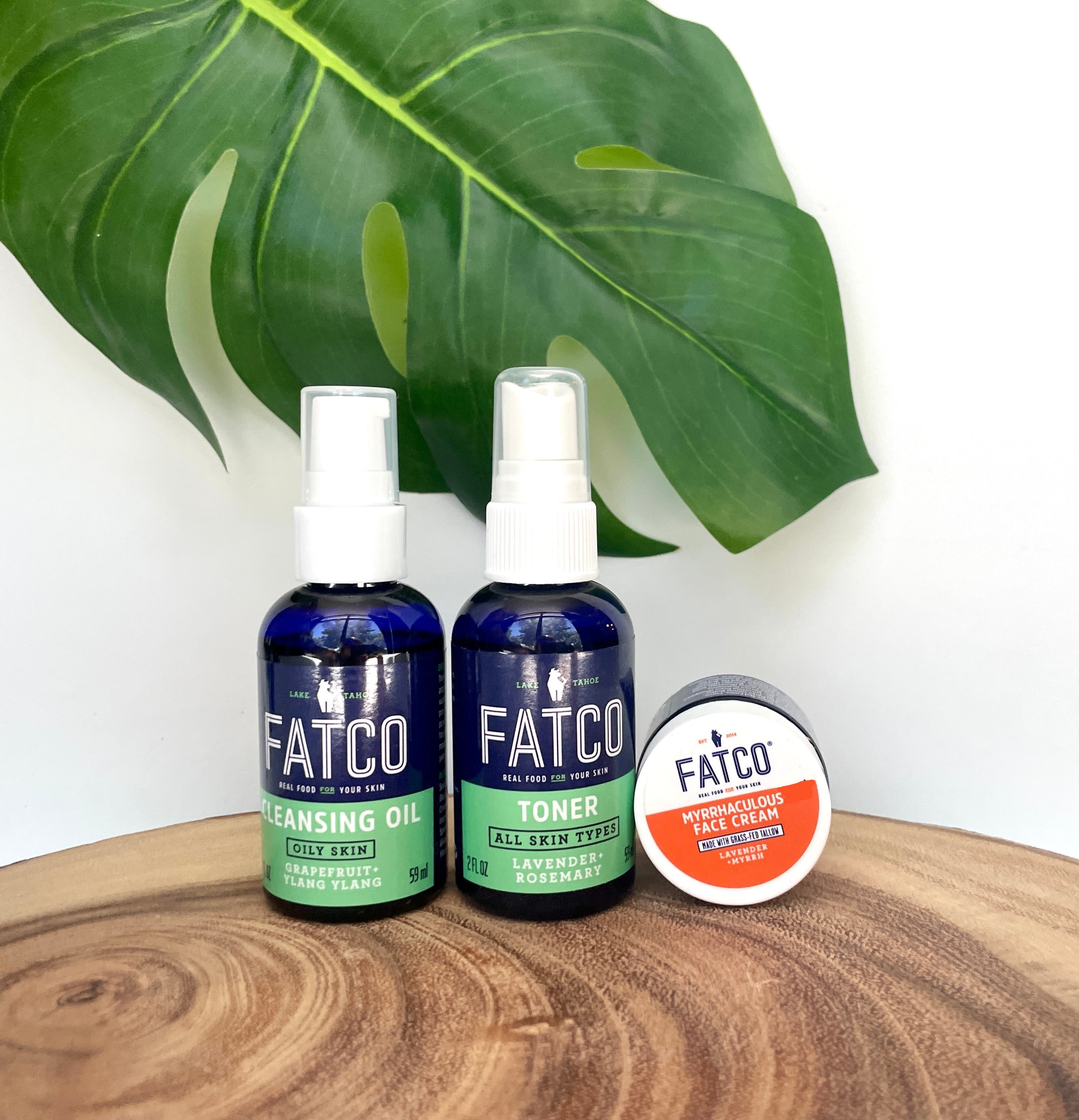
FATCO Myrrhaculous Face Cream
Myrrhaculous is FATCO's flagship face cream, built on grass-fed, suet-sourced beef tallow dry-rendered for purity. The formula combines tallow with myrrh essential oil — traditionally used for skin repair and inflammation — and a handful of other clean ingredients. No silicones, no synthetic fragrance, no parabens.
It is available in 1oz and 2oz sizes, and it is the product we recommend if you want to try tallow face cream without committing to a large jar first.

Common Questions
Tallow Face Cream FAQ
What is tallow face cream?
Tallow face cream is a facial moisturizer made with rendered beef fat (tallow) as its primary ingredient instead of synthetic oils or silicones. Because tallow shares the same fatty acids as human sebum, it absorbs readily and moisturizes without synthetic film or residue.
Is tallow face cream good for your skin?
Yes, for most skin types. A 2024 scoping review found tallow biocompatible with human skin because it shares fatty acids with the skin's natural sebum. It moisturizes dry and reactive skin without synthetic ingredients.
Does tallow face cream clog pores?
Tallow has never been formally rated for comedogenicity, but it is generally considered low-risk because its fatty acids mirror those the skin naturally produces. Patch testing before full-face use is recommended for acne-prone skin.
What is the best tallow face cream?
The best tallow face cream starts with grass-fed, suet-sourced tallow (better fatty acid profile than grain-fed), a short ingredient list, no synthetic fragrance, and dry-rendered processing for purity. FATCO's Myrrhaculous Face Cream is built on these standards.
Is grass-fed tallow better for skin?
Yes, measurably. Grass-fed tallow has roughly 1.9% polyunsaturated fat versus 3.45% for grain-fed, more CLA, higher vitamin E, and a better omega ratio. These differences affect both the product's stability and its skin compatibility.
Can sensitive skin use tallow face cream?
Tallow face cream is often specifically chosen by people with sensitive or reactive skin because it contains no synthetic fragrance, sulfates, or parabens. Its fatty acid profile mirrors the skin's own lipid barrier, making it less likely to irritate than most conventional moisturizers.