Night Moisturizer: What Changes About Skin While You Sleep

Your skin does behave differently overnight, and the difference is measurable. It is just not the difference the night cream aisle describes, and the gap between the two is where most of the money goes.
Key Takeaways
- Water leaves skin faster in the evening and at night than in the morning. That single finding is what the whole night cream category rests on, and it holds up.
- Your skin also makes less of its own oil overnight. Sebaceous activity is at its lowest around four in the morning and its highest at midday.
- "Skin repairs itself while you sleep" is thinner than it sounds. Cell division does peak near midnight, but the striking numbers trace back to a 1959 paper, and the most-cited overview of this field was written by four cosmetics-company scientists.
- The product that genuinely belongs at night is not a moisturizer. Tretinoin's FDA-approved label puts the drug in the evening and the moisturizer in the morning.
- A water-free tallow cream is an occlusive, which is the exact job the overnight numbers describe. FATCO's own instruction for its face creams is morning and evening, not a separate night jar.
What Actually Changes Overnight
Four things move on a daily cycle. Two of them support the night cream argument, one runs against it, and the fourth gets misread.
Water loss rises. Transepidermal water loss is the rate at which water evaporates out through skin, and it varies with the clock. A 2019 review in the Journal of Clinical and Aesthetic Dermatology reports circadian rhythm changes in the stratum corneum. It records skin permeability higher in the evening than in the morning. The human study underneath it sampled sixteen volunteers every two hours across a full day. That study concluded skin permeability is higher in the evening and night than in the morning.
Oil output falls. The same review puts sebaceous gland activity at its minimum around 04:00 and its maximum at midday. So your own oil film is thinnest during the stretch when water is leaving fastest. It also notes the cause of that rhythm is unknown.
Skin temperature moves the wrong way. The popular version says skin warms up at night and drinks in what you applied. The review says the opposite: skin temperature "peaks in the afternoon and has a trough at night".
Cell turnover picks up. Proliferation of keratinocytes varies through the day, with the highest rate occurring around midnight. That is the sentence the "beauty sleep" story is built on. Read it carefully: it is about cells dividing, not about skin absorbing anything.
How Strong Is Any of This
Weaker than the shelf implies, in three specific ways.
The samples are small. The sixteen-volunteer study is one of the larger ones. Much of the facial data traces to a study of eight healthy Caucasian women, run at a research centre in Neuilly sur Seine.
The results disagree with each other. A 2016 review in the International Journal of Molecular Sciences says research groups have generally found higher water loss in the late afternoon and evening. It then adds that results vary, most likely because of differences in study design.
And you have to check who wrote it. All four authors of that 2016 review work for the Estée Lauder Companies. The acknowledgments record that permission to publish was granted by the company, and the paper declares no conflict of interest. It is also the origin of the widely repeated claim that skin cell proliferation is 30-fold higher at night than at noon. That figure is credited to a paper published in 1959. The 2019 review is the cleaner source: no funding was provided, and the authors report no conflicts.
None of this makes the circadian findings wrong. It makes them modest, which is the right size for the conclusion drawn from them.
What Follows for a Product, and What Does Not
Here is the honest version of the argument. More water leaves overnight and less oil arrives to slow it. An occlusive, meaning anything that puts a physical layer over the surface, therefore has a clearer job at bedtime than at eight in the morning. That is a real mechanism, and it is the same reason some moisturizers sit on the surface while others fill in between skin cells.
Notice what that argument does not contain. It says nothing about the layer needing to be a different product from the one you already own. It says nothing about a richer texture being better, only that a layer helps. Transepidermal water loss is also the measurement used to judge a damaged skin barrier. There the answer is to cover skin and remove the cause, not to buy a second cream.
The claim that does not survive is the other one. Faster cell division at midnight is not a request for external material. Skin builds new cells out of what arrives through the bloodstream, not out of what you spread on the outside. Nothing measured in these studies shows a cream working differently after dark. "Your skin repairs itself at night, so feed it" borrows the authority of a real observation for a product it does not support.
The evening does have work the morning does not, and it is removal. A day of sunscreen, sweat and city air comes off before anything goes on, which is what an evening cleansing and layering sequence is built around. The morning is the reverse, because the morning has a different job, which is to survive the rest of the day.
The One Thing That Genuinely Belongs at Night
It is not a moisturizer. It is a retinoid, and the reason is printed on the label rather than inferred from a rhythm.
The FDA-approved label for RENOVA tretinoin cream 0.02% says the cream "should be applied to the face once a day in the evening". The same label explains why the timing matters. Exposure to sunlight, including sunlamps, should be avoided or minimized during use "because of heightened sunburn susceptibility". Evening dosing keeps the drug and the sun apart. It has nothing to do with absorption improving overnight.
Then comes the part the night cream aisle never quotes. The patient instructions on that label say "Skin moisturizers should be used at least every morning to protect the treated areas from dryness". They also tell patients to apply a moisturizing sunscreen of SPF 15 or greater. The most evidence-backed night product on the market ships with an instruction sheet that puts the moisturizer in the daytime. The fuller picture of what actually works on aging skin is a separate and better-evidenced conversation than texture.
What Moves Overnight, and What It Justifies Buying
| What changes | What the readings show | What it justifies |
|---|---|---|
| Water loss | Higher in the evening and night than in the morning | A layer over the surface at bedtime. Not necessarily a second product |
| Oil output | Lowest around 04:00, highest at midday | The same, and more so if your skin already runs dry |
| Skin temperature | Peaks in the afternoon, troughs at night | Nothing. It runs opposite to the marketing story |
| Cell turnover | Highest around midnight | Nothing you apply. Cells divide on their own schedule |
| Sun exposure | Absent | A retinoid, which is a drug rather than a moisturizer |
So Do You Need a Separate Night Moisturizer
For most people, no. One good moisturizer used twice a day covers everything the overnight readings actually justify, and a second jar mostly buys you a second jar.
There is one situation where two products are a genuine answer, and it is a daytime problem. If your morning cream was chosen to sit politely under sunscreen and makeup, it is probably lighter than your skin wants for eight unattended hours. In that case the richer product at night is not treating a nocturnal repair window, it is correcting a compromise you made for the daytime.
The counterview deserves a hearing, because it comes from a dermatologist rather than a brand. Cleveland Clinic's Melissa Piliang, MD, says day and night creams differ in what they are supposed to do for your skin. Night creams, she adds, are usually thicker than day creams. Worth reading closely, though, is her list of what belongs in a night cream: retinols, alpha and beta hydroxy acids, hyaluronic acid, vitamin E and resveratrol. Three of those five, the hyaluronic acid, vitamin E and resveratrol, would sit just as happily in a morning cream. What makes a night cream a night product, on her own account, is the treatment folded into it. The tretinoin label arrives at the same conclusion from the other direction.
Got Questions?
Frequently Asked Questions
Q What type of moisturizer is best at night?
One with a real occlusive component, since water loss through skin runs higher in the evening and night than in the morning. Beyond that, texture is preference. Nothing measured in the circadian research says a night formula has to differ from the one you already use each morning.
Q Is it okay to use only moisturizer at night?
Yes, for most people that is a complete evening routine after cleansing. The overnight change worth acting on is water loss, and a moisturizer addresses it. Extra steps are treating something specific, such as a prescribed retinoid, rather than responding to anything that happens while you sleep.
Q Can I use two different moisturizers for day and night?
You can, and it makes sense for one reason only. A daytime cream is often chosen to sit under sunscreen and makeup, so it runs lighter than your skin would like overnight. If that describes yours, the second product is fixing a daytime compromise rather than a nocturnal need.
Q Does your skin repair while you sleep?
Cell turnover does rise, with keratinocyte proliferation highest around midnight. That is a real observation about cells dividing, not evidence that skin absorbs or uses skincare differently after dark. The commonly quoted figures for it trace back to research published in 1959, so hold them loosely.
Q What time does skin repair at night?
Published readings put peak keratinocyte proliferation around midnight and the lowest oil output near four in the morning. Neither number gives you a window to apply anything into. They describe your skin's internal schedule, which continues whether or not you bought a cream to accompany it.
Q Can I skip moisturizer and use night cream?
A night cream is a moisturizer, usually a thicker one with actives added, so you are not skipping a step. The useful question is what is in it. A water-free balm delivers the occlusive layer the overnight numbers call for without a preservative system or a second purchase.
The FATCO Alternative
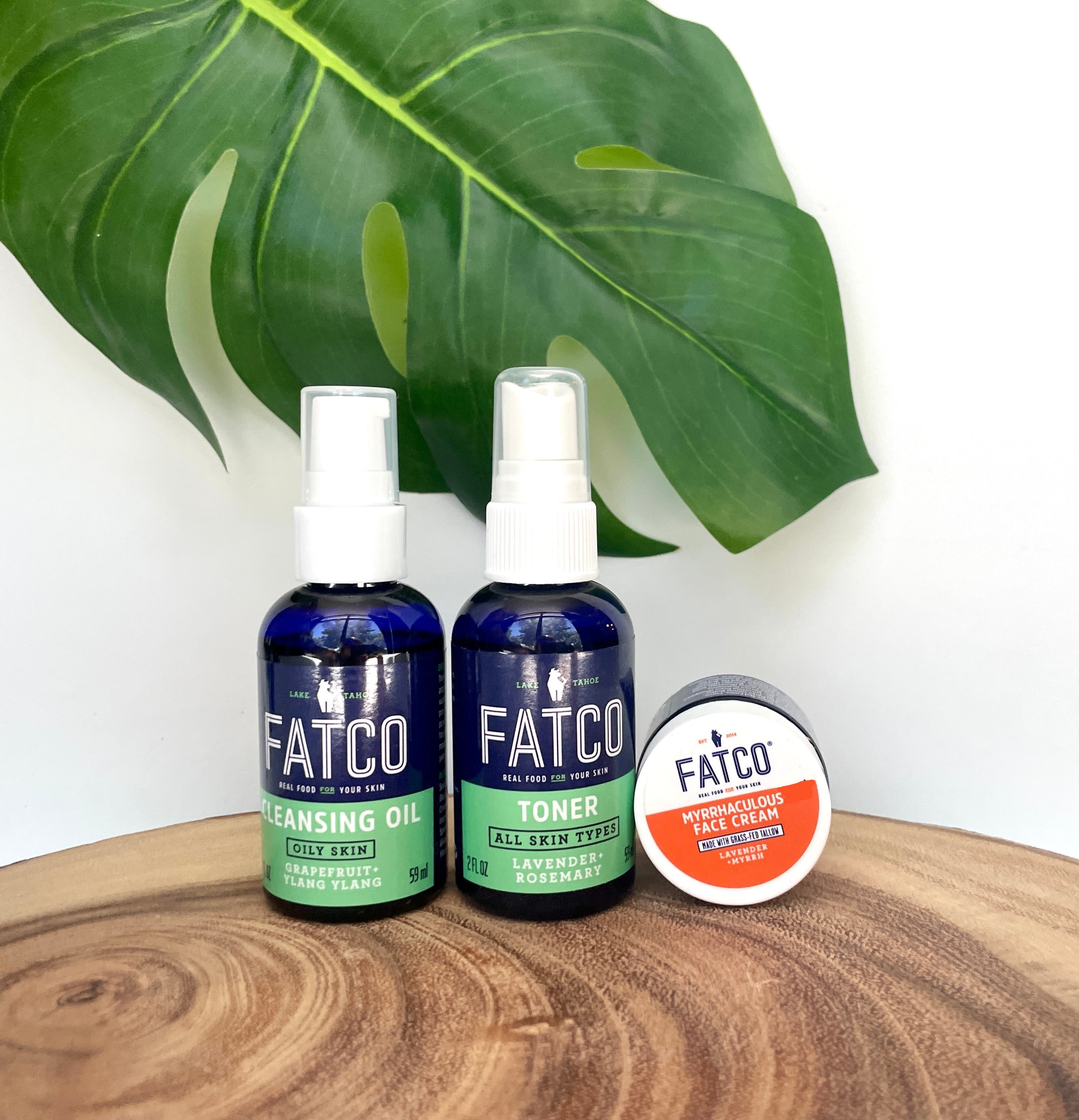
FATCO makes no night cream, and that is deliberate rather than an oversight. Myrrhaculous Face Cream opens with tallow from grass-fed cows, then coconut oil, shea butter and jojoba. After those come pumpkin seed, olive and avocado oils, beeswax, then rosehip seed, evening primrose, borage, moringa and argan. No water, so no preservative system, and it is dosed a pea at a time. Its own page says to use it morning and evening, which is the honest version of everything above. Read the panel before you buy. It carries lavender and myrrh essential oils. The Unmyrrhaculous version drops the myrrh and keeps the lavender, so neither is the pick if you are avoiding fragrance. Baby Butta is our shortest label and has no added scent. If a retinoid is part of your evening, that comes from a pharmacy, and its own label wants the moisturizer on in the morning too.
FATCO Tallow Skincare
Grass-Fed. Suet-Sourced. Dry-Rendered.