What Is Tallow Used For? Uses Beyond the Frying Pan

Tallow is used for three very different jobs: high-heat cooking, skin and body care, and traditional household goods like soap and candles. The fat that fries a batch of potatoes is the same fat that goes into a bar of soap. What changes between those jobs is how the fat was rendered and filtered, not what it fundamentally is. Below is the honest inventory. Every use here traces to a source, and the ones we could not verify were left out on purpose.
Key Takeaways
- Three families cover almost everything: cooking, skin and body care, and traditional household products. Nearly every claim you will read about tallow fits into one of them.
- Frying is the oldest use, and the numbers vary. The Culinary Institute of America chart lists beef tallow at 400°F; Montana State University Extension gives 400°F to 420°F. Distrust any single confident figure.
- Skin use is breadth, not magic. Tallow appears as a moisturizer, a balm, a lip fat, and the base fat in a bar of soap. A 2024 scoping review found it biocompatible with skin, while flagging thin human evidence.
- Soap and candles were the historical mainstays. Britannica notes tallow was used chiefly for both until synthetic surfactants arrived and pushed it toward feed, chemicals, and lubricants.
- Cooking grade and skincare grade are not interchangeable. FATCO's Fat Bar soap and Fat Stick balm both start from grass-fed tallow rendered and filtered for skin, not for a fryer.
What Tallow Is, in One Paragraph
Tallow is rendered beef fat. Hard fat from cattle is melted slowly, strained, and cooled back into a firm white block, with nothing added. That is the whole definition, and what tallow actually is gets more interesting once you ask which fat, from where, and rendered how. Everything below assumes you have a jar and want to know what to do with it.
Tallow in the Kitchen
Cooking is where most people meet tallow, and it has the longest commercial track record here. It is also the cheapest place to start, since butchers sell beef fat by the pound and rendering a batch at home takes an afternoon and a heavy pot.
Deep frying
Tallow was the default frying fat in American fast food for decades. In Fast Food Nation, Eric Schlosser reports that McDonald's cooked its french fries in a mixture of about 93% beef tallow and 7% cottonseed oil. That blend gave way to vegetable oil in 1990. It was an industry habit, not one chain's quirk. The Center for Science in the Public Interest tested fast-food frying fats in November 1985. UPI reported that Arby's, Burger King, Hardee's, McDonald's, Popeye's, and Wendy's were all frying in tallow, or in tallow cut with vegetable oil.
Smoke point is where honest writing gets thin, because published figures disagree. The Culinary Institute of America chart that Serious Eats reproduces lists beef tallow at 400°F. Montana State University Extension gives a smoke point of 400°F to 420°F. The spread is real, because the fat itself varies. That Extension article notes that rendering method changes the quality of the finished tallow, and that frying fat degrades faster once it has cooked protein. Take 400°F as the conservative planning figure.
Searing and roasting
Anything above roughly 400°F counts as high-heat cooking, and tallow clears that bar on the conservative end of its range. That makes it a workable fat for searing steak, roasting potatoes and root vegetables, and browning anything you would rather not steam. Flavor preference is a cook's judgment, not a research finding.
Pastry and preserved food
Solid fat does something in pastry that liquid oil cannot. The Culinary Institute of America explains that fats in a crust coat the proteins in flour, which prevents gluten development and yields tenderness. The same fats create steam in the oven, and that steam forces the layers apart into flakes. Bakers also use tallow for flavor and texture in biscuits, pie crusts, and gravies.
Tallow is also the binder in pemmican. The Canadian Encyclopedia describes it as dried meat, traditionally bison, pounded to a coarse powder and mixed with an equal amount of melted fat. Sewn into hide bags, it provisioned fur-trade voyageurs across the prairies.
Seasoning cast iron
Here the internet and the manufacturers disagree, and the manufacturer is worth hearing out. Lodge, the American cast iron maker, states plainly that it does not recommend seasoning with beef tallow, lard, or ghee, because those fats can go rancid. Lodge seasons its own cookware in the foundry with a soy-based vegetable oil and points home cooks toward a neutral, high-smoke-point oil for reseasoning.
What Lodge does endorse is cooking with tallow in cast iron. The same page calls it perfectly fine to cook with any of those fats, as long as you wash, dry, and oil the pan afterward.
Tallow on Skin and Body
Skin is where FATCO lives, and where the compositional argument is strongest. A 2024 scoping review in Cureus screened 147 papers and included 19. It concluded that tallow looks biocompatible with skin, since oleic, palmitic, stearic, and linoleic acid all appear in both tallow and the epidermis. The same authors are blunt about the gaps: most published work lacks human subjects, and they call for randomized controlled trials. Tallow shares fatty acids with the skin's surface lipids, and that is a fair claim. Proven better than everything else is not.
Everyday moisturizer. The most common skin use is also the simplest: warm a little between your fingers, then smooth it onto clean, slightly damp skin. Technique shifts by area, and applying tallow to your face, body, and hair is worth getting right.
Balm for small dry patches. A firm, water-free tallow balm suits cracked knuckles, cuticles, elbows, and wind-chapped cheeks. There is no water in it to evaporate away. FATCO's Fat Stick is that format in a half-ounce tube, aimed at dry lips, rough patches on the face, elbows, and knees.
Lip care. Tallow stays firm at room temperature, which is the texture a lip product needs to stay where you put it. The same Fat Stick covers lips, and it is the lowest-commitment way to try tallow on skin.
Household and Traditional Uses
Before tallow was a skincare ingredient it was a commodity, and the two biggest markets were washing and light. Britannica's entry states that tallow was used chiefly to make soap and candles until the development of synthetic surfactants moved it toward animal feed, chemicals, and lubricants.
Soap
Soap is a chemical reaction rather than a recipe: fat plus lye. Britannica's account of soapmaking describes hot caustic soda acting on a fat such as tallow to yield a sodium fatty acid salt, which is soap, plus glycerin. Britannica places tallow among the hard fats that make mild, well-cleansing bars, and calls it the most important of them. FATCO's Fat Bar soap runs the same reaction on a short list: grass-fed beef tallow, sodium hydroxide, distilled water, sucrose, sodium lactate, kaolin clay, colloidal oats, and an essential oil. If you have only ever used foaming gel, washing with a tallow soap bar takes a few days to adjust to.
Candles
Tallow candles were once the standard household light. Sir John Soane's Museum, writing on artificial light in Georgian England, records that candles made from sheep, cow, or pig fat were the most common. They were temperamental and smelly, they burned unevenly, and the wick had to be trimmed while it burned. Beeswax was reserved for the wealthiest households and the church. Below tallow sat the rushlight, the cheapest option of all: a marsh rush, peeled and dipped in animal fat, good for about twenty minutes. Brighter oil lamps and then gaslight ended the whole arrangement.
Leather
This is the use stated most confidently and understood least well. The Canadian Conservation Institute, part of the Government of Canada, describes how vegetable tanning finishes. The leather comes out hard and inflexible, so fats and oils, tallow among them, are worked in to provide flexibility. That is part of making leather, not maintaining it.
Maintenance goes the other way. The same institute's guidance for heritage collections says leather dressings and saddle soap are now not generally recommended. Applied oils can stiffen leather by dehydrating it, and they darken the surface. Museum objects are a stricter case than your work boots, but the direction of the evidence is clear. Rubbing tallow on leather is folk practice, not conservation practice.
Lubrication and industry
Tallow historically served as a lubricant and a livestock feed as well as a soap fat. That trail has not gone away. The North American Renderers Association traces where tallow's acids end up. Oleic acid goes into textiles and shampoo, stearic acid into tires, rubber, and crayons, and linoleic acid into paints and lubricants. None of that is a home use. It is why a rendering industry exists at this scale.
What Tallow Is Not For
Four things get claimed for tallow that we will not claim.
It is not wound care. Tallow is an emollient for everyday dryness. Cuts, burns, and infected skin need a doctor, not a balm.
It is not sun protection. No home-rendered fat carries a tested, labeled sun protection factor.
It is not a health food by volume. Montana State University Extension puts beef tallow at about 58% saturated fat, though USDA data works out closer to 52% of total fatty acids. Either figure sits against an American Heart Association cap of 6% of daily calories. Whether beef tallow is healthy to eat is genuinely contested and deserves its own treatment.
Cooking grade is not skincare grade. Kitchen tallow is rendered for flavor and heat stability. Skincare tallow is filtered further, for purity and for scent.
Got Questions?
Tallow Uses FAQ
Q What is the best use of tallow?
For most households it is high-heat cooking, where tallow's stability and low polyunsaturated content earn their keep. For FATCO the answer is skin, because tallow shares fatty acids with the skin's surface lipids. Both answers hold up. Which one fits depends on why you bought the jar.
Q What is beef tallow used for on skin?
Four main jobs: an all-over moisturizer, a firm balm for cracked knuckles and cuticles, a lip fat that stays put, and the base fat in a bar of soap. One ingredient covers what most bathroom routines split across four separate products, and it does it without added water.
Q Can you use the same beef tallow for cooking and skincare?
You can, but the grades differ. Cooking tallow is rendered for flavor and heat stability, so it often keeps a beefy scent and traces of solids. Skincare tallow is filtered further for purity and a neutral smell. Kitchen tallow works on skin; it just varies more from batch to batch.
Q Why did people stop using beef tallow?
Two shifts, in different industries. Synthetic surfactants replaced tallow in soap manufacturing, and brighter oil and gas lighting replaced tallow candles. In food, a saturated fat campaign pushed the big fast-food chains onto vegetable oil in 1990. None of it was a problem with the fat itself.
Q What are the downsides of using beef tallow?
It is a saturated fat, and dietary guidance says to limit those. It carries a beefy note unless it is well rendered and well filtered. It is not vegan. On skin, the published human research is thin, so treat it as a good emollient rather than a proven treatment.
Q What does tallow do for skin?
It softens skin and helps hold moisture in, the way any rich emollient does. What makes tallow specific is compositional: the 2024 Cureus review found it shares oleic, palmitic, stearic, and linoleic acid with the epidermis. FATCO built its entire line on that overlap.
The FATCO Alternative
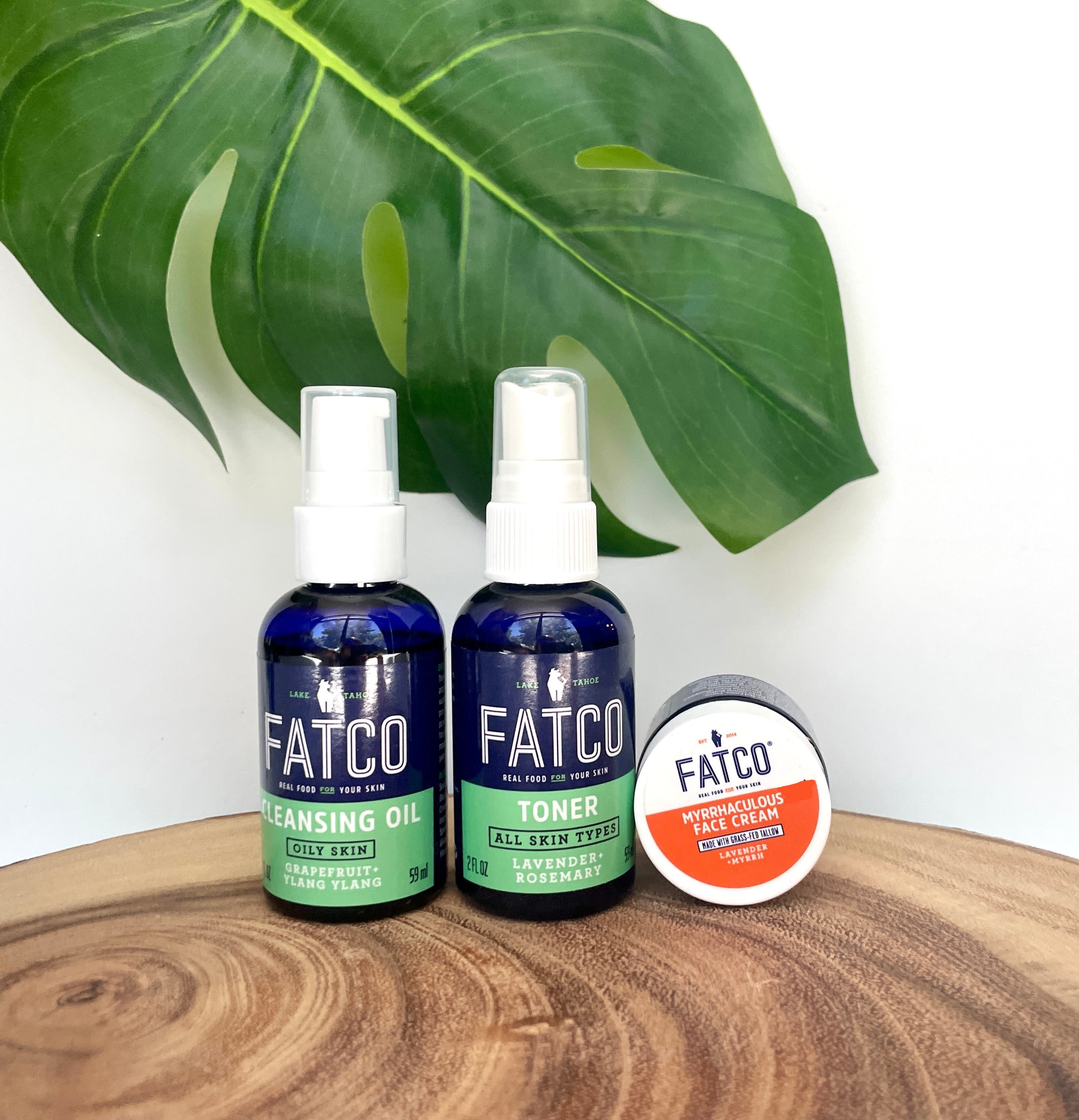
Every use on this list is real, but they do not all want the same fat. The tallow that fries a potato was rendered for a fryer, not for your face. FATCO starts with tallow from the kidney fat of grass-fed, pasture-raised cows, then renders and filters it for skin. That becomes a short list: Fat Bar soap, Fat Stick balm, Body Butta, Myrrhaculous Face Cream, and Stank Stop deodorant. One ingredient, in the format that matches the job.