How to Use Grass Fed Beef Tallow Soap for Face and Body Care
Beef tallow soap is a traditional bar cleanser made by saponifying grass-fed beef fat, and it is one of the few soaps that genuinely moisturizes while it cleans. If your skin feels tight, itchy, or flaky after your shower, your soap is almost certainly the culprit. This guide breaks down what beef tallow soap is, why it suits dry and sensitive skin better than most commercial bars, how to use it on your face and body, and what to look for when you buy.
Key Takeaways
- Beef tallow soap is made from grass-fed beef fat rendered and saponified, with the same fatty-acid profile that makes up healthy human skin.
- Fat-soluble vitamins A, D, E, and K in grass-fed tallow support the skin's natural regeneration process.
- The lipid composition of tallow mirrors the skin barrier, which is why it cleanses without stripping, unlike most synthetic detergent bars.
- For face and body, the technique is the same: warm water, a creamy lather, a 30-second gentle massage, thorough rinse.
- FATCO's grass-fed soap bars (Lemongrass, Lavender, and Coffee Fat Bar) are saponified in small batches from humanely sourced tallow.

What Beef Tallow Soap Actually Is
Beef tallow soap is made by combining rendered beef fat (tallow) with a lye solution (sodium hydroxide and water) through a process called saponification. When the reaction completes, no lye remains: just soap molecules, glycerin, and the beneficial fatty acids from the original fat. The resulting bar is dense, creamy-lathering, and slow to dissolve in the shower, which makes it more economical than most natural bar soaps.
Grass-fed tallow is the best starting point because pasture-raised cattle produce fat with a higher concentration of fat-soluble vitamins A, D, E, and K than grain-fed alternatives. According to MedlinePlus, vitamin A helps form and maintain healthy skin and mucus membranes, and deficiency shows up as dry, scaly skin. A bar made with grass-fed tallow delivers those vitamins directly to your skin with every wash.
Traditional soap makers have known this for centuries. Tallow-based soaps were the global standard for most of recorded history. The shift to petroleum-derived detergent bars in the 20th century was driven by industrial economics, not by any improvement in skin outcomes. A growing number of people with sensitive, reactive, or chronically dry skin are finding their way back to the original formula.
Why Beef Tallow Soap Suits Dry and Sensitive Skin
Most store soap bars use sodium lauryl sulfate (SLS) or similar surfactants to create a rich foam. These molecules are highly effective at removing oil, which sounds appealing until you realize your skin needs its oils. The outermost layer of skin (the stratum corneum) is a lipid-rich barrier that locks moisture in and keeps irritants out. Research on how topical fatty acids affect skin barrier function and moisture retention confirms that the composition of fats applied to skin directly influences whether the barrier stays intact or breaks down.
Beef tallow's fatty acid composition (predominantly oleic, palmitic, and stearic acids) closely matches the lipid profile of healthy human skin. That compatibility is the key. When you cleanse with a tallow soap bar, the fatty acids emulsify dirt and excess sebum without displacing the oils your skin actually needs. The result is skin that feels clean and comfortable, not that tight, squeaky-clean sensation that signals barrier disruption.
For people with sensitive skin, eczema-prone patches, or chronic dryness, switching to a non-stripping bar soap is often the single highest-impact change they can make to their routine. If you have struggled with dry skin and the everyday products that may be making it worse, beef tallow soap is the most direct solution.
How to Use Beef Tallow Soap on Your Face
The technique is gentler than most people expect.
- Splash your face with warm (not hot) water. Hot water accelerates barrier disruption.
- Rub the tallow soap bar between your palms for a few seconds to build a creamy lather, or work it into a soft washcloth.
- Massage the lather across your face for 20 to 30 seconds using light circular movements. No scrubbing.
- Rinse thoroughly until no residue remains, then pat (never rub) with a clean towel.
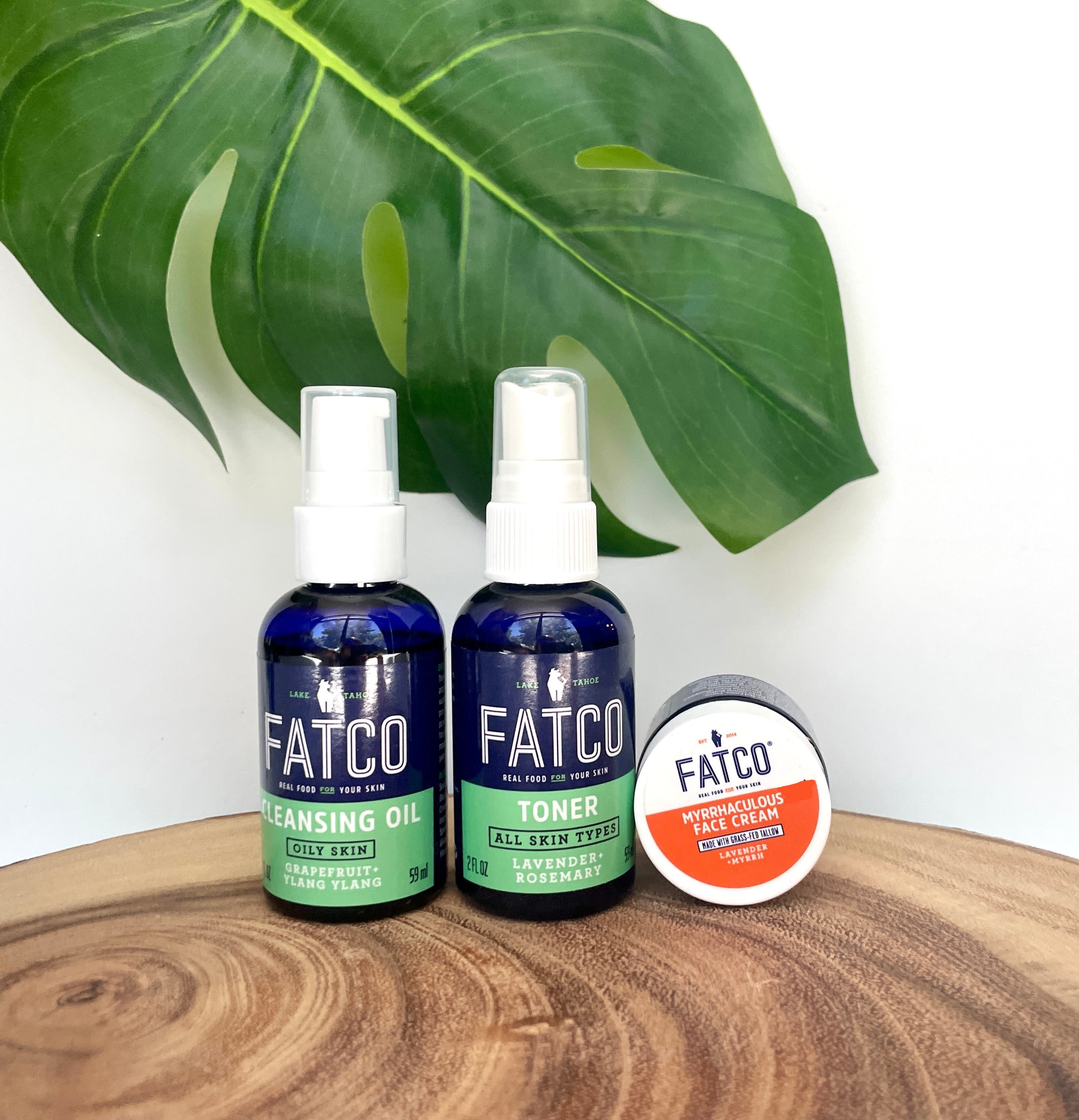
- Follow immediately with a tallow-based moisturizer like FATCO's Myrrhaculous Face Cream to seal in moisture while the skin is still slightly damp.
One bar lasts most people four to six weeks on the face alone because you use so little product per wash. Let it dry between uses on a draining soap dish to extend its life further.
How to Use Beef Tallow Soap on Your Body
The same principles apply at a larger scale.
- Wet your skin in the shower with warm water.
- Lather the bar directly on a loofah, natural sponge, or washcloth, or rub the bar across your skin and work up the lather with your hands.
- Massage in circular movements across the body. This promotes circulation and dislodges dead skin cells without the need for a separate exfoliating product.
- Rinse completely, paying extra attention to areas where soap can collect (underarms, behind knees).
- Towel-dry and apply Baby Butta or another tallow-based body balm while skin is still slightly warm to lock in moisture.
For parents looking for a gentle everyday bar for children with reactive skin, tallow soap's simple ingredient list makes it easy to vet. Our guides to Choosing a Gentle Baby Soap and Baby Soap for Eczema-Prone Skin cover what to look for when shopping for your youngest family members.
What to Look for in a Beef Tallow Soap Bar
Not every bar labeled "tallow soap" is the same. Here is what actually matters.
Grass-fed sourcing. Tallow from pasture-raised cattle has a better fatty acid and micronutrient profile than grain-fed tallow. Look for "grass-fed" or "pasture-raised" on the label.
Cold-process or hot-process saponification. Both methods preserve more of the glycerin and natural fatty acids compared to mass-produced detergent bars. Cold-process bars are typically gentler and creamier.
Minimal ingredient list. A quality tallow soap bar has a short ingredient list built on tallow and lye (which fully converts during saponification), with a few skin-friendly additions. Watch for added "fragrance" (code for synthetic fragrance compounds) and skin-sensitizing preservatives.
No added synthetic surfactants. If the bar lists sodium lauryl sulfate, sodium laureth sulfate, or cocamidopropyl betaine, it is not a true saponified tallow bar. It is a hybrid detergent product.
Scent from essential oils only. If scent is included, it should come from named essential oils, not "fragrance."
For people managing rosacea-prone or reactive skin, this checklist matters even more. Our Rosacea Cleanser Guide walks through the same characteristics: gentle, non-foaming or low-foam, free of synthetic fragrance.

FATCO's Grass-Fed Tallow Soap Bars
FATCO makes its soap bars in small batches from grass-fed beef tallow and a short list of skin-friendly ingredients. Every bar is saponified, which means it retains the glycerin naturally produced during the reaction. There are no synthetic surfactants and no artificial fragrance compounds.
Lemongrass Fat Bar
A bright, clean-scented bar with essential oil from real lemongrass. The citrusy note makes it a natural fit for a morning shower routine. Same grass-fed tallow base, same creamy lather.
Lavender Fat Bar
The mildest-scented option in the line. Lavender essential oil has a long history of use in skincare for sensitive skin types, and the tallow base keeps the bar well-tolerated even for people who react to conventional soap.
Coffee Fat Bar
Ground coffee adds light mechanical exfoliation to this bar without the scratching of harsh scrub particles. It is a good choice for body use, particularly on rough patches at elbows, knees, and heels. The Coffee Fat Bar is one of FATCO's best-sellers for a reason.
All three bars are available in the FATCO soap collection. For days when a bar is less convenient, our guide to choosing a natural, non-toxic body wash covers what to rotate in, so FATCO's tallow lineup has both formats handled.
Got Questions?
Tallow Soap FAQ
Q What is beef tallow soap made of?
At its core, just two things: rendered grass-fed beef fat and a lye solution, reacted together until every trace of lye converts into soap and glycerin. Nothing caustic survives the chemistry. What remains carries the tallow's own fatty acids, which is why a well-made bar cleans without the stripped, tight feeling detergent bars leave.
Q Is beef tallow soap good for your face?
Yes, for most skin types. Tallow's fatty acid profile is closely compatible with the skin's own lipid barrier, which is why it cleanses without stripping. It is particularly well-suited to dry, sensitive, or reactive skin. Start with the Lavender Fat Bar if you are introducing it to your facial routine for the first time.
Q How does beef tallow soap compare to commercial bar soap?
Most commercial bar soaps use synthetic detergents (surfactants like SLS) that effectively strip all surface oils, including the ones your skin needs. Tallow soap saponifies naturally and leaves behind glycerin, which has humectant properties. The cleansing is gentler and the post-wash feel is noticeably different: no tightness, no rebound oiliness.
Q Can you use tallow soap on sensitive or eczema-prone skin?
Many people with sensitive or eczema-prone skin find tallow soap more tolerable, since it skips the synthetic fragrance and harsh surfactants that commonly trigger flares. Every skin still reacts differently, though. Patch-test on your inner arm first if you have active eczema or a diagnosed skin condition before using it on your face.
Q Does grass-fed tallow soap smell like beef?
Not in any meaningful way. Properly rendered grass-fed tallow has a very mild, neutral scent. When scent is added (lavender or lemongrass essential oil, or coffee in the Coffee Fat Bar), those notes dominate entirely. A well-made tallow soap bar smells like the lavender, lemongrass, or coffee it is scented with, not like the kitchen.
Q Where can I buy quality grass-fed beef tallow soap?
FATCO's grass-fed soap bars ship directly from fatco.com in Lemongrass, Lavender, and Coffee, and are also available through select retailers. Buying direct gets you the freshest bars and lets you read the full ingredient list before purchasing, which matters since not every "tallow soap" on a shelf is actually saponified the traditional way.
The FATCO Alternative
If you have spent years reaching for whatever bar soap is on the shelf, beef tallow soap is a straightforward upgrade: fewer ingredients, better compatibility with your skin's natural lipid barrier, and a bar that lasts. FATCO's grass-fed Fat Bars are made exactly the way traditional saponified tallow soap should be: small batches, pasture-raised fat, scent from essential oils or coffee, and nothing synthetic. Your skin does not need a 20-ingredient formula. It needs real food-grade fats and a short, honest ingredient list.