Skincare for Anti-Aging: What Actually Works (and What's Just Marketing)

Two things in the anti-aging aisle have strong evidence behind them, and neither one is a cream. Daily broad-spectrum sunscreen and a retinoid do most of the work the whole category advertises. Everything else runs from modestly useful down to pure label. Here is the honest ranking, including where a tallow moisturizer sits in it.
Key Takeaways
- Sunscreen is the best-evidenced anti-aging product on the shelf. A randomized trial in Annals of Internal Medicine measured 24 percent less skin aging over four and a half years.
- Retinoids are the only topicals with evidence for changing skin structure. Tretinoin is the form the FDA recognizes for photoaging, and it is prescription-only for a reason.
- "Anti-aging" is a marketing category, not a regulated one. By the FDA's own line, a cream that softens the look of lines by moisturizing is a cosmetic, not a treatment.
- "Clinically proven" means the product was given to consumers to try. That is the American Academy of Dermatology's wording, not an FDA approval.
- Moisturizer, tallow included, changes how lines look rather than the damage underneath. That is a real job, and the honest one for a fat-based cream.
What Skin Aging Actually Is
Dermatologists split it in two. Intrinsic aging is the part your genes run: skin gets thinner and drier over time, and everyone gets visible lines eventually. Extrinsic aging is the part your environment and habits cause, and the American Academy of Dermatology puts the sun at the top of that list. Only the second half is reachable by anything you buy, which is why the ranking below looks nothing like the shelf.
The Two With the Strongest Evidence
Sunscreen, every day. The best evidence in this category belongs to a product almost nobody files under anti-aging. A randomized controlled trial in Annals of Internal Medicine followed 903 Australian adults for four and a half years. The group assigned to daily broad-spectrum sunscreen showed 24 percent less skin aging than the group left to apply it at their own discretion. Its conclusion: regular sunscreen use retards skin aging in healthy, middle-aged men and women. The funder was Australia's National Health and Medical Research Council, not a sunscreen brand.
The AAD's practical version: broad-spectrum, SPF 30 or higher, water resistant, applied daily to all skin clothing does not cover. No fat carries an SPF, which is why a short routine built on fats still has to buy its sun protection somewhere else. FATCO does not make a sunscreen.
A retinoid, at night. Retinoids are the only topical family with evidence for changing the skin rather than the look of it. The AAD dates the category to 1971, when tretinoin was approved as a topical acne treatment. Dermatologists then noticed it spurs faster turnover of surface skin cells and boosts collagen, improving skin tone and reducing fine lines and wrinkles. A 2006 review in Clinical Interventions in Aging states it directly: tretinoin cream 0.02% is now recognized by the FDA for the treatment of photoaging.
Prescription is not a formality here. Tretinoin is a drug, and the AAD says retinoids should not be used during pregnancy. It also says anyone with a lot of redness or inflammation should ask a dermatologist about rosacea therapies instead. Over-the-counter retinol runs the same pathway at lower strength. FATCO makes neither.
Everything Else, Ranked by What the Evidence Says
A 2021 systematic review in Dermatology went through the most common ingredients in over-the-counter anti-aging cosmetics. Its conclusion: evidence and good clinical practice of the data supporting their use are oftentimes lacking.
The table ranks ingredients rather than products, because the same handful of actives is what you are buying whether the label says cream or anti-wrinkle serum.
| What you can buy | What the evidence actually supports | Strength |
|---|---|---|
| Broad-spectrum sunscreen, SPF 30 or higher | Measurably less photoaging over 4.5 years in a randomized trial | Strongest |
| Prescription tretinoin | The topical form the FDA recognizes for photoaging | Strong |
| Over-the-counter retinol | Same pathway, lower strength, slower results | Moderate |
| Vitamin C | Reduced photoaging scores in two small placebo-controlled studies | Limited |
| Niacinamide | Fine lines, blotchiness and sallowness in one 12-week split-face trial | Limited, industry-run |
| Alpha hydroxy acids | Surface exfoliation, and 18 percent more UV sensitivity after four weeks | Real, and double-edged |
| Peptides | Signalling claims the systematic reviews describe as under-evidenced | Weak |
| Topical green tea and most botanicals | No significant clinical difference from placebo in a 40-woman trial | None so far |
| Moisturizer, tallow included | Water held in the skin, so fine lines look less pronounced | Real, appearance only |
One row needs its funding stated. The 12-week niacinamide trial, 50 subjects at 5 percent, was run by employees of Procter and Gamble. That does not make the result false. It does mean the strongest single finding for niacinamide has not been independently repeated.
The alpha hydroxy acid row is the one people miss. The FDA's own research found volunteers' sensitivity to UV reddening rose 18 percent after four weeks of use. Keep acids and daily sunscreen together rather than treating them as alternatives.
What Is Just Marketing
Four claims do most of the selling in this category, and none of them survives being read closely.
"Anti-aging" itself. The FDA's position is that a product meant to make lines and wrinkles less noticeable simply by moisturizing the skin is a cosmetic. A product intended to remove wrinkles or increase the skin's production of collagen is a drug or a medical device. Cosmetics need no FDA approval before sale; drugs do. A jar sold as a cosmetic is, by its own regulatory status, not doing what its front label implies.
"Clinically proven". The American Academy of Dermatology names sunscreen and moisturizer as the two most-effective anti-aging products you can buy, and defines the phrase on the same page. Clinically proven means the product was given to consumers to try. It does not mean clinical trials or FDA approval.
Price as a proxy for potency. The same guidance says effective anti-aging products come in all price ranges. Cost tracks packaging and marketing far more reliably than it tracks actives.
"Reverses" and "10 years younger". Keep the AAD's line handy: you cannot get the results of a facelift from a cream, and these products deliver modest results. Its guidance also sets the only timeline worth trusting. A moisturizer can plump fine lines in a few days, but most products take at least six weeks, sometimes up to three months.
The "Natural Retinol" Problem
Vitamin A is the active idea behind every retinoid, so any ingredient that can be called a source of vitamin A gets marketed into this category. Tallow is one of them, including in places we would rather it were not.
It is not accurate. USDA reference data for beef tallow, fdcId 171400, records vitamin A at zero and vitamin K at zero. Only vitamin E, at 2.7 mg per 100 g, and vitamin D, at 28 IU, are non-zero. There is no retinol in tallow. What it does is fill gaps between surface skin cells and slow water loss. What beef tallow does and does not do is a narrower story than the packaging tells.
Grass-fed deserves the same care. USDA's Agricultural Marketing Service withdrew its grass-fed marketing claim standard on 12 January 2016, at 81 FR 1386. Treat any grass-fed line, FATCO's included, as a sourcing description rather than a certification.
Where a Moisturizer Honestly Fits
Moisturizer is not the consolation prize in this ranking. The AAD names it beside sunscreen as one of the two most-effective anti-aging products. Its description of the mechanism is precise: moisturizer traps water in your skin, and that extra moisture can help reduce the appearance of fine lines. Appearance is the operative word. Nothing in a jar of fat reverses the collagen loss underneath it.
That is the whole and honest case for a tallow cream on older skin. Tallow and human sebum both carry high proportions of palmitic and oleic acid, so the fat is compatible with what the barrier already handles. Skin also makes squalene, wax esters and sapienic acid, none of which tallow contains, so the overlap is partial. Oil production falls with age, which is why a richer, water-free vehicle earns its place on mature skin. Which one suits you depends on oil output and barrier state more than on any hero ingredient. Choosing a moisturizer by skin type is a better filter than the anti-aging shelf label.
A retinoid at night with a barrier moisturizer alongside it is the shape most face creams for aging skin are built around, whether or not the box says so. If the basics are not getting you where you want, the AAD's own instruction is that you may want to see a board-certified dermatologist.
Got Questions?
Frequently Asked Questions
Q What is the best anti-aging skin care?
Daily broad-spectrum sunscreen first, then a retinoid. Those two carry the strongest published evidence, and a randomized trial measured 24 percent less skin aging in daily sunscreen users over four and a half years. A moisturizer is the third piece, working on how lines look rather than on the damage beneath them.
Q What is a good skin care routine for anti-aging?
Three steps, in this order of importance. Sunscreen every morning at SPF 30 or higher. A moisturizer twice a day. A retinoid at night if your skin tolerates one, introduced slowly and never during pregnancy. Adding several new products at once mostly adds irritation, which the AAD says makes skin look older.
Q What is a good anti-aging cream that actually works?
Any cream you will genuinely apply twice a day works at the level a cream can work, which is hydration and the look of fine lines. No cream removes wrinkles, and the FDA treats that intent as a drug claim rather than a cosmetic one. Patch-test on your inner forearm first.
Q What is the best anti-aging skincare line?
No single line settles it, because the two best-evidenced items rarely come from the same brand. Sunscreen is regulated separately as a drug, and tretinoin comes from a pharmacy. Judge a range on what it actually contains and whether you will use it daily, not on the words in its name.
Q How to take 10 years off your face?
Not with skincare. The American Academy of Dermatology is blunt about it: you cannot get the results of a facelift from a cream, and these products deliver modest results. Consistent sun protection, a retinoid and patience do more than any single purchase. Procedures are a separate conversation with a dermatologist.
Q How long does beef tallow take to work on wrinkles?
Tallow does not act on wrinkles the way a retinoid does, so no honest timeline exists for that. USDA data puts its vitamin A at zero. What it does is hold water in the skin, and the AAD's window for a visible difference from a moisturizer is a few days for plumping.
The FATCO Alternative
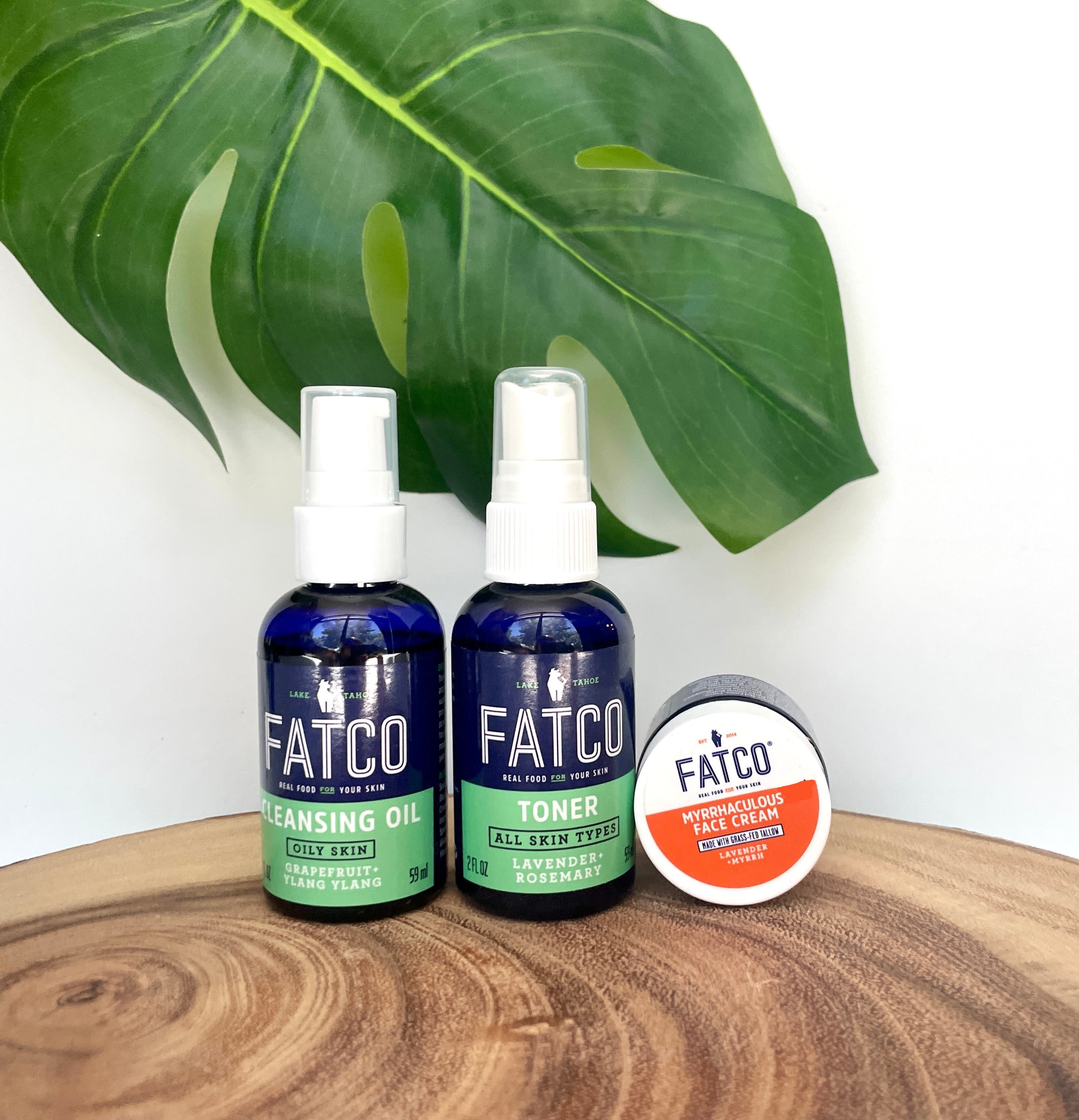
FATCO makes no sunscreen and no retinoid, and this article would be worth less if it pretended otherwise. What FATCO makes is the third item on the list. Myrrhaculous Face Cream opens with tallow from grass-fed cows, then coconut oil, shea butter and jojoba. After those come pumpkin seed, olive and avocado oils, beeswax, and rosehip seed, evening primrose, borage, moringa and argan. No water, so no preservative system, and a pea-sized amount morning and evening. It carries lavender and myrrh essential oils, so it is not the pick if fragrance is what you are avoiding. Buy the sunscreen elsewhere, and ask a dermatologist about the retinoid.
FATCO Tallow Skincare
Grass-Fed. Suet-Sourced. Dry-Rendered.