Wagyu Beef Tallow: Is the Premium Worth It for Skin?

Wagyu beef tallow is rendered fat from wagyu cattle, the Japanese-origin breed famous for exceptional marbling. The fat really is compositionally different, and the culinary credentials are real. Two things are worth checking before you pay for it, though: whether the premium exists at all, and whether it buys you anything on skin.
Key Takeaways
- Wagyu fat genuinely does run higher in oleic acid. A 2026 analysis of 167 Japanese Black carcasses put oleic acid at 48.4 percent of intramuscular fatty acids on average, against 36.0 g of oleic acid per 100 g in USDA's beef tallow reference.
- The cooking case is the strong one: richer flavor and a lower melting point, which is what produces the melt-in-the-mouth quality. Smoke point is a property of the tallow generally rather than of the breed.
- The price premium is largely a myth in the US market. At Fatworks on 31 July 2026, American wagyu tallow and grass-fed beef tallow cost exactly the same per 14 oz jar, $18.25, and the organic grass-fed jar cost more than either. Snake River Farms sold American wagyu tallow at $0.60 an ounce, below both.
- For skincare, how the cattle were raised is the better-evidenced question than breed. Grass finishing is documented to raise vitamin E, beta-carotene, CLA and omega-3 content in beef fat. Breed is not documented to change what tallow does on skin at all.
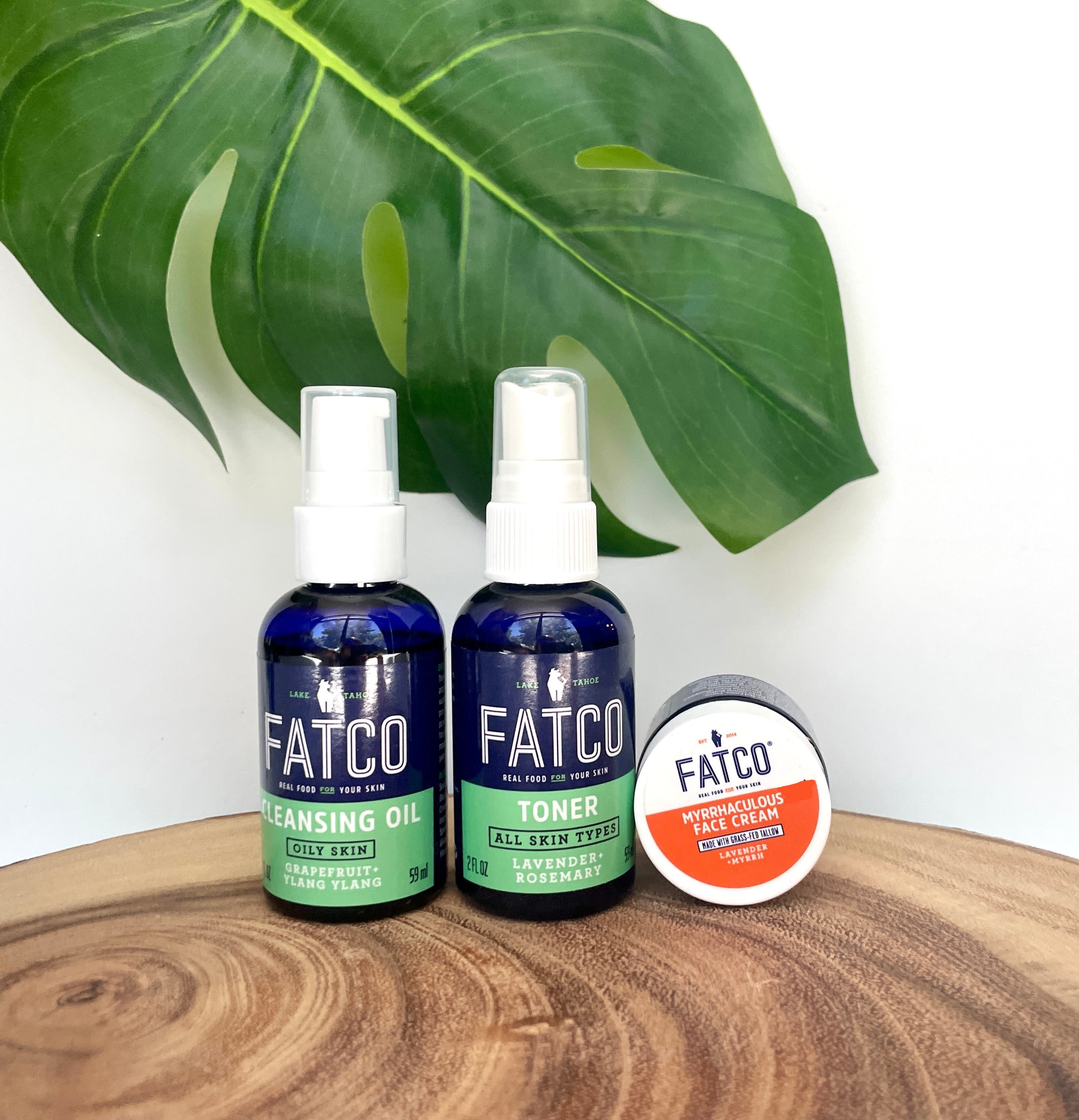
- FATCO uses grass-fed tallow, sourced for the pasture diet rather than the pedigree.
What Is Wagyu Beef Tallow?
Wagyu is a breed category originally developed in Japan. The name translates as "Japanese cattle," and it covers four breeds: Japanese Black, Japanese Brown, Japanese Polled and Japanese Shorthorn. A 2022 study in Metabolites from Kobe University notes that Japanese Black alone accounts for more than 97 percent of Japan's wagyu production, so it is effectively the breed people mean.
Wagyu cattle carry a genetic predisposition to deposit fat within muscle tissue rather than just around the outside. This intramuscular fat, or marbling, is what produces the characteristic appearance and flavor, and Japan grades it on its own scale, the Beef Marbling Standard, running from 1 to 12. The numbers are striking: in a 2026 study of 167 Japanese Black carcasses published in Foods, intramuscular fat in the loin averaged 46.5 percent of the sample, with the leanest carcass in the set still at 30.5 percent.
One caveat about the word "wagyu" outside Japan. The same Kobe University work found that Japanese, Australian and hybrid wagyu differ measurably in their triglyceride composition, so a US or Australian wagyu product is not the same fat as a Japanese one.
Why Wagyu Fat Has a Different Composition
Part of the answer is the enzyme stearoyl-CoA desaturase (SCD), which converts saturated stearic acid into monounsaturated oleic acid. A 2004 study in Mammalian Genome genotyped 1,003 Japanese Black carcasses and found that one SCD variant was associated with a higher share of monounsaturated fat and a lower melting point. The authors were explicit that SCD "was not the only genetic factor" behind the difference, and the variation they measured sits within the breed rather than between wagyu and everything else, so this is one contributing mechanism rather than the whole story.
The size of the gap is worth stating plainly. In the 167-carcass Japanese Black dataset, oleic acid averaged 48.4 percent of total fatty acids, ranging from 39.5 to 56.1 percent across individual animals, with total monounsaturates at 56.3 percent. USDA's reference entry for beef tallow (fdcId 171400) reports 36.0 g of oleic acid and 41.8 g of total monounsaturated fat per 100 g. The Weston A. Price Foundation's own account of traditional fats puts tallow at "typically 50 to 55 percent saturated, with almost all of the rest being monounsaturated." Note that the wagyu figures describe intramuscular fat in the loin and the tallow figures describe rendered fat, so they are indicative rather than a like-for-like test.
Oleic acid is the same fat that dominates olive oil. It is a documented skin-penetration enhancer in lipid-based formulations, though the mechanism reported in that literature is disruption of the stratum corneum's ordered lipid packing rather than a neat fit with it. Tallow shares several fatty acids with the skin's surface lipids, palmitic and oleic among them. It is not a match for them: a 2018 review in the Journal of Lipids reports that the most abundant monounsaturate on the skin surface is sapienic acid, which tallow does not supply, and that sebum also carries squalene and wax monoesters, which tallow lacks entirely.
Wagyu Tallow for Cooking
This is where wagyu tallow earns most of its reputation.
The elevated oleic acid content is tied to the aroma and mouthfeel. The 2026 Foods study found that sweet and "wagyu beef" aromas strengthened as oleic acid composition rose, though the effect flattened out at the highest marbling levels. A higher monounsaturated share also lowers the melting point, which is the mechanical reason wagyu fat reads as buttery rather than waxy.
On heat, treat the numbers as a property of beef tallow rather than of the breed. Montana State University Extension puts beef tallow's smoke point at 400 to 420°F, which is high enough for searing and frying. Nothing published shows wagyu tallow smoking higher than any other tallow, and since oleic acid lowers melting point rather than raising smoke point, there is no mechanism to expect it to. Chefs use it for searing steaks, roasting vegetables, making compound butters, and finishing sauces where the fat flavor is meant to be front and center.
Common cooking uses for wagyu tallow:
- Searing beef at high heat (adds flavor without breaking down)
- Roasting root vegetables (crisp exterior, rich finish)
- Sautéing aromatics as a flavor base for sauces
- Rubbed onto a roast before low-and-slow cooking
- Used as a flavor drizzle on finished dishes, similar to cultured butter
If you cook regularly with tallow and value that specific flavor, wagyu tallow is a legitimate choice. And in the US market you may not be paying much of a premium for it anyway, which is the next section.
What Wagyu Tallow Actually Costs
The premise that wagyu tallow is expensive deserves checking against live listings rather than repeated from the steak market. Prices below were pulled from the sellers' own catalogues on 31 July 2026 and will drift, so re-check before you buy.
| Seller | Product | Size | Price | Per ounce |
|---|---|---|---|---|
| Fatworks | American Wagyu Tallow | 14 oz | $18.25 | $1.30 |
| Fatworks | Grass Fed Beef Tallow | 14 oz | $18.25 | $1.30 |
| Fatworks | Organic Grass Fed Beef Tallow | 14 oz | $20.75 | $1.48 |
| Fatworks | Japanese Wagyu Tallow | 14 oz | $24.95 | $1.78 |
| Snake River Farms | Wagyu Beef Tallow | 30 oz | $18.00 | $0.60 |
At the one seller carrying both in the same jar size, American wagyu tallow and grass-fed beef tallow are priced identically, and the organic grass-fed jar costs more than either. Snake River Farms, which raises American wagyu itself, sells its tallow well below both. Only the Japanese wagyu SKU carries a real premium, and on the day we checked it was out of stock.
Two things follow. First, the marbling premium that makes wagyu steak expensive does not carry over cleanly to the rendered by-product. Second, if you were choosing between wagyu tallow and grass-fed tallow on price, price is usually not the deciding factor.
Wagyu Tallow for Skincare: The Honest Picture
Here is where the conversation gets more nuanced.
Tallow has been used as a skin-compatible fat for centuries. Its fatty acid profile, particularly the balance of palmitic, stearic, and oleic acids, shares several fatty acids with the skin's own surface lipids, in different proportions.
Diet is the better-documented lever. A 2010 review in Nutrition Journal found that grass finishing roughly triples alpha-tocopherol (vitamin E) in beef compared with grain feeding, raises beta-carotene about sevenfold, and increases conjugated linoleic acid and omega-3 fatty acids, while total saturated fat does not differ between the two systems. The Weston A. Price Foundation reaches the same conclusion from its own reading, reporting four times the vitamin E in grass-fed cattle and three to five times the CLA. Note that neither source supports a vitamin A or vitamin K claim, and USDA's reference entry for beef tallow lists both at zero.
That is the key point for skincare: what is documented to change the nutrient content of tallow is what the cattle ate, not their breed.
Grass-fed cattle produce tallow with measurably more vitamin E and carotenoid content than grain-fed alternatives. A wagyu animal raised on a feedlot ration produces tallow with a distinctive fatty acid ratio but not those pasture-derived nutrients.
Breed does move the fat. A 2026 study in the Journal of the Science of Food and Agriculture compared tallow from four cattle types and found saturated fat ranging from 41.8 to 66.2 percent and melting points from 39.9 to 49.5°C, which is a wide spread. What no published work does is show that any of that changes how the fat behaves on skin. The honest position is that breed changes the fat and has not been shown to change the skincare outcome.
The honest answer: for skincare, grass-fed sourcing is the quality marker with evidence behind it. Breed is untested.
Wagyu Tallow vs. Grass-Fed Tallow: Side by Side
| Attribute | Wagyu Tallow | Grass-Fed Tallow |
|---|---|---|
| Primary use | Culinary (flavor, high-heat cooking) | Skincare and cooking |
| Oleic acid content | Higher: 48.4% of fatty acids on average in Japanese Black | USDA reference tallow: 36.0 g per 100 g |
| Melting point | Lower, which is what reads as buttery | Higher, sets firmer |
| Vitamin E and carotenoids | Depend on diet, not breed | Documented higher when grass-finished |
| Omega-3 and CLA | Depend on diet | Documented higher with a forage diet |
| Skin evidence | None specific to breed | None specific to feeding system either, beyond composition |
| Price point (31 July 2026) | American wagyu at parity with grass-fed; Japanese wagyu higher | $1.30 to $1.48 an ounce at Fatworks |
| Sourcing transparency | "Wagyu" outside Japan covers crossbreds too | Depends on the producer; no federal standard since 2016 |
Does Wagyu Tallow Clog Pores?
Tallow has not been formally assigned a comedogenic rating in the standardized scale used for cosmetic ingredients, and neither has wagyu tallow specifically. It is generally treated as low-risk for most skin types, but that is formulator experience rather than a test result, and anyone quoting you a number for either fat is estimating.
If you are trying tallow on your face for the first time, the sensible approach is to patch test on a small area over a few days before applying broadly.
Got Questions?
Wagyu Tallow FAQ
Q What makes wagyu tallow different from regular beef tallow?
Oleic acid. Japanese Black cattle carry a genetic tendency toward heavy intramuscular fat with a higher oleic share: 48.4 percent of fatty acids on average across 167 carcasses, against 36.0 g per 100 g in USDA's beef tallow reference. That means a lower melting point and a richer flavor. The saturated fraction is lower, not absent.
Q Is wagyu tallow better for skin than grass-fed tallow?
There is no evidence that it is. No published work tests wagyu tallow on skin. What is documented is that a forage diet raises vitamin E, beta-carotene, CLA and omega-3 content in beef fat, which is a feeding question rather than a breed one. Wagyu genetics are documented to affect flavor and melting point.
Q Is wagyu tallow good for cooking?
Yes. The higher oleic acid content gives it a richer, more buttery flavor and a lower melting point than standard tallow. On heat tolerance it behaves like any beef tallow: Montana State University Extension puts the smoke point at 400 to 420°F, and nothing suggests the breed changes that.
Q What are the best ways to cook with wagyu beef tallow?
Searing steak is the classic use, letting the fat's buttery flavor carry through without overpowering the meat. It also works well for roasting root vegetables, sautéing aromatics as a sauce base, or rubbing onto a roast before slow cooking. A small drizzle over a finished dish adds richness, similar to cultured butter.
Q Is wagyu beef tallow healthy?
Wagyu fat runs high in oleic acid, the monounsaturate that also dominates olive oil. Across 167 Japanese Black carcasses it averaged 48.4 percent of total fatty acids and ranged from 39.5 to 56.1 percent, against 36.0 g per 100 g in USDA's beef tallow reference. It is still a saturated-fat-rich food, so use it in moderation like any cooking fat.
Q Which tallow is best for skincare: wagyu, grass-fed, or grain-fed?
Grass-fed is the defensible pick, because it is the only one of the three with published evidence behind the difference: forage feeding raises vitamin E, beta-carotene, CLA and omega-3 content in the fat. Wagyu is a flavor and texture choice with no skin evidence either way. And in the US, wagyu tallow often is not the more expensive option anyway.
The FATCO Alternative
FATCO uses grass-fed beef tallow as the foundation of every formula because feeding is the variable with published evidence behind it, and breed is not. The brand's own position on the rest of the chain is suet-sourced, dry rendered and triple filtered. If you want the wagyu jar for your kitchen, buy it for the flavor, and know that the pedigree is not what determines how a tallow behaves on skin.