Where Does Tallow Come From? From Pasture to Jar

Tallow comes from cattle. It is beef fat that has been melted down, separated from connective tissue, and strained clean. True, but nearly useless on its own, because that answer skips the two things that decide whether a jar of tallow is any good. Which fat on the animal did it come from, and how was that animal raised? Hard fat from around the kidneys is not the same tissue as scraps trimmed off a steak. And a cow finished on pasture does not produce the same fat as a cow finished on grain.
Key Takeaways
- Tallow is rendered fat from cattle. Raw beef fat straight from the butcher is not tallow yet. Rendering is the step that makes it clean, stable, and usable.
- The best tallow starts as suet, the firm internal fat packed around the kidneys and loins, rather than trim fat shaved off muscle cuts.
- Fat deposits are not interchangeable. Internal fat, fat under the hide, and fat inside muscle behave as different tissues, and they render differently too.
- Diet shows up in the fat. Cattle finished on pasture carry more carotenoids, more vitamin E, and a better omega balance in their fat than grain-finished cattle.
- FATCO's tallow is suet from grass-fed, pasture-raised cows, dry-rendered and triple-filtered before it ever reaches a jar.
What Part of the Cow Does Tallow Come From?
Tallow can be rendered from fat taken almost anywhere on the carcass, which is exactly why quality varies so much between brands. Two deposits account for most of what gets sold.
Suet: the fat around the kidneys and loins
Suet is the hard, dry, crumbly white fat that sits inside the body cavity, wrapped around the kidneys and running along the loins. It is not a marketing term. It is a specific anatomical deposit that the beef industry already measures. South Dakota State University Extension explains that graders estimate kidney, pelvic, and heart fat as a percentage of hot carcass weight when assigning a yield grade. Most Midwest carcasses fall between 2 and 3.5 percent, and that figure covers all three internal deposits together, not suet alone.
So the usable suet on a carcass is a fraction of an already small number. That is why suet-sourced tallow costs more than commodity tallow, and why most producers do not bother with it.
Trim fat: everything else
Trim fat is what comes off the outside of muscle cuts during butchering. It is softer, wetter, and threaded with more connective tissue than suet. There is far more of it, it costs far less, and much of the tallow sold in bulk is made from it.
Trim fat can absolutely be rendered into perfectly usable cooking tallow. The issue is consistency. Trimmings vary by cut, by animal, and by day, so the finished fat varies too, in firmness, in color, and in how strongly it smells.
Why the deposit matters
This is not just a butcher's distinction. A 2025 study in the journal Biology compared gene expression and cell behavior across intramuscular, subcutaneous, and visceral fat in beef cattle. The three depots turned out to function as biologically distinct tissues, not one interchangeable fat stored in different places.
For anyone rendering that fat, the practical differences are the ones you can see in the pot. Suet holds less water and less connective tissue, so it yields a firmer, cleaner fat with a milder smell and a longer shelf life. Trim fat needs harder straining to reach the same clarity. Neither one is tallow until it is rendered, which is the difference between suet and tallow that trips up most first-time buyers.
Which Animal, and What Was It Eating?
In the United States, "tallow" on a label almost always means rendered beef fat. Mutton tallow, rendered from sheep, is a real product but an uncommon one. Rendered pork fat is lard, which is softer at room temperature and has a different fatty acid profile. So when someone asks what animal tallow comes from, the answer is a cow, nearly every time.
The more interesting variable is what that cow ate.
Grass-finished versus grain-finished
Cattle raised on pasture and cattle finished in a feedlot on corn and soy deposit measurably different fat. A review in Nutrition Journal by Daley and colleagues compared grass-fed and grain-fed beef across the published literature. Grass-finishing produced a lower omega-6 to omega-3 ratio, averaging 1.53 against 7.65 for grain-fed. The same review reported roughly a seven-fold increase in beta-carotene and about three times the alpha-tocopherol, which is vitamin E.
Those measurements were taken in beef tissue rather than in rendered tallow specifically, so treat them as a direction rather than a label guarantee. The direction is consistent, though, and it explains something you can see with your own eyes. Grass-fed tallow often carries a yellow or ivory tint, and that color is carotenoid content, not a defect. Snow-white tallow usually means grain feeding, heavy processing, or both.
For skincare buyers this is the whole ballgame, because the cow's diet matters for skin in a way that no amount of post-processing can fix. You cannot add fat-soluble vitamins back into a fat that never had them.
The Step That Turns Fat Into Tallow: Rendering
Rendering means melting fat at low, controlled heat until the pure fat separates from the solids, then straining the liquid clean. It sounds trivial. It is the step that decides half of the finished quality.
Dry rendering uses no added water. The fat melts, the solids sink and crisp, and the clear fat is poured off and filtered. Wet rendering simmers the fat in water and skims the fat off the top, which produces a very white, very neutral result. The tradeoff is that residual water shortens shelf life and the water-washing carries off some of the aromatic and fat-soluble compounds along with the smell.
Filtering is separate from rendering. Running the rendered fat through progressively finer filters pulls out protein fragments and cellular debris without changing the chemistry of the fat itself. It cleans without stripping.
Anyone curious about the mechanics can render tallow at home with a pot and an afternoon. Doing it once teaches you more about tallow quality than any label ever will.
Where FATCO's Tallow Comes From
FATCO's sourcing statement is short and specific: "Our tallow is derived from the kidney fat (or, suet) of grass-fed, pasture raised cows."
Stacked out, the standard is four decisions made in the same direction:
- Suet-sourced, from the kidney and loin fat, not scrap trimmings
- Grass-fed, from cattle raised on pasture diets
- Dry-rendered, at controlled temperatures rather than water-washed
- Triple-filtered, to remove impurities without chemical stripping
That is the same fat in every product FATCO makes, from the Body Butta to the Fat Sticks to the Stank Stop deodorants. It is also close to the ancestral tradition of tallow skincare that existed long before synthetic moisturizers did.
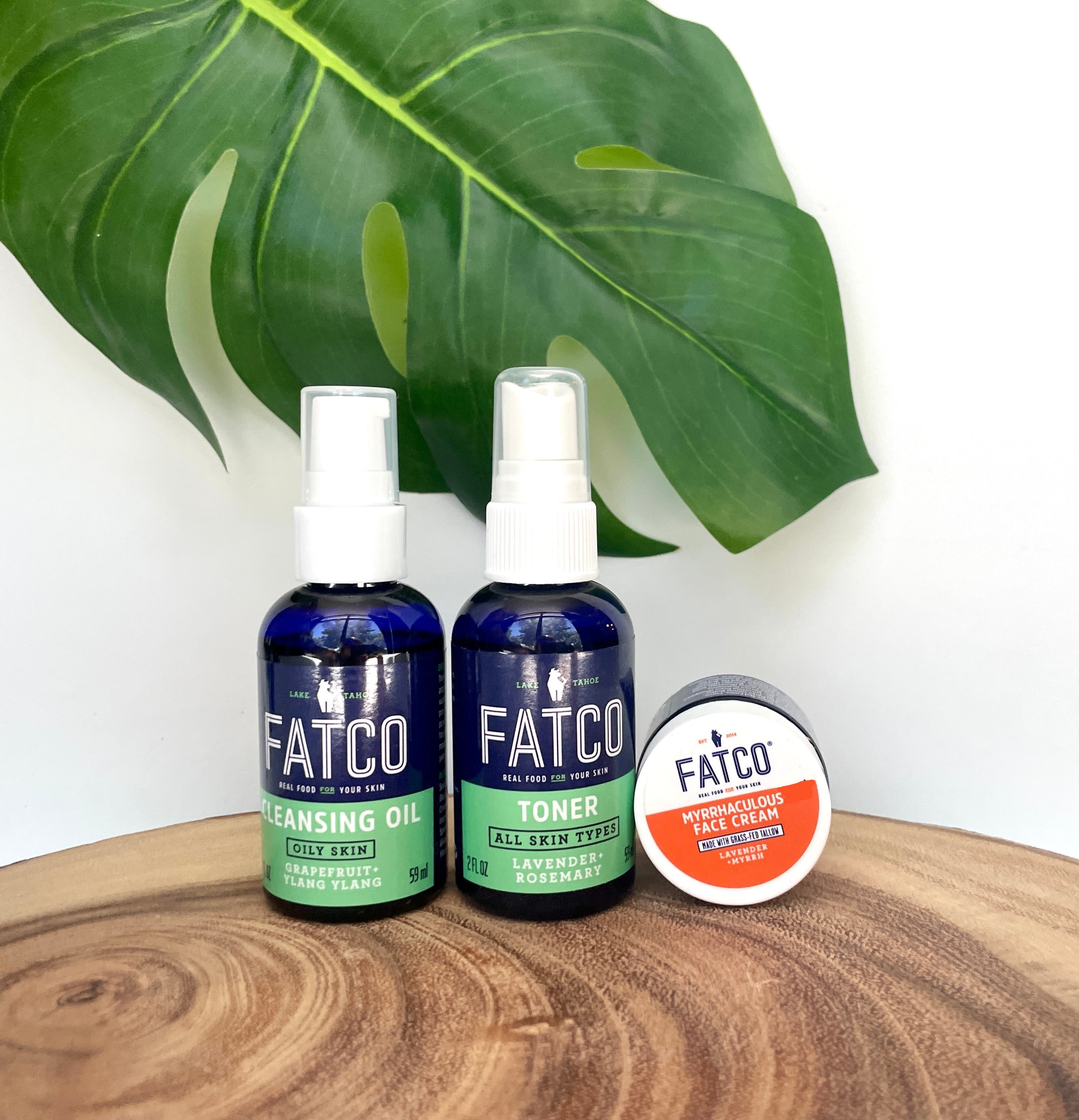
One honest clarification, because sourcing language gets blurry. Grass-fed is not the same thing as USDA Organic certified, and FATCO does not claim it is. On the Myrrhaculous face cream label, several plant ingredients carry an asterisk marking them organic. The tallow does not. It reads simply as "Tallow from Grass-fed Cows," which is the accurate description of what it is.
What to Ask Any Tallow Supplier
You do not need to take any brand's word for this, including ours. Four questions separate real sourcing from label decoration.
Which fat deposit is it? If the answer is suet or kidney fat, that is a specific answer. If the answer is "beef fat" or nothing at all, it is almost certainly trim.
What did the cattle eat, and for how long? "Grass-fed" and "grass-finished" are not identical claims. Many cattle eat grass early and grain at the end. Ask about the finishing period specifically.
How was it rendered? Dry or wet, and at what kind of heat. Producers who dry-render at low temperature tend to say so, because it costs them more.
How was it filtered? Filtering and deodorizing are different processes. Filtration removes solids. Chemical deodorizing removes character, and a supplier who bleaches and deodorizes usually will not volunteer it.
Prefer to start from raw material and control all four variables yourself? Buying raw beef fat by the pound is straightforward once you know what to inspect at the butcher counter. If you are comparing finished products instead, those same four questions are what separate high-quality tallow from commodity tallow.
Got Questions?
Tallow Origins FAQ
Q Where does tallow come from?
Tallow comes from cattle. Specifically, it is beef fat melted at low heat, separated from connective tissue, and strained clean, a process called rendering. The highest-grade tallow starts as suet, the firm fat surrounding the kidneys and loins, rather than trimmings off muscle cuts.
Q What part of the cow does beef tallow come from?
It depends on the producer. Tallow can be rendered from fat anywhere on the carcass, including trimmings off muscle cuts. Better tallow comes from suet, the internal fat packed around the kidneys and along the loins, which carries less water and connective tissue than trim.
Q Is beef tallow the same as beef fat?
Not quite. All tallow is beef fat, but not all beef fat is tallow. Raw fat straight from the butcher still contains water, protein, and connective tissue. It becomes tallow only after rendering, which is what makes it shelf-stable and usable in cooking or skincare.
Q Is suet the same as tallow?
No. Suet is the raw material and tallow is the finished product. Suet is the hard, unrendered fat around the kidneys and loins. Melt it down, strain out the solids, and you have suet tallow, which is the cleanest and firmest grade of beef tallow.
Q Is all tallow made from beef?
Almost always, yes. In the United States, a product labeled simply "tallow" is rendered beef fat unless it names another animal. Mutton tallow from sheep exists but is uncommon. Rendered pork fat is lard, not tallow, and it has a softer texture and a different fatty acid profile.
Q What does grass-fed tallow actually mean?
It means the cattle ate forage instead of being finished on grain in a feedlot. Diet changes the fat itself, raising carotenoid and vitamin E levels and shifting the omega balance. FATCO's tallow comes from suet off grass-fed, pasture-raised cows for exactly that reason.
The FATCO Alternative
FATCO started with a simple conviction: skincare should be as simple as eating well. That is why the sourcing question comes first here and not last. Every jar starts as suet from grass-fed, pasture-raised cattle, dry-rendered and triple-filtered, and then gets blended with a short list of ingredients you could pronounce without practice. If you have been reading labels and wondering where the fat in your moisturizer actually came from, this is what a real answer looks like.