How to Choose the Right Moisturizer for Sensitive Skin
Sensitive skin doesn't need a longer ingredient list. It needs a shorter one. The right moisturizer for sensitive skin stays out of its own way (no fragrance, no unnecessary preservatives, no harsh surfactants) and gives your skin barrier what it needs to function on its own.
Key Takeaways
- Fragrance is the leading trigger. It appears under many names ("parfum," "natural fragrance," essential oils) and is one of the most common sources of contact reactions in skincare products.
- Your skin barrier is the real target. A moisturizer for sensitive skin should reinforce the barrier with fatty acids, ceramides, and occlusives, not just sit on top of it.
- Fewer ingredients is a feature, not a limitation. Short ingredient lists mean fewer potential triggers.
- Tallow's fatty acid profile shares several fatty acids with the skin's own surface lipids. Oleic, palmitic, and stearic acid all appear in both, which is the basis of the compatibility argument for reactive skin.
- Occlusives and humectants do different things. Understanding which your skin needs helps you pick a moisturizer that actually works.
What a Moisturizer for Sensitive Skin Should Actually Do
Sensitive or reactive skin is characterized by a weakened or disrupted skin barrier. The outer layer of skin (the stratum corneum) relies on a precise mix of lipids, including ceramides, cholesterol, and free fatty acids, to hold moisture in and keep irritants out. When that lipid balance is off, skin becomes reactive: it stings, flushes, flakes, or breaks out in response to products that wouldn't bother most people.
A good moisturizer for sensitive skin does two things: it helps restore that lipid layer, and it avoids introducing new irritants in the process. That means looking for formulas that are fragrance-free, built around barrier-compatible ingredients, and free from unnecessary additives.
The keyword here is "barrier-compatible." Your skin builds and repairs its own protective lipid layer. A well-chosen moisturizer supports that process rather than overriding it with synthetic substitutes.
Ingredients to Seek vs. Avoid
Seek These
Ceramides. These lipids are a core structural component of the skin barrier. A moisturizer containing ceramides, particularly ceramide NP, AP, or EOP, helps replenish what sensitive or compromised skin tends to be deficient in.
Fatty acids (palmitic, oleic, stearic). These same fatty acids appear in the skin's own surface lipids. Ingredients that overlap with that composition, such as animal-derived fats, sit on skin as a familiar material rather than a novel one.
Glycerin. A humectant that draws water into the outer skin layers. Widely tolerated, even by reactive skin. Works best when paired with an occlusive that keeps the moisture from evaporating.
Squalane. A stable, lightweight emollient. It is a saturated hydrocarbon rather than an oil, and cosmetic squalane is now usually derived from olives or sugarcane, though the ingredient was historically obtained from shark liver. It is the hydrogenated form of squalene, one of the lipids naturally present in sebum, and it sits well on sensitive skin.
Zinc oxide (in mineral sunscreen context). The American Academy of Dermatology tells rosacea patients that if a sunscreen irritates their skin, they should look for one containing zinc oxide, titanium dioxide, or both, which makes mineral filters a reasonable default for reactive skin.
Avoid These
Fragrance and parfum. This includes "natural fragrance," which is a catch-all term that can contain dozens of undisclosed sensitizing compounds. The North American Contact Dermatitis Group analyzed ten years of patch-test data from 24,246 patients and found that 5,504 of them, 22.7 percent, reacted to at least one fragrance or botanical allergen. The individual markers came in at 10.6 percent for fragrance mix I, 8 percent for balsam of Peru, and 4.9 percent for fragrance mix II. Note what that population is: people referred for patch testing because a contact allergy was already suspected, not the general public. Even plant-derived essential oils like lavender, peppermint, and citrus can trigger reactions on sensitive skin.
Alcohol denat (denatured alcohol). This drying alcohol is commonly added to give products a fast-dry feel or thin texture, but it disrupts the skin barrier on contact and worsens reactivity over time.
Synthetic dyes and colorants. They serve no skincare function in a moisturizer, so on a sensitive-skin formula they are an ingredient you are carrying for no benefit.
Preservatives with a sensitization record. Methylisothiazolinone (MIT) is the clear one to avoid; it drove a well-documented spike in contact allergy after it came into wide cosmetic use. Parabens deserve a more careful line than they usually get. A published review of methyl paraben concluded that on normal skin it is practically non-irritating and non-sensitizing, and that documented sensitization has largely occurred where paraben-containing products were applied to damaged or broken skin. That is a real caution for a compromised barrier, and not the blanket hazard the label politics suggest.
Sodium lauryl sulfate (SLS). A foaming agent that strips the skin barrier. Out of place in any moisturizer but sometimes appears in combo products.
"Natural" essential oils and botanical extracts. A fragrant plant extract is still a fragrant extract. Sensitive skin doesn't distinguish between synthetic and natural irritants.
Occlusives vs. Humectants: Where Tallow Fits
Most moisturizers work through one of two mechanisms, or a combination of both.
Humectants draw water into the skin from the environment or from deeper skin layers. Glycerin, hyaluronic acid, and urea are common examples. They work well in humid environments and help the skin feel plump and hydrated. The catch: in very dry conditions, they can actually pull water out of the deeper layers of skin if there's nothing sealing it in.
Occlusives form a physical barrier on the skin surface that slows or prevents water loss (called transepidermal water loss, or TEWL). Petrolatum, beeswax, shea butter, and animal fats like tallow fall into this category. They don't add moisture. They seal it in.
Emollients sit between the two: they soften and smooth skin texture, fill in gaps between skin cells, and provide some occlusion without feeling as heavy as pure occlusives.
Where Tallow Fits
Tallow functions primarily as an occlusive and emollient. USDA reference data for beef tallow (SR Legacy, fdcId 171400) gives 36 g of oleic acid, 24.9 g of palmitic acid, and 18.9 g of stearic acid per 100 g, and all three of those fatty acids also appear in the skin's own surface lipids. That overlap is the compatibility argument, and it is worth stating its limit rather than overselling it. Work on ceramides and physiological lipid repair in compromised skin found that cholesterol, ceramides, and free fatty acids are all required for repair and that individually they encumber rather than facilitate barrier recovery, with incomplete mixtures producing suboptimal recovery. The formulations shown to rebuild the barrier use a roughly 3:1:1 molar ratio of ceramides, cholesterol, and free fatty acids. Tallow supplies fatty acids, not that full ratio, so the honest claim for it is a compatible occlusive with a short ingredient list, not a barrier-repair formulation.
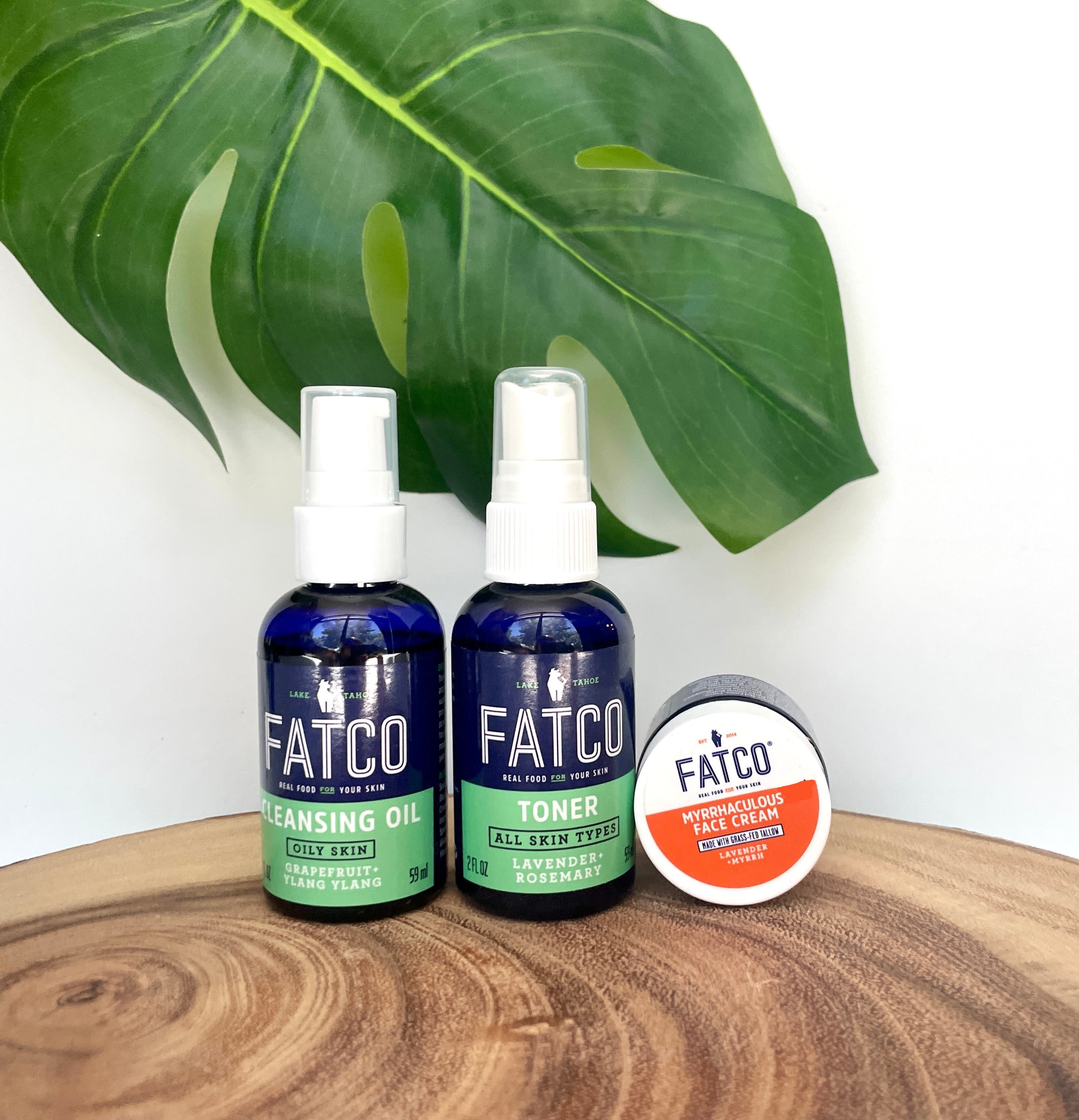
Because tallow's ingredient profile is short (often just tallow, or tallow with a small number of botanicals), it avoids the long additive lists that cause reactions in synthetic or heavily formulated products. Plain rendered tallow is fragrance-free in its base form, but read the label on any finished product: most tallow face creams on the market, FATCO's included, add essential oils, and an essential oil is still fragrance.
How to Patch-Test and Introduce a New Moisturizer
Sensitive skin deserves a slow introduction to new products. Patch testing takes less than two minutes and can save you from a week of recovery.
Step 1: Choose a test area. The inside of your wrist or behind your ear are good spots. These areas have thinner skin, making reactions easier to detect, but are away from your face if things go wrong.
Step 2: Apply a small amount. A pea-sized amount is enough. Don't dilute it.
Step 3: Wait 24 to 48 hours. Check for redness, itching, swelling, or stinging. If any of these appear, rinse off and avoid the product.
Step 4: If no reaction, do a small face test. Apply to one small area (like the jaw or cheek) for 3 to 5 days before using it on your full face.
Step 5: Introduce one new product at a time. Wait at least two weeks between introducing new products so you can isolate the cause if something reacts. This rule applies whether you're switching moisturizers, cleansers, or anything else in your routine.
Speed-testing multiple new products at once is one of the most common mistakes with sensitive skin. The reaction may not appear until day three or four, and if you've introduced three new products at once, you won't know which one caused it.
Got Questions?
Sensitive Skin Moisturizer FAQ
Q What makes a moisturizer safe for sensitive skin?
A short ingredient list, no fragrance (including natural fragrance or essential oils), and barrier-supporting fats or ceramides. The fewer unnecessary additives a formula contains, the lower the chance of triggering a reaction. Tested-on-sensitive-skin claims on packaging are a starting point, but reading the ingredient label is more reliable.
Q Is fragrance-free the same as unscented?
No, and this distinction matters. "Unscented" often means a masking fragrance was added to cover the natural smell of the product, which still means fragrance chemicals are present. "Fragrance-free" means no fragrance compounds were added, which is what sensitive skin actually needs. Always look for "fragrance-free" specifically.
Q What is the difference between an occlusive and a humectant?
A humectant like glycerin or hyaluronic acid pulls water into skin from the air or deeper layers. An occlusive instead forms a thin surface seal that slows water loss. For dry or reactive skin, occlusives often win out because they trap existing moisture rather than just adding more of it.
Q Can sensitive skin use oil-based moisturizers?
Yes, and for many people they're actually gentler than water-based options. Water-based formulas typically need more preservatives and emulsifiers to stay stable, which raises the irritant load. A simple occlusive fat like tallow or squalane moisturizes well without that added complexity. Just confirm it's fragrance-free first.
Q What moisturizer ingredients should I absolutely avoid?
Fragrance (listed as "fragrance," "parfum," "natural fragrance," or essential oils) is the top one to avoid: it is the most common allergen family in patch-test data. After that: alcohol denat, SLS in any form, and preservatives with a sensitization record such as MIT or MCI. Avoid anything with a strong scent, even if it's labelled as natural.
Q Is tallow good for sensitive skin?
For many people, yes. Its fatty acids overlap with the skin's own surface lipids, it works as an occlusive, and plain rendered tallow has a very short ingredient list. Two caveats worth knowing: the published research on tallow and skin is thin and largely non-human, and many finished tallow products, including FATCO's face creams, contain essential oils, so check before assuming fragrance-free. Patch test first, as with anything new on redness-prone skin.
The FATCO Alternative
If you're looking for a moisturizer for sensitive skin that skips the long ingredient lists, the synthetic additives, and the hidden fragrance, FATCO's tallow-based face care is worth trying. Our formulas are built around grass-fed beef tallow, whose main fatty acids overlap with the ones in your skin's own surface lipids. Simple, free of synthetic fragrance, and made for real skin. One thing we would rather tell you than have you find on the label: our face creams are scented with essential oil, so if you are screening out fragrance of every kind, they are not the right pick.