Long-Lasting Deodorant: What Actually Decides How Long It Holds

The hour count on the front of a deodorant package is the least regulated thing printed on it. On an antiperspirant it sits outside the panel the FDA governs. On a plain deodorant it sits outside that rulebook altogether. What decides how long yours lasts is a short list, and only part of it is in the tube.
Key Takeaways
- The hour figure and the regulated part of the label are different things. Dove's stick is listed with the FDA as Men + Care Extra Fresh 72H Antiperspirant, and its Drug Facts panel says only "reduces underarm wetness".
- 24 hours is the only duration number the FDA ever wrote into the antiperspirant rule. Anything longer exists because the agency stayed its own limit in 2004.
- FDA has never published a decision above 48 hours. It said in 2004 that it would consider longer claims once data arrived. The stay is still open.
- A deodorant's hour number is a different kind of number. Deodorants are cosmetics, so no monograph test sits behind the figure at all.
- A large part of the spread is you. Bacterial load, sweat volume, how you apply it and what you wear are all in play, and none of them is on the label.
What an Hour Number on an Antiperspirant Is Claiming
For antiperspirants, duration claims are written into the rule itself. Under 21 CFR 350.50(b)(3), a product that has demonstrated standard effectiveness, defined there as 20 percent sweat reduction, over a 24-hour period may pick one phrase from a short bracketed list. The four options are "all day protection", "lasts all day", "lasts 24 hours" and "24 hour protection". It reads like a sentence and it is not one. It is a menu.
When that monograph was finalized in 2003, longer claims were off the table. FDA's stated position was that enhanced duration beyond 24 hours was nonmonograph, because no data had been submitted showing an antiperspirant still working past a day.
Then a manufacturer sent some. In October 2004 the agency stayed the 24-hour limit on duration claims after reviewing two studies, one on a roll-on and one on a solid stick. The Federal Register notice describes the finding plainly: sweat "was reduced by at least 30 percent in the majority of subjects up to 48 hours after antiperspirant application".
That is where the ceiling still sits. FDA wrote that it "will consider allowing enhanced duration claims of greater than 48 hours after it receives and evaluates data supporting such claims". The stay, in its words, "will remain in effect until further documentation is provided in a future issue of the Federal Register". More than twenty years later, the eCFR still carries that note.
So What Is a 72-Hour Claim Standing On?
Its maker's own files. The same 2004 document is direct about it: "Manufacturers making such claims for their products should have supporting test data in their files." That is a real obligation, and it is not the same thing as a number an agency has reviewed.
You can watch the split on one label. Dove's stick is listed with the FDA as Men + Care Extra Fresh 72H Antiperspirant, and on its DailyMed record the figure appears only inside the product name. The Drug Facts panel gives aluminum sesquichlorohydrate at 12.8 percent, one use, "reduces underarm wetness", and directions that read in full: "apply to underarms only". No hours, and no application frequency.
FDA noticed that gap itself. The same notice observes that "there are no specific direction statements about how frequently to apply the product". It then asks for comment on whether long-duration products need extra labeling, including what showering partway through does to the claim.
A Deodorant's Hour Number Is Not the Same Number
None of the above reaches a plain deodorant, because the two categories sit on opposite sides of a legal line. Part 350 is a drug rule. A deodorant is a cosmetic, so there is no monograph, no defined effectiveness threshold, and no agency-published test its figure has to clear.
That does not make the number dishonest. It makes it an advertising claim, backed by whatever odor testing the brand chose to run and by nothing you can look up. The natural aisle does this too. Our roundup of natural roll-on deodorants found brands stating 24-hour odor protection, and one claiming up to 72 hours from a single application with instructions to reapply only when odor returns.
What Actually Sets Your Own Number
Odor is made on your skin rather than inside you. A small group of bacteria converts molecules that reach the surface odorless into the ones you can smell. The fabric sitting over that reaction changes how much of it you notice. Every hour a deodorant buys you is an hour that conversion is being slowed, and protection ends when the thing slowing it is gone.
How the active leaves. An antiperspirant's aluminum salts form plugs inside the sweat duct, under the surface, which is why that category can talk in days at all. A deodorant's actives sit on the skin. Water, sweat and a sleeve rubbing against your side take them away, and none of that is in the formula's control.
How much you are carrying to begin with. Researchers at North Carolina State University and the North Carolina Museum of Natural Sciences swabbed armpits daily for eight days, while participants stopped and restarted their products. The paper's own starting point is "substantial inter-individual variation in armpit bacteria, even relative to variation among individuals for other body habitats". When antiperspirant went back on, counts fell by an order of magnitude within a day. The study was publicly funded and its authors declare no competing interests.
How much you sweat. Volume dilutes a surface active and carries it off, which is how one stick can hold all day in an office and fade by lunch on a loading dock. If wetness rather than smell is the real complaint, sweating that outruns ordinary products is a different problem with a different aisle.
Whether you reapplied. This is the lever people refuse to pull, because a long-duration claim implies they should not have to. FDA's own directions line does not tell you how often to apply anything.
The Levers Worth Pulling
| Lever | What it changes | Who it helps most |
|---|---|---|
| Apply to clean, fully dry skin | Keeps the active in place instead of leaving with the last of the shower | Anyone applying straight out of the bathroom |
| Reapply at midday | Replaces what friction and sweat removed | Long days, hot rooms, evening plans |
| Match the format to the day | A cream stays put; a spray goes on thin and light | Anyone whose product fades by lunch |
| Change the shirt | Removes odor already held in fabric | Synthetic tops, back-to-back days |
| Move to an antiperspirant | Reduces the sweat that dilutes everything else | People whose complaint is wetness |
The Other Thing "Long-Lasting" Means
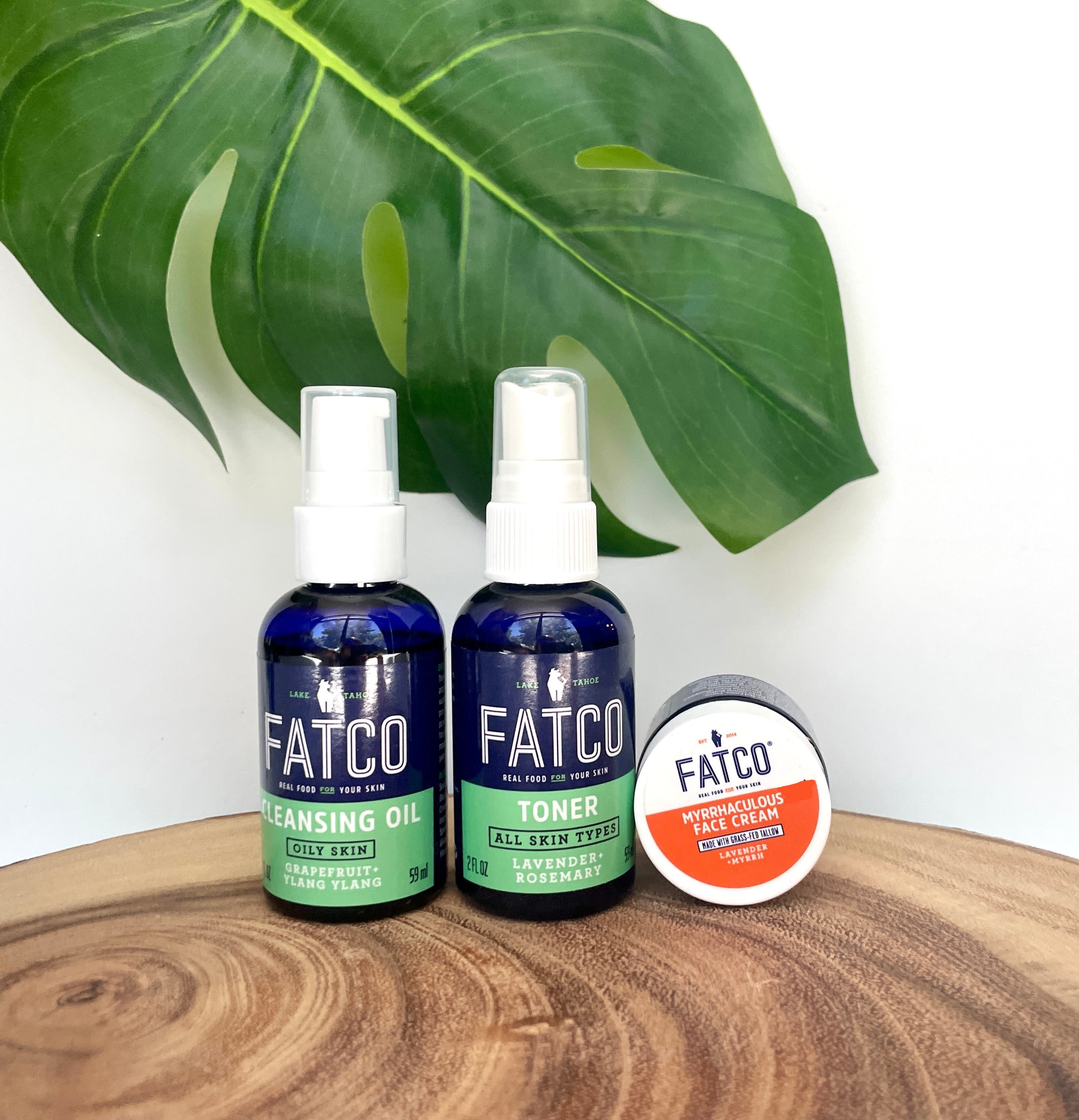
Plenty of people searching this are not asking how many hours of protection they get. They are asking how long the container lasts, and that answer is easier to give honestly, because it is arithmetic rather than a sensory panel. FATCO publishes both numbers. At two swipes per underarm daily, one 1.7 oz stick typically lasts 2 to 3 months, and a 1 oz cream jar typically lasts 4 to 6 weeks. Those are the brand's own figures from its multipack and kit pages.
Got Questions?
Frequently Asked Questions
Q Does deodorant actually last 72 hours?
Sometimes, for some people, and no agency has verified it. FDA opened the door above 24 hours in 2004 after seeing data at 48, and has never cleared 72. A plain deodorant is a cosmetic and is not covered by that rule at all, so its figure rests on in-house testing.
Q What is the longest lasting deodorant?
There is no single winner, because the variable with the widest spread is the person wearing it. Research on armpit bacteria finds substantial variation between individuals, and sweat volume and clothing add more on top. Pick an active your skin tolerates, then apply it properly and consistently.
Q Why does my deodorant stop working so fast?
Usually because the active was removed rather than used up. Damp skin at application, heavy sweat and friction from sleeves all strip a surface product through the day. Applying to fully dry skin, covering the whole hair-bearing area, and reapplying once at midday fixes most of it.
Q Why does my 24 hour deodorant not work?
Because 24 hours describes a test result, not a promise about you. On antiperspirants the phrase is tied to a demonstrated 20 percent sweat reduction over a 24-hour period, measured on study subjects. Your sweat rate, your bacteria and your day can all sit outside the average behind that figure.
Q Is 2 swipes of deodorant enough?
For a stick, yes, and it is the dose FATCO's own directions specify: two firm swipes per underarm. Coverage matters more than quantity, so reach the whole hair-bearing area rather than one central stripe. Piling more on mostly ends up on your shirt rather than on your skin.
Q How often should you replace deodorant?
When it runs out, or sooner if the texture or scent changes noticeably. By FATCO's own estimate a 1.7 oz stick at two swipes per underarm daily typically lasts 2 to 3 months, and a 1 oz cream jar 4 to 6 weeks. Heavy or twice-daily use shortens both.
The FATCO Alternative
Stank Stop is a deodorant, so this article's standard applies to it too. FATCO's cream pages promise "all-day protection". The FDA reserves that phrasing for antiperspirants that have shown 20 percent sweat reduction over 24 hours. Part 350 does not govern cosmetics, so nothing here is out of order. But we cannot show you a sweat-reduction test, because Stank Stop does not reduce sweat and is not trying to.
What it does is work on the bacterial step, with baking soda and non-nano zinc oxide on a grass-fed tallow, coconut oil and shea butter base. The unscented cream lists eight ingredients and carries no scent of any kind, at $12 for 1 oz and $21 for 2 oz, one of eight cream options. The stick is a different panel, adding magnesium hydroxide as a third odor active, at $14 for 1.7 oz in four scents. Prices read from fatco.com on 4 August 2026. If your afternoon needs a second application, give it one. That is a better answer than a bigger number on the front of a package.