Calendula for Skin: What the Research Says
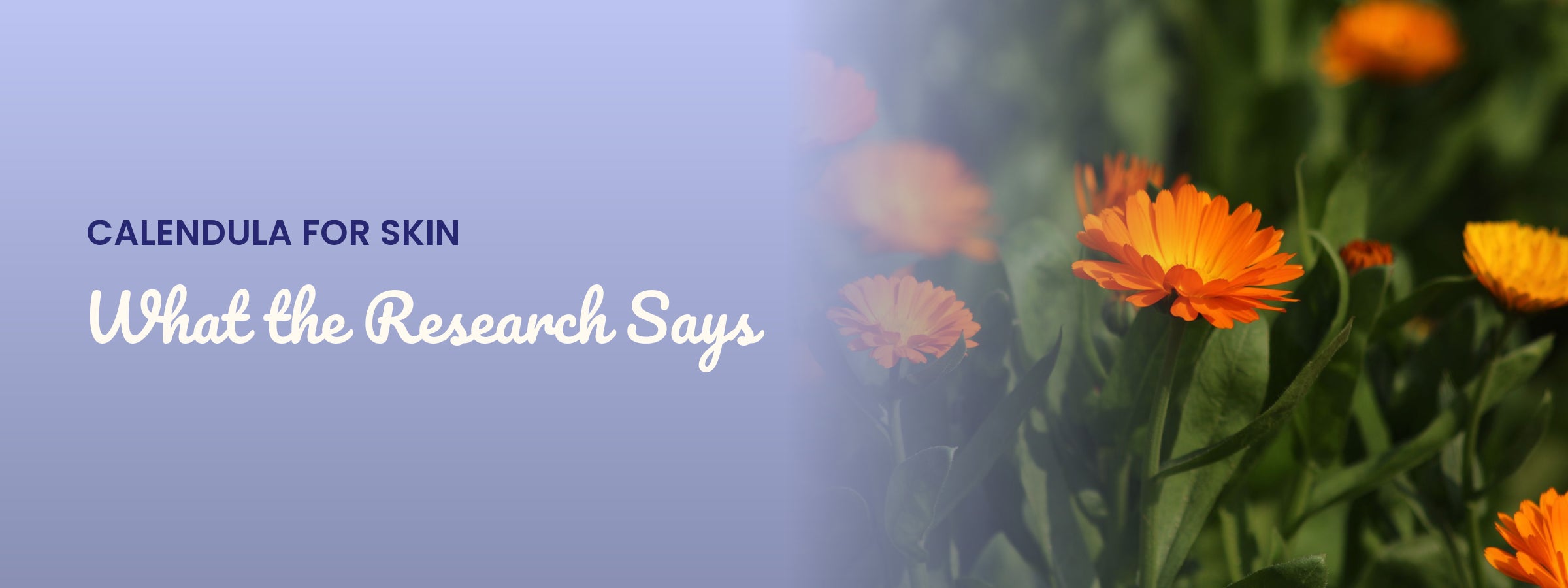
Calendula for skin rests on more tradition than trial data. Europe's medicines regulator accepts calendula flower preparations for minor skin inflammation and minor wounds because of their long use. The clinical trials, the largest of them in radiation therapy, disagree with each other. The firm caution is allergy: anyone allergic to the daisy family is told to stay away from it.
Key Takeaways
- Calendula is pot marigold. Calendula officinalis belongs to the daisy family, and the marigolds of the Tagetes genus are a different plant.
- The radiation trials split. One trial found fewer skin reactions of grade 2 or higher with calendula than with trolamine; a larger one found no difference against a plain aqueous cream.
- Europe accepts it on tradition. The European Medicines Agency backs calendula flower preparations for minor skin inflammation and minor wounds on long-standing use, with insufficient evidence from clinical trials.
- The daisy family is the warning sign. Calendula medicines must not be used by people allergic to the daisy family. In Europe they are meant for people over 6, and they are not recommended in pregnancy or breastfeeding, where data are lacking.
- FATCO puts calendula in a soap. FATCO's Baby Fat Bar washes with grass-fed tallow, colloidal oats and organic calendula, then rinses away. If daisy-family plants bother you, read its label first.
Pot Marigold and the Forms It Comes In
Calendula officinalis is pot marigold, a member of the Asteraceae, the plant family also called the Compositae, daisy or sunflower family. The word marigold also covers Tagetes, a genus not closely related to calendula. So "marigold" on a label does not tell you which plant is inside, and the Latin name does.
Skin products use the flowers, prepared in several ways. They include alcohol-based tinctures and liquid extracts, an extract made with a fatty vegetable oil such as olive oil, and extracts in hardened vegetable fat or petroleum jelly. Calendula oil for skin is the oil kind: the flowers extracted into a carrier oil.
On a cosmetic ingredient list, calendula appears under names such as Calendula Officinalis Flower Extract, Calendula Officinalis Flower Oil, Calendula Officinalis Extract or Calendula Officinalis Seed Oil. The seed oil comes from a different part of the plant than the flower preparations studied for skin.
Calendula for Skin in Clinical Trials
Skin Reactions During Radiation Therapy
The best-known trials are in people having radiotherapy for breast cancer, and their results point in different directions.
- A trial published in 2004 randomized 254 patients to a calendula ointment (126) or trolamine (128), a cream many hospitals then treated as the reference. Acute dermatitis of grade 2 or higher affected 41% of the calendula group and 63% of the trolamine group.
- A trial published in 2013 randomized 420 patients and analyzed 411, comparing a calendula cream with an aqueous cream. Severe reactions occurred in 23% of the calendula group and 19% of the aqueous cream group, and the authors found no difference.
- A trial published in 2021 compared calendula with sorbolene, a glycerin cream, in 81 analyzed women. It found no detectable difference, but it recruited fewer than half the women it planned, so it was too small to settle the question.
A review published in 2015 reads the 2004 result cautiously. Patients found the calendula harder to apply, and the review suggests the trial may show trolamine's harm rather than calendula's benefit. It also notes that in these trials, the moisturizing base of a cream may play a larger role than the active ingredient.
Guidelines have landed on both sides. A review of radiodermatitis guidelines published in 2025 on behalf of the radiation therapist committee of ESTRO, the European radiotherapy society, found calendula recommended in the Italian and Mexican guidelines. Others give it no or limited recommendation, citing insufficient evidence or possible allergic reactions, and one meta-analysis it cites pointed to calendula being ineffective. The review's own panel recommends moisturizing agents for preventing these reactions and could not recommend natural agents with certainty.
Diaper Rash
Two small trials in Iran tested calendula ointment on babies' diaper rash. In the first, published in 2012, 66 infants under 3 used either calendula ointment (34) or aloe cream (32) three times a day for 10 days. Both groups improved, the calendula group significantly more, and neither cream caused a reported side effect. A later trial, published in 2018, found no difference between a calendula ointment and an olive ointment.
Minor Wounds
Here the regulator's view rests on tradition. The EMA concluded that calendula flower preparations can be used "as an aid in healing of minor wounds". It also says that, although the evidence from clinical trials is insufficient, their effectiveness is plausible.
Among the trials that exist, a small one published in 2022 treated hand and finger wounds with a standardized calendula extract or mineral oil. Of the 40 patients randomized, 19 wounds per group were measured. Wounds on the extract closed over with new skin in about 9 days on average, against about 13 days on mineral oil.
The Daisy-Family Allergy, and Who Should Skip Calendula
Calendula can cause allergic contact dermatitis, a rash from skin contact with something you have become allergic to. In a study published in 2001, 443 consecutive patients were patch tested, and 9 of them, about 2%, reacted to marigold. A review of daisy-family allergy published in 2025 describes reports of allergic reactions to calendula ointments as rare. Rare is not never, and the people most at risk are easy to name.
Calendula's relatives include chamomile and arnica, both in the same Asteraceae family. The EMA is direct: calendula flower medicines "must not be used in patients who are hypersensitive (allergic) to plants of the Asteraceae family." Memorial Sloan Kettering's herb guide gives the same advice and lists allergic reactions as a possible side effect. If you know you react to chamomile, arnica or another daisy-family plant, you are in the group told to leave calendula alone.
The European monograph adds three more limits for calendula medicines. Use in children under 6 is not recommended, because adequate data are lacking. Use during pregnancy and breastfeeding is not recommended, also for lack of data. And if a skin infection appears or symptoms worsen, it says to see a doctor.
Reading a Calendula Cream Label
The front of a jar can say calendula in large letters. The ingredient list tells you the rest.
- Find the Latin name. Look for Calendula officinalis on the ingredient list, not only on the front.
- Read the base. In the radiation trials, one review suggests a cream's moisturizing base may matter more than its calendula, so judge the oils, butters and water that carry it.
- Check for scent. A botanical cream can still carry added fragrance or essential oils, which matters if you are after fragrance-free skin care.
- Scan for relatives. Chamomile and arnica belong to calendula's plant family, so a jar that adds them carries more of the same allergy risk.
- Treat "hypoallergenic" as marketing. The FDA says no federal standard defines the term, so a hypoallergenic claim tells you nothing about daisy-family plants.
The Baby Fat Bar: FATCO's Calendula Formula
Calendula appears in one FATCO formula, the Baby Fat Bar, and it is a soap. The Baby Fat Bar is made with grass-fed beef tallow, sodium hydroxide (lye), colloidal oats, organic calendula, organic olive oil, distilled water, sucrose and sodium lactate. It carries no essential oil. Saponified tallow does the cleaning, which is the whole idea behind a tallow soap.
A soap lathers, cleans and rinses away, so its calendula is part of a cleanser rather than a leave-on treatment. Use it for what it is: a short-list bar for bath time with babies and young children. If you are choosing a gentle baby soap and anyone in the house reacts to daisy-family plants, read the label with that in mind, since calendula is on it. As with any new product, ask your pediatrician before using it on an infant, and patch test first.
Got Questions?
Frequently Asked Questions
Q What does calendula do to the skin?
Mostly it is used for minor skin inflammation and small wounds, on the strength of long traditional use. The trials are mixed. Some found fewer radiation skin reactions or greater diaper rash improvement with calendula, while others found it no better than a plain cream or an olive oil ointment.
Q Who should not use calendula?
Anyone allergic to the daisy family, which includes chamomile and arnica, should avoid it. Europe's monograph also does not recommend calendula medicines during pregnancy or breastfeeding, or for children under the age of 6. Both limits come from a lack of data.
Q Can we apply calendula on the face?
Yes, if your skin tolerates it. Its accepted use, minor skin inflammation such as sunburn, comes with no limit on where it goes. Skip it if daisy-family plants have bothered you before. If the skin looks infected or symptoms worsen, Europe's herbal monograph says to see a doctor.
Q Does calendula remove dark spots?
There's no published trial of calendula on dark spots. The research on it covers skin inflammation, radiation skin reactions, diaper rash and wounds. If fading spots is your goal, calendula's track record doesn't speak to it. Its traditional uses, minor skin inflammation and small wounds, are a different job.
Q Which is better for skin, chamomile or calendula?
Neither has been shown better, because there's no published head-to-head trial of the two on skin yet. A trial comparing their creams on radiation-damaged skin has been registered, with results still to come. They are relatives, so a person allergic to one may react to the other.
Q Is calendula oil good for your skin?
It is a traditional choice for minor skin inflammation, if your skin tolerates the daisy family. Calendula oil is the flower extracted into a fatty oil such as olive oil. FATCO uses calendula differently, in its tallow Baby Fat Bar.
The FATCO Alternative
FATCO's calendula comes in a bath bar. The Baby Fat Bar pairs organic calendula with grass-fed tallow, colloidal oats and organic olive oil, and leaves out essential oils. It's made for bath time with babies and young children. Check its label against any daisy-family allergy in the house first.