Best Moisturizers for Acne-Prone Skin: Hydration Without Breakouts
The best moisturizer for acne-prone skin is lightweight, non-comedogenic, and built to support the skin barrier without adding extra oil to skin that already produces plenty of its own. It will not clear your acne. What it does is keep your skin hydrated enough that active breakouts, and the treatments used on them, do not leave your face drier and more irritated than it started.
Key Takeaways
- Skipping moisturizer makes acne-prone skin worse, not better. Dehydrated skin overproduces oil to compensate, which can add to congestion.
- Texture and non-comedogenic formulation matter more than any single "hero" ingredient. Gel-creams and fluid lotions are generally better tolerated than heavy, occlusive creams.
- "Non-comedogenic" is a marketing claim, not a regulated one. The label is a starting point, not a guarantee.
- Ceramides, niacinamide, and hyaluronic acid support the barrier without clogging pores, and are especially useful if you are also using a retinoid or benzoyl peroxide.
- Tallow is a genuinely rich moisturizer, but it is not a universal acne-prone pick. FATCO's own Myrrhaculous Face Cream suits dry, barrier-compromised, acne-prone skin better than oily or actively congested skin, and a patch test is the honest first step.
What "Non-Comedogenic" Actually Means for Acne-Prone Skin
Acne-prone skin needs the same water and lipids as any other skin type, but it needs them delivered in a formula that will not sit on the surface and interact with an already oil-heavy environment. That is the entire idea behind "non-comedogenic": the product is formulated to avoid ingredients associated with clogging pores.
The catch is that the claim itself carries less weight than the label suggests. A 2025 comedogenicity review in JAAD Reviews states that the FDA has no legal definition for the term, so manufacturers can make the claim without regulation. The same review notes that the rabbit ear assay initially guided comedogenicity ratings but that later studies found inconsistent results when the same substances were applied to human skin. A product can be labeled non-comedogenic and still break some people out, and one without the label is not automatically a problem.
That does not make the label useless. Treat it as a reasonable first filter, not the only thing you check.
What acne-prone skin actually needs from a moisturizer
Three things matter more than the label:
- A lightweight texture. Gel-creams, water-gels, and thin fluid lotions absorb faster and are less likely to sit on the skin surface than rich creams or balms.
- Oil-free or low-oil formulation. "Oil-free" typically means the product skips added plant oils and heavy occlusives in favor of water, humectants, and lighter emollients.
- Barrier-supporting ingredients. Ceramides, niacinamide, and hyaluronic acid hydrate and reinforce the skin barrier without adding to pore congestion, which matters even more if you are using a drying acne treatment.
The same lightweight-texture, barrier-first logic applies whether you are choosing a face lotion for acne-prone skin or picking a heavier cream, so the ingredient list matters more than the product category.
Best Moisturizers for Acne-Prone Skin
These picks span a range of textures and price points, from oil-absorbing lotions with SPF built in to a fragrance-free gel-cream that layers well under other treatments. Prices are approximate and current as of July 2026, check the retailer for the latest.
CeraVe PM Facial Moisturizing Lotion
Price: around $12-20 for 3 fl oz (89ml).
CeraVe's PM lotion is formulated with niacinamide, hyaluronic acid, and three ceramides, delivered through the brand's MVE technology for a slower release of hydration overnight. It is oil-free, non-comedogenic, and fragrance-free. A CeraVe-affiliated dermatologist notes that this AM/PM pairing is also commonly used alongside prescription acne treatment specifically to offset the redness, dryness, and irritation those treatments can cause.
Cetaphil DermaControl Oil Absorbing Moisturizer SPF 30
Price: around $9-15 for 4 fl oz (118ml).
This one is built for oily, sensitive skin specifically: oil-free, fragrance-free, and formulated with Micropearl technology to absorb surface shine while providing SPF 30 broad-spectrum sun protection in the same step (avobenzone 3%, octisalate 5%, octocrylene 7%). Ceramide NP, glycerin and zinc gluconate keep it from feeling stripping despite the mattifying finish, and it carries a "won't clog pores" claim on the product label.
La Roche-Posay Effaclar Mat
Price: around $38-42 for 1.35 fl oz (40ml).
Effaclar Mat is oil-free and non-comedogenic, formulated with lipo-hydroxy acid (LHA), a gentler derivative of salicylic acid with mild exfoliating properties, alongside glycerin for hydration. Two things worth flagging clearly: LHA makes this less of a pure moisturizer and more of a moisturizer-exfoliant hybrid, so it fits better if you want ongoing surface renewal built into your routine rather than hydration alone, and it is a scented product, so it is not the pick if you are cutting fragrance.
Vanicream Daily Facial Moisturizer
Price: around $13-16 for 3 fl oz (89ml).
Vanicream's formula centers on five ceramides (EOP, NG, NP, AS and AP), hyaluronic acid, and squalane, with no botanical extracts or essential oils at all, which makes it one of the more minimal ingredient lists on this list. It is non-comedogenic, fragrance-free, pH balanced, and carries the National Eczema Association's Seal of Acceptance.
FATCO Myrrhaculous Face Cream
Price: $28 for 1 oz or $52 for 2 oz.
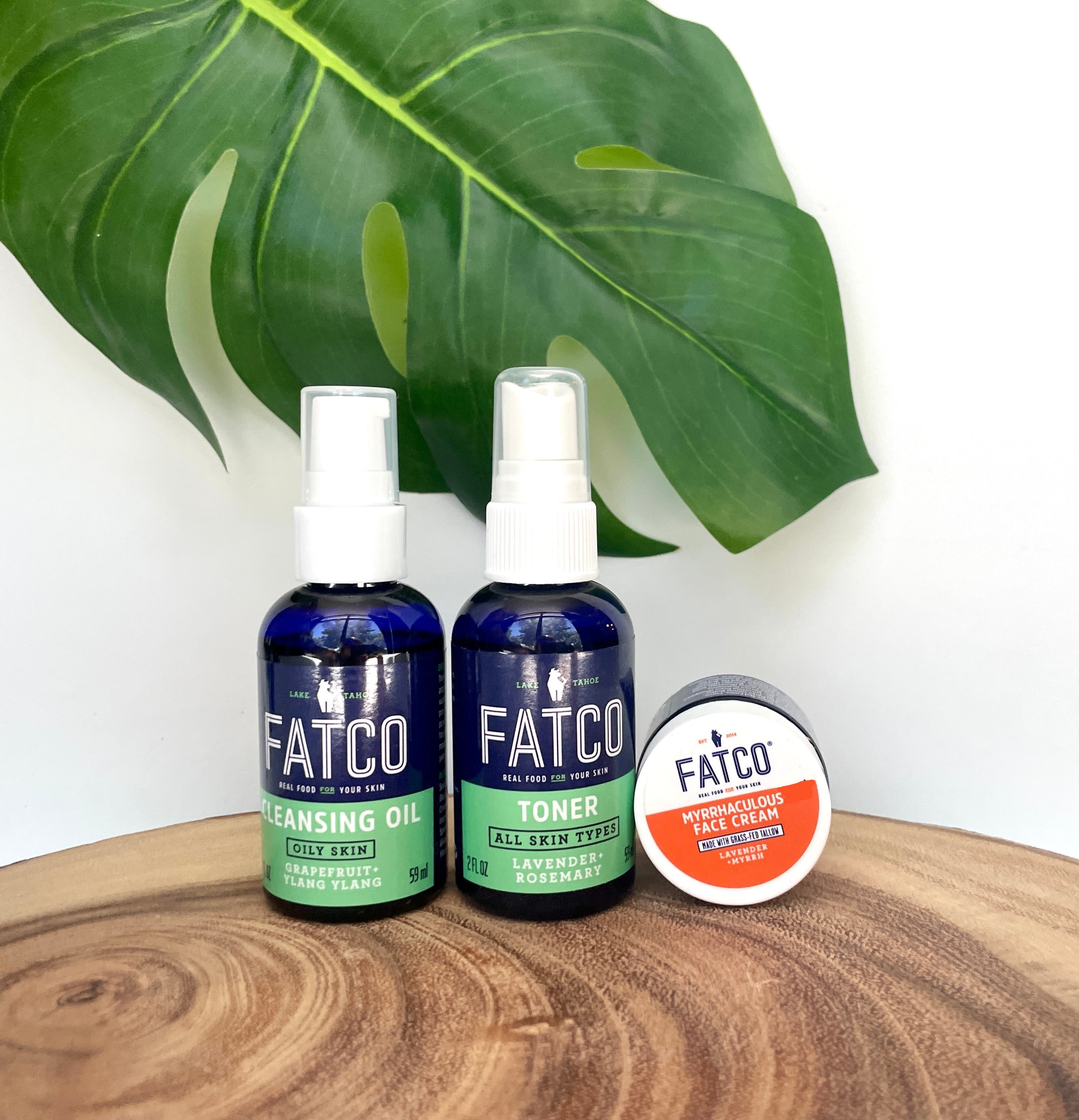
FATCO's Myrrhaculous Face Cream is built on grass-fed tallow, layered with shea butter, jojoba oil, pumpkin seed oil, rosehip oil, evening primrose oil, and several other whole-food oils, plus lavender and myrrh essential oil for scent. It is rich, and it is not marketed or formulated as an acne-specific product. As we cover in more detail in our look at whether beef tallow can help acne-prone skin, tallow is high in oleic acid, and several of the plant oils in this formula (olive, avocado) lean the same direction, which is a fair concern for skin that already runs oily or congested.
The honest fit is dry, barrier-stressed, acne-prone skin, not oily or actively breaking-out skin, and the essential oil content means it is not a fragrance-free option. Patch-test on the jawline for a week before working it into a full routine. If myrrh is something you are avoiding, the Unmyrrhaculous version is the same base without it.
How to Choose: Comparing Moisturizers for Acne-Prone Skin
| Product | Key Ingredients | Non-Comedogenic | Texture | Best For |
|---|---|---|---|---|
| FATCO Myrrhaculous Face Cream | Tallow, shea butter, jojoba oil, rosehip oil, myrrh | No published rating | Rich cream | Dry, barrier-stressed, acne-prone skin (patch-test first) |
| CeraVe PM Facial Moisturizing Lotion | Niacinamide, hyaluronic acid, 3 ceramides | Yes | Lightweight lotion | Overnight barrier support, layering with retinoids |
| Cetaphil DermaControl SPF 30 | Ceramide NP, glycerin, zinc gluconate, SPF 30 | Label: won't clog pores | Mattifying lotion | Oily, sun-exposed skin wanting moisturizer + SPF in one step |
| La Roche-Posay Effaclar Mat | LHA (salicylic acid derivative), glycerin | Yes | Mattifying gel-cream | Oily skin that also wants mild ongoing exfoliation (scented) |
| Vanicream Daily Facial Moisturizer | 5 ceramides, hyaluronic acid, squalane | Yes | Lightweight lotion | Minimal ingredient list, sensitive and acne-prone skin |
Moisturizing While You're on Acne Treatment
If you are using a retinoid, benzoyl peroxide, or a prescription topical, moisturizer is not an optional add-on. It is part of how the treatment works without wrecking your skin barrier in the process.
A panel of 11 Canadian dermatologists, publishing their consensus in the Journal of Clinical and Aesthetic Dermatology, agreed unanimously that dry skin and irritation are a very important reason for nonadherence to acne treatment, that moisturizers can improve that dryness and irritation, and that ceramide-containing moisturizers may enhance adherence and complement existing acne therapies. The same review notes that acne patients have a deficiency in total ceramides, so a moisturizer that replenishes them is filling a real gap rather than just adding a comfort layer.
How to layer moisturizer into a treatment routine
In practice, apply moisturizer after your treatment has absorbed, not instead of it, and choose a formula lightweight enough not to trap the active ingredient underneath a heavy layer. If a retinoid or benzoyl peroxide routine is leaving skin raw and flaking, that usually means increasing moisturizer frequency and easing off treatment frequency until skin catches up, rather than stopping moisturizer altogether.
The cleanser you pair with that moisturizer matters too. Over-washing or reaching for the wrong face wash for acne can undo a lot of what a good moisturizer is trying to do, since a stripping cleanser leaves skin more reactive to everything applied afterward.
What Should You Watch Out For?
Ingredient labels do not always predict outcomes, and everyone's skin reacts differently to the same formula. A few things worth keeping in mind before you commit to any product on this list:
- Patch-test anything new, especially rich or oil-containing formulas, for about a week before applying it to your whole face.
- Give a moisturizer 4 to 8 weeks before judging whether it is helping or hurting. That is the American Academy of Dermatology's own window: in studies, most patients saw less acne between four and eight weeks after starting an acne-friendly moisturizer, all of them alongside an acne treatment plan. Some initial adjustment, sometimes called purging, is different from a genuinely bad reaction, but persistent new congestion is a signal to stop.
- A moisturizer will not resolve moderate to severe acne on its own. It supports whatever treatment you are using; it is not a substitute for one. AAD says to see a dermatologist if your acne is severe (deep, painful cysts or nodules that can leave scars), if it has not cleared with treatment you can buy without a prescription, or if it makes you uncomfortable and you want clearer skin.
- If you are also managing sensitive or reactive skin, fragrance is usually the first ingredient worth removing before you start troubleshooting anything else.
Got Questions?
Acne-Prone Moisturizer FAQ
Q Which moisturizer is best for acne-prone skin?
There is no single best option, since skin type and treatment routine both matter. Lightweight, oil-free, fragrance-free formulas like CeraVe PM or Vanicream Daily Facial Moisturizer suit most acne-prone skin, while oilier or more sun-exposed skin may prefer a mattifying option like Cetaphil DermaControl SPF 30. AAD's advice is to look for "oil-free", "non-comedogenic" or "won't clog pores" on the container.
Q What moisturizer is good for closed comedones?
Look for a lightweight, oil-free formula and avoid heavy occlusives and high-oleic plant oils, which can contribute to congestion in some people. Closed comedones often respond better to consistent gentle exfoliation (salicylic acid or a retinoid) than to moisturizer changes alone, so pair the right moisturizer with the right treatment.
Q Do I still need a moisturizer if my skin is oily?
Yes, oily and dehydrated are not opposites, and skipping moisturizer often pushes oil production even higher as skin compensates for the lost water. Choose a lightweight, oil-free formula rather than skipping the step; mattifying options with SPF built in work well for daytime.
Q Can I use tallow-based skincare if I'm acne-prone?
With a patch test first. Tallow's high oleic acid content is a legitimate reason for caution on oily or congested skin, though some acne-prone skin tolerates it well, especially the dry, barrier-stressed kind. Apply to a small test area for about a week before working it into a full routine.
Q Is "non-comedogenic" a guarantee my skin won't break out?
No. The FDA has no legal definition for the term, so brands can use it without regulation. Treat it as a helpful first filter, not a guarantee, and remember a finished formula behaves differently from the isolated ingredient a comedogenicity assay tested.
Q How long should I try a new moisturizer before switching?
Give it 4 to 8 weeks. That is the window AAD cites for most patients to see less acne after starting an acne-friendly moisturizer alongside their treatment plan. Some skin goes through a short adjustment period that can look like new breakouts, but congestion that keeps building rather than settling down is a sign the formula isn't right for you.
Where Does FATCO Fit?
Tallow is not a universal answer for acne-prone skin, and FATCO would rather tell you that plainly than oversell a jar of Myrrhaculous Face Cream to skin it is not suited for. Where it does shine is dry, barrier-stressed, acne-prone skin looking for a richer, food-based alternative to synthetic moisturizers, ideally after a patch test confirms it agrees with your skin.