Best Moisturizers for Combination Skin: T-Zone and Cheeks

Combination skin runs two separate moisture budgets at once: the T-zone produces enough oil to skip a moisturizer, while the cheeks beg for one. Finding the best moisturizer for combination skin means you need something that can do both jobs without turning your forehead into a greasy mess or leaving your cheeks feeling tight by noon.
Key Takeaways
- The T-zone and cheeks need different things. The T-zone has more sebaceous glands and produces more oil; the cheeks tend to run dry. Most moisturizers compromise one zone for the other rather than serving both equally.
- Niacinamide, ceramides, and hyaluronic acid are the three ingredients that genuinely work for combination skin. Niacinamide helps regulate sebum without stripping; ceramides support the barrier; hyaluronic acid provides lightweight hydration without adding oil.
- The picks here span a wide price range. From about $7 (The Ordinary's 30ml) to $39 (Kiehl's 1.7 oz), with meaningful differences in texture weight, ingredient depth, and who each one suits best.
- One-product approaches exist. Tallow-based face creams share fatty acids with the skin's own surface lipids, and some people use one across both zones rather than running two products.
Why Combination Skin Is Tricky to Moisturize
The T-zone (forehead, nose, chin) has more sebaceous glands than the rest of the face. That's not a defect. It's just anatomy. The challenge is that the products formulated to control T-zone oil are often too drying for the cheeks, and the ones rich enough for the cheeks make the T-zone worse.
A few ingredients help both zones at once. Niacinamide (vitamin B3) has the most direct evidence, though it is thinner than the marketing suggests. Two small trials reported together in the Journal of Cosmetic and Laser Therapy tested 2% topical niacinamide: in 100 Japanese participants it significantly lowered the sebum excretion rate after two and four weeks, while in 30 Caucasian participants it lowered casual sebum levels after six weeks but did not significantly change the excretion rate. The authors' own conclusion is that it "may be effective," and the studies measured sebum, not dryness or irritation. Ceramides are a structural component of the moisture barrier across the whole face, and hyaluronic acid provides lightweight hydration that doesn't add oil.
7 Best Moisturizers for Combination Skin
Prices are approximate and were re-checked against live retailer and brand pages in July 2026. Check the retailer for the latest.
1. CeraVe PM Facial Moisturizing Lotion
Price: around $15 for 3 fl oz.
CeraVe PM is a widely recommended drugstore option for combination skin, and the ingredient list explains why. It contains three ceramides (listed as ceramide NP, ceramide AP, and ceramide EOP), hyaluronic acid as sodium hyaluronate, and niacinamide. The texture is lightweight enough to absorb without film on the T-zone but substantive enough to keep cheeks comfortable overnight. CeraVe's own page describes it as oil-free, non-comedogenic, and free of added fragrance, which makes it a reasonable starting point for most skin types. "Non-comedogenic" is an unregulated label rather than a tested guarantee, so treat it as a formulating intention.
One thing to consider: the formula leans toward oily-skin needs. If your cheeks run very dry, it may not provide enough hydration on those areas during winter or in dry climates.
2. La Roche-Posay Toleriane Double Repair Face Moisturizer
Price: around $25-26 for 3.38 fl oz (100ml). A smaller 40ml size runs around $11-13.
La Roche-Posay's Double Repair formula uses one ceramide (ceramide NP, which the brand markets as ceramide-3), niacinamide, and glycerin in a base the brand labels oil-free. The Toleriane line is designed for sensitive skin, so it suits combination skin that also trends reactive. It has a slightly richer texture than CeraVe PM, which can help if the cheeks are drier while the niacinamide still works on the T-zone.
The brand labels it fragrance-free, allergy-tested, and suitable for sensitive skin. A good step up for skin that needs a bit more barrier support.
3. Neutrogena Hydro Boost Water Gel
Price: around $20 for 1.7 fl oz.
The Hydro Boost is a hyaluronic acid-forward formula in a water-gel texture that suits the T-zone. It absorbs quickly, leaves no residue, and provides hydration without adding oil. For dry-cheek areas, it may not provide enough emollient support on its own. It's a strong option in warmer months or for anyone whose dry zones are mild.
Neutrogena now sells the standard version under the name Hydro Boost Hyaluronic Acid Water Gel with Signature Fragrance, so the fragrance is on the label rather than hidden. A separate fragrance-free Water Gel is listed on Neutrogena's own site, which is the one to look for if your skin is reactive.
4. Cetaphil Moisturizing Lotion
Price: around $16 for the 20 fl oz pump, or around $10 for 8 fl oz. The 16 fl oz size is now hard to find at list price from major retailers.
Cetaphil's moisturizing lotion (US formula) uses glycerin, panthenol, niacinamide, avocado oil, and sunflower seed oil. It's lighter than Cetaphil's cream version and works reasonably well across skin types. It's less targeted to combination skin specifically but earns its place here for gentleness and wide availability. One thing to note for an oily T-zone: isopropyl palmitate sits third on the ingredient list, and it scores high on the classic pore-clogging lists. Those lists come from an imperfect rabbit-ear assay and finished formulas behave differently from isolated ingredients, so it is a reason to patch-test rather than a reason to rule the product out. Cetaphil's formulas differ between regions and variants, so always check the label for the exact ingredient list.
A good option for sensitive combination skin that reacts to too many active ingredients.
5. The Ordinary Natural Moisturizing Factors + HA
Price: around $12.50 for 100ml (3.3 fl oz), or around $6.70 for the 30ml size.
The Ordinary's NMF+HA contains natural moisturizing factors that overlap with the skin's own moisture-regulating compounds: amino acids (arginine, glycine, alanine, serine and others), sodium hyaluronate, urea, sodium PCA, and sodium lactate. The texture sits between a lotion and a gel. It doesn't control oil production, but it provides barrier support and hydration without heaviness. For combination skin where the T-zone is mildly oily (not aggressively), it works well as a lightweight all-over moisturizer.
A practical choice for people building a budget-conscious routine.
6. First Aid Beauty Ultra Repair Face Lotion with Colloidal Oatmeal
Price: around $28 for 1.7 fl oz.
First Aid Beauty renamed this one, and the name matters because the brand also sells a much thicker Ultra Repair Cream in a tub. The face lotion uses colloidal oatmeal, one ceramide (ceramide NP), shea butter, avocado oil, squalane, and meadowfoam seed oil, and First Aid Beauty describes it as lightweight and quick-absorbing with a velvety finish rather than as a rich cream. Colloidal oatmeal is a long-standing ingredient in moisturizers for irritated skin, though the trial evidence is narrower than the marketing: a 2018 study in the Journal of Drugs in Dermatology found a hand cream containing 7% sweet almond oil and 2% colloidal oatmeal safe and effective in moderate to severe hand dermatitis, which tested the whole formula on hands, not colloidal oatmeal on combination facial skin. Pick it when the dry zones are the primary complaint. If you want the genuinely heavy option, that is the Ultra Repair Cream, not this.
7. Kiehl's Ultra Facial Cream with Squalane
Price: $39 for 1.7 fl oz (50ml) on Kiehl's own site. The line runs from $26 for 0.95 fl oz up to $115 for 8 fl oz.
Kiehl's Ultra Facial Cream with Squalane states 4.5% squalane on the label, and there is no fragrance or parfum in the ingredient list, so the fragrance-free claim holds. Kiehl's also labels it non-comedogenic, which is a marketing claim rather than a regulated test result. Read the rest of the list before you assume it suits an oily T-zone: apricot kernel, avocado, rice bran, olive, sweet almond, soybean, and sunflower oils all appear, and several of those are oleic-acid-heavy. It is a comfortable medium-weight cream that many people keep long-term, but it is not the light option in this list.
How to Choose
| Skin pattern | Recommended pick |
|---|---|
| Oily T-zone and dry cheeks both need support, prefer minimal ingredients | FATCO tallow face cream (one product for both zones) |
| T-zone is the main issue, cheeks are mildly dry | CeraVe PM or La Roche-Posay Toleriane Double Repair |
| Cheeks are very dry, T-zone is manageable | First Aid Beauty Ultra Repair Face Lotion or La Roche-Posay Toleriane |
| Sensitive combination skin, reacts to actives | Cetaphil Moisturizing Lotion |
| Lightweight all-over hydration, budget-conscious | The Ordinary NMF+HA |
| T-zone is oily, dry zones are mild (warmer climates) | Neutrogena Hydro Boost Water Gel |
| Long-term staple, fragrance-free, mid-premium spend | Kiehl's Ultra Facial Cream with Squalane |
The Case for a Single-Product Approach: Tallow-Based Face Creams
Most of the options above solve the combination skin problem the same way: keep it light everywhere and accept that the cheeks don't get everything they want. Another approach is to run one richer formula across the whole face and vary how much you use where.
Beef tallow shares several fatty acids with the skin's own surface lipids. USDA reference data for beef tallow puts oleic acid at 36 g per 100 g, palmitic acid at 24.9 g, and stearic acid at 18.9 g, alongside a small amount of linoleic acid. Palmitic, stearic, and oleic acid all appear in the fatty acid profile of the epidermis, and that overlap is what the case for tallow rests on. It is worth being straight about how thin the rest of the evidence is: a 2024 scoping review in Cureus found 19 studies of tallow on skin, all of them comparative, basic-science, or animal studies, and listed randomized controlled trials among the designs still needed. It sounds counterintuitive to put fat on oily skin, and the honest answer is that plenty of people report it suits them, not that a trial has demonstrated it.
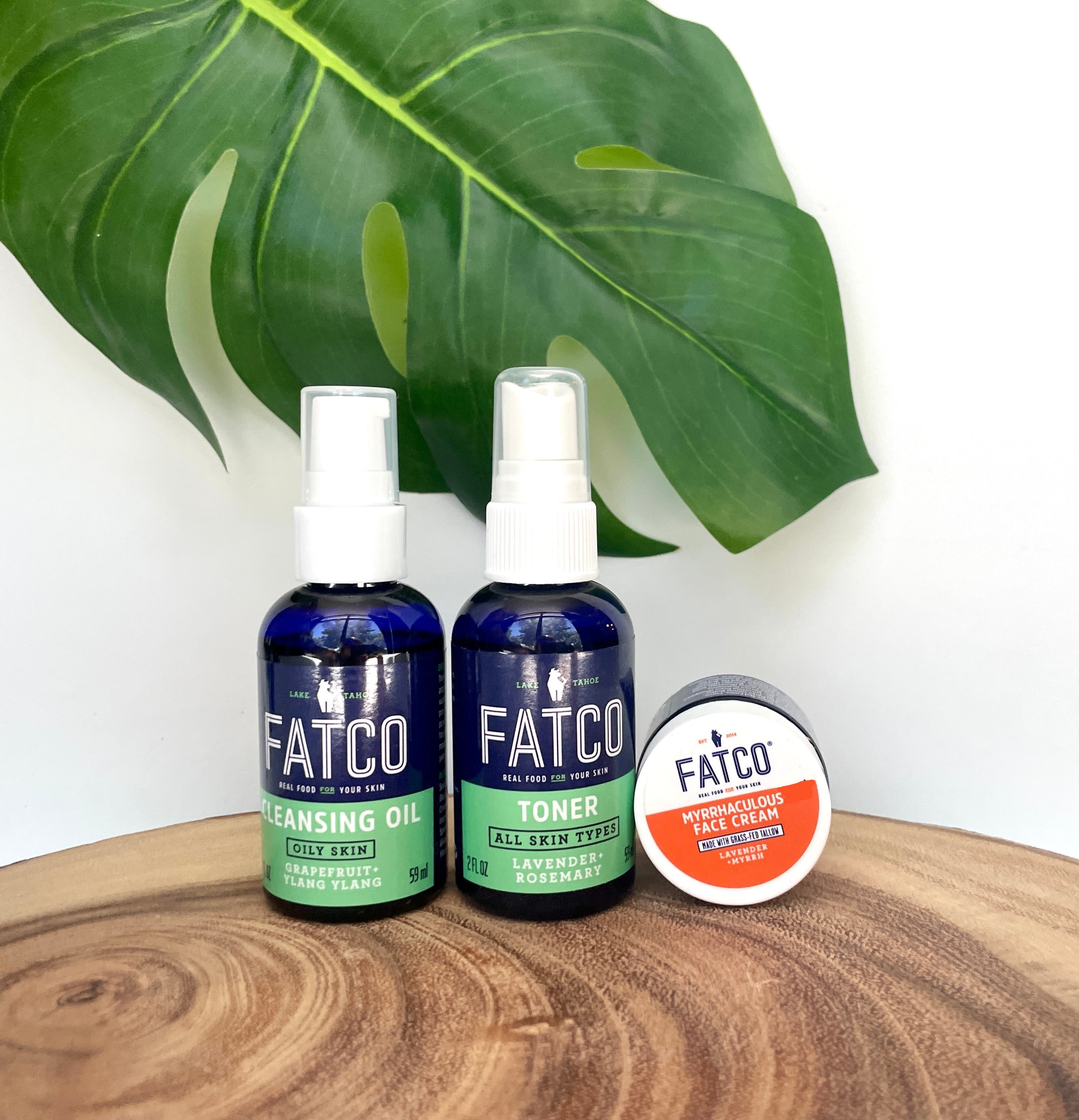
FATCO makes two tallow face creams. Myrrhaculous Face Cream combines grass-fed tallow with jojoba oil, pumpkin seed oil, rosehip seed oil, and myrrh essential oil. Unmyrrhaculous Face Cream is the same base with the myrrh removed, since myrrh essential oil is traditionally avoided during pregnancy. It is not an unscented cream: both formulas list lavender essential oil, so neither is fragrance-free, and neither suits anyone screening botanicals out. Both absorb into skin rather than sitting on top, and FATCO's own instructions call for a pea-sized amount. There is a longer version in the science behind tallow in skincare.
The drugstore picks (CeraVe, Cetaphil) are significantly less expensive per use. If you're new to moisturizing or just need a reliable starting point, either makes sense without commitment. If you've been through the rotation of gel-creams and they aren't solving the dry-cheek problem, a tallow-based formula takes a different approach worth trying. FATCO's creams contain no synthetic preservatives, no sulfates, no parabens, and no synthetic fragrance compounds, and they are made in the USA.
What to Look for in a Moisturizer for Combination Skin
- Niacinamide at 2% lowered measured sebum in the trials above, and it is not a stripping ingredient.
- A "non-comedogenic" label is an unregulated claim, so read the ingredient list rather than relying on the badge.
- Ceramides support the moisture barrier across the whole face.
- Fragrance-free is the safer default for combination skin that trends sensitive.
- Texture matters: gel-creams absorb fastest, lotion-weight formulas sit in the middle, cream-weight is richer and better for dry cheeks.
If you're layering, adding a hyaluronic acid serum under your moisturizer helps cheek hydration without adding oil to the T-zone. It's also worth checking whether your current routine is damaging your skin barrier before adding more products.
Which Moisturizer Should You Start With?
For most people with combination skin, CeraVe PM is a reliable low-risk starting point: good ingredients, drugstore price, fragrance-free, and widely available. La Roche-Posay's Double Repair is worth the step up if your skin trends sensitive. Neutrogena Hydro Boost works best for mild dry zones in warm climates.
If you've tried the gel-cream category and the cheeks still feel tight or the T-zone never quite settles, FATCO's tallow-based creams take a different path. One clean, ancestral formula instead of zone-by-zone juggling: fats that overlap with your skin's own surface lipids, applied a little heavier where the skin is driest.
Got Questions?
Combination Skin FAQ
Q Can I use the same moisturizer on my T-zone and cheeks?
Yes, and for most people that's the practical approach. Lightweight gel-creams or lotions with niacinamide work for mildly oily T-zones while still hydrating cheeks. If your cheeks are significantly drier, apply more product to those areas rather than buying two separate moisturizers.
Q Do I need two different moisturizers for combination skin?
Usually not. A well-chosen single moisturizer covers most combination-skin situations without extra cost or steps. Two-product routines make sense only when the T-zone and cheeks are dramatically different in behavior. Start with one product and see whether your cheeks stay hydrated before adding a second.
Q Is gel or cream moisturizer better for combination skin?
Gel-creams work better for T-zone-dominant skin because they absorb without residue. Cream-weight formulas suit skin where dry cheeks are the bigger complaint. If a gel feels comfortable on your T-zone but not enough for your cheeks, apply a richer formula only on the drier areas.
Q Should I moisturize my oily T-zone at all?
Yes, skipping it usually backfires. The American Academy of Dermatology states that when skin becomes dry, your body makes more oil, and that extra oil can clog pores. A lightweight formula applied thinly avoids that without adding to the shine. Even oily skin needs some hydration to stay comfortable.
Q What ingredients should I avoid with combination skin?
Heavy mineral oils and petroleum-based occlusives can block pores on oily zones. Alcohol-heavy toners dry out the cheeks and trigger rebound oil. Synthetic fragrance is worth avoiding if your skin trends reactive. Comedogenic ingredients in high concentrations can cause breakouts on the T-zone.
Q Is there a one-product approach that works for both zones?
Tallow-based face creams are worth knowing about. Grass-fed tallow shares several fatty acids with the skin's own surface lipids, and it is applied as one product across the whole face, a little heavier on the drier areas. FATCO's Myrrhaculous Face Cream is used in a pea-sized amount. Note that it contains lavender and myrrh essential oils, so it is not a fragrance-free option.
The FATCO Alternative
Combination skin doesn't always need two separate products. FATCO's tallow face creams are built on fats that share several fatty acids with your skin's own surface lipids, which is why one formula can cover dry cheeks and an oilier T-zone. Use a pea-sized amount all over, apply a touch more where you need it.