Beef Fat for Sale: Where to Find It and Why the Source Matters

Beef fat for sale is easier to find than most people expect. The harder part is knowing what you are actually buying, because not all beef fat is equal, and the difference matters whether you are rendering it for cooking or for your skin.
Humans have used animal fats for thousands of years, both in the kitchen and as topical care for skin and hair. Tallow, which is simply rendered beef fat, shares its main fatty acids with the skin's surface lipids: USDA reference data puts beef tallow at 36 grams of oleic acid and 24.9 grams of palmitic acid per 100 grams, and both turn up in human sebum too. That overlap is why this old-fashioned ingredient is making a genuine comeback in modern skincare, and it works across more skin types than most people expect. But to get the benefits, you need to start with quality fat, and quality begins with sourcing.
Key Takeaways
- Suet, leaf fat, and trim fat are the three main types of raw beef fat, each with different rendering behavior and quality; suet from around the kidneys produces the cleanest, most stable tallow.
- Local butchers, farms, and online grass-fed meat suppliers are the most reliable places to find raw beef fat, with farms offering the best sourcing transparency.
- Grass-finished matters for skincare-grade tallow because the Weston A. Price Foundation reports that vitamins A and K go largely missing from the fat of animals that have not been grazing green grass.
- Sourcing and rendering raw fat takes real effort including finding the right fat type, asking the right sourcing questions, and managing the rendering and storage setup.
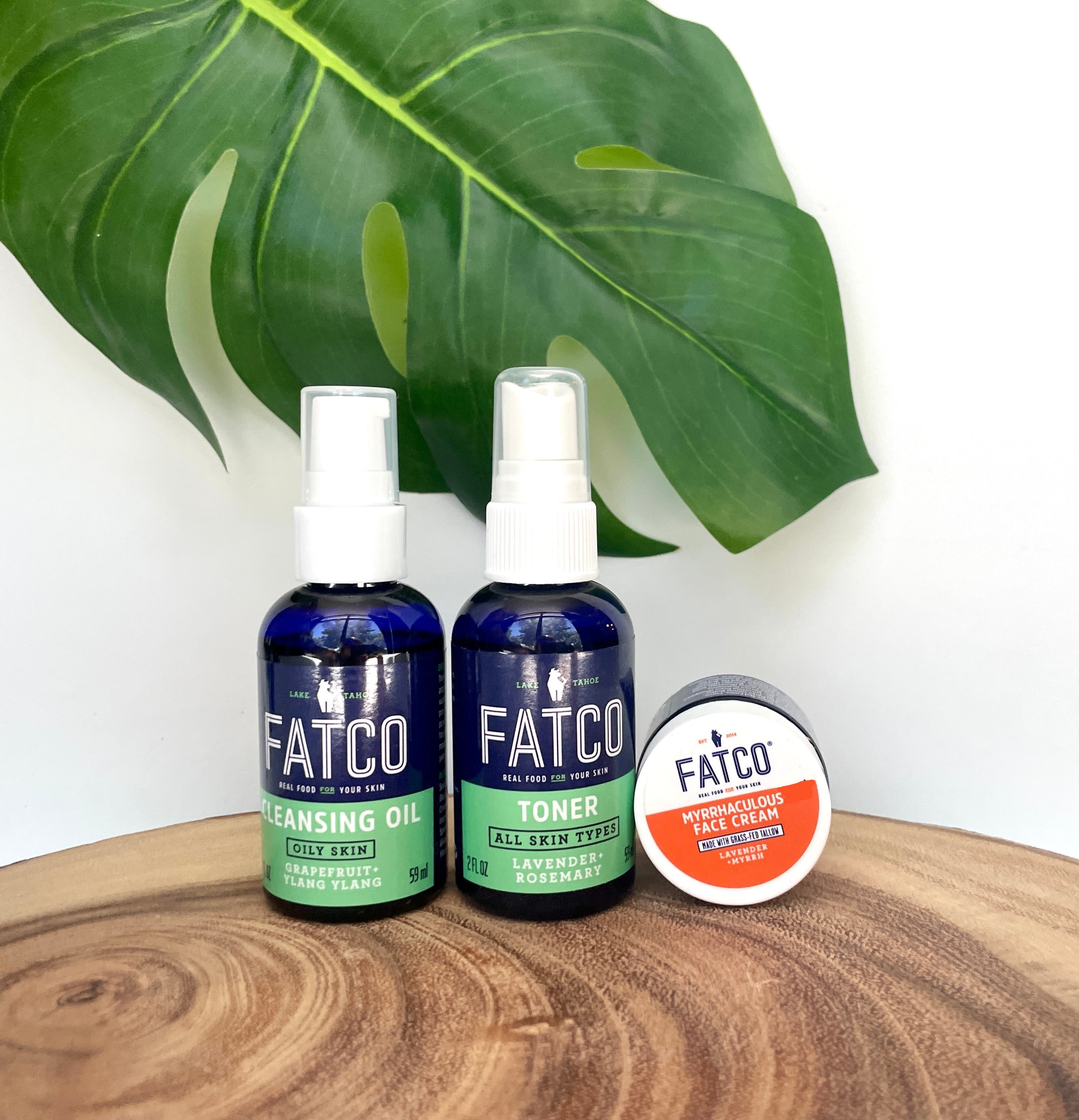
- FATCO pre-renders grass-fed tallow into ready-to-use balms and sticks, skipping the entire rendering setup while preserving the quality of the source fat.
What Kind of Beef Fat Are You Looking For?
Before you search for beef fat for sale, it helps to understand that there are a few different types, each with its own texture, fat content, and rendering behavior.
Suet
Suet is the dense, hard fat that surrounds the kidneys and loins of the animal. It is the most prized fat for rendering because it produces a very clean, white tallow with a mild scent. When you render suet, you get a finished tallow that is stable, long-lasting, and well-suited for skincare applications. Suet is what serious home renderers and small-batch skincare makers seek out first.
Leaf Fat
Leaf fat is a softer layer of fat found just inside the abdominal cavity. It sits between the suet and the muscle. Leaf fat renders well and produces a high-quality tallow, though it is slightly softer than suet-rendered tallow at room temperature. It is less common than suet at retail butcher counters but worth asking for at a farm or specialty butcher.
Trim Fat
Trim fat is exactly what it sounds like: the fat trimmed away from muscle cuts during butchering. It is a mix of fat and some connective tissue, which means the rendered tallow will have a slightly more variable quality depending on the ratio. Trim fat is the most commonly available type from butchers and online meat suppliers, and it works fine for cooking purposes. For skincare-specific rendering, suet or leaf fat is a better starting point.
Where to Find Beef Fat for Sale
Local Butchers and Meat Markets
A traditional butcher shop is often the most accessible source of raw beef fat. Most butchers accumulate fat as a byproduct of breaking down carcasses and are happy to sell it, sometimes for very little, because it otherwise goes to waste. Call ahead and ask specifically for suet or kidney fat if you want the cleaner rendering option. Trim fat is usually available without any special request.
The key question to ask your butcher: where did the animal come from, and was it grass-fed? Many local butchers can trace their sourcing back to the farm, and that answer tells you a lot about the fat quality.
Local Farms and Direct-to-Consumer Producers
Buying directly from a farm is one of the best ways to get grass-fed beef fat with full transparency about how the animal was raised. Many small farms sell fat at a low price or include it as an add-on when you buy a portion of an animal (known as buying a quarter, half, or whole cow). This route gives you the most control over sourcing quality and is often the most cost-effective if you plan to render in bulk.
Farmers markets are another option. Producers who sell grass-fed beef at markets often have fat available as well, either pre-packaged or by request for regular customers.
Online Meat Suppliers
If local sourcing is not available or you want more consistency, a number of online grass-fed meat suppliers sell raw beef fat with direct-to-door delivery, in packages running from about 1 pound up to 10 pounds. Shipping adds cost, but the traceability and quality documentation that comes from a reputable online farm often makes the premium worth it.
When shopping online, look for suppliers that clearly state grass-fed and grass-finished on the product page, not just grass-fed. Grass-finished means the animal ate grass for its entire life, not just part of it. The distinction matters for fat composition.
What About Grocery Stores?
Larger grocery stores with a full-service meat counter occasionally carry beef suet, especially around the holiday season when suet pudding is popular in some regions. But it is inconsistent, and store-bought fat rarely comes with any sourcing transparency. For rendering into skincare-grade tallow, this is usually the last resort.
Why Grass-Finished Matters, Especially for Skincare
When the goal is tallow for your skin, the animal's diet directly affects what ends up in the fat. The Weston A. Price Foundation has documented the nutritional differences in pasture-raised animal fat for decades. According to the Weston A. Price Foundation, when animals are not consuming green grass, vitamins A and K are largely missing from their fat and organ meats, while vitamin D depends on the animals being raised in sunlight rather than on what they eat. That is a narrower claim than the one the category usually makes, and it is the defensible one. A peer-reviewed review of fatty acid profiles in grass-fed vs grain-fed beef published in Nutrition Journal found that grass-finished beef carries elevated precursors for vitamins A and E, beta-carotene and alpha-tocopherol, and a more favorable omega-6 to omega-3 ratio. Those measurements were taken in the meat, so read them as evidence that pasture changes the animal, not as a nutrient panel for a jar of tallow.
Two things follow from that, and only two. Sourcing is a real variable rather than a marketing flourish. And the vitamin content of any beef tallow is modest to begin with: USDA reference data lists it at zero vitamin A and zero vitamin K, with vitamin E and a trace of D the only fat-soluble vitamins measured. Ancestral cultures applied animal fats as well as eating them, and the case for beef tallow in a modern routine rests mainly on the fatty acids it shares with the skin's surface lipids, not on a vitamin payload.
Grain-fed fat is not inherently harmful for external use. If you are going to the effort of sourcing and rendering beef fat yourself, grass-finished is the version that earns its place in the process.
What Good Sourcing Looks Like: A Quick Checklist
Not every supplier will answer all of these, but the ones who can are usually the ones worth buying from. These are the questions worth asking:
- Is it grass-fed and grass-finished, or just grass-fed for part of its life?
- Can the supplier tell you where the animal was raised?
- Is the fat clean and fresh-smelling, or does it have an off odor?
- Is it suet or kidney fat (better for skincare), or trim fat (better for cooking)?
- Does the fat have any additives, or is it pure?
For cooking purposes, trim fat from a reliable source is perfectly good. For skincare-grade tallow, the extra step of sourcing suet or leaf fat from a grass-finished animal is worth it.
Pricing: What to Expect
Raw beef fat is one of the cheapest animal products you can buy, partly because demand was low for decades and butchers did not want it sitting around. Prices at a local butcher counter vary too much by region to quote, and most butchers do not publish them, so ask rather than budget from a number you read online.
Grass-fed suet ordered online is easier to pin down. Checked live in July 2026, it lands between roughly $8 and $12 per pound: US Wellness Meats sells a 5 lb bag of coarse-ground beef suet at $39.87, White Oak Pastures a 2.5 lb pack at $22.59, Grand View Beef a 5 lb bag at $55.00, and Acabonac Farms a 1 lb pack at $11.99. Package sizes across those suppliers run from 1 lb up to 10 lb. Prices drift, so treat that band as a sanity check rather than a quote and confirm on the seller's page.
Rendering introduces a yield consideration: the connective tissue and moisture cook off, so the finished tallow weighs noticeably less than the raw fat you started with, and trim fat loses more than suet does. That shrinkage is what determines your real cost per unit of finished product.
Got Questions?
Frequently Asked Questions
Q What is the difference between suet and tallow?
Suet is the raw, unrendered fat taken from around the kidneys of the animal. Tallow is what you get after rendering that fat by slowly heating it to separate the pure fat from tissue or impurities. Suet is the raw material; tallow is the finished product used for cooking or skincare.
Q What is the difference between suet and leaf fat?
Suet is the hard fat around the kidneys; leaf fat is a softer layer just inside the abdominal cavity. Both render into quality tallow, though suet produces a firmer, whiter result. Leaf fat is less common at butcher counters but worth requesting at small farms or specialty shops.
Q Can I ask my butcher for raw beef fat?
Yes, and most butchers are glad to sell it, since it's a byproduct that would otherwise go to waste. Request suet or kidney fat by name for the cleanest rendering result. Trim fat needs no special request and cooks just fine.
Q Is grocery store beef fat good for skincare?
Grocery store beef fat is inconsistent and rarely comes with sourcing information. It is usually trim fat from conventionally raised cattle, and the Weston A. Price Foundation's position is that fat from animals off pasture carries less vitamin A and K. For skincare-grade tallow, a local farm or a reputable online grass-fed supplier is a better choice.
Q Is beef fat good for your skin?
It works well as an emollient once it is properly rendered into tallow. It shares its main fatty acids, oleic and palmitic, with the skin's surface lipids, which is why it absorbs rather than sitting on top. Sourcing and rendering quality determine how clean and stable the finished fat is.
Q What if I want grass-fed tallow but do not want to render it myself?
FATCO pre-renders grass-fed suet into ready-to-use balms, Fat Sticks, and Baby Butta, so you get the quality-sourced ancestral fat without the sourcing legwork or rendering setup. Every batch starts with the same suet-first sourcing standard described above. The full lineup is at fatco.com.
The FATCO Alternative
If you are interested in tallow for your skin but the sourcing, rendering, and storage process sounds like more than you want to take on, that is exactly the problem FATCO was built to solve. FATCO's products use pre-rendered grass-fed tallow, quality-sourced and carefully processed, so you get the full ancestral skincare benefit without the rendering setup.
The lineup includes tallow balms in multiple sizes, Fat Sticks for convenient on-the-go application, and Baby Butta formulated for sensitive skin. Every product skips the rendering step and goes straight to the results.