When Was Deodorant Invented (and Why)?
Deodorant was invented in 1888, when a Philadelphia inventor trademarked Mum, a zinc-based cream that killed odor-causing bacteria. The first antiperspirant, Everdry, followed in 1903. The habit of wearing deodorant every day is younger than either product, and it did not come from a chemist at all. It came from a 1919 magazine ad that convinced American women their friends were too polite to tell them they smelled. Here is the deodorant story as the historical record actually supports it, folklore removed.
Key Takeaways
- Mum, trademarked in Philadelphia in 1888, was the first commercial deodorant. It was a zinc oxide cream, scooped from a jar and rubbed into the armpits with the fingertips.
- The first antiperspirant was Everdry, launched in 1903. It used aluminum chloride to block sweat, and early formulas of that era were harsh on skin and clothing.
- Advertising, not chemistry, made deodorant a daily habit. Odorono's 1919 "Within the Curve of a Woman's Arm" campaign reframed body odor as a social offense, and sales rose 112 percent.
- Before 1888, people washed, wore perfume, and layered linen. Ancient Egyptians were rubbing scented unguents under their arms thousands of years earlier.
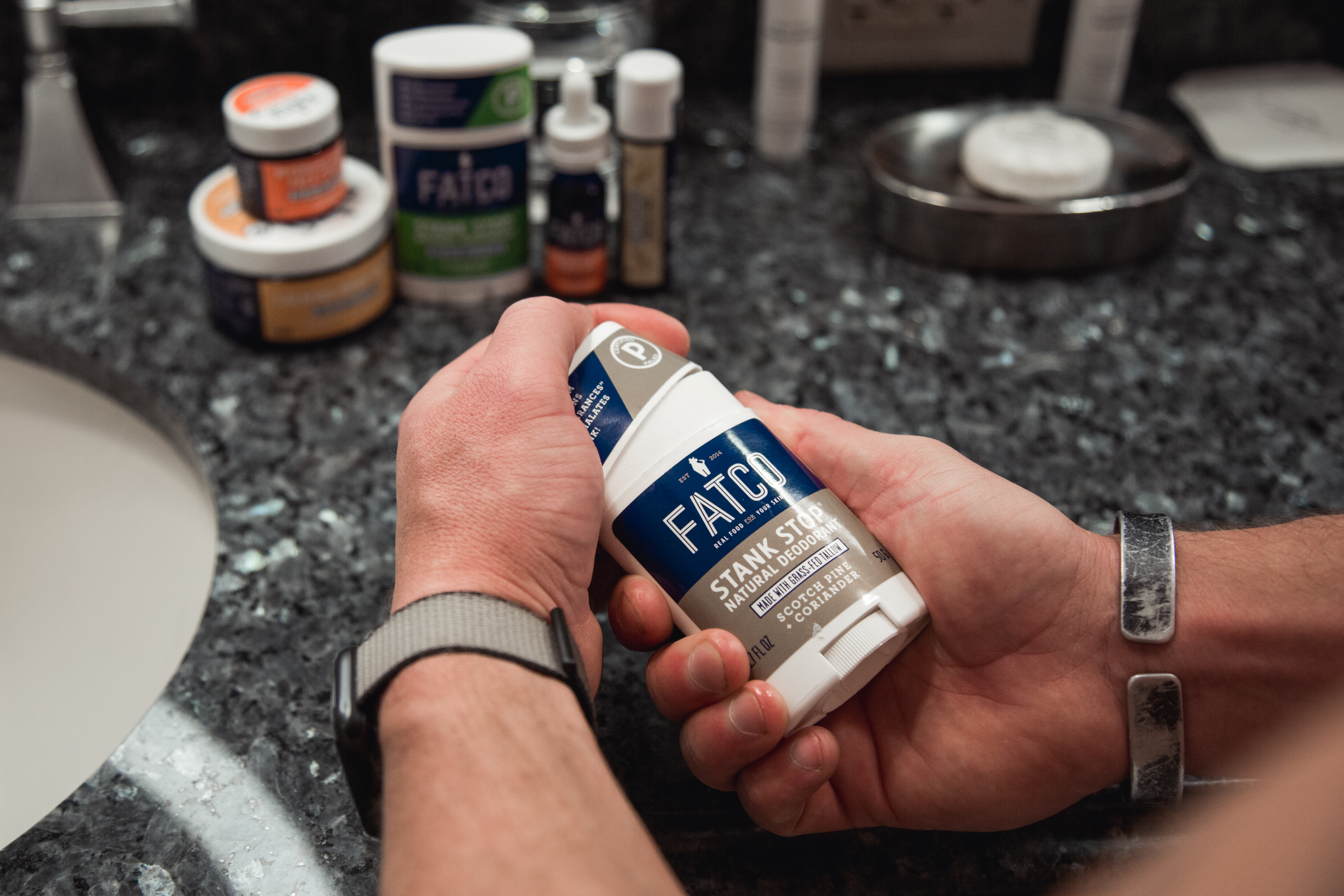
- The story has circled back to where it started. The natural wave, including FATCO's tallow-based Stank Stop, returns to the original idea: a simple cream with zinc, applied by hand.
What People Used Before Deodorant
Managing body odor is thousands of years older than the product. The best documented early practices come from ancient Egypt. Egyptians washed daily and rubbed scented unguents over the body, with potent mixtures reserved for the underarms, according to the World History Encyclopedia's survey of Egyptian hygiene. One recipe recorded in the Hearst Papyrus, an Egyptian medical text, mixed lettuce, myrrh, and incense to fight perspiration odor. Another called for ostrich egg, nuts, tamarisk, and crushed tortoise shell blended with fat. These were deodorants in intent, if not in packaging.
Claims about later eras get shakier, and plenty of what circulates online is folklore, so we keep this part modest. What the record supports is simpler: before commercial deodorant, most people in Europe and America relied on washing, perfume, and clothing. Layers of washable linen underclothing were believed to absorb the body's oils and smells, and fragrance covered the rest. By the late 1800s, soap was cheap, indoor plumbing was spreading, and the market was ready for something more targeted.
The Invention Era: 1888 to 1919
The modern deodorant age began quietly in Philadelphia. In 1888, an inventor whose name has not survived trademarked Mum, a waxy zinc oxide cream scooped from a jar and rubbed into the armpits with the fingertips. Zinc oxide kills odor-causing bacteria, so it worked. The Smithsonian's National Museum of American History credits Mum as the first branded deodorant on the American market. Brand lore says the product was named for the inventor's nurse, though other accounts trace it to the phrase "mum's the word." Since the inventor's identity is lost, both stories stay unverifiable.
The antiperspirant arrived fifteen years later. Everdry, launched in 1903, used aluminum chloride to block sweat rather than just fight odor bacteria. It was effective and harsh. Early aluminum chloride solutions were acidic, stung the skin, and had a reputation for damaging clothes.
| Year | Product | What it introduced |
|---|---|---|
| 1888 | Mum | The first trademarked deodorant, a zinc oxide cream that killed odor bacteria |
| 1903 | Everdry | The first antiperspirant, an aluminum chloride solution that blocked sweat |
| 1912 | Odorono | The antiperspirant that went national after a hot summer at the Atlantic City exposition |
| 1919 | Odorono's "Within the Curve of a Woman's Arm" ad | The campaign that turned deodorant into a daily habit |

How a 1919 Ad Created the Deodorant Habit
Neither Mum nor Everdry made deodorant a daily routine. That took Odorono, and one of the most consequential ads in American history.
Odorono began in an operating room. Dr. Abraham D. Murphey, a Cincinnati physician, developed a liquid antiperspirant to keep his hands dry during surgery. His daughter Edna Murphey realized it worked on underarms, named it Odorono (say it out loud: Odor? Oh no!), and started a company around 1910. It nearly failed. Druggists returned unsold bottles, and the product had real flaws. A 1913 American Medical Association lab analysis found it was roughly one-third aluminum chloride and warned it would clog pores. It was tinted red, could irritate freshly shaved skin, and the directions told women to pat it on at night, only two or three times a week. What saved the young company was weather: a hot summer exposition in Atlantic City in 1912 turned sweaty fairgoers into Odorono customers across the country.
By 1918 growth had stalled, so Murphey borrowed $50,000 and hired the J. Walter Thompson agency, where a copywriter named James Webb Young took the account. His 1919 ad in the Ladies' Home Journal was titled "Within the Curve of a Woman's Arm" and billed as a frank discussion of a subject too often avoided. The message: your friends notice your odor, and they will never tell you. Readers were offended, and some canceled their subscriptions. Sales did not care. Odorono revenue rose 112 percent, reaching $417,000 in 1920. Smithsonian Magazine's retelling of how advertisers convinced Americans they smelled bad treats that ad as the moment deodorant stopped being a remedy and became a routine.
Selling deodorant to men
For decades deodorant was marketed almost entirely to women, while sweat on men passed as manly. The Depression changed the math. In 1935, Top-Flite arrived: a men's deodorant sold in a black bottle. Its ads spoke to Depression-era fear, warning men that smelling bad at the office could cost them a job they could not afford to lose. The gendered aisle never fully disappeared. But what separates the best deodorant for men from the best deodorant for women today is mostly scent and marketing, because the formulas underneath do the same work.
From Then to Now: Roll-Ons, Aerosols, and the Natural Wave
The rest of the century was largely a packaging story. In the late 1940s, a member of the Mum team named Helen Diserens borrowed an idea from the newly invented ballpoint pen and developed a rolling applicator. It reached the market in 1952 and became Ban Roll-On. In 1960, Gillette introduced Right Guard, the first aerosol deodorant, and sprays soon dominated the category. Aerosols lost momentum after 1978, when US regulators banned chlorofluorocarbon propellants over ozone damage, and sticks, gels, and roll-ons took back the shelf.
The newest chapter is the natural wave. From the 2000s on, shoppers started reading labels and asking for aluminum-free formulas with shorter ingredient lists. Honesty matters here: reviewing the research, the American Cancer Society says research does not show such a link between antiperspirant use and breast cancer risk. Choosing natural deodorant is best understood as a preference, for sweating naturally and for recognizable ingredients, rather than an escape from a proven danger. The shift also revived old chemistry. Baking soda became the category's workhorse odor neutralizer, effective for many people and irritating for some, a tradeoff our Baking Soda Deodorant Guide walks through. And a century after Odorono's stinging red liquid, a gentle deodorant for sensitive skin has gone from afterthought to one of the category's main promises.
Where Tallow-Based Deodorant Fits the Story
Here is our favorite twist in the story. The first commercial deodorant ever sold was a simple zinc cream, scooped from a jar and applied with the fingertips. More than 130 years of sprays, sticks, and aerosol patents later, that is roughly the format the natural wave came back to.
FATCO will not pretend to a history it does not have. Tallow deodorant is a modern product, and nobody in 1888 was whipping grass-fed tallow for armpits. The ingredient itself is genuinely old, though: people have used animal fats to care for skin for millennia, since long before Mum's trademark. Stank Stop cream deodorant leans on non-nano zinc oxide, the same active idea that made Mum work, plus baking soda. Both sit in a base of grass-fed tallow, organic coconut oil, shea butter, and arrowroot powder, scented only with essential oils. And it goes on the 1888 way: a fingertip scoop, warmed for a second, rubbed in. The deodorant story began with a zinc cream. We just think the cream deserved better fat.

Got Questions?
Deodorant History FAQ
Q When was deodorant invented?
The first trademarked deodorant, Mum, went on sale in 1888 in Philadelphia as a zinc oxide cream. The first antiperspirant, Everdry, followed in 1903. Daily deodorant use is newer than both products, and it spread widely only after Odorono's shame-based advertising campaign of 1919.
Q Who invented deodorant?
Nobody knows the name of Mum's inventor. He was a Philadelphian who trademarked his zinc cream in 1888, and accounts suggest the brand name honored his nurse. The first widely marketed antiperspirant came from Dr. Abraham D. Murphey, a Cincinnati physician, whose daughter Edna built Odorono around it.
Q What did people use before deodorant was invented?
Mostly soap, perfume, and clothing. Nineteenth-century Americans layered washable linen underclothes to absorb sweat and masked what remained with fragrance. Ancient Egyptians bathed daily and rubbed scented unguents under their arms, and one Egyptian medical papyrus records an odor recipe of lettuce, myrrh, and incense.
Q When was antiperspirant invented?
Everdry, the first antiperspirant, launched in 1903 using aluminum chloride to block sweat. Deodorant and antiperspirant do different jobs: a deodorant targets the bacteria that turn sweat smelly, while an antiperspirant reduces sweating itself. Early aluminum chloride formulas were acidic enough to irritate skin and damage clothing.
Q Why was deodorant invented?
To solve two real problems: odor and wetness. Mum's zinc cream killed odor-causing bacteria, and Everdry's aluminum chloride cut sweating. Daily use, though, was invented by advertising. Odorono's 1919 campaign convinced buyers that body odor was a social failure their friends would never mention, and the habit stuck.
Q When did natural deodorant become popular?
The aluminum-free natural wave took off in the 2010s, driven by ingredient-label reading rather than by any proven danger. Its core formats are old ideas: baking soda and zinc oxide creams work much like 1888's Mum. FATCO's Stank Stop updates that original formula with a skin-nourishing grass-fed tallow base.
The FATCO Alternative
Most of this 130-year history was an arms race to stop sweat harder: stronger salts, bigger sprays, longer patents. FATCO took the other lesson from it. Odor is the problem worth solving, sweat is just your body working, and the original zinc cream had the right idea all along. Stank Stop pairs non-nano zinc oxide and baking soda with a grass-fed tallow base that conditions underarm skin instead of stinging it. It comes as a cream or a stick, in eight scents including unscented. Aluminum-free, cruelty-free, and made in the USA.