Baking Soda Deodorant: Does It Work and Who Should Avoid It
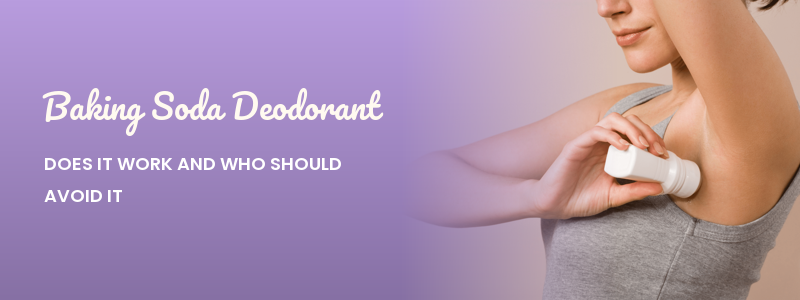
Baking soda deodorant works by neutralizing odor-causing acids in sweat, but it comes with a catch: some people develop redness, itching, or a rash under the arms from regular use. No one has published a reliable figure for how many, so treat it as a known risk rather than a known rate. Understanding why that happens, and what the alternatives do differently, makes it easier to find something that actually keeps you fresh without punishing your skin.
Key Takeaways
- Baking soda raises the pH of sweat, which neutralizes odor at the source and explains why it is so common in natural deodorant formulas.
- Skin pH runs acidic, averaging about 4.7 once you strip out the effect of soap and tap water, while baking soda solution sits around pH 8 to 8.6, creating a mismatch that disrupts the skin's natural protective barrier for some people.
- The "baking soda rash" is a form of irritant contact dermatitis, not an allergy, meaning it shows up with enough exposure rather than on first contact.
- Baking-soda-free alternatives use magnesium hydroxide, arrowroot, and zinc oxide to absorb moisture and slow bacterial activity. Magnesium hydroxide and zinc oxide are not pH-neutral, so "gentler" is about how much they shift the skin, not about leaving it untouched.
- FATCO's Stank Stop deodorant cream contains baking soda alongside tallow, coconut oil, shea butter, and non-nano zinc oxide. If your underarms are sensitive, the transition guide below is worth reading before you try any baking soda formula.
Why Baking Soda Is in Deodorant
Sweat itself has almost no smell. Odor happens when bacteria on the skin's surface break down sweat components, especially fatty acids and proteins found in apocrine sweat glands located in the underarms. The byproducts of that bacterial activity are acidic, which is where baking soda (sodium bicarbonate) comes in.
Sodium bicarbonate is alkaline. PubChem puts a 1% solution between pH 8.0 and 8.6, and a freshly prepared 0.1 molar solution at 8.3. When applied to the underarms, it neutralizes those acidic bacterial byproducts, reducing the smell before it becomes noticeable. It is inexpensive, widely available, and genuinely effective at odor control, which is why it became a staple ingredient in natural deodorant formulas over the past two decades.
Many natural deodorants include baking soda. Schmidt's is a useful example of how much this varies by scent: its Natural Deodorant lists magnesium hydroxide first with no sodium bicarbonate at all, its Lavender & Sage lists magnesium hydroxide first with baking soda further down, and its Charcoal + Magnesium lists baking soda ahead of magnesium hydroxide. FATCO's Stank Stop contains baking soda too, which is worth knowing if your skin runs sensitive.
None of this changes the fact that the ingredient does not belong in everyone's underarm routine.
Why It Irritates Some Skin
Human skin maintains an acidic surface pH. A 330-person study by Lambers and colleagues in the International Journal of Cosmetic Science found that once you have people skip showering and skincare for 24 hours, the average drops from 5.12 to 4.93, and the authors estimate the "natural" figure at about 4.7. They flag the widely repeated 5.0 to 6.0 range as an artifact of soap and tap water rather than the skin's baseline. That acidity is not accidental: the same paper found that skin below pH 5.0 scored better on barrier function, moisturization and scaling, and that an acidic pH of 4 to 4.5 keeps resident bacteria attached to the skin while an alkaline pH of 8 to 9 promotes their dispersal.
Baking soda at pH 8 to 8.6 sits squarely in that dispersal range. For people with already-thin or reactive underarm skin, repeated exposure can cause what dermatologists classify as irritant contact dermatitis: redness, itching, burning, small bumps, or raw-feeling skin. Mayo Clinic describes irritant contact dermatitis as the most common type, occurring when an irritant damages the skin's outer protective layer, and notes that while some people react to a strong irritant after a single exposure, others develop a rash only after repeated exposures to mild irritants such as soap and water.
This is why the "baking soda rash" tends to show up weeks or months into using a new deodorant rather than immediately. The irritation accumulates. Shaving the night before applying deodorant rather than the morning of can reduce friction on vulnerable skin during the transition period.
Sensitive skin and sensitized skin are not quite the same thing. Sensitive skin is a baseline trait. Sensitized skin is a temporary state caused by overexposure to an irritant. Baking soda in deodorant can create sensitized underarms even in people whose skin does not react to baking soda in other contexts (like food or cleaning products), because the underarm environment is warm, occluded, and often freshly abraded.
Baking-Soda-Free Alternatives and How They Work
The natural deodorant category has moved significantly toward baking-soda-free formulas over the past several years, driven by exactly this pattern of irritation complaints. The main alternatives use different mechanisms to address odor.
Magnesium hydroxide is the most common substitute, and it is worth being precise about why. It is not a pH-neutral swap: magnesium hydroxide is also a base. What differs is solubility, since it dissolves poorly in water and so has far less capacity to shift the skin's pH than a readily soluble carbonate does. Plenty of people who react to baking soda report tolerating magnesium formulas, but that is user experience rather than a head-to-head trial, and it is not universal.
Arrowroot powder is a fine starch that absorbs moisture, reducing the wet environment that odor-causing bacteria need. It does not neutralize pH the way baking soda does. It works more as a moisture management tool, and FATCO's Stank Stop cream uses arrowroot powder as part of its base for exactly this reason.
Non-nano zinc oxide inhibits bacterial growth through a pathway that is not pH adjustment. A randomized, double-blind, placebo-controlled trial in 30 volunteers, published in Acta Dermato-Venereologica in 2020, treated one armpit with zinc oxide and the other with placebo for 13 days. Total bacterial growth fell, and so specifically did the odor-producing Corynebacterium species and Staphylococcus hominis, and participants judged their zinc-treated side less malodorous. The notable detail is that this happened even though skin-surface pH went up on the zinc side, which is the clearest evidence that zinc oxide is not working by acidifying anything. FATCO's Stank Stop includes non-nano zinc oxide alongside the baking soda.
Tallow base brings something most natural deodorant formulas skip entirely. Tallow shares fatty acids with the skin's own surface lipids, and formulas built on tallow, coconut oil, and shea butter apply smoothly rather than sitting on the skin as dry powder.
Activated charcoal appears in some baking-soda-free formulas, including Schmidt's Charcoal + Magnesium and Dr. Squatch's sticks, where it is included as an odor adsorbent. It can leave gray residue on clothing, which limits its practical appeal.
How to Know If Your Skin Reacts and How to Transition
The most common signs that baking soda deodorant is causing irritation:
- Redness that appears within a few days of starting a new deodorant and does not clear between applications
- Itching that feels worse right after application or within an hour of applying
- Small bumps or a rash pattern that matches the application zone exactly
- Burning on freshly shaved skin that takes longer than a day to resolve
- Dark patches developing after the rash clears (post-inflammatory hyperpigmentation is common in this area)
If you are switching from conventional antiperspirant to any natural deodorant, expect an adjustment period where odor control feels less reliable. This is not specific to baking soda. A 2016 PeerJ study by Urban and colleagues found that when habitual antiperspirant and deodorant users stopped, culturable armpit bacteria increased toward the levels seen in people who never use product, and the community composition shifted. The study did not measure how long odor takes to settle, so the timelines you see quoted are user reports rather than research findings. That process is covered in FATCO's natural deodorant switching guide.
During transition, applying deodorant to completely dry skin (waiting a few minutes after showering) and skipping application immediately after shaving can reduce irritation regardless of formula. If redness or itching develops, stop and let the skin recover before trying a different formula. Mayo Clinic advises seeing a health care provider if a contact-dermatitis rash does not improve within three weeks, if it is severe or widespread, or if it keeps you from sleeping.
Where FATCO Fits
FATCO's Stank Stop deodorant cream is a tallow-based formula that contains baking soda. The unscented 1 oz cream lists: Coconut Oil, Arrowroot Powder, Shea Butter, Tallow from Organic Grass-fed Cows, Sodium Bicarbonate (Baking Soda), Non-Nano Zinc Oxide, Cera Alba (Beeswax), Helianthus Annuus (Sunflower) Seed Wax ( denotes an organic ingredient). Scented versions add essential oils and botanical extracts, and the exact list differs by scent, so check the label for the one you buy. The stick format is a different formula again: it swaps in shea fruit butter and adds magnesium hydroxide.
That is worth being clear about if you already know you react to baking soda. Stank Stop is not marketed as baking-soda-free, and it would not be accurate to describe it that way. What makes it different from many baking-soda-based formulas is the base: tallow and shea butter condition the underarm skin around the active ingredients, and non-nano zinc oxide provides additional antimicrobial action so the baking soda does not have to carry the entire formula on its own.
For people who tolerate baking soda or are newer to natural deodorant, Stank Stop's tallow base offers something most competitors do not: a conditioning base rather than a dry powder carrier. For people with confirmed baking soda sensitivity, this is not the formula to start with. We have seen no evidence that a tallow base buffers the pH effect of baking soda, and we are not going to claim it does. What the base does is moisturize; the baking soda is still baking soda.
Got Questions?
Baking Soda Deodorant FAQ
Q Does baking soda in deodorant cause a rash for everyone?
No. Plenty of people use baking soda deodorant for years without any reaction at all. Whether it irritates you depends on your skin's pH, how recently you shaved, and how concentrated the baking soda is in that formula. It is a well-known issue in natural deodorant, just not a universal one.
Q What does the baking soda rash look like?
It typically presents as redness, small bumps, or raw-feeling skin concentrated in the underarm fold where deodorant contact is heaviest. In some cases it progresses to peeling or dark patches after the irritation resolves. It can look similar to razor burn but tends to persist longer and appears regardless of shaving.
Q Is baking soda deodorant safe to use long term?
For people whose skin tolerates it, yes. Baking soda is not a harmful chemical. The concern is purely about local skin irritation from pH disruption, not systemic effects. If your underarm skin stays calm and healthy, there is no documented reason to stop using it.
Q Can I use baking soda deodorant after shaving?
Wait at least a day, which is what FATCO's own directions say. Shaving leaves skin more vulnerable right when a high-pH formula makes contact. The StatPearls review on contact dermatitis lists previously damaged skin among the factors that determine how severe an irritant reaction is, alongside the irritant's concentration, duration, and frequency of exposure.
Q What is the difference between a deodorant and an antiperspirant?
Deodorants, including baking soda formulas, address odor by neutralizing or inhibiting the bacteria that produce it. Antiperspirants use aluminum-based compounds to temporarily block sweat glands, reducing moisture as well as odor. Baking soda deodorant does not reduce sweating; it manages the smell of sweat after it reaches the skin surface.
Q Is there a natural deodorant that works without baking soda?
Yes. Magnesium hydroxide is the most popular swap for people with baking soda sensitivity, and some formulas rely on zinc oxide and arrowroot instead. FATCO's Stank Stop still contains baking soda in both formats, so if you have a confirmed reaction, look to a magnesium-based stick rather than to Stank Stop.
The FATCO Alternative
If you are navigating the baking soda deodorant question, FATCO's Stank Stop cream is the tallow-based option. It contains baking soda alongside arrowroot powder, non-nano zinc oxide, and a grass-fed tallow and shea butter base that most dry natural deodorant formulas skip entirely. Whether you are trying natural deodorant for the first time or looking for something that handles odor without drying out your underarm skin, it is worth trying. The cream comes in eight options, including an unscented version, in 1 oz and 2 oz sizes.