Aloe Vera Gel for Face: Benefits, Limits, and Alternatives

Aloe vera gel is mostly water. That one fact explains what it does on a face, what it cannot do, and why so much of what gets claimed for it does not survive checking. The evidence is real and narrower than the reputation. The plant also carries a second substance, and it is not the part you want on your face.
Key Takeaways
- The inner leaf gel is 99 percent water. DermNet puts the remaining 1 percent at dissolved sugars, vitamins, minerals, enzymes and organic acids. That is hydration, not a seal.
- Gel and latex are different parts of the leaf. Latex is the bitter yellow layer under the rind, it carries anthraquinones, and the FDA had it removed from over-the-counter laxatives in 2002.
- The strongest topical claim NCCIH makes is hedged. Clinical research "suggests" aloe gel "may" speed burn healing and reduce burn pain. For much else it says the information is not reliable enough.
- Contact allergy is documented and uncommon. A patch-test study of 702 consecutive patients found no reactions at all, and the case reports that exist tend to involve home-made preparations.
- FATCO does not make an aloe gel. Aloe vera gel sits on our Toner's panel, and what we do make is the layer that goes over a watery one.
What Aloe Vera Gel Actually Is
An aloe leaf is not one material. A 2008 review in the Indian Journal of Dermatology describes three layers, and only the innermost is what people mean by aloe vera gel.
The middle one is the layer to know about. That review calls it "the bitter yellow sap", and says it "contains anthraquinones and glycosides".
DermNet, the dermatology reference maintained by the New Zealand Dermatological Society, puts numbers on the inner gel. It "is 99% water". The other 1 percent is dissolved sugars, vitamins, minerals, enzymes, phenolic compounds and organic acids.
NCCIH names three source materials: the gel, the latex and the whole crushed leaf. Its wording is "the gel (from the inner leaf), latex (from the leaf's outer layer), and whole crushed leaf (containing the gel and latex)".
The same page records that in 2002 the FDA "issued a ruling that required manufacturers to remove aloe latex from over-the-counter laxative products because of a lack of safety data". It adds that the International Agency for Research on Cancer "has classified whole leaf extract of aloe vera as a possible carcinogen in humans".
Both concern swallowing aloe rather than applying it, and neither is a reason to avoid a cosmetic gel. They are the reason a commercial gel is processed to leave the latex behind, and a leaf snapped off a windowsill plant is not.
What the Evidence Actually Supports
Aloe's reputation runs ahead of its research. The honest way to show that is to quote the people who reviewed it.
On burns, NCCIH says: "Clinical research suggests topical application of aloe gel may speed burn healing and reduce burn-related pain." On acne: "Two small studies suggest that topical application of aloe gel, in combination with other forms of treatment, may improve acne." That qualifier is doing real work.
Beyond those, only "a small amount of research" suggests aloe "may help" with a short list that includes lichen planus, psoriasis and radiation skin damage.
Then the limit, stated plainly. NCCIH says "there isn't enough reliable information to say whether it might be helpful for those conditions". Eczema, diabetic foot ulcers, irritable bowel syndrome and ulcerative colitis are the ones it names.
DermNet is blunter about the everyday uses. Its sentence on aloe being soothing, moisturising and cooling opens with a single qualifier: "Anecdotally". It also states plainly that "the use of Aloe vera in conventional medicine has not been thoroughly established".
None of that makes aloe a poor ingredient. It makes it an ingredient with one reasonably supported job and a long tail of maybes.
Where Aloe Stops, and What Goes Over It
Ninety-nine percent water is the ceiling. A gel that is almost entirely water puts water on the surface, and then that water leaves. It hydrates. It does not seal. On dry skin that is why aloe feels wonderful going on and tight later.
This is the difference between a humectant and an occlusive, and it is the most useful thing to understand before buying either. Humectants draw and hold water. Occlusives slow the rate at which it escapes. Neither does the other job.
Aloe and tallow are not rivals, and any article staging them as one is selling you something. Aloe is water with sugars dissolved in it. Tallow is rendered beef fat containing no water at all, which makes it an occlusive and an emollient. They solve opposite halves of one problem, and they stack in the obvious order: the watery layer first, the fat over the top.
If You Landed Here Because of a Sunburn
Sunburn sends more people looking for aloe than anything else, so here is what the dermatology bodies say, quoted rather than paraphrased.
The American Academy of Dermatology's sunburn guidance is to "Apply a moisturizer that contains aloe vera or soy to help soothe sunburned skin". Do it "while your skin is still damp from a bath or shower and whenever you feel discomfort". Read that precisely: a moisturizer containing aloe, on damp skin.
AAD adds that "Blistering skin means you have a second-degree sunburn". You "should not pop the blisters". Keep them clean and apply petroleum jelly while they heal.
Aloe is a comfort measure, and a sunburn can outgrow comfort measures. Mayo Clinic says to see a health care provider if you:
- "Develop large blisters."
- "Develop blisters on the face, hands or genitals."
- "Experience severe swelling of the affected area."
- "Show signs of infection, such as blisters with pus or streaks."
- "Experience worsening pain, headache, confusion, nausea, fever or chills."
- "Get worse despite at-home care."
- "Have eye pain or vision changes."
Mayo lists a separate set for immediate medical care: a fever over 103 F (39.4 C) with vomiting, confusion, an infection, dehydration, or "Cold skin, dizziness or faintness".
How to Read an Aloe Gel Label
The front of the bottle gives you a percentage. The back gives you the product.
A high aloe percentage does not mean a one-ingredient formula, and it should not. Badger's Aloe Vera Gel is a 4 oz tube from a brand that publishes its own panel. Badger advertises it as "96% pure organic aloe juice". The panel reads organic aloe, xanthan gum, water with gluconic acid and sodium benzoate, glyceryl caprylate, and citric acid. That is aloe plus a thickener, a preservative system and a pH adjuster.
The preservative is not a compromise on the aloe. The FDA lists an "ineffective preservation system" among the routes by which microorganisms get into cosmetic products. It also tells consumers not to add water to a product, because doing so "waters down preservatives that are intended to keep microorganisms from growing". A water gel with nothing preserving it is a growth medium.
So read past the number. A short list with a named preservative beats a bare purity percentage you have no way to check.
Reactions, in Proportion
Aloe is well tolerated by most people, and it is not risk-free. Both halves have evidence behind them.
NCCIH: "Topical use of aloe gel is generally well tolerated; however, there have been occasional reports of burning, itching, rash, and eczema." DermNet's side-effect list names allergic contact dermatitis "including generalised and bullous forms", contact urticaria, and "a burning discomfort after applying the gel to the skin".
Scale keeps this proportionate. A 2005 study in Contact Dermatitis patch tested 702 consecutive patients with an oily leaf extract, whole-plant aloe powder and concentrated aloe gel. Its result: "None of the subjects showed any reaction to one of the preparations."
A 2007 case report in the same journal describes a 72-year-old woman who did react, to "self home-made Aloe vera juice" applied to her legs. Its authors read the pattern this way: "most manufacturers process Aloe products avoiding its irritant extracts, and probably as a consequence reports of allergic reactions are rare".
Patch-test a new gel on your inner forearm for a couple of days, as with any new product on reactive skin. DermNet also lists allergy to the Liliaceae family, lilies and tulips among them, as a contraindication.
Got Questions?
Frequently Asked Questions
Q Is aloe vera gel good for face everyday?
For most people, yes. NCCIH describes topical aloe gel as generally well tolerated, with occasional reports of burning, itching and rash. Daily use is fine if your skin stays happy with it. Aloe hydrates rather than seals, so pair it with a moisturizer or dry skin will feel tight.
Q Can you put aloe vera straight from the plant onto your skin?
Cautiously. A cut leaf gives you the clear inner gel plus the bitter yellow latex beneath the rind. The latex carries anthraquinones, and most manufacturers process it out. Rinse the sap away and use the clear gel. A published allergy case involved home-made aloe juice applied to the legs.
Q Can I directly apply aloe vera gel on my face?
Yes. A bought gel goes on clean skin, before anything heavier. Patch-test it on your inner forearm for two days first. Aloe is 99 percent water, so it will not replace a moisturizer, and on dry skin it works better underneath one than instead of one.
Q What are the side effects of aloe vera?
Topically, few. NCCIH reports occasional burning, itching, rash and eczema. DermNet adds allergic contact dermatitis and contact urticaria, and flags people allergic to lilies and tulips. Swallowing aloe is a separate question with real risks, including hepatitis linked to oral leaf extracts.
Q Can I leave aloe on my face overnight?
You can, and it does less overnight than people expect. The water in a 99 percent water gel leaves, and what stays behind is a thin film of dissolved solids. If the goal is waking up softer, the layer doing that work is an occlusive one applied over the top.
Q What are the ingredients in aloe vera gel for the face?
Usually aloe juice, a thickener such as xanthan gum, a preservative system and a pH adjuster. Even a 96 percent aloe product carries those. Aloe also turns up as one ingredient among several: it sits on FATCO's Toner panel alongside witch hazel and rose water.
The FATCO Alternative
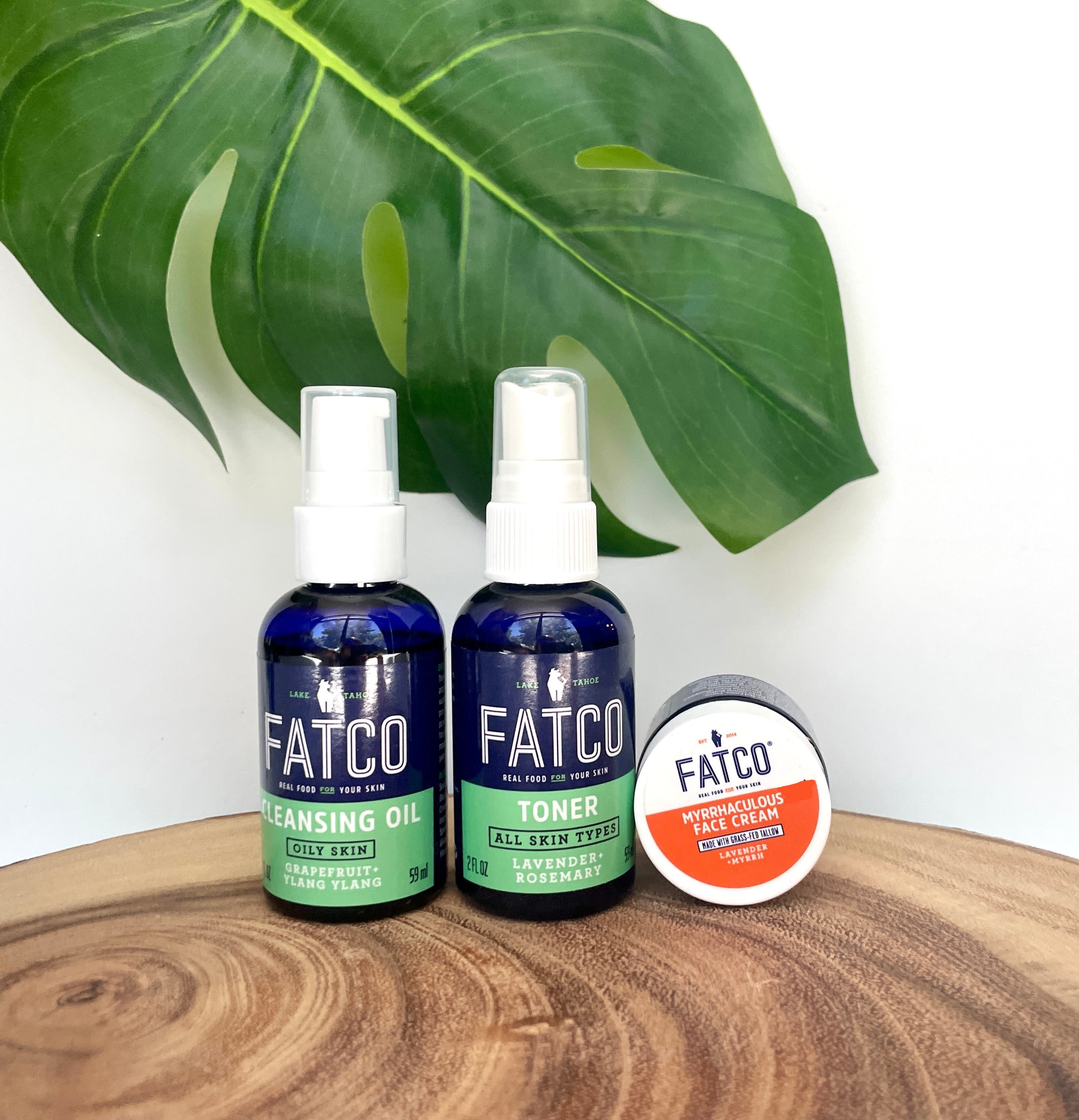
Plainly: FATCO does not make an aloe vera gel, and this article is not a detour toward one. Aloe vera gel is on our Toner's ingredient list, next to witch hazel, raw apple cider vinegar and rose water. That is a toner, and we are not calling it an aloe product.
What we make is the step after. Myrrhaculous Face Cream is grass-fed tallow, coconut oil, shea butter and jojoba, with no water in it at all. That makes it an occlusive and an emollient rather than a source of hydration. It carries lavender and myrrh essential oils, so skip it if fragrance is what you are avoiding. If aloe leaves your face tight an hour later, that is the layer it was missing.