Scent-Free Skincare: Reading Labels When Fragrance Is the Problem

Scent-free skincare is a shopping problem before it is a skin problem. Three phrases compete for the front of the package, two of them mean genuinely different things, and none is defined in American law. The ingredient list is the part that has to tell you the truth.
Key Takeaways
- "Fragrance-free" and "unscented" are not the same claim. Fragrance-free normally means no fragrance ingredient was added. Unscented describes how the product smells, which is a different question.
- An unscented product can contain fragrance. FDA says a manufacturer may add just enough fragrance to mask the smell of other ingredients, without giving the product a noticeable scent.
- Neither phrase is defined in US regulation. FDA states there is no federal standard or definition governing terms like "fragrance-free" or "for sensitive skin".
- Essential oils are fragrance ingredients. A cream scented only with lavender oil is honestly scented. It is not fragrance-free.
- The FATCO products with no essential oil are the Stank Stop Cream Deodorant in Unscented, Baby Butta, the Baby Fat Stick and the Baby Fat Bar. Most of the range is scented, which we would rather say than have you find on the label.
Fragrance-Free, Unscented, Scent-Free: What Each Word Claims
Fragrance-free is the strict claim. It means nothing was added to the formula for the purpose of smell, synthetic or botanical.
Unscented is the loose one. It describes the result rather than the recipe: the product has no smell you would notice. Getting there does not require leaving fragrance out. FDA's page on fragrances in cosmetics puts the mechanism plainly. Even some products labeled unscented may contain fragrance ingredients. A manufacturer may add just enough fragrance to mask the unpleasant smell of other ingredients, without giving the product a noticeable scent.
Scent-free is the third phrase, and it is not defined anywhere either. Read it as unscented until the ingredient list says otherwise.
The two real terms answer different questions. Fragrance-free answers what is in it. Unscented answers what it smells like. If fragrance is your problem, only the first question matters.
No Federal Standard Sits Behind Any of Them
FDA's guidance on allergens in cosmetics tells shoppers the front of the package is not enough. Checking for terms like hypoallergenic, fragrance-free or for sensitive skin settles nothing, because there is no federal standard or definition governing them in the US.
The agency's labeling-claims page says the same thing more broadly. FDA does not have a list of approved or accepted claims for cosmetics, and labeling does not need FDA approval before a product goes on sale. Claims still have to be truthful and not misleading. Nobody signs off on the wording in advance.
That does not make fragrance-free meaningless. Most brands using it mean exactly what it sounds like. It means the phrase is a manufacturer's description rather than a certified one, and the ingredient list is what you check it against.
Essential Oils Are Fragrance Ingredients
This is the part that trips up clean personal care shoppers, and it is the crux of the whole question. An essential oil added to make a product smell like something is a fragrance ingredient. Being plant-derived does not change that. FDA notes there is no regulatory definition for essential oils at all, and that the law treats ingredients from plants the same as those from any other source.
The allergy data points the same way. The European Commission has identified 26 fragrance ingredients as allergens in Annex III of the EU Cosmetics Directive, and FDA publishes that list. It includes linalool, limonene, geraniol, citronellol, citral, coumarin and eugenol. Those are all constituents of common essential oils.
So a face cream scented only with lavender oil is not fragrance-free. It is honestly scented, which beats a blend hidden behind one word. It is still a different claim, and for someone screening out fragrance it is the wrong product.
How Fragrance Shows Up on an Ingredient List
Under US rules, fragrance and flavor components do not have to be itemized. FDA explains why: they are the parts of a formula most likely to be trade secrets, so a whole blend can appear as the single word Fragrance. That one word can stand for a long list of individual chemicals, and Parfum is its INCI equivalent.
| What you see | What it allows | What to do |
|---|---|---|
| "Fragrance" or "Parfum" | An undisclosed blend under one word | Treat the product as scented |
| A named essential oil | A disclosed scent ingredient | Scented, just visible |
| "Aroma" or "natural fragrance" | The same catch-all, softer wording | Treat as fragrance |
| Linalool, limonene, geraniol, coumarin | Fragrance allergens, named on some labels | Scented, whatever the front says |
| "Unscented" on the front | Masking fragrance is permitted | Read the full list before trusting it |
| "Fragrance-free" on the front | No federal definition behind it | Confirm against the full list |
Two things that table cannot tell you. A US label is not required to name the individual allergens, so their absence proves nothing on its own. And a botanical can be in a formula for a reason other than smell. A short list is easier to judge than a long one ending in Parfum.
Who Actually Needs to Screen for Fragrance
Most people use scented skincare for decades and never think about it. This is not an article about danger.
It is an article about a specific group. The American Academy of Dermatology calls fragrance one of the most common causes of contact dermatitis, capable of producing anything from a painful itchy rash to hives. Its instruction to patients is blunt: use products labeled fragrance free. Unscented means the fragrance has been covered up, and a covered-up fragrance can still cause an allergic reaction.
Four situations make screening worth the effort: a reaction you could not trace, skin that is already reactive or eczema-prone, pregnancy, and a home or workplace where someone else reacts. If none of those describe you, a scented product you have used happily for years is not a problem you need to solve.
If your skin does react, fragrance is the first variable to remove rather than the only one. Preservatives, surfactants and alcohol denat sit on the same list, which is why a sensitive skin routine works by subtraction. The same gap runs through other aisles too. An unscented deodorant can carry masking fragrance for exactly the reason a face cream can.
Which FATCO Products Are Actually Unscented
FATCO scents most of its range with essential oils, and an essential oil is fragrance. Naming the brand is not good enough here, so name the SKU.
| FATCO product | Scent ingredient on the label | Fragrance-free |
|---|---|---|
| Stank Stop Cream Deodorant, Unscented | None | Yes |
| Baby Butta, 2 oz / 4 oz / 8 oz | None | Yes |
| Baby Fat Stick, Unscented, 0.5 oz | None | Yes |
| Baby Fat Bar, 4 oz | None | Yes, but sold out at the time of writing |
| Unmyrrhaculous Face Cream | Lavender essential oil | No |
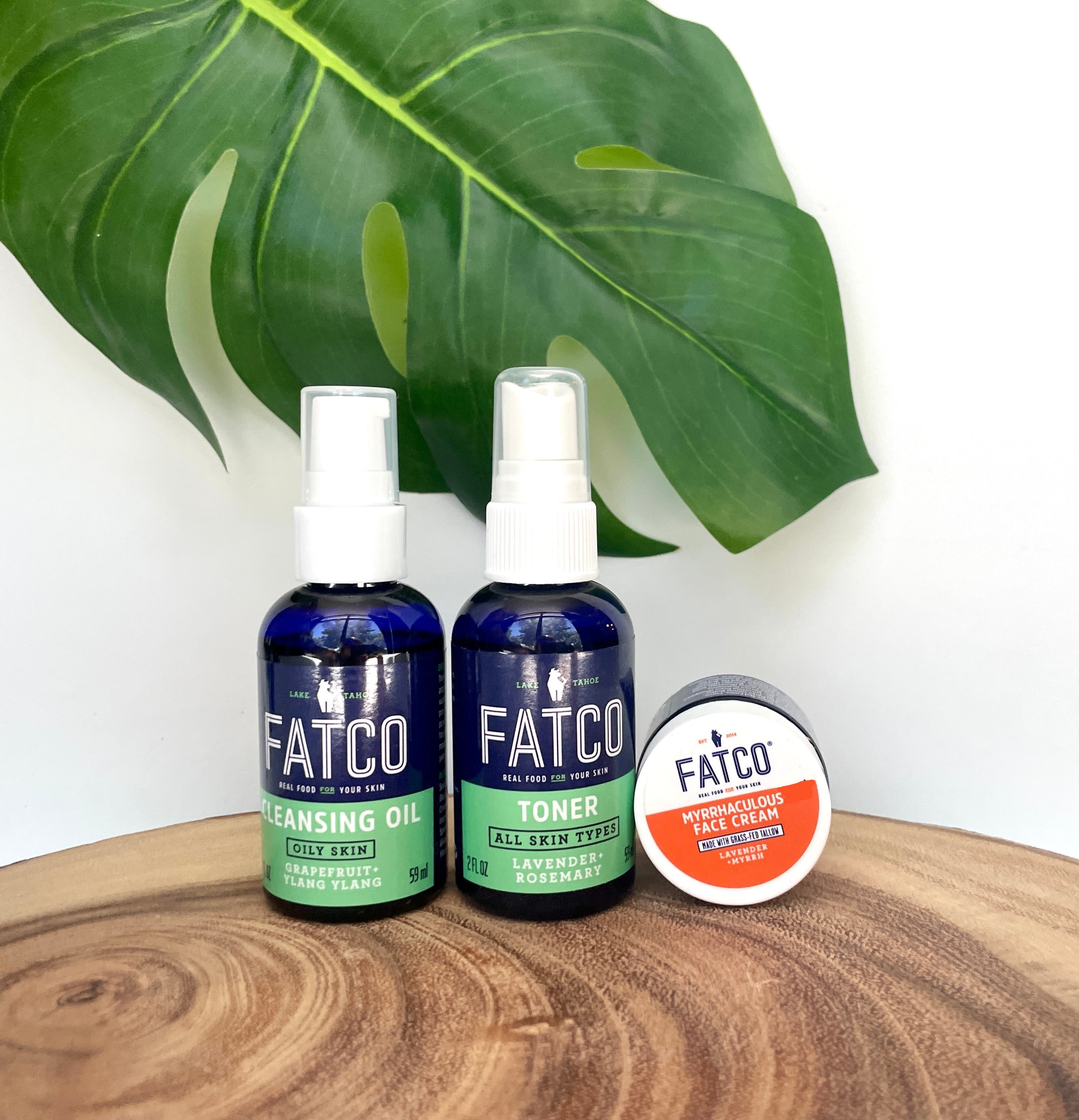
| Myrrhaculous Face Cream | Lavender and myrrh essential oil | No |
| Fat Bars in Lavender, Lemongrass and Coffee | Essential oil, or coffee grounds and coffee seed oil | No |
| Scented Stank Stop creams and sticks | Essential oil | No |
Two of those deserve a sentence. The Stank Stop Cream Deodorant in Unscented lists eight ingredients and no essential oil. They are organic coconut oil, arrowroot powder and shea butter, tallow from organic grass-fed cows, baking soda, non-nano zinc oxide, beeswax and sunflower seed wax. It does contain baking soda, which irritates some people on its own, so fragrance is not the only thing worth checking.
Baby Butta runs to seven: tallow from grass-fed cows, organic coconut oil, shea butter, extra virgin olive oil, avocado oil and jojoba oil, plus beeswax. No essential oil, no synthetic fragrance, nothing added for smell.
The name Unmyrrhaculous refers to the myrrh, not to the scent. It is the Myrrhaculous formula with the myrrh taken out for pregnancy, and it still carries lavender essential oil. If you are choosing a moisturizer for reactive skin and cutting fragrance of every kind, neither face cream qualifies.
Got Questions?
Frequently Asked Questions
Q What is fragrance-free skincare?
Fragrance-free skincare is made without any ingredient added for smell, synthetic or botanical. The phrase has no legal definition in the United States, so it is a manufacturer's description rather than a certified claim. Confirm it by reading the full ingredient list before you trust the front of the package.
Q Are odorless and fragrance free the same?
No. Odorless describes what your nose detects; fragrance-free describes what went into the formula. A product can be odorless because a masking ingredient cancelled a base smell, and that masking ingredient is fragrance. Judge the formula by its ingredient list, never by how the jar smells when you open it.
Q Do essential oils count as fragrance?
Yes. An essential oil added for scent is a fragrance ingredient, and US law treats plant-derived ingredients the same as any other source. Lavender, lemongrass and sweet orange oils are all fragrance. A product scented only with essential oils is honestly scented, which is not the same claim as fragrance-free.
Q Why is it so hard to find fragrance-free products?
Because the labeling rules work against you. US regulations let a whole scent blend appear as the single word Fragrance. No federal standard defines fragrance-free. And botanical scent hides behind oil names that read like actives. The ingredient list is the only reliable filter.
Q Are fragrance-free products better for your skin?
Only if fragrance is a problem for you. Most people use scented skincare for years without trouble. Fragrance is among the most common causes of contact dermatitis, so it is the first ingredient to cut if your skin reacts, and unnecessary caution otherwise.
Q What skincare brands are fragrance-free?
Shop by SKU, not by brand. A single line usually mixes scented and unscented products, so a brand-wide answer will mislead you. FATCO's own range is an example: the unscented Stank Stop cream, Baby Butta and the Baby Fat Stick carry no essential oil. Most of the rest of the line does.
The FATCO Alternative
FATCO does not have a fragrance-free line, and pretending otherwise is how a reader with reactive skin ends up with a rash. What we do have is a handful of products with nothing added for smell. Baby Butta is the everyday one, seven food-grade fats and waxes, and FATCO's own page says it is not only for babies. The Stank Stop cream in Unscented handles the underarm, and the Baby Fat Stick covers lips and dry patches in a tube that fits a pocket.