Beef Tallow for Acne: Can It Help Acne-Prone Skin?

Beef tallow for acne is one of the most searched questions in the tallow skincare world, and for good reason. The honest answer is not a simple yes or no. Tallow's fat profile means it works beautifully for many skin types, but acne-prone skin deserves a more careful look before you apply it.
Key Takeaways
- Tallow is not formally rated comedogenic, but its high oleic acid content means acne-prone skin should always patch-test before committing to a full routine.
- Some people with acne-prone skin tolerate tallow well. Others, particularly those with sebum that is already oleic-acid-heavy, may find it aggravates breakouts.
- Purging and breakouts are not the same thing. A short adjustment period is possible; persistent new breakouts are a signal to stop.
- Barrier support is a plausible mechanism, not a tested one. Tallow shares saturated fatty acids with the skin's barrier lipids, but no trial has measured tallow against the ceramide deficiency seen alongside acne.
- Tallow will not clear acne on its own. For persistent or moderate-to-severe acne, a dermatologist is the right call.
Why the "Is Tallow Comedogenic?" Question Misses the Point
Most online discussions about tallow and acne revolve around comedogenic ratings. You will see people cite a number somewhere around 2 on a scale of 0 to 5 and call it safe. The problem is that tallow has no formal, peer-reviewed comedogenic rating. Those ratings were generated decades ago using rabbit ear models that do not reliably predict human outcomes.
Treat any specific rating you see as informal and unverified.
What matters more than a rating is the fatty acid composition. Published analysis of grass-fed tallow puts it at roughly 37% oleic acid, 27% palmitic, 17% stearic, and about 1% linoleic acid, which USDA reference data for beef tallow broadly matches. Each of those acids interacts with acne-prone skin differently, and that is where the real story lives.
The Oleic Acid Factor
Oleic acid is the largest single fatty acid component in beef tallow. It is also the fatty acid that researchers point to most often when discussing tallow's complicated relationship with acne-prone skin.
Here is the nuance, and it is less flattering to oleic acid than skincare marketing usually makes it sound. Oleic acid is a well-documented penetration enhancer, but the mechanism behind that is barrier disruption: a 2017 review in the International Journal of Molecular Sciences states that oleic acid is detrimental to skin barrier function and causes barrier disruption under continuous topical application.
At the same time, acne-prone sebum is compositionally different from ordinary sebum. A review in Clinical, Cosmetic and Investigational Dermatology describes elevated monounsaturated fatty acids in acne, driven by two enzymes: delta-6 desaturase converts palmitic acid to sapienic acid, and stearoyl-CoA desaturase converts stearic acid to oleic acid. Linoleic acid runs low in acne sebum, and that shortfall matters because linoleic acid is a building block for skin ceramides, so its depletion feeds the ceramide deficiency and follicular hyperkeratinization that drive comedone formation.
Adding more oleic acid on top of that is not obviously a good idea. The same review cites work in which oleic acid applied to rabbit ear skin induced comedones, with barrier disruption in the follicular keratinocytes proposed as the route to follicular hyperkeratosis. That is animal-model evidence for isolated oleic acid, not a trial of tallow on human faces, so treat it as a reason for caution rather than a verdict. Individual skin chemistry still matters.
Palmitic and stearic acid, tallow's second and third largest components, are both saturated and both appear in the skin's own barrier lipids at roughly 10% each of the stratum corneum free fatty acid fraction. Tallow also contains linoleic acid, at about 1%. Topical linoleic acid does have a small evidence base of its own: a 1998 double-blind, placebo-controlled crossover trial in Clinical and Experimental Dermatology found an almost 25% reduction in the size of follicular casts and microcomedones over one month in patients with mild acne. At 1% of tallow, though, that is a benefit tallow largely does not deliver.
The takeaway: tallow's fat profile is not inherently pore-clogging, but it is not universally neutral for acne either. Individual response depends heavily on your skin's existing sebum composition, how much tallow you apply, and whether you have active acne or a generally acne-prone baseline.
Does Tallow Have Any Potential Benefits for Acne-Prone Skin?
This is a fair question and worth answering honestly. There are a few plausible mechanisms through which tallow might support the skin of someone who is acne-prone, even if it cannot treat or resolve acne itself.
Barrier support. Acne-prone skin frequently shows signs of compromised barrier function. The ceramide deficiency that accompanies linoleic acid depletion in sebum creates a barrier that lets irritants and bacteria penetrate more easily. Tallow's saturated fraction overlaps with the barrier's own free fatty acids, and it carries a little vitamin E (USDA reference data lists 2.7 mg per 100 g of beef tallow). Whether that adds up to measurable barrier recovery has not been tested for tallow, so treat it as a plausible mechanism rather than a demonstrated one.
Avoiding harsh stripping. Many acne-focused routines over-strip the skin with harsh cleansers and astringents, which can drive compensatory oil production. Tallow is rich, not stripping. For someone whose acne is partly driven by a damaged, reactive barrier rather than true excess sebum, a gentle occlusive moisturizer may reduce that cycle.
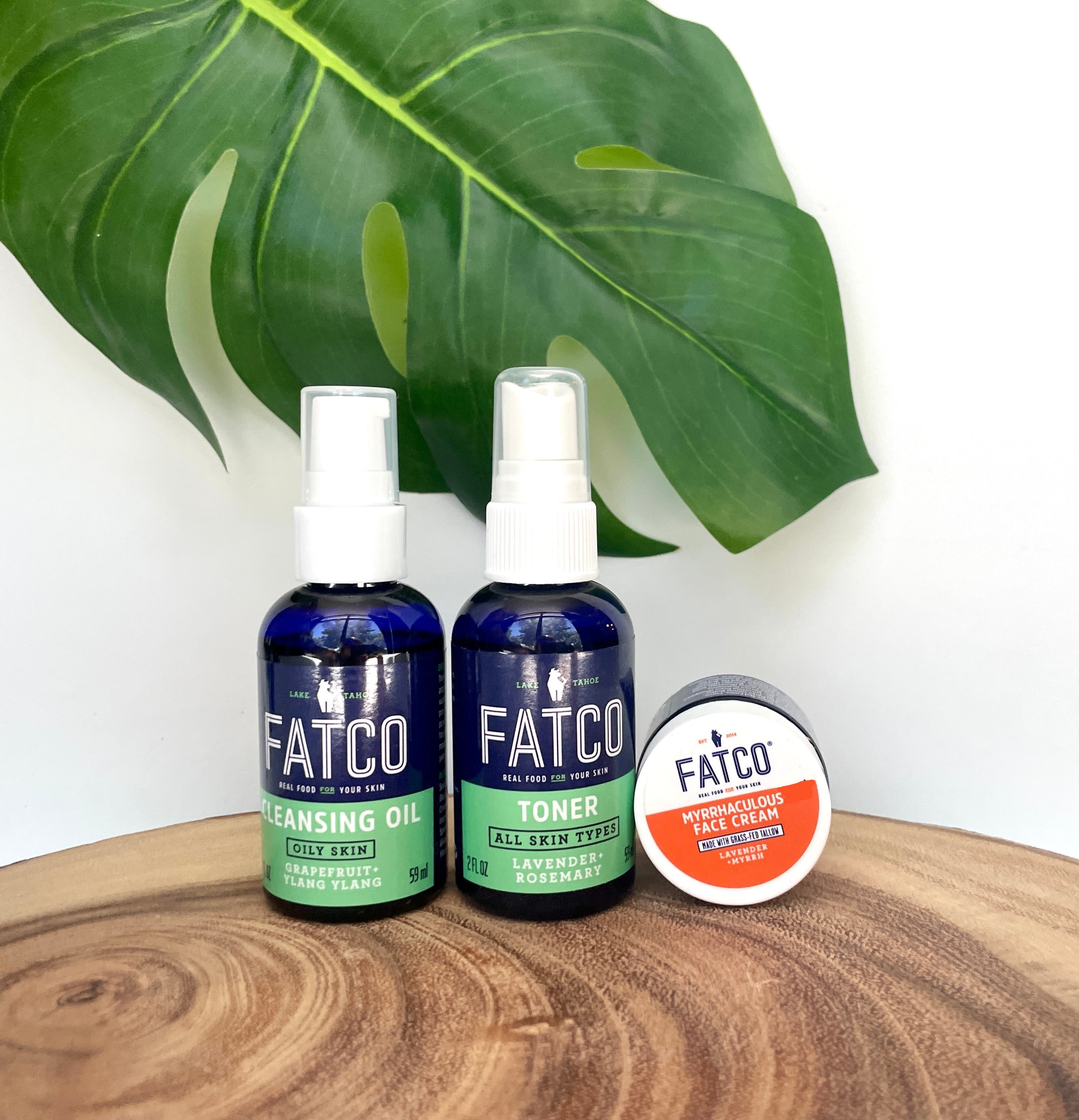
Simpler ingredient lists. FATCO's tallow-based creams are built on tallow and plant oils rather than water, synthetic emulsifiers and silicones, so they sidestep several common pore-clogging ingredients found in conventional moisturizers. Read the label first if you react to essential oils: Myrrhaculous Face Cream contains lavender and myrrh essential oil, and the unmyrrhaculous version still contains lavender.
None of this means tallow treats acne. These are potential supportive roles, not clinical outcomes.
Who Is Likely to Tolerate Tallow Better
If you are exploring beef tallow for acne-prone skin, the people most likely to see positive or neutral results share a few characteristics:
- Dry, acne-prone skin. People who experience breakouts alongside persistent dryness or flakiness often have a compromised barrier at the root. Tallow's richness may help without over-oiling already-congested pores.
- Hormonal or cyclical acne with otherwise calm skin. The American Academy of Dermatology explains that during puberty androgens increase the size of the skin's oil glands. If your skin is mostly balanced outside those hormone-driven stretches, a lightweight application of tallow as a moisturizer may not aggravate the baseline.
- Sensitive skin with occasional breakouts. People who react to synthetic ingredients and fragrance but tend toward mild breakouts rather than cystic acne tend to report positive experiences.
People who tend to do less well:
- Active, moderate-to-severe inflammatory acne. If you have multiple pustules, cysts, or nodules actively present, this is not the moment to experiment with a rich, occlusive fat. Work with a dermatologist on evidence-based treatments first.
- Oily, congested skin without barrier damage. If your skin is genuinely overproducing sebum, adding oleic-acid-rich tallow may exacerbate that tendency.
- Anyone with a history of strong reactions to topical oils. If your skin reliably clogs under heavier oils like avocado oil, proceed with caution.
What Is Skin Purging and How Is It Different from a Breakout?
Purging is one of the most misunderstood concepts in skincare. It refers to an acceleration of your skin's natural cell turnover cycle, which can cause comedones and microcomedones already forming under the surface to come to the surface faster than they normally would. Purging is typically associated with active ingredients like retinoids, AHAs, and BHAs that actually speed up cell turnover.
Tallow does not contain those active exfoliants. It does not meaningfully speed up cell turnover. If you start using tallow and break out within the first week or two, that is most likely a direct reaction rather than purging. It could be because your skin is congesting under the occlusive texture, or because the oleic acid content is triggering increased sebaceous activity.
This distinction matters because "it's just purging" is commonly used to talk people out of stopping a product that is genuinely not working for them. If you add tallow to your routine and consistently see new breakouts in areas where you do not normally break out, stop using it. That is signal, not a phase to push through.
How to Patch-Test Tallow for Acne-Prone Skin
Patch-testing is not optional when you are acne-prone. It takes about two weeks and tells you what full-face use would likely do. Here is a practical method:
- Apply a small amount of tallow to a spot on your inner arm or behind your ear each night for five to seven days.
- If no reaction appears on the arm test, move to a small area on the side of your jawline or chin, which tends to be more sebum-rich than the arm.
- Apply a thin layer on that test area each night for another week.
- If you see new comedones or breakouts only in the test area, tallow is likely not a good match for your acne-prone skin.
- If the test area stays calm or improves, you can cautiously try it on a wider area of your face.
Apply tallow sparingly. A pea-sized amount for the whole face is generally enough. Heavier application raises the risk of congestion even for skin that tolerates small amounts well.
When to See a Dermatologist
Tallow is a moisturizer. It is not an acne treatment. If your acne is moderate, persistent, scarring, or causing significant distress, tallow is not the right primary intervention.
A board-certified dermatologist can identify whether your acne is hormonal, bacterial, barrier-related, or driven by something else entirely, and recommend treatments that have been tested in clinical settings. Exploring tallow alongside evidence-based acne care is a reasonable choice for some people. Replacing that care with tallow alone is not.
Got Questions?
Tallow and Acne FAQ
Q Is tallow good for acne?
It depends on your skin. Tallow can support the barrier and replace synthetic-heavy moisturizers, which helps some acne-prone people. But its oleic acid content is not universally acne-safe, and oily, congested skin may see more breakouts. Patch-test on your jawline for two weeks before using it on your full face.
Q What does beef tallow do for skin, and does that include acne-prone skin?
For most skin, tallow works as a rich occlusive that slows water loss, and its palmitic and stearic acid overlap with fatty acids in the skin's own barrier lipids. For acne-prone skin, that richness cuts both ways: it can help a dry, damaged barrier but adds oleic acid, which is a barrier disruptor and tallow's largest single component. The effect depends on your baseline skin type.
Q Can tallow clog pores?
It depends on your skin chemistry and how much you apply. Tallow has no formal comedogenic rating, but its oleic acid content puts it in a gray zone for acne-prone users. Applying a thin layer on skin that is not already overproducing oil lowers the risk considerably.
Q What does "not formally rated" comedogenic mean?
No peer-reviewed comedogenic score exists for tallow. The 0-5 rating scale people cite traces back to rabbit ear assays developed in the 1970s and 1980s, which were never shown to predict human breakouts reliably. Numbers floating around online for tallow are informal, not clinical findings. A two-week patch test tells you more than any published rating ever could.
Q Is tallow safe for acne if I have dry skin?
More plausibly than for oily or congested skin, though nobody has trialled it. Dryness alongside acne often points to a damaged barrier, and a rich occlusive slows the water loss that keeps it damaged. Patch-test first and apply thinly. See a dermatologist first if your acne is active and inflamed.
Q Where can I find a tallow-based product formulated for sensitive, acne-prone skin?
FATCO's face care is built on tallow and plant oils, with no synthetic emulsifiers and no synthetic fragrance, though the face creams do carry essential oils, so check the label if those bother you. Whether tallow suits your skin still comes down to individual chemistry, but a purpose-formulated product beats home-rendered tallow of unknown purity if you decide to try it.
The FATCO Alternative
Most conventional moisturizers marketed to acne-prone skin strip the barrier or load it with synthetic ingredients that create their own set of problems. FATCO's approach is different: real, grass-fed beef tallow, short ingredient lists, nothing synthetic. If you have been struggling with acne-prone skin that is also dry or reactive, tallow-based face care may be worth exploring as part of a balanced routine, with a patch-test first and a dermatologist in your corner for anything persistent.